Photo via The Daily Caller

Supreme Court Justices Bash Lawyer Defending Company Undercutting American Jobs With Cheap Migrant Labor

Read the original at The Daily Caller ↗
Cite

Peterson, P. (2026, November 10). Supreme Court Justices Bash Lawyer Defending Company Undercutting American Jobs With Cheap Migrant Labor. The Daily Caller. https://dailycaller.com/2026/11/10/sun-scotus-bashes-lawyer-defending-migrant-workers-undercutting-american-jobs-valley-orchards-dol-rob-johnson-h2a

Dated from the outlet's own feed. Check the original for its byline.

The Daily Caller · collected 2026-11-10 · by Pete Peterson

Quick Summary

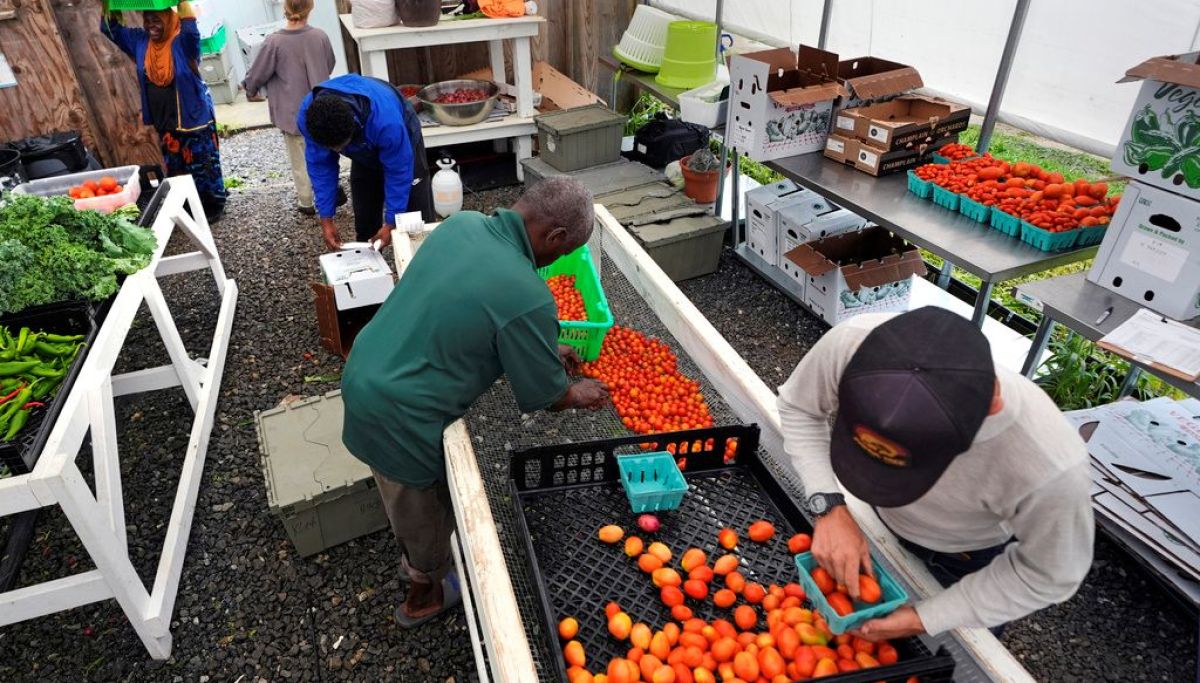
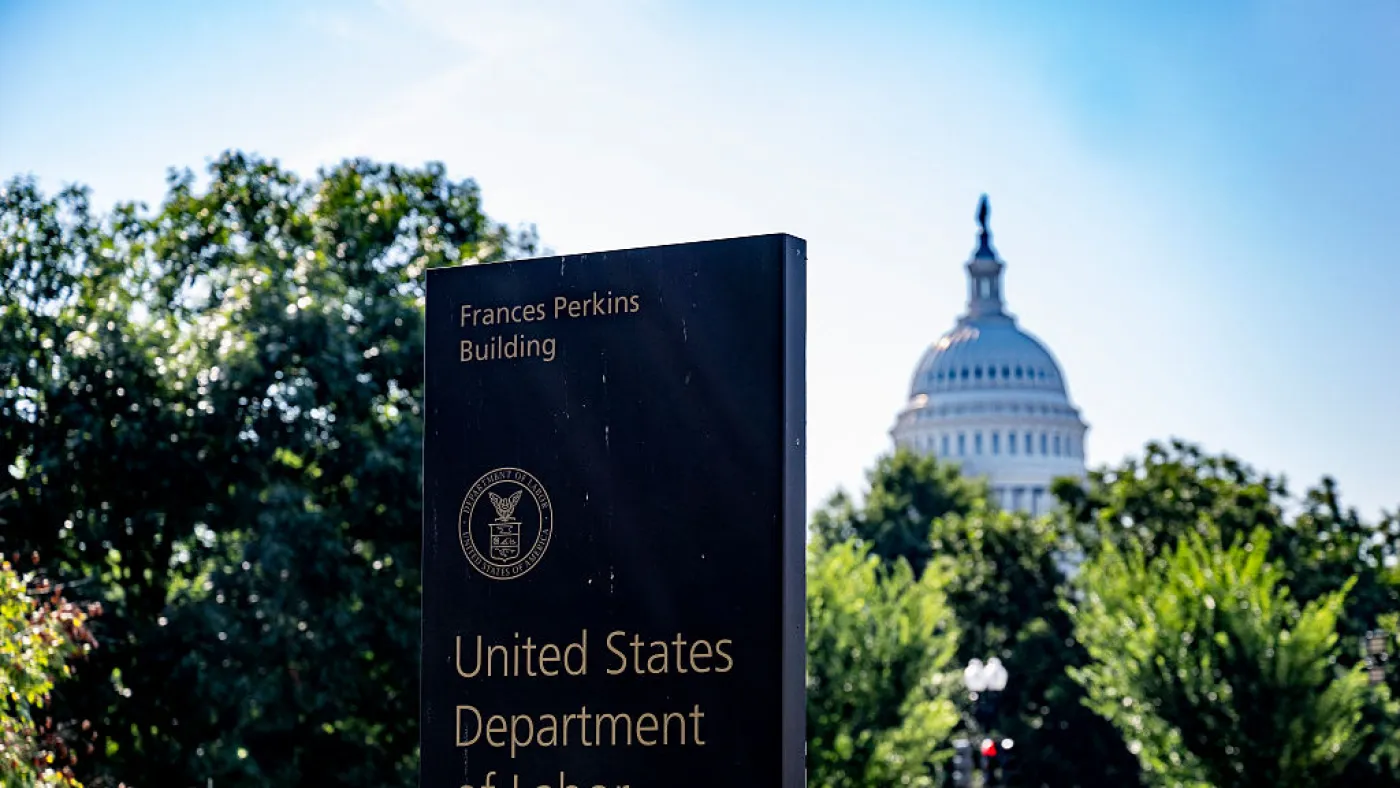
On Tuesday, the Supreme Court heard arguments in Department of Labor vs. Sun Valley Orchards regarding penalties imposed by the DOL on a New Jersey farm for violating H-2A program rules. The DOL fined Sun Valley Orchards $550,000 in 2015 over poor living conditions for migrant workers. During oral arguments, Justice Elena Kagan criticized the farm's lawyer Rob Johnson for arguing that civil penalties should be handled by courts rather than the Executive Branch, while Justices Kavanaugh and Barrett pressed Johnson on inconsistencies in his argument regarding immigration law exceptions.
Written by AI on 2026-11-11, from this article's own text only (the story summary below draws on all the coverage).

AI analysis

Story summary

On November 10, 2026, the Supreme Court heard arguments in Department of Labor v. Sun Valley Orchards, a case challenging the Department of Labor's authority to fine companies for violations of the H-2A migrant worker program. The court grappled with whether such fines should be imposed by federal agencies or require judicial review, with Justice Elena Kagan questioning the defendant’s argument about foreign workers undercutting domestic jobs. Sun Valley Orchards, a New Jersey farm, was fined $550,000 in 2015 for poor living conditions and wage violations reported by migrant workers. The company argues that imposing such penalties bypasses their constitutional right to a jury trial, while the DOL asserts that precedent supports its enforcement powers under immigration law. Justices were divided on the issue, with Justice Brett Kavanaugh expressing skepticism about the clarity of the proposed legal framework.

Written for “Supreme Court Weighs Department Of Labor Case” on 2026-11-11, grounded in this article and the 2 other(s) covering the same event.

Story

Supreme Court Weighs Department Of Labor Case
Politics · 3 article(s) covering the same event. See how they differ ↓

Compared with similar articles

This article reads leans left and hedges 14% of its claims. Each row says how that neighbour differs.
Washington Examiner
Leans left Hedges 0 of 4 claims Outlet record 68/100
NPR
Hedges 2 of 24 claims Outlet record 60/100
How this article was measured signals, leaning charts, publisher record, byline, topics and claims

Signals How these are calculated →

Claims extracted
35
sentences that state something as happening or true
Uncertain
14%
5 of 35 hedged ("reportedly", "may", "according to")
Leaning
Leans left
of the writing, not the subject · beta estimate
Publisher signals
93/100
The Daily Caller's corrections and hedging, across everything collected from it. Not a measure of accuracy.
Outlets on this story
3
Politics
Same framing elsewhere
1
articles that frame the event the way this one does
Analyzed 2026-11-11 · how these are computed

How this is being covered How these are calculated →

Article leaning vs. publisher reliability
Source leaning vs. consistency

Publisher

The Daily Caller · 110 article(s) · 0 correction(s) detected
No corrections detected for this publisher. That may mean careful reporting, or simply that nothing has been checked.

Who wrote this

Pete Peterson
3 article(s) here · 1 carrying a prediction
It’s all about when do we allow the admission of foreign workers, given the fact that we’re concerned that foreign workers will undercut the economic status of domestic workers,” Associate Justice Elena Kagan said.
Eventually the project developers won at the Supreme Court, seven-two, but after that much delay and after the cost ballooned that much, they decided less than three weeks after the case was decided that they would have to cancel the project because it just simply became uneconomical,” he added. Ellis wrote about the pipeline in a Nov. 6 op-ed for the Daily Caller News Foundation he co-authored with AFPI Vice Chair for Energy & Environment Policy Oliver McPherson-Smith.
Also by Pete Peterson
Nothing else under this byline is closely related to this article, so these are simply their most recent.

Topics

DOL Sun Valley Orchards Supreme Court The Supreme Court the Executive Branch’s

Subjects

Johnson PERSON · 11× Sun Valley Orchards ORG · 5× DOL ORG · 4× Supreme Court ORG · 3× Kavanaugh PERSON · 2× New Jersey GPE · 2× Rob Johnson PERSON · 2× The Supreme Court ORG · 2× the Executive Branch ORG · 2× the Executive Branch’s ORG · 2×

Narrative

Johnson faced criticism from both the liberal and conservative justices on the Supreme Court with lawyers representing the Department of Labor (DOL) also rebutting Johnson, arguing that Supreme Court precedent established the Executive Branch’s power to levy such penalties in immigration cases.
framing: assertive · carried by 1 article(s) · first seen 2026-11-11
It’s all about when do we allow the admission of foreign workers, given the fact that we’re concerned that foreign workers will undercut the economic status of domestic workers,” Associate Justice Elena Kagan said.

Claims (35 extracted, 5 hedged)

The Supreme Court heard oral arguments Tuesday for Department of Labor vs. Sun Valley Orchards, with the justices taking turns grilling the latter’s lawyer. asserted
justices → hear → lawyer
Rob Johnson, arguing on behalf of Sun Valley Orchards, contended that imposing penalties over immigration contracts was a power reserved for courts, not the Executive Branch’s internal adjudication. asserted
imposing → argue → courts
Johnson faced criticism from both the liberal and conservative justices on the Supreme Court with lawyers representing the Department of Labor (DOL) also rebutting Johnson, arguing that Supreme Court precedent established the Executive Branch’s power to levy such penalties in immigration cases. asserted
precedent → face → cases
“I feel at the base of your argument, Mr. Johnson, you’re trying to get us to think that the H2A program is not an immigration program. asserted
program → feel → argument
It’s all about when do we allow the admission of foreign workers, given the fact that we’re concerned that foreign workers will undercut the economic status of domestic workers,” Associate Justice Elena Kagan said. asserted
Kagan → ’ → workers
The DOL fined Sun Valley Orchards $550,000 in 2015 after an inspection revealed that the living conditions on the farm violated H-2A seasonal agricultural worker program rules meant to protect American workers from being undercut by cheaper foreign labor. asserted
conditions → fin → labor
Sun Valley Orchards appealed on the basis that these civil penalties relate to contract law and thus should be adjudicated in courts rather than internally in the DOL, in accordance with Article Three of the Constitution. asserted
penalties → appeal → Constitution
An opinion today from a federal district court in New Jersey shows the stakes for the upcoming Supreme Court case of Jarkesy v. SEC. asserted
opinion → show → SEC
With his brother, he runs Sun Valley Orchards — a multi-generational family farm in New Jersey. asserted
he → run → Jersey
Or, he *used* to run it … asserted
he → use → it
— Rob Johnson (@FreeRangeLawyer) July 27, 2023 “You’re not arguing in this case, say all that all civil penalties must be [adjudicated through] Article Three?” Associate Justice Brett Kavanaugh asked Johnson. asserted
Kavanaugh → argue → Article
Johnson agreed. asserted
Johnson → agree → ?
“So you recognize exceptions, with immigration being one of them?” Kavanaugh continued. asserted
Kavanaugh → recognize → them
Johnson affirmed. asserted
Johnson → affirm → ?
“But I thought you said earlier that in [the immigration] context all civil penalties should fall under Article Three. asserted
penalties → think → Article
Did you say that earlier?” Kavanaugh said. asserted
Kavanaugh → say → that
“So I think that–” Johnson was interrupted. asserted
Johnson → think → ?
“Can I get an answer?” Kavanaugh asked. asserted
Kavanaugh → get → answer
“Can I distinguish between the rule that I would advocate –” Johnson was interrupted again. asserted
Johnson → distinguish → that
“Can you say ‘yes’ or ‘no’ to him, because I thought you said that too?” asserted
you → say → that
Associate Justice Amy Coney Barrett interjected. asserted
Barrett → interject → ?
“Yes, but I don’t think the Court should go that far in this case,” Johnson said. asserted
Johnson → think → case
“You’re going to need to explain that now,” Kavanaugh said, laughing. asserted
Kavanaugh → go → that
The DOL argued that under the Supreme Court decision in Oceanic Steam Navigation Co. v. Stranahan, precedent exists for the Executive Branch levying fines on corporations breaking immigration law through internal adjudication. asserted
Branch → argue → adjudication
(RELATED: SCOTUS Announces Decision That Could Give GOP An Edge In Closely Watched NH Senate Race) uncertain
That → announce → Race
Johnson argued that Oceanic was an immigration admissions case, because its root involved whether the Executive Branch could fine boats importing diseased migrants. uncertain
Branch → argue → migrants
He contended that the Sun Valley Orchards case was different because the migrants were already in the country. asserted
migrants → contend → country
“I have to tell you, Mr. Johnson, I’m struggling with your argument a little bit. asserted
I → have → argument
You said that the difference between this case and Oceanic is the nature of the claims and the nature of the remedies. uncertain
difference → say → remedies
The nature of the claims, you said, ‘well, Oceanic was an admissions case; of course, the government has complete authority to use administrative adjudications with respect to admissions.’ uncertain
government → say → admissions
An employer has gone to the government and said, ‘We are going to make various certifications so that you will allow us to bring in a boatload of foreign workers.’ asserted
us → go → workers
What the government is now saying is that the admissions requirements put on those workers have been violated. asserted
requirements → say → workers
,” Kagan said. asserted
Kagan → say → ?
Associate Justice Sonia Sotomayor suggested that the purpose of the precedent set in Oceanic makes the ruling still relevant today, even though Oceanic concerned admission at the border and Sun Valley Orchards concerns matters within the country. uncertain
admission → suggest → country
“Oceanic was at a time when immigration was totally different […] [but] as soon as immigration became a problem, we had administrative processes to punish employers who have lied to bring people in,” Sotomayor said. asserted
Sotomayor → become → people

Give feedback · no sign-in needed

No sign-in needed for now. Your note is sent without a name, so it cannot be answered.

History Support