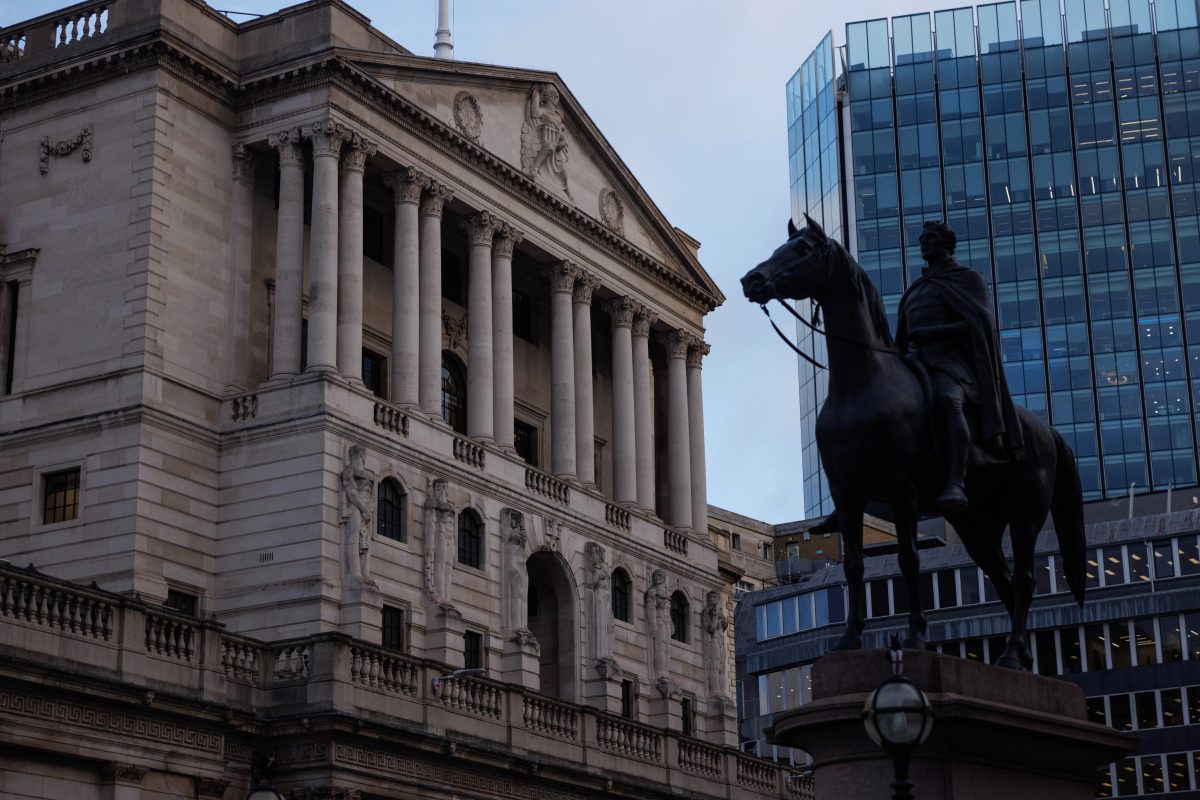
Photo via Evening Standard

Interest rates should rise to 5% to control inflation, says think tank

Read the original at Evening Standard ↗
Cite

Wise, A. (2026, November 11). Interest rates should rise to 5% to control inflation, says think tank. Evening Standard. https://www.standard.co.uk/news/politics/government-interest-rates-gdp-john-healey-b1304390.html

Dated from the outlet's own feed. Check the original for its byline.

Evening Standard · collected 2026-11-11 · by Anna Wise

Quick Summary

The National Institute of Economic and Social Research (NIESR) asserts that the Bank of England should raise interest rates to 5% from their current level to address inflation, which is forecasted to peak at around 4.4% in February. NIESR criticizes both monetary and fiscal policy for deferring necessary actions, warning that delaying rate hikes risks exacerbating inflation and straining public finances further. The think tank also highlights the UK government's failure to adequately fund major spending initiatives and balance its budget effectively, suggesting that difficult decisions on taxes and spending have been postponed.
Written by AI on 2026-11-11, from this article's own text only (the story summary below draws on all the coverage).

AI analysis

Story summary

The National Institute of Economic and Social Research (NIESR) has urged the Bank of England to increase interest rates from 4% to 5% to combat rising inflation in the UK. NIESR's new forecasts predict Consumer Prices Index (CPI) inflation reaching a peak of around 4.4% by February 2027, up from their previous prediction of 3.8%. The think tank warns that without further rate hikes, inflation may not return to the 2% target until late 2030, exacerbating economic challenges for poorer households who have fewer financial buffers. NIESR also criticized the Bank's recent decision as being too cautious and warned of potential second-round effects if action is delayed, such as wage increases leading to higher prices in a spiral effect.

Written for “Bank of England Interest Rate Pressures” on 2026-11-11, grounded in this article and the 2 other(s) covering the same event.

Story

Bank of England Interest Rate Pressures
Economy/Business · 3 article(s) covering the same event. See how they differ ↓

Compared with similar articles

This article reads unscored and hedges 7% of its claims. Each row says how that neighbour differs.
City AM
Hedges 8 of 25 claims Outlet record 93/100
Daily Mail
Hedges 2 of 24 claims Outlet record 69/100
“The articles discuss different aspects of interest rates and inflation, with Article A focusing on the impact of the rate hike on homeowners and Article B reporting on a think tank's recommendations for further rate increases to control inflation.”
City AM
Centre Hedges 6 of 49 claims Outlet record 93/100
“While both articles discuss recent interest rate hikes by the Bank of England, they describe different aspects and perspectives on the decision.”
Evening Standard
Hedges 3 of 15 claims Outlet record 64/100
“The articles discuss similar themes but refer to different sources and timeframes for interest rate predictions.”
The Guardian
Hedges 1 of 22 claims Outlet record 65/100
“While both articles discuss NIESR's recommendations on interest rates and inflation, they focus on different aspects: Article A discusses the think tank’s forecast and expectations for future rate hikes, while Article B critiques the Bank of England's response to rising inflation and its implications.”
BBC News
Leans left Hedges 8 of 34 claims Outlet record 66/100
“While both articles discuss recent interest rate hikes by the Bank of England, they describe different aspects: Article A focuses on the impact of the hike on individuals' finances, while Article B discusses a think tank's recommendation and forecast leading up to the decision.”
How this article was measured signals, leaning charts, publisher record, byline, topics and claims

Signals How these are calculated →

Claims extracted
15
sentences that state something as happening or true
Uncertain
7%
1 of 15 hedged ("reportedly", "may", "according to")
Leaning
withheld
no quote in the article backed the model's score
Publisher signals
64/100
Evening Standard's corrections and hedging, across everything collected from it. Not a measure of accuracy.
Outlets on this story
3
Economy/Business
Same framing elsewhere
1
articles that frame the event the way this one does
Analyzed 2026-11-11 · how these are computed

How this is being covered How these are calculated →

Article leaning vs. publisher reliability
Source leaning vs. consistency

Publisher

Evening Standard · 9470 article(s) · 74 correction(s) detected
Running correction rate · 74 correction(s)

Who wrote this

Anna Wise
92 article(s) here · 1 carrying a prediction
New forecasts by NIESR show Consumer Prices Index (CPI) inflation in the UK rising to a peak of around 4.4% in February – up from the 3.8% peak predicted in July.
Oil prices drop below 90 dollars as Trump says Iran war could end soon This followed a sharp fall on Monday and extending last week’s sell-off of the commodity in global markets.
Overvaluing AI stocks may cause ‘bubble’ to burst, warns Bank of England boss Artificial intelligence (AI) has increased the risk of cyber attacks and poses a threat to financial stability should a stock market “bubble” burst, the boss of the Bank of England has said.
Furthermore, the Bank of England’s decision to hike its base rate on Thursday and expectations that borrowing costs will go up further next year is impacting consumer affordability.
The Bank of England has increased interest rates for the first time in more than three years as it warned that inflation is set to soar to around 5%.
The central bank’s policymakers said this was warranted because inflation in the UK economy was rising and would continue to rise as the war in Iran goes on. It also said that borrowing costs were likely to go up further if there continued to be no resolution to the conflict.
The Bank of England has increased interest rates for the first time in more than three years as it warned that inflation is set to soar to around 5%.
But it warned that such “buffers would only prove temporary and these cost pressures would eventually pass through into higher consumer prices if the energy shock persisted”.
Also by Anna Wise
Nothing else under this byline is closely related to this article, so these are simply their most recent.
All 92 articles by Anna Wise →

Topics

Bank Government NIESR The National Institute of Economic and Social Research the Bank of England

Subjects

NIESR ORG · 6× Bank ORG · 2× Government ORG · 1× John Healey PERSON · 1× The National Institute of Economic and Social Research ORG · 1× the Bank of England ORG · 1×

Narrative

Elsewhere in the latest report, it forecast UK gross domestic product (GDP) at 1.6% this year – stronger than a previous prediction of 1.4%, and driven by Government spending and business investment, including on AI.
framing: assertive · carried by 1 article(s) · first seen 2026-11-11
New forecasts by NIESR show Consumer Prices Index (CPI) inflation in the UK rising to a peak of around 4.4% in February – up from the 3.8% peak predicted in July.
2026-11-11 · Evening Standard
Interest rates should rise to 5% to control inflation, says think tank · assertive framing

Claims (15 extracted, 1 hedged)

The National Institute of Economic and Social Research (NIESR) argued that decisions around both monetary and fiscal policy were being “deferred”. asserted
decisions → argue → policy
It warned this risks worsening inflation in the UK economy and squeezing the public finances. asserted
this → warn → finances
New forecasts by NIESR show Consumer Prices Index (CPI) inflation in the UK rising to a peak of around 4.4% in February – up from the 3.8% peak predicted in July. asserted
inflation → show → July
Rising inflation prompted the Bank of England to take action by raising interest rates to 4% last week – the first hike in more than three years. asserted
inflation → rise → years
NIESR said it was expecting the Bank to raise rates one more time, but that this would not be enough, and would mean inflation not returning to the 2% target until late 2030. asserted
inflation → say → 2030
This would hit poorer households the hardest because it leaves them with no choice but to buy less, rather than make adjustments to spending or dip into savings, it said. asserted
it → hit → savings
Rates need to go as high as 5% to tackle the risk of second-round inflation effects, which will show up early next year when companies set their wages and prices, according to its analysis. uncertain
companies → need → analysis
The Bank is only risking future hikes by delaying now, it argued. asserted
it → risk → hikes
Meanwhile, NIESR also took aim at the Government’s fiscal policy, arguing that major spending drives remain unfunded, including on defence, social care and disability. asserted
drives → take → defence
In last month’s autumn Budget, Chancellor John Healey confirmed that the UK’s fiscal headroom will reduce to £14.5 billion from £23.6 billion, which was linked to a jump in debt interest costs for the past year. asserted
which → confirm → year
NIESR said plans to balance the public finances rely heavily on restraining public spending scheduled for the years ahead. asserted
plans → say → years
But its analysis found that if the plan slips by as much as previous ones have, then the Government’s fiscal rules would be missed by around £30 billion. asserted
rules → find → billion
The think tank argued that the Chancellor did not seize the opportunity at the autumn Budget to put the public finances on a firmer footing, and difficult decisions about taxes and spending were largely postponed. asserted
decisions → argue → taxes
In the summer, NIESR called for the Government to raise or reform taxes or make cuts to spending in order to fund new cost-of-living and defence commitments. asserted
Government → call → commitments
Elsewhere in the latest report, it forecast UK gross domestic product (GDP) at 1.6% this year – stronger than a previous prediction of 1.4%, and driven by Government spending and business investment, including on AI. asserted
it → forecast → AI

Give feedback · no sign-in needed

No sign-in needed for now. Your note is sent without a name, so it cannot be answered.

History Support