It is also a sign of structural weaknesses that, left unchecked, threaten to derail China’s bid to join the ranks of the wealthiest nations.
asserted
that → leave → nations
Recommended Stories
list of 4 items- list 1 of 4Massive fire as Israeli settlers burn down business near Nablus
- list 2 of 4Fire contained on platform in Iran’s South Pars gas field
- list 3 of 4‘Everything and everyone we love is at stake’: Thunberg slams COP31 talks
- list 4 of 4Spain holds state funeral for 69 victims of deadly train crash
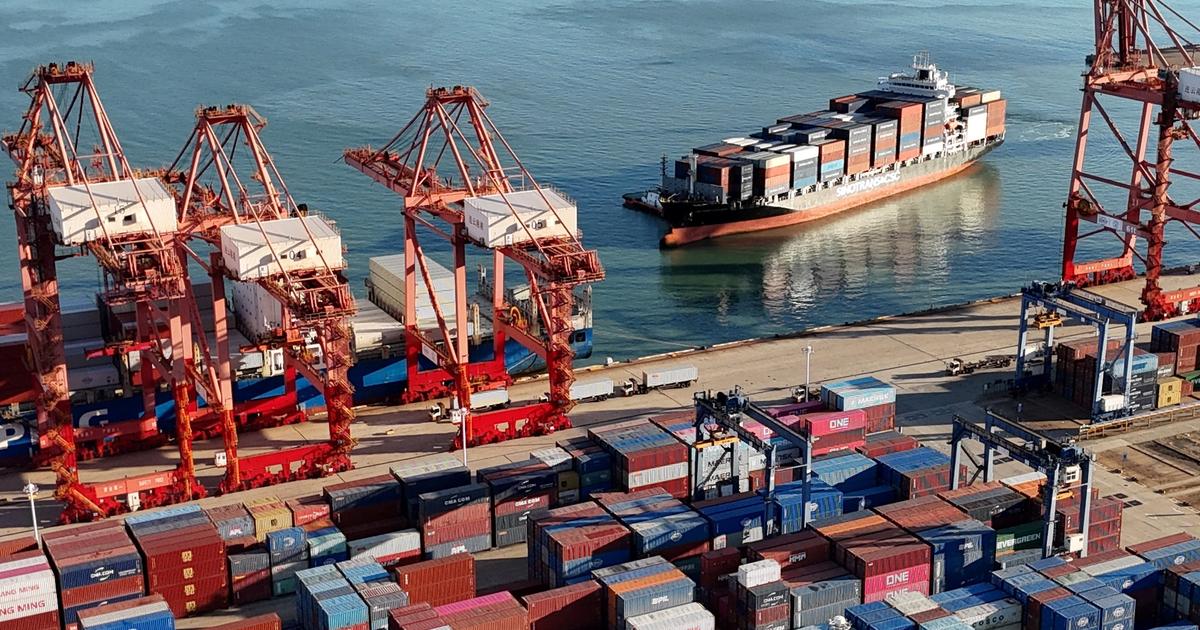
While its status as the world’s factory helped it achieve a dramatic rise in living standards beginning in the late 1970s, China’s export-led economic model is facing diminishing returns.
asserted
model → burn → returns
Even as the AI boom drives its exports to record highs, the world’s second-largest economy suffers from chronically weak domestic demand.
asserted
economy → drive → demand
Chinese consumers save far more than their peers elsewhere, with households typically putting away one-third or more of earnings.
asserted
households → save → earnings
The dynamic can be partly explained by China’s relatively weak social safety net, as well as cultural attitudes, an undervalued currency and a flailing real estate market.
asserted
dynamic → explain → net
China spends far less on social protection than most advanced economies.
asserted
China → spend → economies
Government spending on healthcare, pensions and welfare payments accounts for only about 10 percent of the country’s gross domestic product (GDP), far below the OECD average of about 23 percent.
asserted
spending → account → percent
With more money stowed away for a rainy day, Chinese households also spend less.
asserted
households → stow → less
Chinese household consumption sits at about 39 percent of GDP, versus 68 percent of GDP in the United States, according to the Hinrich Foundation, a Singapore-based philanthropic organisation that promotes trade.
“An export-dependent model essentially means Chinese households are subsidising global consumers,” Alicia García Herrero, a senior fellow at Bruegel, a Brussels-based think tank, told Al Jazeera.
uncertain
Herrero → sit → Jazeera
“High precautionary savings – driven by falling property wealth and thin social safety nets – leave families with weaker wage growth, deflationary pressures at home, and a smaller share of the country’s economic gains,” García Herrero said.
asserted
Herrero → drive → gains
For China, trade has been critical in mitigating areas of weakness in the economy.
asserted
trade → mitigate → economy
Exports surged 35.2 percent in October on a yearly basis, according to official figures released on Tuesday, buoyed by red-hot demand for semiconductors and automatic data processing machines.
uncertain
Exports → surge → semiconductors
The latest trade figures put China on track to exceed its record full-year surplus of $1.2 trillion in 2025.
asserted
figures → put → 2025
But the reliance on trade has also left its economy vulnerable to growing discontent overseas.
asserted
reliance → leave → discontent
Critics say China’s state-subsidised export model abuses the norms of fair trade.
asserted
model → say → trade
Earlier this month, the European Union announced it would cap imports of Chinese hybrid electric vehicles at 350,000 units annually as part of its efforts to counter China’s “overcapacity”.
asserted
it → announce → overcapacity
The growing reliance on exports to maintain growth is “unlikely to be sustainable”, said Carsten Holz, a professor of economics at the Hong Kong University of Science and Technology.
asserted
Holz → grow → Science
“The world is too small to absorb all of the PRC’s excess manufacturing capacity and eventually, other countries will put up barriers similar to those the PRC has used in the past and is still using across some sectors of its economy,” Holz told Al Jazeera, using the acronym of China’s official name, the People’s Republic of China.
asserted
Holz → absorb → China
“The property boom has run its course.
asserted
boom → run → course
The export boom, too, will run its course,” he said.
asserted
he → run → course
The limits of China’s economic model have become increasingly visible over the past decade.
asserted
limits → become → decade
In March, Beijing announced an economic growth target of 4.5-5 percent, its lowest since 1991.
asserted
Beijing → announce → 1991
While such growth would be the envy of most advanced economies, it represents a marked slowdown from the double-digit increases that were common during the 1990s and 2000s.
asserted
that → represent → 1990s
Despite decades of rapid growth after reforms undertaken in the 1970s and 1980s, the Chinese economy still has considerable ground to cover to catch up with its developed counterparts.
asserted
economy → undertake → counterparts
President Xi Jinping has expressed his ambition to double the size of the economy by 2035, a goal that some economists believe will be difficult to reach at expected growth rates in the coming years.
asserted
economists → express → years
“As a large country, China will eventually need better consumption to support its long-term growth,” said Gary Ng, a senior economist for the Asia Pacific at Natixis Corporate & Investment Banking in Hong Kong.
asserted
Ng → need → Kong
“It is not a small economy that can rely on one or two sectors,” Ng told Al Jazeera.
asserted
Ng → rely → Jazeera
Policymakers have acknowledged the need to boost domestic demand.
asserted
Policymakers → acknowledge → demand
In July, Beijing announced its first five-year plan aimed specifically at boosting consumption, targeting 60 trillion yuan ($9 trillion) in sales of consumer goods by 2030, up from a record 50.12 trillion yuan ($7.5 trillion) last year.
asserted
Beijing → announce → yuan
So far, such efforts have produced meagre results.
asserted
efforts → produce → results
Retail sales have been close to stagnant in 2026, growing just 1.1 percent year-on-year in September, up from 0.6 percent growth in August.
asserted
sales → grow → August
“More policy support is expected, but I think for now, the focus may be more oriented toward developing tech self-reliance and industrial upgrading,” said Lynn Song, chief economist for Greater China at ING.
uncertain
Song → expect → ING
“Longer term, China’s consumption will naturally play a larger role in economic growth as more households enter the middle class – this process takes some time,” Song said, adding that most observers would agree that “quality of life and consumption has improved over the years”.
asserted
quality → play → years
While China’s growing trade surplus reflects its competitiveness in tech, it also points to a “stark two-speed economy”, said Bruegel’s García Herrero.
asserted
Herrero → grow → economy
“Publicly, Beijing insists it wants more balanced trade, yet its industrial policies continue to channel capital into manufacturing and self-reliance rather than household demand,” she said.
asserted
she → insist → demand
“Without meaningful structural reforms to boost household income and social welfare, this reliance on exports is unsustainable – especially as trading partners like the US and EU push back with tariffs and trade curbs.”
asserted
partners → boost → tariffs
 The Aporia