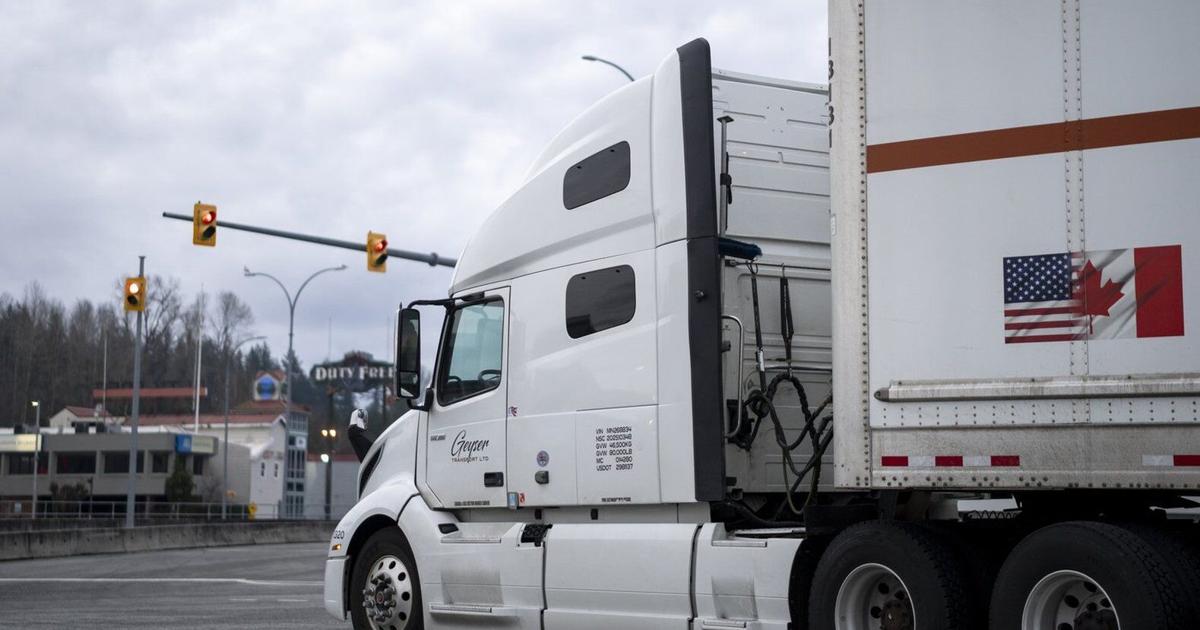
Mining, quarrying and oil and gas companies that import non-steel inputs from the U.S. can now recover the counter-tariffs they pay.
asserted
they → import → tariffs
Ottawa widened its tariff remission program on Monday and extended it by a year, to June 30, 2028.
asserted
Ottawa → widen → June
The changes, announced by Finance Minister François-Philippe Champagne, also extend relief to all goods used by public education entities, including those mandated by Indigenous organizations.
asserted
changes → announce → organizations
At the same time, Ottawa will begin pulling relief from goods it has identified as having domestic production.
asserted
it → begin → production
Certain trailers lose eligibility on Dec. 1.
asserted
trailers → lose → Dec.
Certain aluminum wire and extrusions and paperboard products follow on Feb. 1, 2027.
asserted
products → follow → Feb.
The Department of Finance says the lead time will let importers adjust their supply chains or apply for case-by-case remission.
asserted
importers → say → remission
The broad relief, known as horizontal remission, continues to cover U.S. goods used in manufacturing and processing, agricultural production, and packaging for farm, food and beverage products.
asserted
relief → know → products
It also covers goods used by certain public health, public safety, national security and public education organizations.
asserted
It → cover → health
Ottawa is also granting targeted relief for some goods in short supply in Canada and for companies facing exceptional circumstances, such as pre-existing contracts.
asserted
Ottawa → grant → contracts
Going forward, detailed product schedules will be published on the Department of Finance’s website and incorporated by reference into the remission order.
asserted
schedules → go → order
The department says this will speed up relief.
asserted
this → say → relief
Dominic LeBlanc, the minister responsible for Canada-U.S. trade, said the extension “gives Canadian companies the support they need today” while encouraging the use of Canadian-made goods.
asserted
they → say → goods
A temporary program, repeatedly renewed
Ottawa set out its criteria for tariff remission on March 4, 2025.
asserted
Ottawa → renew → March
Relief would be considered only for goods in short supply or in other exceptional circumstances with significant harm to the Canadian economy.
asserted
Relief → consider → economy
Six weeks later, on April 16, 2025, it introduced time-limited horizontal remission for U.S. goods imported for specific end uses.
asserted
it → introduce → uses
That relief has since been extended and amended several times.
asserted
relief → extend → ?
In June, Ottawa pushed the steel and aluminum remission out to June 2027, alongside its steel tariff-rate quotas.
asserted
Ottawa → push → quotas
Monday’s announcement adds another year.
asserted
announcement → add → year
The approach has its critics.
asserted
approach → have → critics
The Canadian Steel Producers Association has argued that remissions remove the pressure on Canadian firms to switch to domestic suppliers, The Canadian Press reported.
asserted
Press → argue → suppliers
Retaliation on a historic scale
The program now sits on top of a much larger set of counter-tariffs.
asserted
program → sit → tariffs
After talks in Washington collapsed in August, the U.S. imposed 50 percent tariffs on roughly $20 billion USD of Canadian goods, about 5 percent of Canada’s exports.
asserted
U.S. → collapse → exports
Prime Minister Mark Carney committed to respond dollar for dollar.
asserted
Carney → commit → dollar
On Sept. 8, Canadian counter-tariffs of 15 to 50 percent took effect on $27.6 billion of American goods, and existing remissions were carried over to the new duties.
asserted
remissions → take → duties
Tariffs on U.S. steel and aluminum doubled to 50 percent.
asserted
Tariffs → double → percent
Dairy, appliances, farm equipment and electronics joined the list.
asserted
Dairy → join → list
University of Calgary economist Trevor Tombe estimated in August that matching the U.S. measures would mean 50 percent tariffs on roughly $28 billion of Canadian imports.
asserted
matching → estimate → imports
By his calculation, that would be one of the largest single tariff increases in Canadian history, enough to push Canada’s effective tariff rate on U.S. goods to levels last seen in the late 1970s.
asserted
that → push → 1970s
Who gains and how far relief should go
Tombe argues retaliation can pursue three aims: shifting U.S. behaviour by targeting electorally important swing states, hurting American producers that depend on Canadian buyers, and limiting the damage to Canadian consumers and businesses.
asserted
that → gain → consumers
“Unfortunately, Canada is not big enough to do all three at once.
asserted
Canada → do → three
At best, we can pick two,” Tombe writes.
asserted
Tombe → pick → two
He estimates that a package meeting all three tests would be less than one-tenth the size the government was seeking.
asserted
government → estimate → tests
Food and consumer goods do the least harm at home but are poorly aimed at politically important states, Tombe notes.
asserted
Tombe → do → states
That leaves packages dominated by industrial supplies and capital goods.
asserted
That → leave → supplies
The announcement answers the question of who gains from the broadened program: mines, quarries, oil and gas operators, and public education bodies.
asserted
who → answer → program
How far relief should extend is harder to settle.
asserted
extend → extend → ?
Tombe’s analysis addresses which goods to tariff rather than which to exempt, but its logic carries over.
asserted
logic → address → which
The damage at home is smallest where other countries can supply the same goods.
asserted
countries → supply → goods
Each remission is, in effect, a judgment that a tariffed good fails that test.
asserted
good → tariff → test
…and 21 more, not listed.
 The Aporia