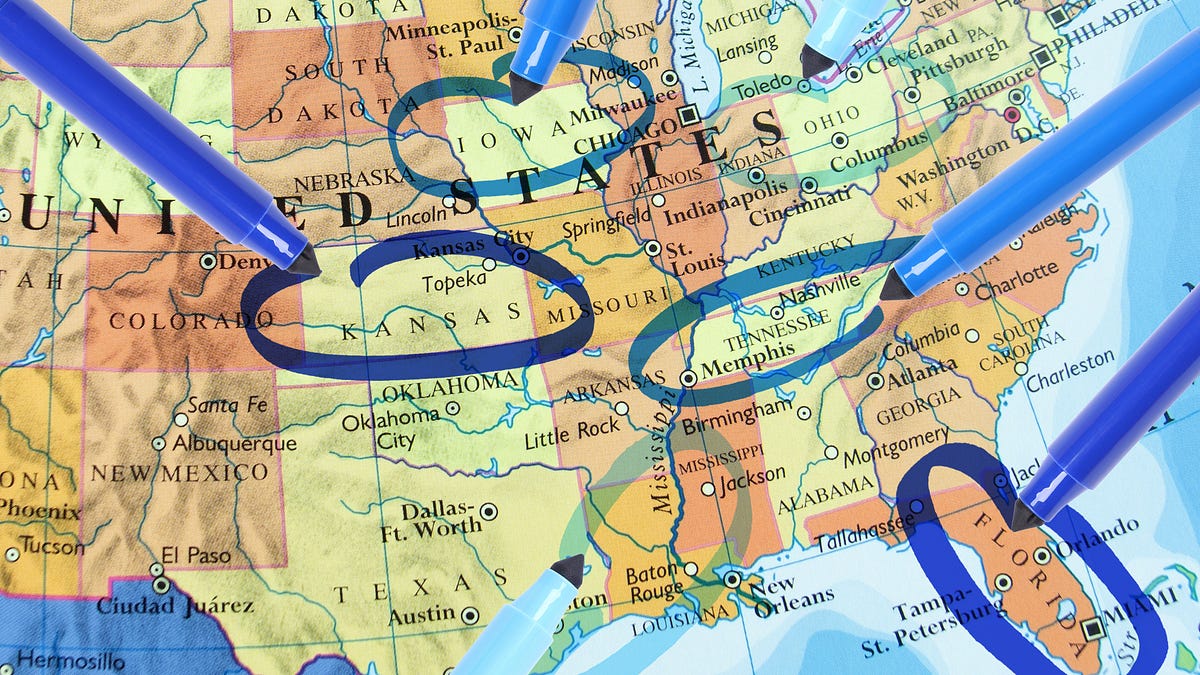
IN THE WEEK SINCE THE MIDTERM ELECTIONS, one of the Democratic party’s major takeaways has been that the electoral map has shifted.
asserted
map → shift → takeaways
States the party once viewed as too red are now places where Democrats want to consistently compete.
asserted
Democrats → view → ?
North Carolina Rep. Don Davis and Kansas Rep. Sharice Davids are being floated as potential Senate candidates to take on Republican incumbents next cycle.
asserted
Davis → float → incumbents
After narrowly losing the Senate race in Louisiana, Jamie Davis said he will either run for governor next year or try again for Senate in 2028.
asserted
he → lose → 2028
And Brandon Presley told me he isn’t ruling out another run for Mississippi governor.
asserted
he → tell → governor
But to take advantage of what could be a historic electoral realignment, Democrats need more resources.
uncertain
Democrats → take → resources
Because while a wave election can lift candidates, and even weak local parties, Democrats can’t always rely on favorable political environments.
asserted
Democrats → lift → environments
And that’s where much of the optimism from the midterms may come crashing down.
uncertain
much → ’ → midterms
Party officials and strategists I spoke with told me that many of the state parties in these new battlegrounds are currently not in a position to build on those gains.
asserted
many → speak → gains
They have atrophied over the past few decades and lack the infrastructure to do long-term party building.
asserted
They → atrophy → building
“I worry that, in the wake of the success we had last week, we will not lean in,” Georgia Sen. Raphael Warnock told me, adding that too often the national party doesn’t get involved until the final months of an election.
asserted
party → worry → election
“We’re not doing nearly enough in the time between the elections.”
asserted
We → do → elections
Dan Kanninen, the battleground director of the Biden-turned-Harris presidential campaign, also cautioned that if Democrats are serious about putting states like Texas and South Carolina and Iowa in play in the 2028 presidential election, they must start investing now.
asserted
they → turn → election
“The next eighteen months will define the map,” Kanninen told me.
asserted
Kanninen → define → me
“Party builders have a tough challenge of finding the resources to put into these places so we can actually take advantage of what’s before us.
asserted
what → have → us
And that means building out infrastructure in places like Mississippi and Alabama.”
asserted
that → mean → Mississippi
Democrats have long stressed the need for continuous investment in state party infrastructure.
asserted
Democrats → stress → infrastructure
When Ken Martin took over as chair of the Democratic National Committee last year, he made funding state parties a top priority.
asserted
funding → take → parties
Despite pushback from some members of the party who thought there were better uses of the DNC’s resources, Martin launched a fifty-state program, giving $1 million a month to state parties and increasing transfers to parties in red states by 50 percent and in blue states by 30 percent.
asserted
Martin → think → percent
But operatives I spoke with said much more is needed.
asserted
more → speak → ?
And while everyone I spoke with said Martin’s chairmanship is safe after such big wins last week, there’s lingering concern about his ability to raise the money to fund those types of investments.
asserted
chairmanship → speak → investments
While the DNC’s cash flow improved in the weeks before the midterms, it still has debt to pay off.
asserted
it → improve → debt
The committee informed staff last week that it would be laying off personnel, according to two people familiar with the situation.
uncertain
it → inform → situation
While some operatives noted that personnel changes were standard practice across national party committees following midterm elections, others characterized the layoffs as yet another sign of the DNC’s financial struggles.
asserted
others → note → struggles
Martin’s uneven fundraising track record has been well documented.
asserted
record → document → ?
But he’s far from the only party official who has struggled to convince donors to make long-term investments in red states.
asserted
who → ’ → states
When Warnock told a roomful of donors in April that they ought to spend money on the Mississippi Senate race, he was laughed at.
asserted
he → tell → race
Mississippi is a blue state that just needs to be organized, and that same commitment needs to be seen in Louisiana, in South Carolina, in North Carolina, even in a place like Alabama,” Warnock told me.
asserted
Warnock → need → me
As Democrats prepare for a competitive 2028 presidential primary when millions of dollars will be spent at the state level, some party operatives are beginning to think through how they can harness that energy into infrastructure-building.
asserted
they → prepare → building
Jaime Harrison, the former DNC chair who ran for Senate in 2020 against Lindsey Graham, told me that he and other South Carolina party leaders have discussed how they can leverage their first-in-the-nation primary slot to get presidential candidates to invest in the local party, particularly as Democrats work to defend Representative-elect Nancy Lacore’s congressional seat and potentially challenge Sen. Tim Scott in 2028.
asserted
Democrats → run → 2028
“We have to insist upon these candidates not just coming down here for their benefit, but to come down here to benefit the Democratic party.
asserted
candidates → have → party
Help us in terms of voter registration, help us in terms of recruitment, help us in terms of building an organization that can be the foundation on how we compete,” said Harrison.
asserted
Harrison → help → organization
Jane Kleeb, president of the Association of State Democratic Committees, has also stressed that 2028 Democratic presidential campaigns have a role to play in building up state parties.
asserted
campaigns → stress → parties
She floated a primary pledge that would ask candidates seeking the nomination to “commit to a 57-state party strategy,1 refuse to build duplicative organizing infrastructure, and keep the Democratic voter file where it belongs—with the state parties.”
asserted
it → float → parties
Some party operatives privately considered establishing a new fundraising organization that would raise money to funnel to state parties, essentially serving as a landing pad for big donors who still lack faith in Martin’s leadership at the DNC.
asserted
who → consider → DNC
But they abandoned the idea because they worried that decentralizing party infrastructure would not work.
asserted
decentralizing → abandon → infrastructure
In fact, it is the lack of a more centralized Democratic party in red states that is currently the challenge that Democrats face.
asserted
Democrats → face → that
As state parties have withered over the years, a web of nonprofits and donor alliance groups has emerged to fill the vacuum.
asserted
web → wither → vacuum
These groups often run voter-registration programs, canvassing operations, and get-out-the-vote efforts—work once done by the party.
asserted
groups → run → party
If you’ve been following this newsletter for a while, you already know how intensively we covered the Democrats during this critical midterm year.
asserted
we → follow → year
…and 30 more, not listed.
 The Aporia