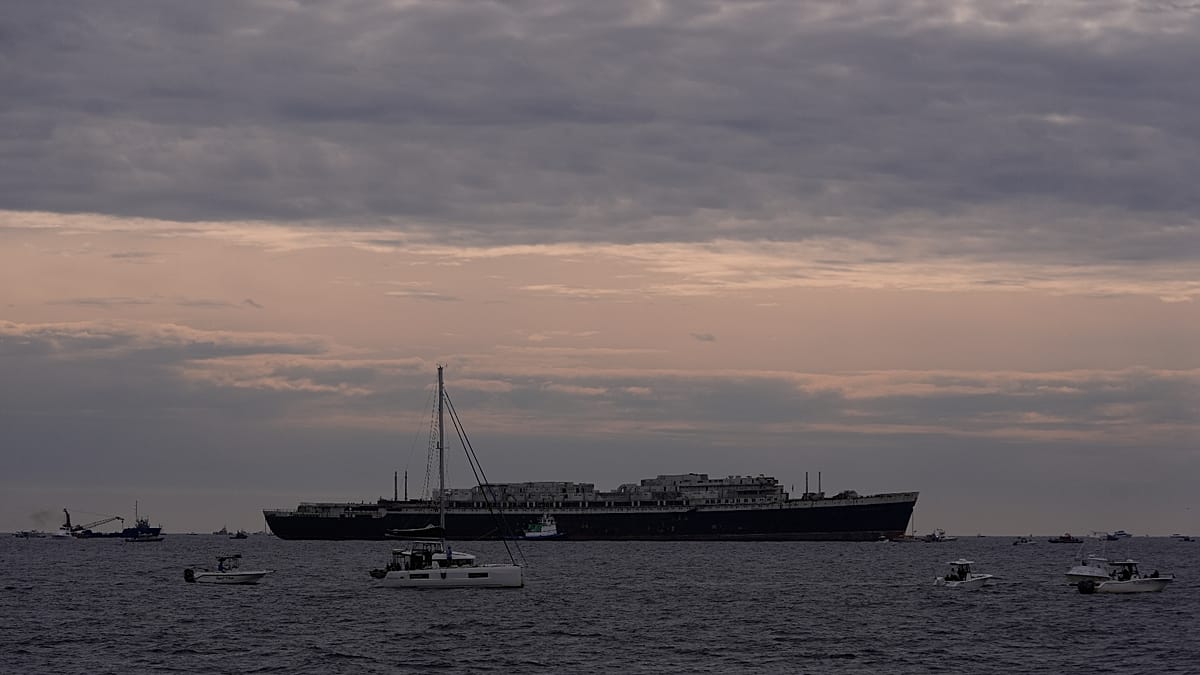
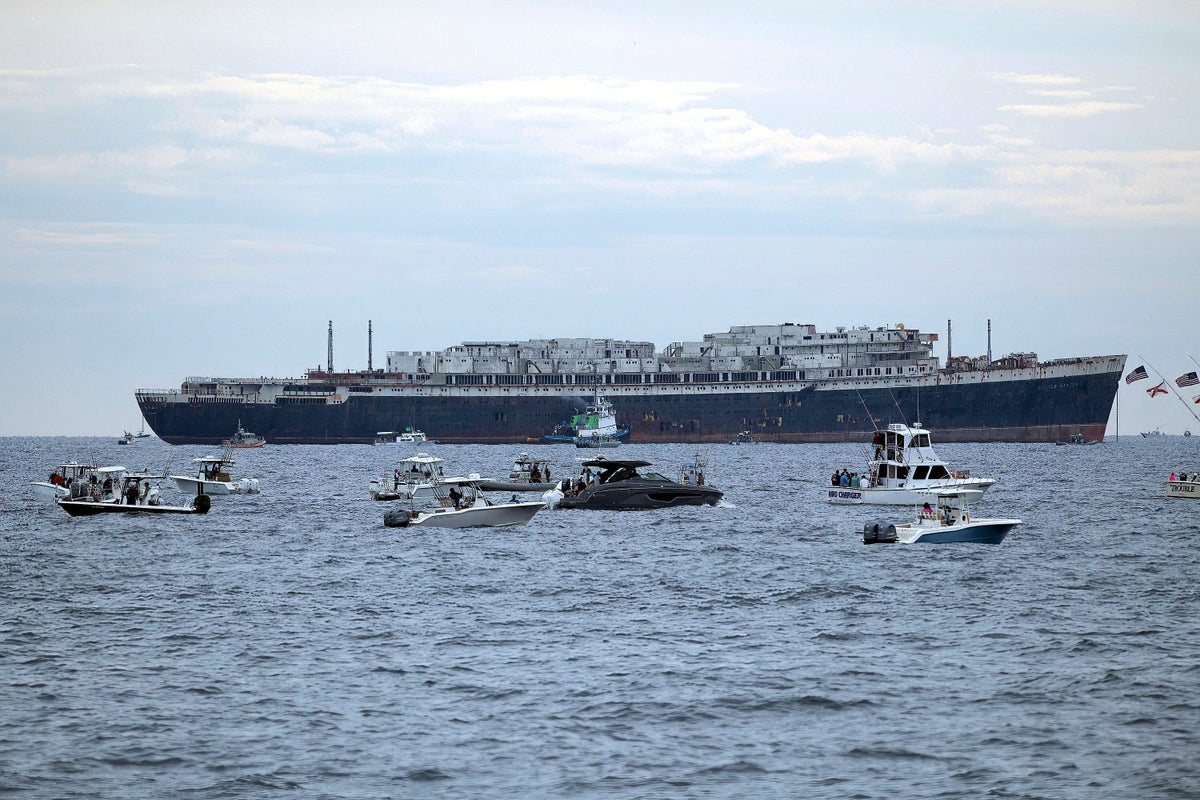
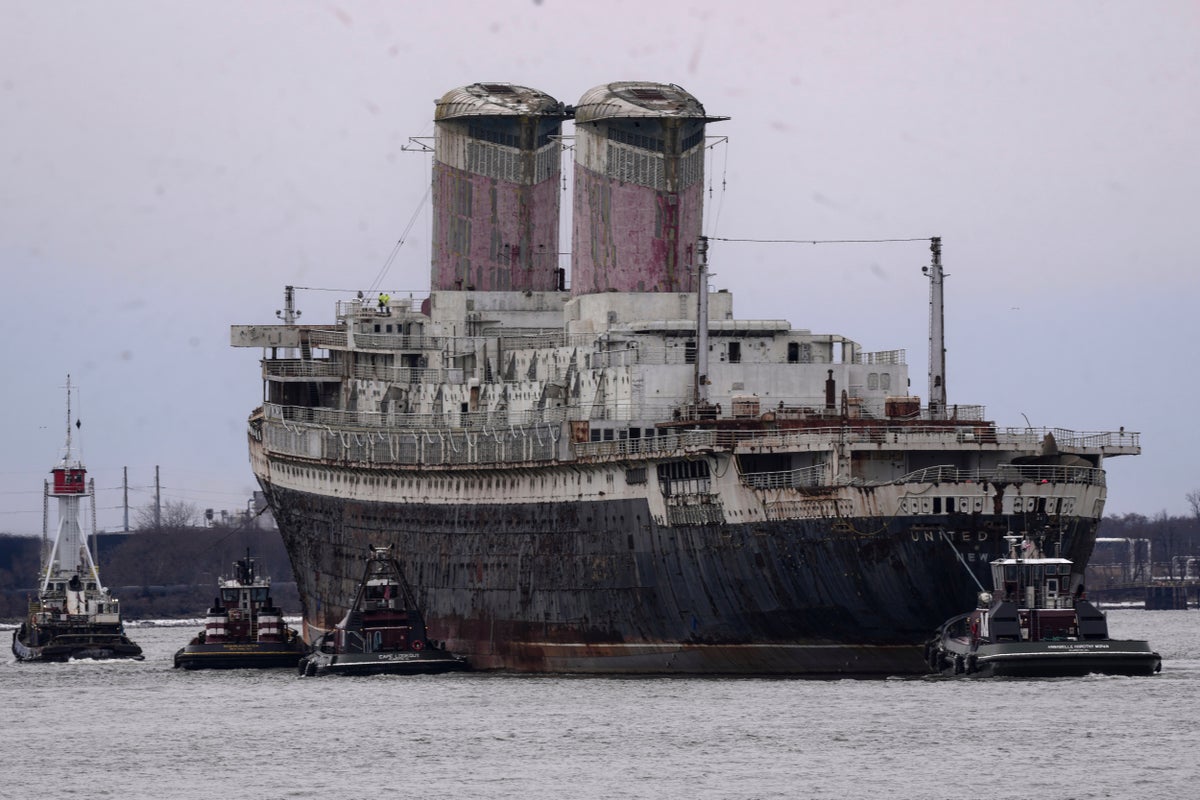
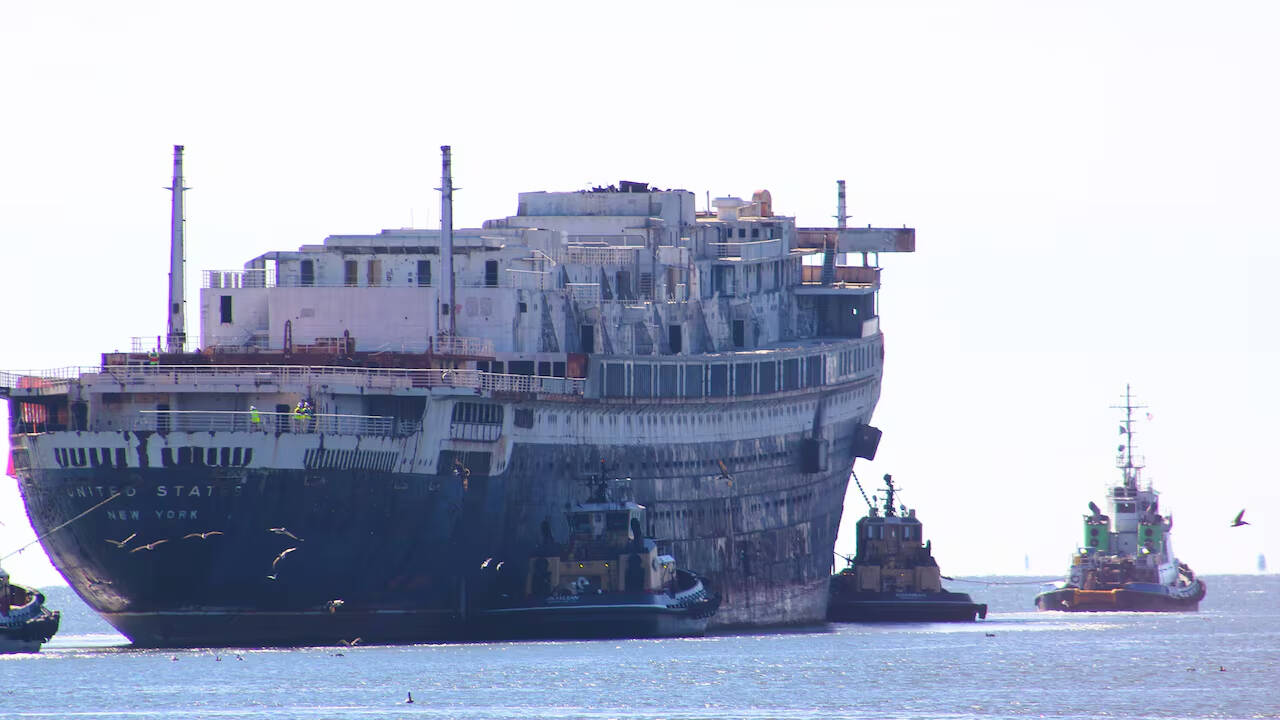
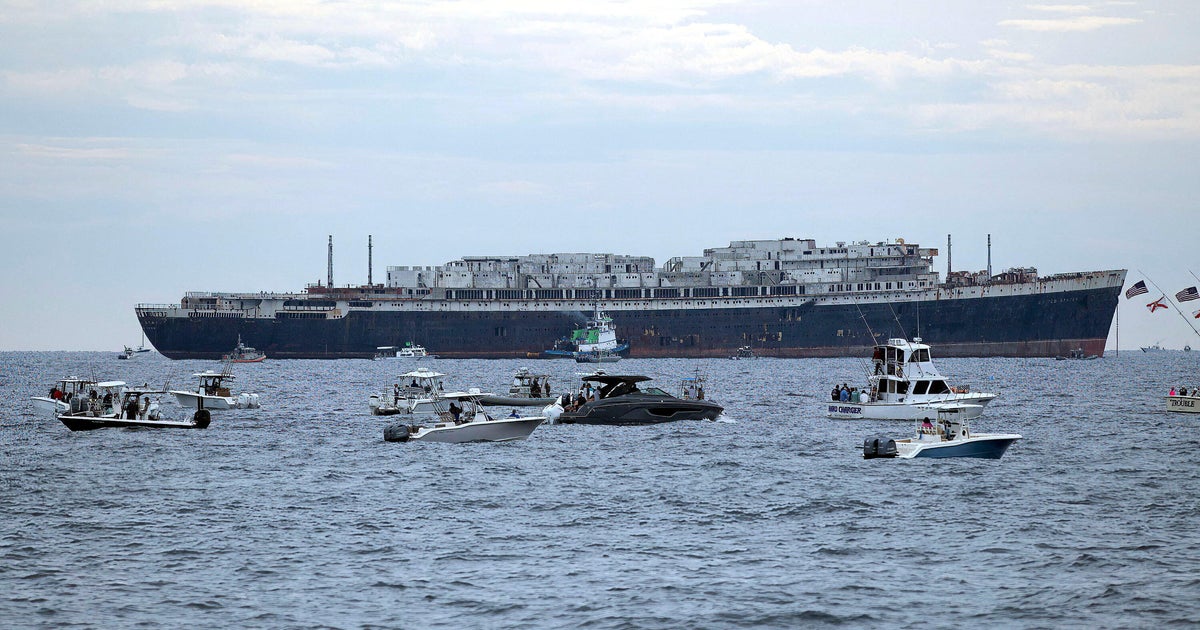
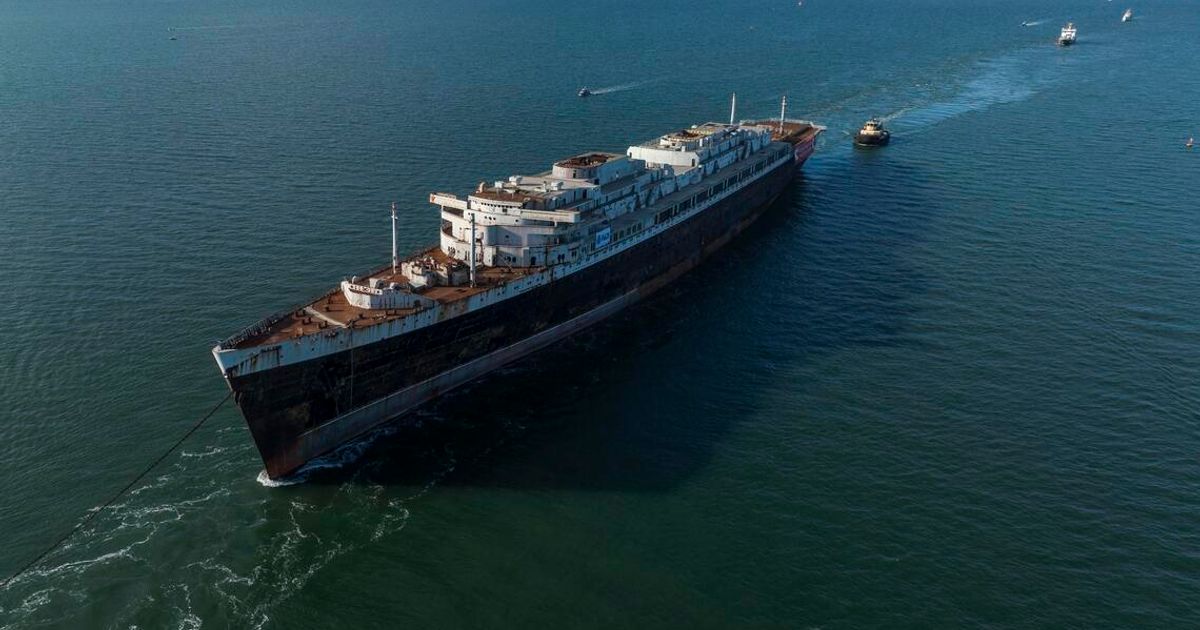
Photo via The Independent

The SS United States has been sunk. Here’s how life will take over the world’s largest artificial reef

Read the original at The Independent ↗
Cite

Ray, N. (2026, November 13). The SS United States has been sunk. Here’s how life will take over the world’s largest artificial reef. The Independent. https://www.independent.co.uk/news/world/americas/ss-united-states-sinking-artificial-reef-wreck-b3084432.html

Dated from the outlet's own feed. Check the original for its byline.

The Independent · collected 2026-11-13 · by Nicholas Ray

Quick Summary

This first-person account by a marine ecologist explores the ecological transformation of the SS United States, which was recently sunk off the coast of Florida to become the world's largest artificial reef. The 302-metre luxury liner will rest in approximately 55 metres of water, creating a diverse habitat that eclipses the size of the nearby USS Oriskany. The author details a projected ecological succession pattern where microscopic biofilm will form within hours, followed by the colonization of larger invertebrates like barnacles and mussels within months.
Written by AI on 2026-11-13, from this article's own text only (the story summary below draws on all the coverage).
See how they differ ↓

AI analysis

Story summary

The historic SS United States, which was once the world's fastest ocean liner, was intentionally sunk on Wednesday, November 11, 2026, to become the world's largest artificial reef. The nearly 1,000-foot (302m) vessel was moved by a fleet of five tugboats from a quayside in Mobile, Alabama, to a location roughly 25 miles southwest of Destin, Florida. This $13.5 million project aims to create a massive underwater habitat for marine life, such as tuna, marlin, and swordfish, while serving as a major destination for divers and fishing enthusiasts. The ship will rest in approximately 180 feet of water, with its upper sections reaching within about 17 meters of the surface. Before its submersion, a nonprofit conservation group filed a lawsuit to block the sinking due to concerns regarding its environmental impact on the marine food web. To preserve its legacy, plans are underway for a shore-based museum featuring the ship's funnels and items, along with a pier for diving trips. The vessel, which spent nearly 30 years docked in Philadelphia, is expected to be colonized by microscopic organisms, barnacles, and sponges as it transforms into an ecotourism site.

Written for “SS United States sunk” on 2026-11-14, grounded in this article and the 34 other(s) covering the same event.

How they differ

17 outlets covered “SS United States sunk”.

What each outlet says

One AI summary per outlet of its latest article on this story, written from that article alone and checked against it. Open the article for the outlet's own words.

The IndependentThis outlet13 Nov

This first-person account by a marine ecologist explores the ecological transformation of the SS United States, which was recently sunk off the coast of Florida to become the world's largest artificial reef. The 302-metre luxury liner will rest in approximately 55 metres of water, creating a diverse habitat that eclipses the size of the nearby USS Oriskany. The author details a projected ecological succession…

The SS United States has been sunk. Here’s how life will take over the world’s largest artificial reef (this article)6 articles from The Independent on this story
The Guardian12 Nov

The SS United States, once the world's fastest ocean liner, was deliberately sunk off the coast of Florida to create what Okaloosa county calls the "world's largest artificial reef." The sinking process, which took about five hours, placed the ship on the seafloor at a depth of around 180 feet, with the upper decks situated about 55 feet below the surface.

Historic ocean liner sunk off the coast of Florida to become artificial reef – video →4 articles from The Guardian on this story
NPR12 Nov

The SS United States, a retired ocean liner that once held the trans-Atlantic speed record, was intentionally sunk off the coast of Florida to create the world's largest artificial reef. At 1,000 feet long, the ship sank to rest upright on the ocean floor, 180 feet beneath the Gulf of Mexico's surface, providing a new habitat for marine life and divers. The sinking was orchestrated by Okaloosa County, Florida, and…

The SS United States takes its final voyage to the bottom of the Gulf of Mexico →3 articles from NPR on this story
BBC13 Nov

Divers are exploring the SS United States after it was intentionally scuttled off the coast of Florida to create the world's largest artificial ocean reef. The historic liner, which was once the fastest in the world and longer than the Titanic, spent nearly 30 years docked in Philadelphia before its relocation. This report highlights the ship's transformation into an underwater attraction and habitat for sea life…

Watch: Divers explore US ship sunk off Florida coast to create new reef →3 articles from BBC on this story
Show 11 more outlets
Fox News12 Nov

The SS United States was deliberately scuttled at approximately 10 p.m. ET on Wednesday roughly 25 miles southwest of Destin, Florida, to become the world's largest artificial reef. The vessel, which served as a luxury ocean liner and troop carrier from 1952 to 1969, is already open to divers as officials and local experts prepare for the site to become a major tourist and research destination. This report focuses…

Legendary SS United States sinks beneath waves as divers prepare for first look →2 articles from Fox News on this story
Times of India12 Nov

The SS United States, once the fastest passenger ship in the world, was deliberately sunk off Florida's coast to become the world’s largest artificial reef. The $13.5 million project involved flooding the ship with water instead of using explosives due to environmental regulations; it took several hours for the 990-foot vessel to fully submerge in around 180 feet of water, approximately 25 miles southwest of Destin…

From fastest passenger ship to world's largest artificial reef: Historic US ocean liner sinks off Florida →2 articles from Times of India on this story
Toronto Star11 Nov

The S.S. United States, once the world's fastest ocean liner and longer than the Titanic, is scheduled to be sunk off Florida’s coast on Wednesday as an artificial reef in a $13.5 million project aimed at boosting tourism. The ship, known for its historic voyages carrying celebrities like Grace Kelly and President Kennedy, will sink without explosives into about 180 feet of water, creating a diving site and marine…

This ocean liner was the world's fastest. It's being sunk to make the largest artificial reef →
The Straits Times12 Nov

The SS United States, once the world’s fastest ocean liner, was deliberately sunk off the coast of Destin, Florida on November 11 to become an artificial reef. Measuring nearly 305 meters long, the ship underwent a year-long process to remove hazardous materials and cut holes for controlled sinking. Organizers expect it to rest upright at a depth of 55 meters, with its upper deck about 15 meters below water…

Famed ship heads for afterlife as artificial reef in deliberate sinking off Florida →
Daily Mail12 Nov

The historic SS United States, once America's fastest ocean liner built in 1950-1951, began sinking off the coast of Destin-Fort Walton Beach, Florida, on Wednesday. The ship, which had been docked in Philadelphia for nearly three decades, was deliberately flooded with seawater to become the largest artificial reef at a depth of about 60 feet. Officials carved holes in the deck and removed over 400 portholes to…

Historic ship originally slated to become hotel or casino deliberately sunk of Florida coast →
South China Morning Post12 Nov

The SS United States, once the largest American-built passenger ship and the world’s fastest, has been deliberately sunk off the coast of Florida in the Gulf of Mexico to become the world’s largest artificial reef. In a live stream broadcast, viewers watched as the 302-meter-long vessel was towed out to sea by numerous tugboats and recreational vessels for its final voyage, with safety crews present to ensure a…

Famed ocean liner sunk to become world’s biggest artificial reef →
New York Post12 Nov

The historic SS United States, known for being the fastest ocean liner during its service, was deliberately sunk off the coast of Florida on November 9, 2026, as part of a $13.5 million project to create an artificial reef. The process took longer than expected, with the ship remaining visible in the water until around 9 p.m., when it finally sank entirely. This controlled sinking aims to attract divers and fishing…

Historic SS United States sinks after hours-long goodbye off Florida’s coast →
Euronews12 Nov

On November 11, the SS United States, a former record-breaking ocean liner, was deliberately sunk in the Gulf of Mexico off Florida's coast as part of a $13.5 million project to create an artificial reef. The process took several hours longer than anticipated; crews filled 128 tanks with water to ensure even sinking, and by 9 pm, the ship had tilted and fully submerged.

Moment historic SS United States sinks off Florida’s coast →
Washington Examiner12 Nov

The SS United States, the fastest ocean liner in transatlantic history, was deliberately sunk off the coast of Destin, Florida, on Wednesday. The process, which began at 5 p.m. Eastern time when water was allowed into the vessel, lasted until 10 p.m., when the ship reached the ocean floor and became the world’s largest artificial reef. The article describes the ship as a symbol of American engineering ingenuity…

Farewell to the SS United States, a nautical and engineering marvel of our nation →
The Daily Wire12 Nov

The SS United States, a historic American ocean liner, was deliberately sunk off the coast of Destin, Florida, on Wednesday night to become a diving attraction. The ship, which set transatlantic speed records in 1952 and served as a symbol of American postwar ambition, was scuttled roughly 22 nautical miles southwest of Destin and now rests upright about 180 feet below the surface. Okaloosa County tourism officials…

Legendary American Ocean Liner Sunk Off Florida To Become Diving Destination →
Al Jazeera13 Nov

The SS United States, a nearly 1,000-foot ocean liner and former transatlantic speed record holder, was scuttled on Wednesday in the Gulf of Mexico off the coast of Destin, Florida. After Florida’s Okaloosa County purchased the vessel for $1 million in 2024, the ship underwent a yearlong preparation process to be converted into the world's largest artificial reef. The article frames the sinking as a deliberate…

From ocean legend to undersea reef: Why has the SS United States been sunk? →

Where they agree and split

Agreed

Reported by outlets on both sides of the middle

In preparation for the sinking, organizers removed the 65-foot smokestacks and plan to have them anchor a new museum that celebrates the ship.

5 outlets
Show 3 more

Workers also have cut 10-foot by 10-foot holes in the decks, and more than 400 portholes have been removed.

5 outlets

Once aboard, passengers were treated to dinners that included caviar, roast duckling, smoked ox tongue and Calf’s Head en Tortue.

4 outlets

“She really embodies and expresses this country’s best,” said Susan Gibbs, the granddaughter of the ship’s designer.

4 outlets

Framing

How the first headlines put it

Stated as fact1
An achievement1
The headlines (2)

Legendary ocean liner bigger than Titanic to be deliberately sunk off Florida within days The Independent · stated as fact

SS United States, a historic ship will be sunk to create an artificial reef NPR · an achievement

The full story: what happened, how it changed, and all 35 articles →

Compared with similar articles

This article reads unscored and hedges 9% of its claims. Each row says how that neighbour differs.
Euronews
Hedges 0 of 5 claims Outlet record 60/100
The Independent
Hedges 0 of 3 claims Outlet record 59/100
NPR
Hedges 5 of 37 claims Outlet record 60/100
The Independent
Hedges 0 of 25 claims Outlet record 59/100
The Independent
Hedges 0 of 25 claims Outlet record 59/100
The Independent
Hedges 2 of 30 claims Outlet record 59/100
Times of India
Hedges 6 of 32 claims Outlet record 59/100
BBC News
Hedges 0 of 13 claims Outlet record 66/100
CBS News
Hedges 0 of 15 claims Outlet record 68/100
The Straits Times
Hedges 2 of 16 claims Outlet record 64/100

Story

SS United States sunk
Environment · 35 article(s) covering the same event. Compare every outlet's account →
How this article was measured signals, leaning charts, publisher record, byline, topics and claims

Signals How these are calculated →

Claims extracted
43
sentences that state something as happening or true
Uncertain
9%
4 of 43 hedged ("reportedly", "may", "according to")
Leaning
not political
takes no side on a contested political question
Publisher signals
59/100
The Independent's corrections and hedging, across everything collected from it. Not a measure of accuracy.
Outlets on this story
35
Environment
Same framing elsewhere
1
articles that frame the event the way this one does
Analyzed 2026-11-13 · how these are computed

How this is being covered How these are calculated →

Article leaning vs. publisher reliability
Source leaning vs. consistency

Publisher

The Independent · 4342 article(s) · 10 correction(s) detected
Running correction rate · 10 correction(s)

Who wrote this

Nicholas Ray
1 article(s) here · 1 carrying a prediction
It will rest in around 55 metres of water, with its upper sections rising to within about 17 metres of the surface.
The only article under this byline in the corpus.

Topics

Blue Riband Florida Okaloosa County Titanic the SS United States

Subjects

Florida GPE · 2× Okaloosa County GPE · 1×

Narrative

The SS United States was built as a luxury ocean liner, and its maiden voyage in 1952 captured the coveted Blue Riband by crossing the Atlantic in only three days and ten hours – a passenger liner record that remains unbroken.
framing: assertive · carried by 1 article(s) · first seen 2026-11-13
It will rest in around 55 metres of water, with its upper sections rising to within about 17 metres of the surface.

Claims (43 extracted, 4 hedged)

As a marine ecologist and keen scuba diver, I’ve long been fascinated by what happens when a large structure is introduced to the sea. asserted
structure → fascinate → sea
Within hours, microscopic organisms begin colonising its surfaces, forming a thin biological layer. asserted
organisms → begin → layer
Over the following months and years, barnacles, mussels, sponges and other marine life become established, creating a new habitat that attracts fish and a diverse range of species. asserted
that → follow → species
This week, one of the world’s most famous ocean liners, the SS United States, was sunk off the coast of Florida. asserted
one → sink → Florida
At 302 metres long, it has become the world’s largest artificial reef. asserted
it → become → metres
It is a very exciting prospect to one day dive on such a giant, and to see how it changes as marine life makes it home. asserted
it → dive → giant
The SS United States was built as a luxury ocean liner, and its maiden voyage in 1952 captured the coveted Blue Riband by crossing the Atlantic in only three days and ten hours – a passenger liner record that remains unbroken. asserted
that → build → record
As the years went by, commercial jetliners superseded transatlantic sea travel, and the vessel was retired and neglected for decades. asserted
vessel → go → decades
Rather than facing the ignominy of a breaker’s yard, the legendary ship was bought by Okaloosa County, Florida, to turn it into a diving attraction. asserted
ship → face → attraction
The SS United States is a particularly enormous structure to introduce to the seabed – longer even than the Titanic. asserted
States → introduce → Titanic
It will rest in around 55 metres of water, with its upper sections rising to within about 17 metres of the surface. asserted
sections → rest → surface
This will create habitats at different depths, making it an unusually varied site for both wildlife and divers of different abilities. asserted
it → create → abilities
It will also eclipse the nearby 275-metre aircraft carrier USS Oriskany, deliberately sunk in 2006, to become the largest artificial reef on Earth. asserted
It → eclipse → Earth
So what do we expect to happen? asserted
we → expect → what
Here’s a suggested ecological succession pattern, month-by-month. uncertain
pattern → ’ → month
First, microorganisms arrive The first organisms to colonise the SS United States will be almost invisible. asserted
organisms → arrive → States
Within hours of immersion, marine bacteria and microalgae will begin attaching themselves to its cleaned metal surfaces, forming a thin layer of “biofilm”. asserted
bacteria → begin → biofilm
As the biofilm develops, it releases chemical cues that help drifting larvae recognise the surface as a suitable place to settle. asserted
larvae → develop → place
Carried by Gulf currents, these tiny organisms begin attaching themselves to the structure. asserted
organisms → carry → structure
By the end of the first three months, a variety of small animals and algae will have established themselves on the hull, beginning the transformation of bare metal into a living reef. asserted
variety → establish → reef
Then the ship becomes covered in marine life As the biofilm matures, larger organisms arrive to feed on it. asserted
organisms → cover → it
These include more mobile invertebrates like sea urchins and porcelain crabs, and filter-feeders like oysters and mussels which attach themselves to vertical walls where the currents tend to send the most nutrients their way. asserted
currents → include → nutrients
Fish and larger predators move in By the end of the first year, hard corals will begin to establish themselves permanently. asserted
corals → move → themselves
The transformation will still be in its early stages, but over the next five to ten years the hull will become increasingly encrusted with corals, sponges and other marine life. asserted
hull → become → corals
At some point, casual divers will no longer see a ship covered in coral, but a coral-covered reef that happens to contain a ship. asserted
that → see → ship
As the reef develops, fish will be attracted by the shelter and the growing supply of food. asserted
fish → develop → food
Smaller fish will begin to find refuge to evade open-water predators. asserted
fish → begin → predators
Snappers and groupers are among the medium-sized reef fish that will begin to take up permanent residency around the wreck, using the long internal corridors for protection. asserted
that → begin → protection
Larger predators, including barracuda, king mackerel and sharks, could also patrol its decks and upper sections. uncertain
predators → include → decks
The ship’s enormous size and varied structure will offer a range of habitats, from sheltered spaces for smaller fish to exposed areas where larger, free-swimming species can hunt. asserted
species → offer → areas
Over time, these interactions could create a complex food web, turning the wreck into a significant biological hotspot. uncertain
interactions → create → hotspot
A common misconception is that artificial reefs simply concentrate fish that were already present, leaving surrounding waters poorer. asserted
that → concentrate → waters
In reality, while some fish are attracted from elsewhere, a large reef structure also creates vast amounts of new habitat and food. asserted
structure → attract → habitat
As corals, sponges, barnacles and other reef builders colonise the wreck, they create food and shelter that did not previously exist, allowing the ecosystem to support more life overall. asserted
ecosystem → colonise → life
The result is generally not an underwater crowd gathered around a ship, but a gradual increase in the total amount of marine life the area can support. asserted
area → gather → life
Another widespread misconception is that marine scientists “seed” artificial reefs with organisms or their larvae. asserted
scientists → seed → organisms
In reality, colonisation happens naturally: the Gulf of Mexico already harbours an abundant pool of drifting larvae and migratory fish. asserted
Gulf → happen → larvae
Artificially introducing marine life is unnecessary and risks introducing non-native species or pathogens. asserted
introducing → introduce → species
Instead, human engineering is largely about preparing the ship for sinking. asserted
engineering → prepare → sinking
This includes removing hazards such as oil, asbestos and loose wires, and sealing off parts of the vessel to prevent divers getting disorientated or lost in silt-outs deep in the hull. asserted
divers → include → hull
…and 3 more, not listed.
Give feedback · no sign-in needed

No sign-in needed for now. Your note is sent without a name, so it cannot be answered.

History Support