The super El Niño is officially here, NOAA's Climate Prediction Center announced Thursday.
asserted
Center → announce → ?
Water temperatures in the Pacific Ocean reached the threshold needed for the designation, rising to at least 0.5 of a degree Celsius (0.9 of a degree Fahrenheit) above average for three consecutive months.
asserted
temperatures → reach → months
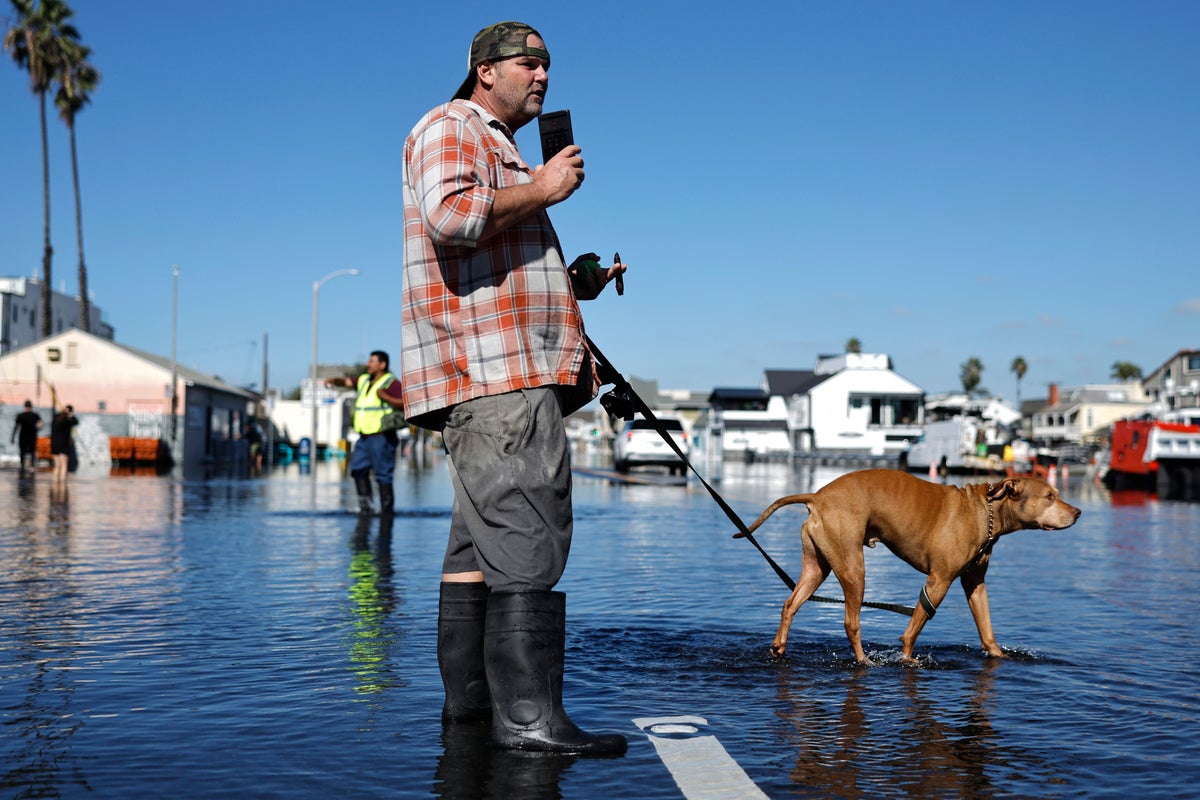
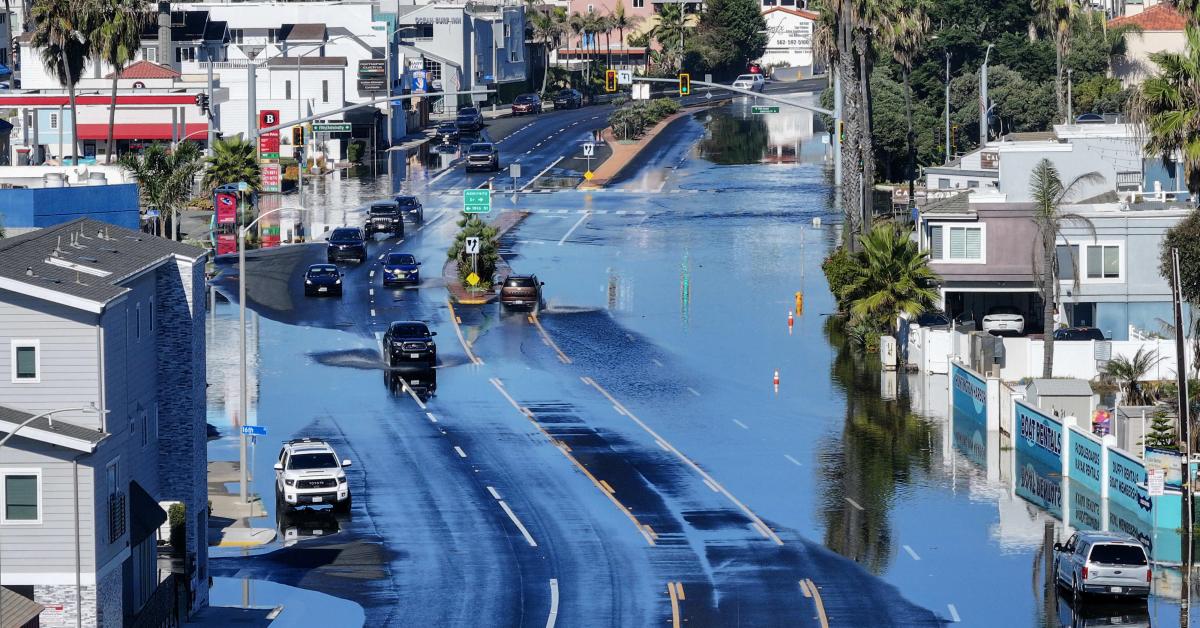
The natural climate pattern has been in effect since late spring, leading to historic flooding in the southern U.S. and impacting massive ocean swells along coastlines.
asserted
pattern → lead → coastlines
But the U.S. hasn’t seen the worst of its impacts yet, with more coming through the spring.
asserted
more → see → spring
“El Niño continues to strengthen, with a strong-to-very strong El Niño likely through January-March 2027,” NOAA said.
asserted
NOAA → continue → January
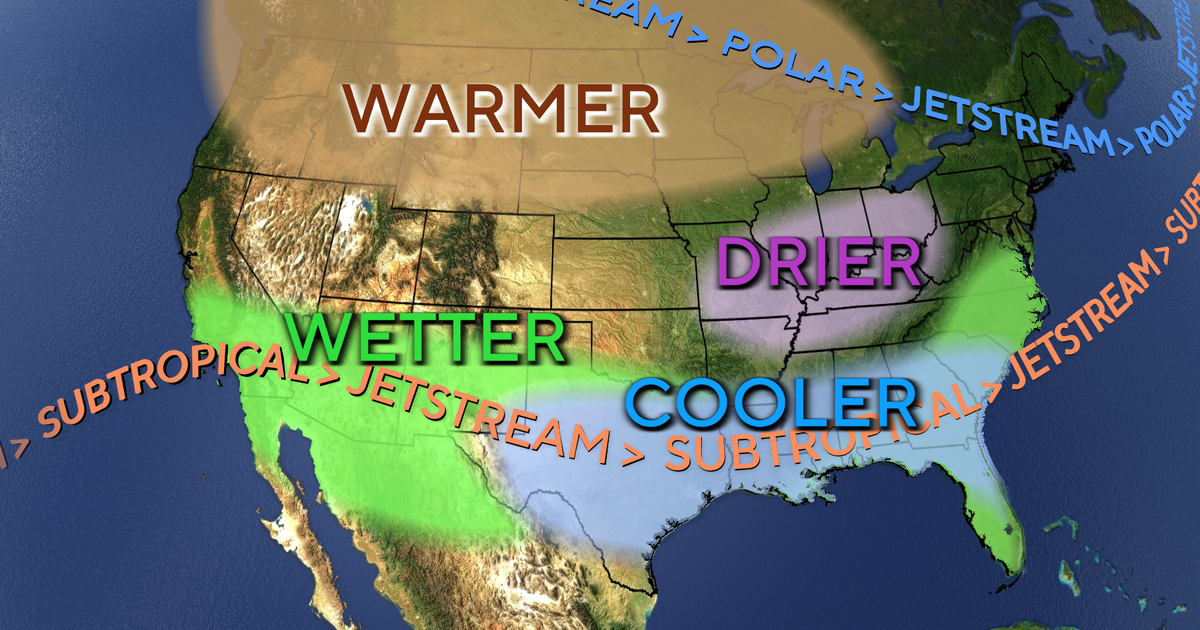
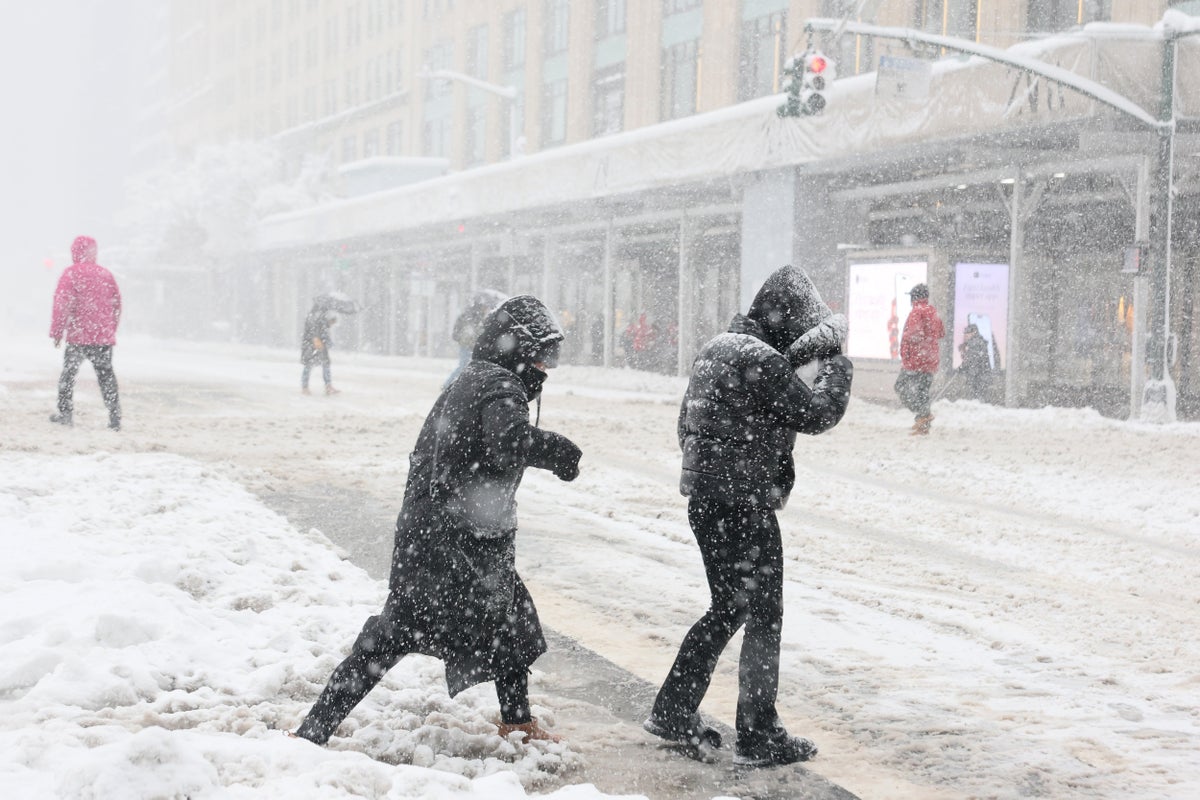
This weekend, Americans from coast to coast are facing wet weather.
asserted
Americans → face → weather
A Pacific storm is expected to dump more rain on the West as a nor’easter affected by the subtropical jet stream continues to hammer the Northeast.
asserted
nor’easter → expect → Northeast
El Niño makes conditions for major storms - including nor’easters - more likely and increased storm activity is anticipated early next year, FOX Weather says.
asserted
Weather → make → nor’easters
“This El Niño winter may feature more than twice the normal amount of strong East Coast storms, with 19 forecast compared to a normal of nine by ECMWF,” Ben Knoll, a meteorologist, said Thursday on social media.
uncertain
Knoll → feature → media
The El Niño is a climate pattern that occurs when east-to-west trade winds weaken over the Pacific, allowing warm water to shift eastward.
asserted
water → occur → Pacific
That shift is what fuels more storms and clouds over the region that can cause ripple effects through the global atmosphere.
asserted
that → fuel → atmosphere
These events occur every two to seven years, and there are four different strength levels, ranging from “weak” to “very strong.”
asserted
events → occur → ?
This year’s El Niño is expected to be among the strongest ever, due to heat in the ocean fueled by human-caused climate change.
asserted
Niño → expect → change
“What is different now is that they arrive on top of an ocean that is already warmer than it used to be, so the same event pushes temperatures and sea level higher than it would have in the past,” Kristen Davis, an associate professor at Stanford University, explained in October.
asserted
Davis → arrive → October
The last time the El Niño was this strong was in 1877, when a global famine killed more than 50 million people.
asserted
famine → kill → people
What’s been happening?
asserted
What → happen → ?
Americans are already seeing the impacts of this El Niño throughout the nation.
asserted
Americans → see → nation
Sea surface temperatures along the California coast are 8 to 10 degrees Fahrenheit higher than average, ”shattering records,” according to climatologist Daniel Swain.
uncertain
temperatures → shatter → Swain
The high Pacific temperatures have resulted in boosted sea levels and energy waves, bringing massive coastal flooding to the Golden State weeks ahead of this month’s high “king” tides.
asserted
temperatures → result → tides
Warm waters are also shifting what happens below the surface, too, shifting populations of marine life hundreds of miles beyond their normal range.
asserted
what → shift → range
While that’s been great for scientists and ocean-lovers to see, it’s also resulted in the starving deaths of thousands of seabirds that are no longer able to reach their food.
asserted
that → see → food
In the southern U.S., El Niño has also contributed to deadly flooding rains.
asserted
Niño → contribute → rains
In Arizona, 73-year-old Williams Singavarapu, was found dead this month after he fell into floodwaters that entered a drainage tunnel, according to FOX 10 in Phoenix.
uncertain
that → find → Phoenix
Another man, 63-year-old Benny Sutton, Jr., was also killed after his truck was swept away by floodwaters last week, the Yavapai County Sheriff’s Office said.
asserted
Office → kill → floodwaters
Following the worst spring drought on record in the U.S., water levels in Lake Powell - the country’s second-largest reservoir - rose 20 feet after reaching a record low.
asserted
levels → follow → low
“That’s somewhat of an unexpected boost from Mother Nature,” Martin Hoerling, a climate scientist and hydrologist at the University of Colorado, Boulder, told The Associated Press.
Though Lake Powell is still 13 feet lower than the same time last year, Swain wrote.
asserted
Swain → ’ → time
 The Aporia