Photo via TIME

What An Early Polar Vortex Combined With El Niño Means For Winter Weather

Read the original at TIME ↗
Cite

Shah, S. (2026, November 13). What An Early Polar Vortex Combined With El Niño Means For Winter Weather. TIME. https://time.com/article/2026/11/13/early-polar-vortex-el-nino-winter/

Dated from the outlet's own feed. Check the original for its byline.

TIME · collected 2026-11-13 · by Simmone Shah

Quick Summary

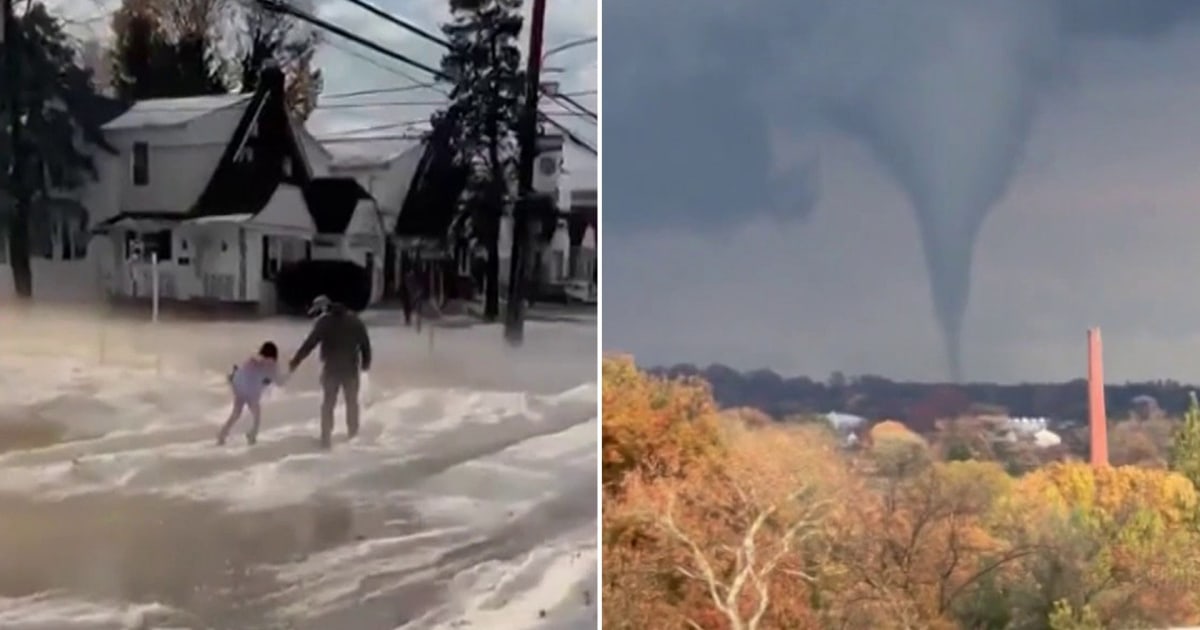
Meteorologists have observed a record-early breakdown of the polar vortex, a low-pressure band of air that typically stays centered over the North Pole but can displace cold air southward during sudden stratospheric warming events. While this disruption is expected to bring cold temperatures to the United States by the end of the month, experts note that its long-term impact remains uncertain due to its interaction with a projected "super El Niño" this winter. The article analyzes how these two rare atmospheric phenomena may compete or reinforce each other, noting that while a weak vortex can trigger immediate snow and ice storms, El Niño typically trends toward milder temperatures.
Written by AI on 2026-11-13, from this article's own text only (the story summary below draws on all the coverage).

Compared with similar articles

This article reads unscored and hedges 15% of its claims. Each row says how that neighbour differs.
NBC News
Hedges 0 of 2 claims Outlet record 77/100
“The articles describe different weather phenomena: the polar vortex and El Niño versus a nor'easter with heavy rain and snow.”
Global News
Hedges 5 of 19 claims Outlet record 63/100
“While both articles discuss the early splitting of the polar vortex and its potential impact on winter weather, they focus on different regions (Canada and the United States) and do not describe the same specific occurrence.”

Story

What An Early Polar Vortex Combined With El Niño Means
Other · 1 article(s) covering the same event.
How this article was measured signals, leaning charts, publisher record, byline, topics and claims

Signals How these are calculated →

Claims extracted
26
sentences that state something as happening or true
Uncertain
15%
4 of 26 hedged ("reportedly", "may", "according to")
Leaning
not political
takes no side on a contested political question
Publisher signals
60/100
TIME's corrections and hedging, across everything collected from it. Not a measure of accuracy.
Outlets on this story
1
Other
Same framing elsewhere
1
articles that frame the event the way this one does
Analyzed 2026-11-13 · how these are computed

How this is being covered How these are calculated →

Article leaning vs. publisher reliability
Source leaning vs. consistency

Publisher

TIME · 966 article(s) · 2 correction(s) detected
Running correction rate · 2 correction(s)

Who wrote this

Simmone Shah
16 article(s) here · 1 carrying a prediction
A record-early breakdown of the polar vortex is expected to bring cold weather to the United States by the end of the month.
Yet on the other side of the transition, he noted, are people like Bennie, a supervisor at one of South Africa's oldest coal-fired power stations who might soon see the place he has worked at for much of his career sunset.
Two of the world’s three biggest emitters are expected to see a drop in emissions.
2026-11-10 · assertive framing · Fossil Fuel Emissions Are Expected to Decrease in 2026
Following two years of anti-climate legislation from Washington, Tuesday’s blue tidal wave—giving Democrats control of both the Senate and the House—could provide an opportunity to change course.
When confronted with a rotting, deflating carved pumpkin, your first instinct might be to beeline to the trash as quickly as possible.
With Democrats being significantly more likely to view climate action as a priority, many in the climate movement are hopeful that if the Democrats take back some leadership in Congress, as it could prove essential in helping to prevent further rollbacks.
Combined, all of the world’s private jets emit more in 2 seconds than someone in the world’s poorest 50%, those annually making an average of $1,500, would emit in a year.
Doing so would provide a greater chance at avoiding the worst impacts of climate change.
The researchers warn that the rate of global warming appears to have accelerated, from about 0.05°C per decade between 1880 and 1970 to roughly 0.36°C per decade between 2010 and 2024—and the 2°C threshold meant to limit planetary damage could be reached before 2050 they warn.
Currently a strong Category 2 hurricane, Isaias could reach Category 3 before making landfall sometime in the next two days.
Also by Simmone Shah
Nothing else under this byline is closely related to this article, so these are simply their most recent.
All 16 articles by Simmone Shah →

Topics

El Niño MIT U.S. the United States the University of Reading

Subjects

Cohen PERSON · 4× Andrew Charlton-Perez PERSON · 1× Charlton-Perez ORG · 1× Judah Cohen PERSON · 1× MIT ORG · 1× U.S. GPE · 1× the United States GPE · 1× the University of Reading ORG · 1×

Narrative

“If the polar vortex gets disrupted and weakens, then that cold air tends tends to be released southward into the mid-latitudes, and of course, with more cold air, you can also have an increased chance or risk of snowstorms or ice storms,” says Judah Cohen, a climate scientist at MIT.
framing: assertive · carried by 1 article(s) · first seen 2026-11-13
A record-early breakdown of the polar vortex is expected to bring cold weather to the United States by the end of the month.

Claims (26 extracted, 4 hedged)

A record-early breakdown of the polar vortex is expected to bring cold weather to the United States by the end of the month. asserted
breakdown → expect → month
The expected wobble in the polar vortex that sends Arctic temperatures south, however, could be in competition with the strong El Niño forecast for this winter—but experts say that how it will impact our weather remains to be seen. uncertain
impact → expect → weather
The polar vortex is a low-pressure band of air centered over the North Pole in the stratosphere, where it typically sits close to the pole and rotates cyclonically around the region. asserted
it → center → region
Every few winters, the polar vortex will be disrupted, causing what is known as sudden stratospheric warming, in which temperatures in the stratosphere jump by 50-70 degrees in a few days. asserted
temperatures → disrupt → days
That can displace cold air, pushing it down towards parts of North America, Europe, or Asia. asserted
That → displace → America
A wobbly polar vortex can shape weather in the northern hemisphere—though it typically takes a few weeks for its impact to be felt. asserted
impact → shape → weeks
The breakdown causes cold air that is usually trapped to spill out of the Arctic toward lower latitudes, triggering a cold snap. asserted
that → cause → snap
“If the polar vortex gets disrupted and weakens, then that cold air tends tends to be released southward into the mid-latitudes, and of course, with more cold air, you can also have an increased chance or risk of snowstorms or ice storms,” says Judah Cohen, a climate scientist at MIT. asserted
Cohen → disrupt → MIT
The polar vortex disruption currently being observed by meteorologists is the earliest ever recorded, as it typically weakens during the second half of winter. asserted
it → observe → winter
“Typically we think of this happening toward the end of the winter, in January or February,” says Andrew Charlton-Perez, professor of meteorology at the University of Reading. asserted
Perez → think → Reading
“So what's unusual about this event is that it's the earliest recorded sudden warming event.” asserted
it → record → event
How will the polar vortex interact with El Niño? asserted
vortex → interact → Niño
The polar vortex is expected to bring chilly temperatures to the U.S. by Thanksgiving week. asserted
vortex → expect → week
However, what happens beyond that is still uncertain. asserted
happens → happen → that
A weak polar vortex in November by no means dictates the rest of the winter. asserted
vortex → dictate → winter
“This is not going to determine how our winter is going to be,” says Cohen. asserted
Cohen → go → ?
“It could make it colder right at the start of winter, but I don't think its influence will last much longer than that.” uncertain
influence → make → that
Experts say that it’s too early to say how the so-called “super El Niño” might interact with the polar vortex. uncertain
Niño → say → vortex
“Because these events are so rare, we have perhaps 45 or so of these events that we've ever observed,” says Charlton-Perez. asserted
Perez → have → that
El Niño years typically bring milder temperatures, but much depends on how it interacts with the polar vortex over the rest of the winter. asserted
it → bring → winter
There’s a chance El Niño and the polar vortex work together, which would mean this winter would have mild weather in store. asserted
winter → ’ → store
“If the pole vortex is in a strong circular state [for the rest of winter], then it's going to influence our weather to be mild, and the El Niño influences our weather to be mild, so they're reinforcing each other,” says Cohen. asserted
Cohen → go → other
However, if the El Niño and polar vortex work against each other, what the weather looks like could just depend on which force wins out. uncertain
force → work → what
“If the polar vortex weakens and wobbles and meanders around the northern hemisphere, then the polar vortex is really favoring [colder weather] so then it'll be a battle,” Cohen adds. asserted
Cohen → weaken → weather
Just how it all plays out remains to be seen. asserted
plays → play → ?
“We've never had a polar vortex disruption of this magnitude and a super El Nino,” says Cohen. asserted
Cohen → have → magnitude

Give feedback · no sign-in needed

No sign-in needed for now. Your note is sent without a name, so it cannot be answered.

History Support