It’s Friday, November 13.
asserted
It → ’ → ?
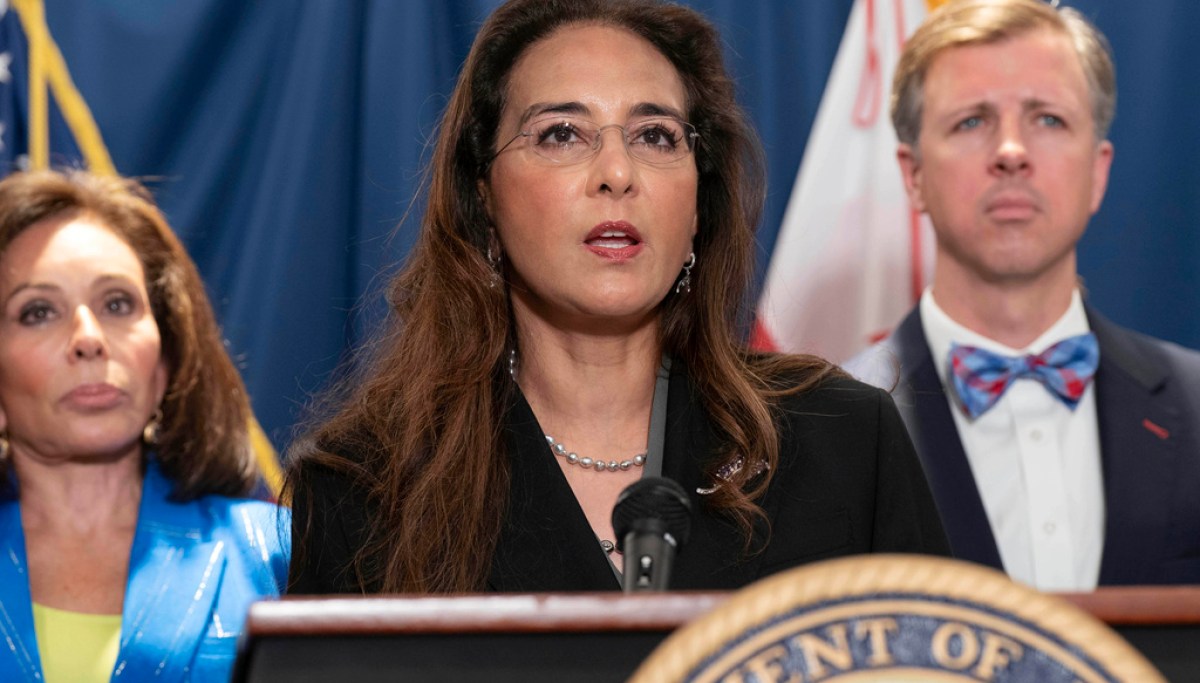
Audrey Fahlberg interviews Harmeet Dhillon on why she quit the Trump administration.
asserted
she → interview → administration
Roy Altman memorializes the federal judge who wasn’t afraid to talk politics outside the courtroom.
asserted
who → memorialize → courtroom
Yuval Levin on how Congress’s new Democratic majority will move both parties to the right.
asserted
majority → move → right
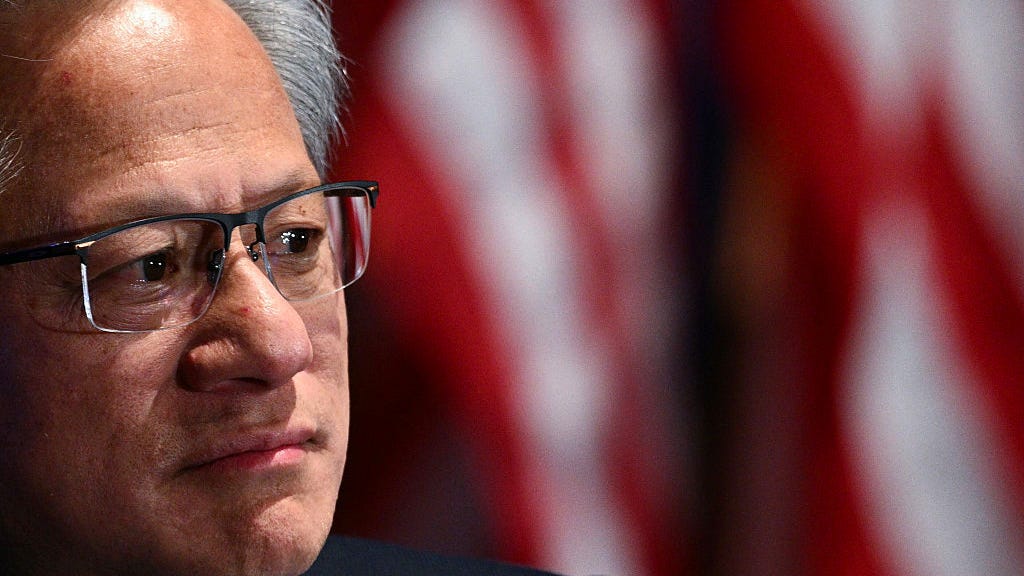
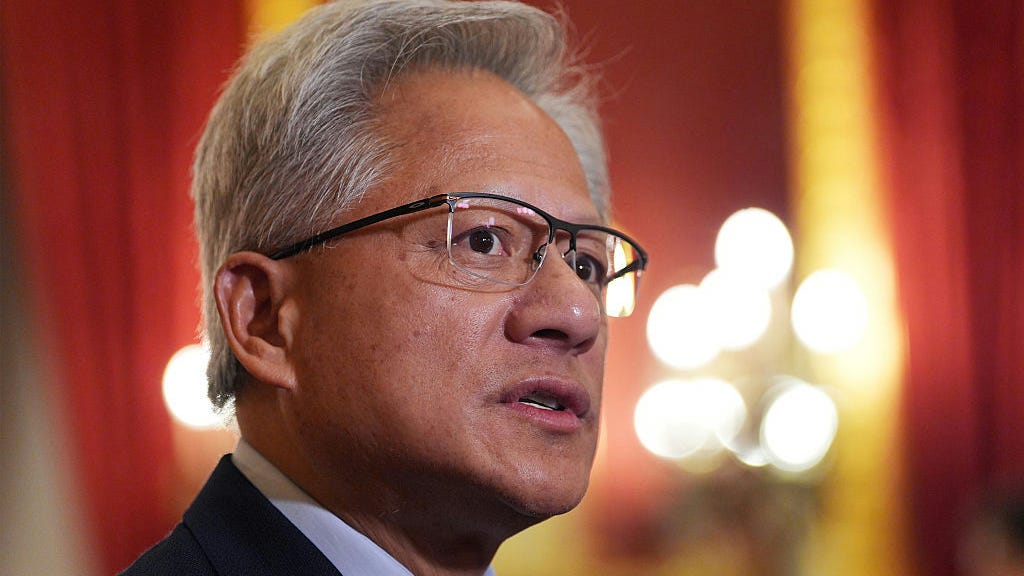
Yet now that the Nvidia founder has been ousted from the chip company he built into a titan, the world is still not sure what we’re looking at.
asserted
we → oust → what
The possibilities range from a salacious sex scandal à la Bill Clinton to a strategic betrayal akin to the Rosenbergs.
asserted
possibilities → range → Rosenbergs
The plot thickened on Thursday as members of both parties called for Huang to testify before Congress.
asserted
Huang → thicken → Congress
Lawmakers want to know whether the alleged Chinese spy with whom Huang had an affair helped smuggle restricted chips to her homeland—with or without Huang’s knowledge.
asserted
Huang → want → knowledge
Commerce Secretary Howard Lutnick is facing similar heat, as critics allege that he loosened barriers on foreign chip sales despite being warned of a possible scheme.
asserted
he → face → scheme
These suspicions point to a gut-wrenching possibility: that the Donald Trump administration and major players in America’s AI industry undermined national security by turning a blind eye to Beijing scheming to evade export controls designed to stop U.S. chips making it into China.
asserted
chips → point → China
That’s the theory that Matt Pottinger and Liza Tobin explore in their report today.
asserted
Pottinger → ’ → report
A former top national security official and a leading China strategist, respectively, they chart the timeline of the administration’s moves and talk to former officials who say they were sidelined or pushed out of the Commerce Department after devising tighter technology restrictions.
asserted
they → lead → restrictions
The details, they argue, amount to “a story of brazen regulatory capture: how Jensen Huang gained personal, persistent access to the president of the United States.”
asserted
Huang → argue → States
No matter which way you look at it, it doesn’t look good.
asserted
it → look → it
America loves a sex scandal—which is a problem when there’s a much more serious national security scandal attached.
asserted
which → love → scandal
Such may be the case with the biggest news story of this week: Jensen Huang’s affair with a suspected Chinese spy.
uncertain
Such → suspect → spy
Huang’s philandering got him ousted as the CEO of Nvidia, the semiconductor giant behind the AI revolution.
asserted
him → get → revolution
But if his Chinese mistress was smuggling Nvidia chips into China—and he knew about it—his problems are a lot bigger than most people thought, argues Patrick McGee.
asserted
McGee → smuggle → it
Read his piece on why the implications of the Huang affair stretch from the bedroom to the boardroom—perhaps, even, to the White House Situation Room.
asserted
implications → read → Room
This high-profile honeypot scandal is the first of many to come, writes Tyler Cowen.
asserted
Cowen → come → many
“Life is going to feel much more cloak-and-dagger, especially for the wealthy and influential,” he argues.
asserted
he → go → wealthy
Read his column on what Huang’s affair portends for the coming age of the AI wars—and the spy-thriller games that may soon unfold.
uncertain
that → read → wars
The other sex-scandal news of this week was the prison sentence handed down to British actor Russell Brand after his recent conviction for rape and sexual assault.
asserted
news → hand → rape
From his lurid and highly public sexcapades in the 2000s to his eyebrow-raising pivot to Christianity in the 2020s, Brand was always shape-shifting to evade accountability
asserted
Brand → raise → accountability
, argues Douglas Murray.
asserted
Murray → argue → ?
Now, not only have his deplorable actions caught up with him, they’ve revealed a fraught cultural shift wrapped up in #MeToo, Covid vaccine skepticism, and changing sexual mores.
asserted
they → catch → MeToo
When Ross Douthat interviewed the president for 60 Minutes last week, Trump surprised him—and the nation.
asserted
Trump → interview → him
The commander in chief conceded an actual political failure.
asserted
commander → concede → failure
He suggested one domestic policy choice that would create a true political earthquake, and expressed an openness to guardrails on artificial intelligence.
uncertain
that → suggest → intelligence
Read Ross’s column on the takeaways from that interview—and the decisions Trump still has to make that will determine his legacy.
asserted
that → read → legacy
The GOP’s midterms reckoning continued this week with slightly less finger-pointing and more soul-searching—while Democrats congratulated themselves on a new dawn in politics.
asserted
Democrats → continue → politics
But the midterms were a regular shellacking, not a political paradigm shift, argues Niall Ferguson.
asserted
Ferguson → argue → ?
In his latest column, he traces the lessons of history, from Dwight Eisenhower to Richard Nixon, about what happens when a second term turns sour.
asserted
term → trace → Nixon
In New York City, e-bikes sometimes travel up to 70 miles per hour.
asserted
bikes → travel → hour
As they speed through traffic lights and on sidewalks, they’re leaving people maimed, paralyzed, or dead.
asserted
they → speed → people
This week, River Page reported on the fight brewing in New York City politics over e-bikes: the victims, the food deliverymen, and the progressive politicians who can’t decide what’s more important—fighting racism or reducing e-bike deaths.
asserted
what → report → deaths
 The Aporia