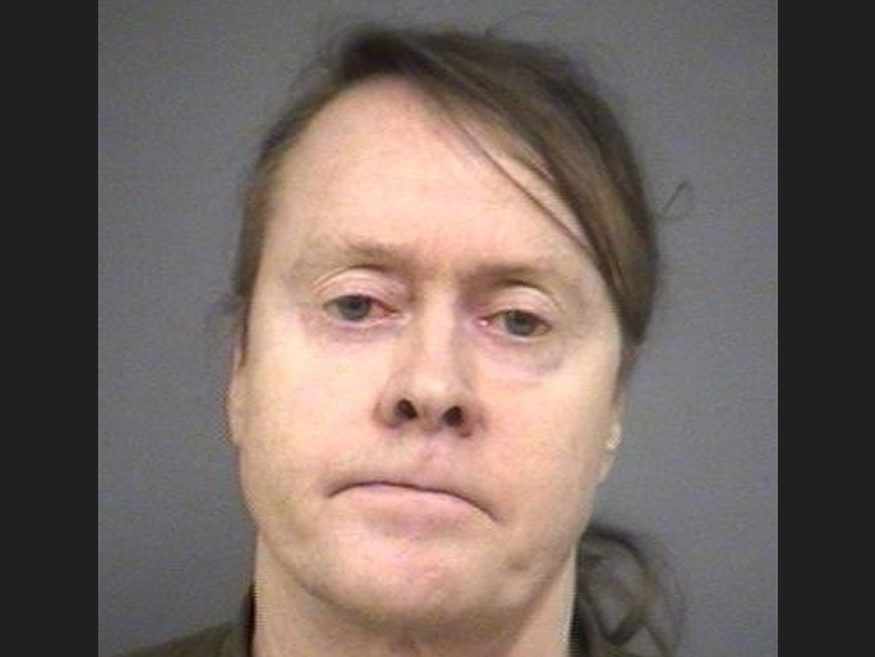
After more than three decades, the “Woodland Rapist” has been brought to justice.
asserted
Rapist → bring → justice
Richard Neil, a 67-year-old Toronto resident accused of preying on children in Southwestern Ontario and the GTA in the 1990s, was found guilty Friday in a Brampton court of 17 charges, including sexual assault, kidnapping and uttering threats.
asserted
Neil → accuse → threats
Neil was arrested and charged in March 2024 by Peel Regional Police following a multi-jurisdictional investigation.
asserted
Neil → arrest → investigation
The case baffled investigators for decades until advances in forensic technology helped identify a suspect in the horrific attacks.
asserted
advances → baffle → attacks
The former courier driver, who was arrested in British Columbia, went on trial last month and denied being the perpetrator of the assaults, insisting authorities had the wrong man despite DNA and fingerprint evidence presented in court.
asserted
authorities → arrest → court
Police said the victims of the attacks were two young boys and a teenage girl.
asserted
victims → say → attacks
Victims suffered brutal assaults
asserted
Victims → suffer → assaults
The first boy was just eight years old when he was lured into the woods at Idlewood Park in Kitchener and sexually assaulted by a knife-wielding man on Aug. 21, 1992.
asserted
he → lure → Aug.
On Sept. 29, 1994, more than two years later, a 10-year-old boy was similarly sexually assaulted by a man at North Place Park in Brampton.
asserted
boy → assault → Brampton
The following year, on Aug. 31, 1995, a man forced a 15-year-old girl at gunpoint into a wooded area of Oakville’s Wildwood Park and raped her for five hours.
asserted
man → force → hours
During the attacks, police said at the time that Neil wore underwear on his head, tied his victims to trees and forced them to drink urine.
asserted
Neil → say → urine
The three attacks were linked through DNA evidence after police recovered sperm from the crotch of one victim, ejaculate from another and semen-stained underwear at the final crime scene.
asserted
police → link → scene
The Project Woodland task force was launched to identify a suspect in the sexual assaults.
asserted
force → launch → assaults
A composite sketch of the “Woodland Rapist” led to 1,200 tips from the public.
asserted
sketch → lead → public
However, after looking into 875 suspects, police made no arrests and the task force was disbanded in 1996.
asserted
force → look → 1996
Investigative genetic genealogy cracked cold case
asserted
genealogy → crack → case
The Toronto Police cold case unit worked with Peel and Waterloo cops using investigative genetic genealogy (IGG) to unravel the brutal assaults.
asserted
unit → work → assaults
And that trail led back to Neil.
asserted
trail → lead → Neil
“IGG is making these cases and other historic investigations solvable,” TPS cold case unit boss Det. Sgt. Steve Smith told the Toronto Sun.
asserted
Smith → make → Sun
“Science is allowing us to solve more of these cases particularly in investigations where we have particularly vulnerable victims, as in this case which were children.”
asserted
which → allow → case
Police services across North America are now using IGG to solve cases that were previously considered unsolvable.
asserted
that → use → cases
“Neil was never on the police radar,” Smith said.
asserted
Smith → say → radar
“The funny thing is, he looks exactly like the composite done at the time.
asserted
he → look → time
Those kids did a great job.”
asserted
kids → do → job
Smith added: “There really is no longer a safe place for these guys.
asserted
Smith → add → guys
We will get them.”
asserted
We → get → them
Indeed, the TPS unit has solved some of the most vexing investigations in the city’s history, including the 1984 murder of Christine Jessop.
asserted
unit → solve → Jessop
 The Aporia