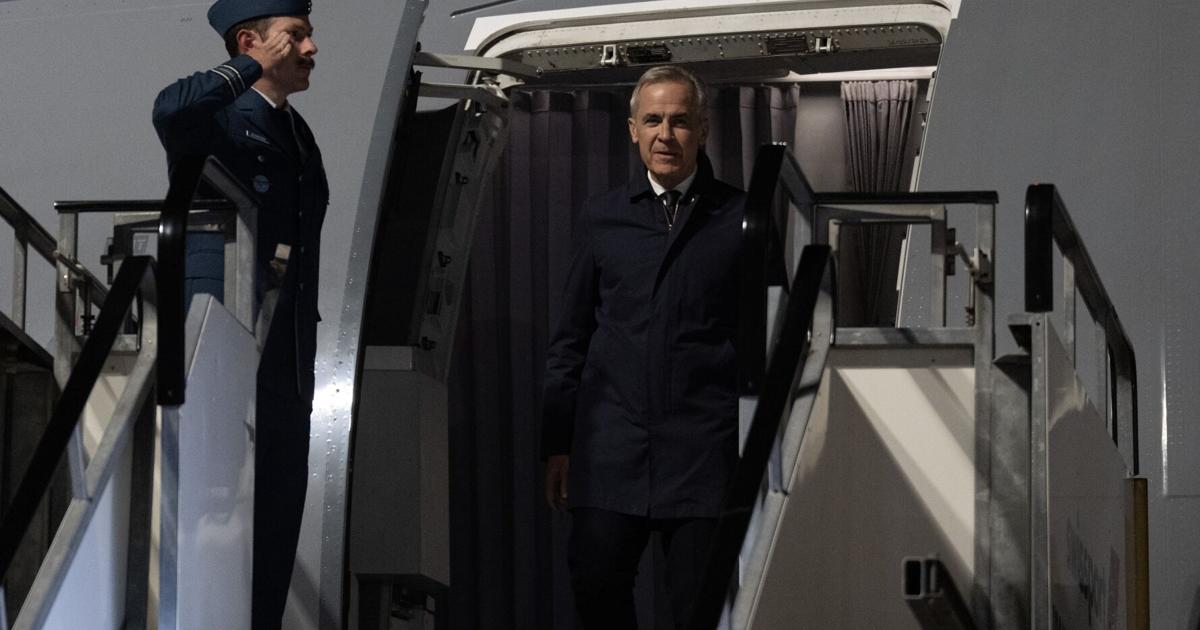
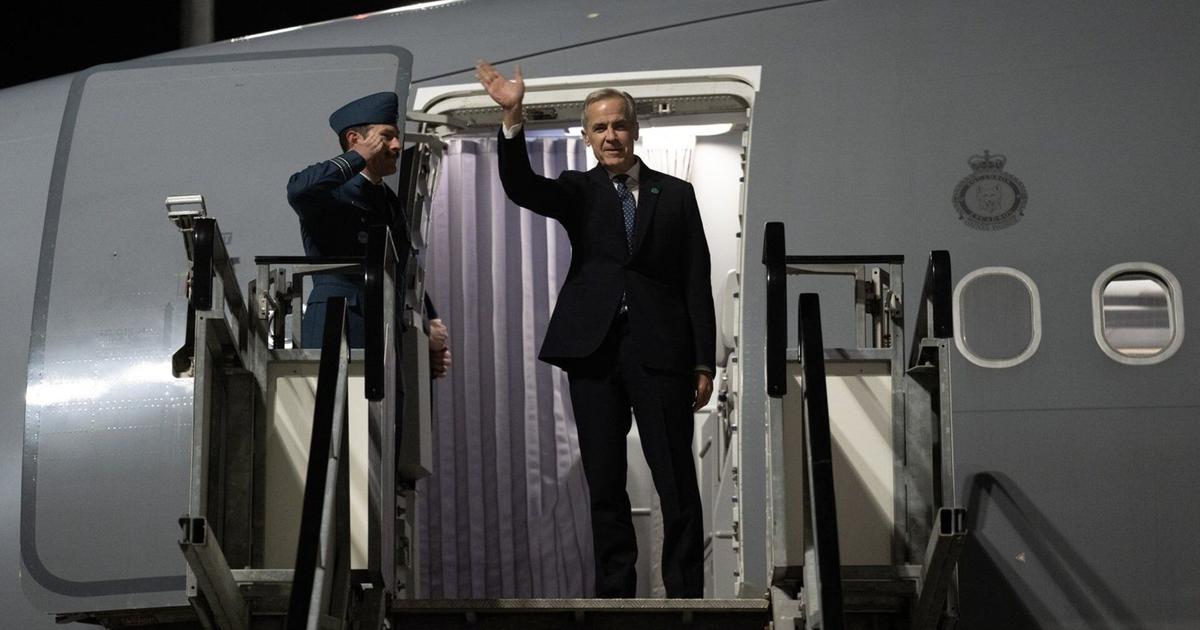
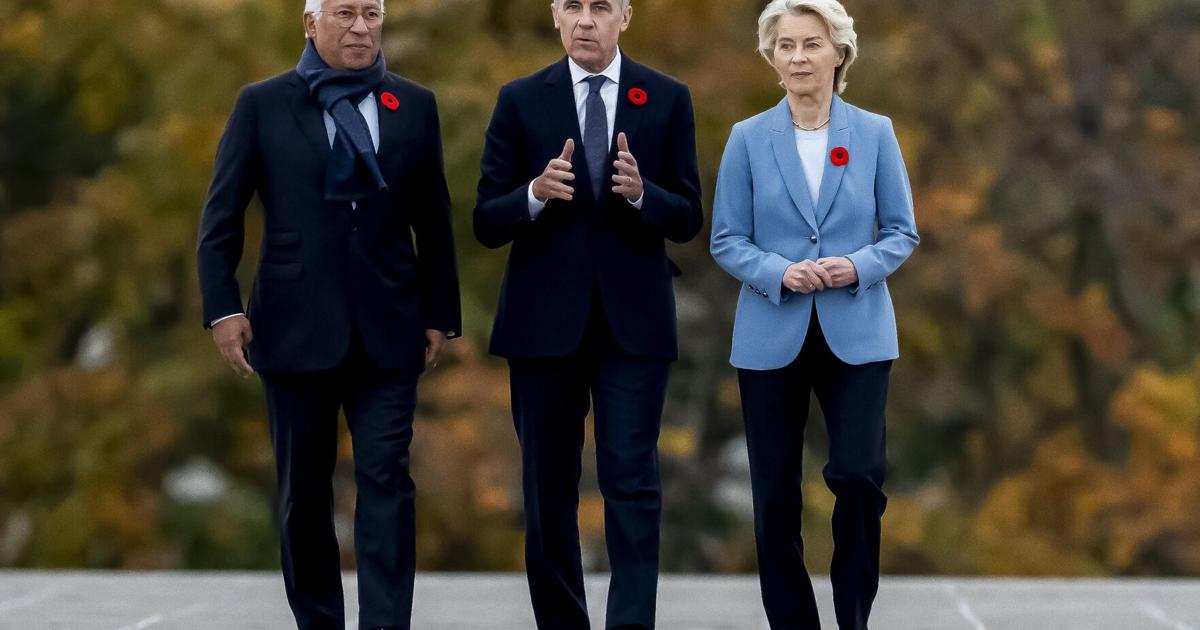
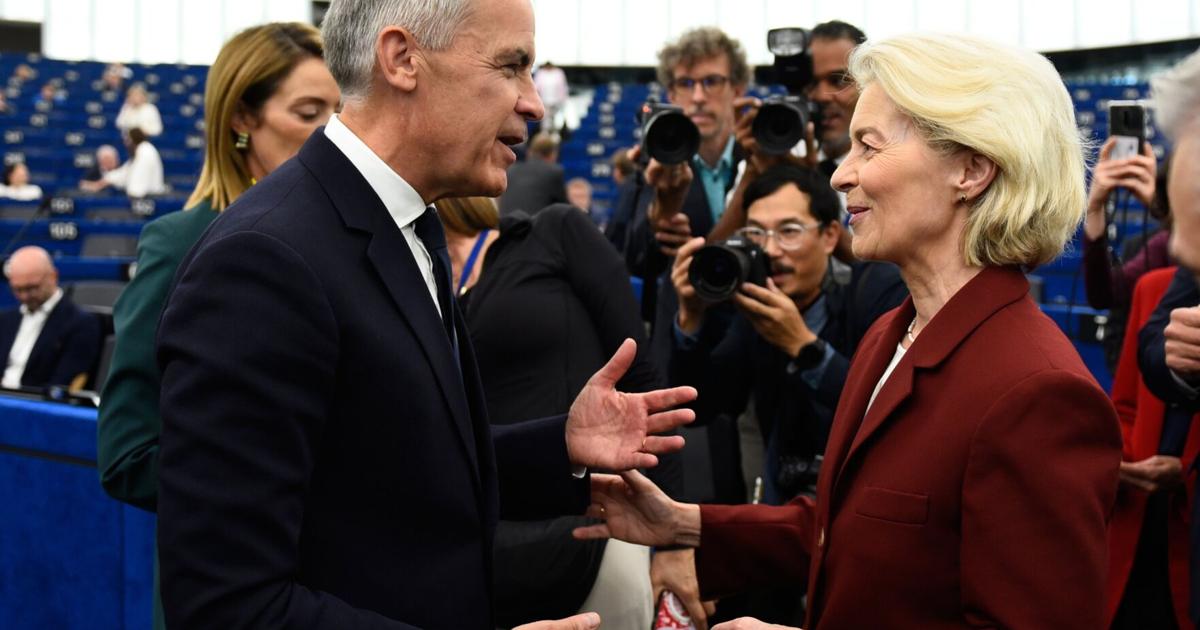
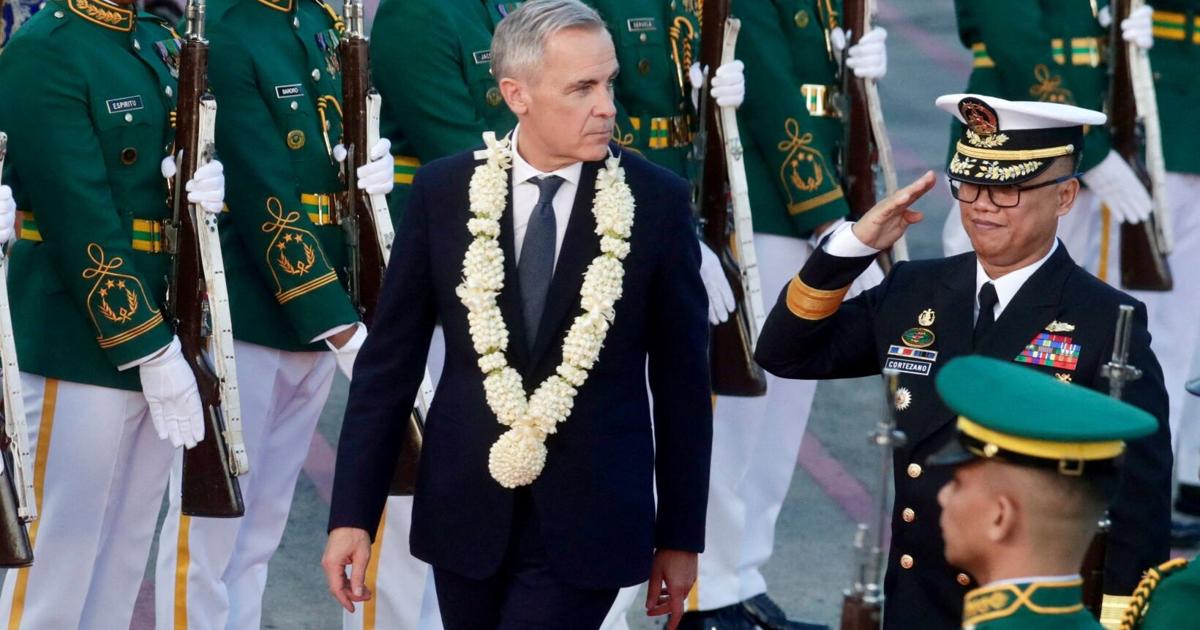
MANILA — Prime Minister Mark Carney landed on a hot Philippines morning and soon was set to knock two big items off his global to-do list.
asserted
Carney → land → list
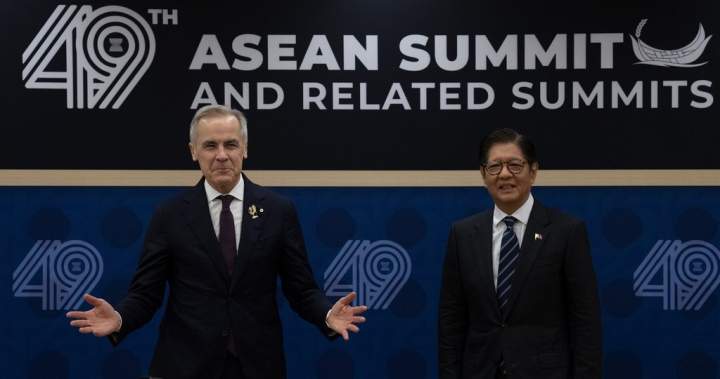
Carney and Philippine President Ferdinand Marcos Jr. first signed joint statements to conclude negotiations on a bilateral free trade agreement that the prime minister regards as tangible proof of the outcomes from his Asian swing.
asserted
minister → sign → swing
They shook hands on a deal expected to come into force next year after negotiations that had stalled before Carney took office were accelerated over the past 12 months.
asserted
Carney → shake → months
Second on Carney’s to-do list, as previously reported by the Star, was a free trade agreement with ASEAN, the Association of Southeast Asian Nations, that was expected to reduce barriers between Canada and one of the world’s fastest-growing economic regions.
asserted
that → report → regions
When completed, the two deals are intended to improve access for Canadian farm, forest and mining products to a combined market of nearly 700 million people representing an overall $6-trillion economy.
asserted
deals → complete → economy
Even without a free trade agreement, Canada-ASEAN trade rose last year by 23 per cent to a value of $52.3 billion.
asserted
trade → rise → billion
Carney spent Friday the 13th in the air, crossing the international date line and skipping over several time zones to get these done as he attends three more summits over the week.
asserted
he → spend → week
During the long-haul flight here, he and his team occasionally huddled to go over details that weren’t yet finalized until they landed, an official said.
asserted
official → huddle → details
Poilievre calls Asia deals political theatre
Conservative Leader Pierre Poilievre has accused Carney of globe-trotting and dismissed the agreements as unnecessary political theatre, arguing Canada already belongs to the Comprehensive and Progressive Agreement for Trans-Pacific Partnership, negotiated under Stephen Harper and finalized by Justin Trudeau, which includes many of the same countries.
asserted
which → call → countries
Others disagree.
asserted
Others → disagree → ?
“The fact that ASEAN has prioritized moving forward on the Canada FTA (free trade agreement) rather than doing a number of others, including with Europe, I think is significant,” said Vina Nadjibulla, an Asia expert leading the Center for Strategic Statecraft, a new foreign policy think tank.
asserted
Nadjibulla → prioritize → Statecraft
“Philippines as the chair has been really focused on getting this to the finish line.
asserted
Philippines → focus → line
So, I think that is an important achievement.”
asserted
that → think → ?
She also pointed to the ramp-up in defence and security cooperation between Canada and the Philippines, a relationship Carney was expected to reinforce.
asserted
Carney → point → Canada
But Carney’s eyeing more.
asserted
Carney → eye → more
Officials say consumers here are hungry for Canadian grains, canola, meat and fishery products, while Canadian producers are eager to see lower tariffs, clearer rules and improved safety standards so food, agricultural products and other goods clear borders faster.
asserted
food → say → borders
With a deal in hand, Ottawa hoped to head off a move by the Philippines to shut off global pork imports later this month due to overproduction here.
asserted
Ottawa → hop → overproduction
The other big draw: there are eager buyers for Canadian oil and gas, clean energy resources, critical minerals and forest products, and officials said with Asia’s aerospace sector undergoing massive commercial and fleet modernizations, Canadian firms stand to gain, whether it’s providing planes, parts, simulators or training.
asserted
it → be → planes
With these deals, Carney’s team says he has secured seven “trade and investment” deals, and launched talks toward seven more.
asserted
he → say → seven
The prime minister often boasts he has signed more than 20 trade and security deals across five continents.
asserted
he → boast → continents
But they are not all equal, and there’s a bit of political marketing at play here.
asserted
they → ’ → play
Free trade deals are painstakingly negotiated, legally binding texts that reduce tariffs to at or near zero between trading partners, on predictable timelines, with legal obligations and tons of detail about how to resolve disputes, for example.
asserted
that → negotiate → example
Then there are deals that set out economic cooperation, or “strategic” security and defence partnerships.
asserted
that → be → cooperation
Other agreements are foreign investment protection agreements that do just that, to secure investments or commercial developments, and in some cases are meant to deliver results more quickly and have more short-term flash.
asserted
that → do → flash
The separate deal with the Philippines follows a 2025 free trade agreement with Indonesia that Carney signed, plus free trade pacts with Ecuador and the United Arab Emirates.
asserted
Carney → follow → Ecuador
Carney hopes to finalize a pact with India by December when Prime Minister Narendra Modi visits Canada, making the détente complete despite ongoing Canadian investigations into India’s role in criminal acts on Canadian soil that India denies.
asserted
India → hop → that
The accords are key to Canada hitting Carney’s goal of doubling non-U.S. exports by 2035.
asserted
Canada → hit → 2035
Carney’s European aspirations aside, the EU’s economic growth is sluggish, and the broader Asia-Pacific is where more trading potential lies.
asserted
potential → lie → ?
ASEAN is comprised of the Philippines, Cambodia, Indonesia, Laos, Malaysia, Brunei Darussalam, Singapore, Myanmar, Thailand, Timor-Leste, and Vietnam.
asserted
ASEAN → comprise → Philippines
In reality, the prime minister is updating the Trudeau government’s Indo-Pacific strategy in real time with every trip to the region and each agreement, not waiting to release a new foreign policy review that’s been due any day now for months.
asserted
that → update → months
Carney’s middle power push and global brand
Carney is also putting into practice his Davos call to action, seeking to widen alliances among “like-minded” nations willing to cooperate in strategic areas to fill gaps in each other’s capabilities, to make everyone’s supply chains less dependent on great powers like the U.S. or China.
Sen. Peter Boehm, a former Canadian diplomat and executive at Global Affairs, says Carney’s trip offers Canada opportunities “both in terms of market and in terms of influence, should he (the prime minister) want that.”
“I think he’s become a bit of a brand himself, at least that’s what I’m hearing from my contacts around the world
asserted
I → put → world
,” said Boehm.
asserted
Boehm → say → ?
They see Carney as “a competent rational leader,” with a middle power initiative that still needs to be defined, including by others who may wish to join it, he said.
uncertain
he → see → it
Finally, Boehm said Carney is viewed in contrast to the U.S. President as “projecting some calm in a world that isn’t very calm” without “folding over,” citing the prime minister’s decision to bar Russian junior hockey players from coming to Alberta for the world tournament.
asserted
that → say → tournament
Whether it’s about brand, influence or economics, Carney’s Asia hopscotch to lay markers down on a flurry of trade deals with nations other than the U.S. is a signal to Canadians: Carney’s moved on from daily fretting about the U.S. and focused on that to-do list:
More tariff-free destinations for Canadian exporters: check.
Less supply chain reliance on the U.S.: check.
Economic growth:
asserted
Carney → ’ → U.S.
 The Aporia