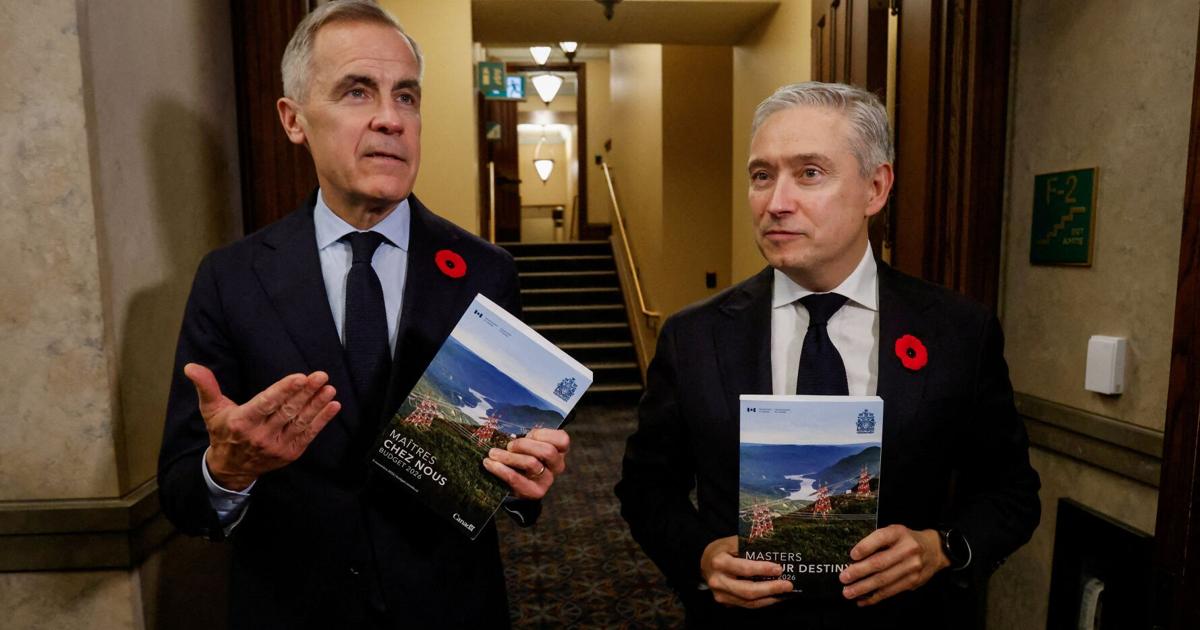
In planning his latest budget, Finance Minister François-Philippe Champagne was helped by a revenue outlook that was better than previously expected.
asserted
that → plan → outlook
That gave him wiggle room to pay for several new measures — including tax cuts for business and extra financial help for households.
asserted
That → give → households
Critics argued the Carney government irresponsibly “spent” almost all of that windfall on new initiatives, rather than dedicating unexpected revenue to deficit reduction.
asserted
government → argue → reduction
In this telling, “spending” includes the cost of major business tax cuts, led by the Productivity Mega Deduction, worth $36 billion over five years.
asserted
spending → include → years
But cutting taxes is not spending.
asserted
cutting → cut → taxes
In any case, what exactly was that supposed windfall?
asserted
windfall → suppose → case
It’s typically attributed to higher oil prices, which surged after U.S. President Donald Trump launched his war in the Persian Gulf.
asserted
Trump → attribute → Gulf
But oil prices have surprisingly little direct impact on federal revenues.
asserted
prices → have → revenues
After all, the federal government does not receive petroleum royalties (which belong to the provinces), and it sold off its once-public oil company, Petro-Canada, decades ago.
asserted
it → receive → company
Yes, it will collect additional taxes from oil companies (set to declare record profits) that might generate a few extra billions — hardly a windfall in a $500 billion budget.
uncertain
that → collect → budget
The real cause of Ottawa’s higher-than-projected revenues is the faster-than-expected growth of economy-wide nominal GDP.
asserted
cause → project → GDP
While real GDP (adjusted for inflation) has been sluggish (growing just 1.1 per cent in the last 12 months), nominal GDP (measured in current dollars) grew by $226 billion (a remarkable 7.1 per cent) in the same time.
asserted
GDP → adjust → time
In this case, we measure inflation by the GDP price deflator, which takes into account prices across the entire economy, not just consumer products, as in the more common consumer price index.
asserted
which → measure → index
By that measure, GDP inflation spiked 4.8 per cent over the last year, mostly due to the rise in oil prices.
asserted
inflation → spike → prices
On one level, inflation is ‘good’ for government: its tax base expands with growing GDP, and common fiscal benchmarks look better when GDP is bigger.
asserted
GDP → expand → GDP
Its own expenses grow — higher procurement costs, indexed social programs, and wage hikes for civil servants.
asserted
expenses → grow → servants
Worst of all, is the higher cost to service the public debt when the Bank of Canada raises interest rates like it did last month.
asserted
it → service → rates
Of course, this so-called windfall is painful for consumers.
asserted
windfall → call → consumers
Canadians are paying much more at the pumps for gasoline and diesel — some $3 billion more in just the second quarter of 2026, and headed toward $10 billion for the year.
asserted
Canadians → pay → year
Other consumer costs are also taking off due to oil prices: airfares, delivery charges, and soon food as soaring truck diesel costs are reflected in your grocery bill.
asserted
costs → take → bill
Ironically, most of the affordability measures in this budget — a gasoline tax holiday and an expanded Groceries and Essentials Benefit — were necessitated by that same oil price “windfall.”
asserted
most → expand → windfall
The little that government gets from high oil prices with one hand, it gives back to struggling consumers with the other.
asserted
it → get → other
Misplaced rhetoric about Ottawa’s windfall is mostly intended to distract attention from where the real windfall is landing: with the oil industry.
asserted
windfall → intend → industry
Its profits will more than double this year, perhaps hitting $100 billion.
asserted
profits → double → billion
Much of that cash came straight from Canadian consumers.
asserted
Much → come → consumers
Ironically, this budget will further enrich those very same oil companies.
asserted
budget → enrich → companies
Ottawa’s Productivity Mega Deduction will allow immediate write offs of huge investments, like pipelines, that last for decades.
asserted
that → allow → decades
That will cut corporations’ upfront taxes by billions, just as they reap record profits.
asserted
they → cut → profits
The oil and gas industry will capture an estimated 29 per cent of total savings from the mega deduction.
asserted
industry → capture → deduction
Instead of applying thick icing on top of an already rich cake, the federal government should recapture some of that windfall.
asserted
government → apply → windfall
An excess profit tax, like the one Ottawa imposed on pandemic-enriched banks in 2022, would be a good way to do that.
asserted
Ottawa → impose → that
To the contrary, it is costing Canadians and their federal government many billions.
asserted
it → cost → billions
And instead of enriching them further with extra tax breaks, we should claw back some of that windfall to compensate the consumers who paid for it.
asserted
who → enrich → it
 The Aporia