In the midterm elections, they voted to slow down its expansion.
asserted
they → vote → expansion
Forty local ballot measures in 10 states promise to tighten restrictions on data-center construction, with overwhelming public support.
asserted
measures → promise → support
Measures to limit development of data centers won more than 70% of the vote in 30 of these electoral contests.
asserted
Measures → limit → contests
A 2026 survey by Pew Research Center found that about 52% of Americans were more concerned than excited about the growing use of AI in daily life, up from 37% in 2021.
asserted
% → find → 2021
Only 9% were more excited than concerned, and roughly six in ten said they wanted more control over how AI is used in their lives.
asserted
AI → concern → lives
The sources of anxiety about AI are many: the safety of increasingly powerful systems and the ability to control them; the fear of job displacement; surveillance and the loss of privacy; a rising tide of misinformation and deep fakes; the enormous amounts of electricity and water that the data centers consume; and the concentration of wealth and power in a handful of companies that own the frontier AI models.
asserted
that → control → models
Until now, anxiety about the role of AI in geopolitical competition has largely been confined to policy circles.
asserted
anxiety → confine → circles
But the possibility that Jensen Huang, who resigned as chief executive of Nvidia on Thursday, may have been compromised in a potential espionage scandal has brought that anxiety into the broader public sphere, fueling a frenzy over AI and the competition between the United States and China.
uncertain
who → resign → States
China and America are AI superpowers, but their strengths differ.
asserted
strengths → differ → ?
America leads in computing power, thanks largely to Nvidia’s advanced chips.
asserted
America → lead → chips
China is catching up fast in AI models.
asserted
China → catch → models
There is another dimension to this competition: the economic effects of China’s trade dominance and the rising role of AI in the economy could reinforce each other and produce greater impact than either would have alone.
uncertain
either → be → impact
China’s trade dominance is well-known.
asserted
dominance → know → ?
Two decades earlier, the economists David H. Autor, David Dorn, and Gordon H. Hanson gave that anxiety a name when they coined the term “China Shock” to describe the impact of the massive increase in Chinese exports to the U.S. in the early 2000s.
asserted
they → give → 2000s
The surge contributed to a sharp decline in American manufacturing and the loss of more than two million jobs in certain regions of the United States.
asserted
surge → contribute → States
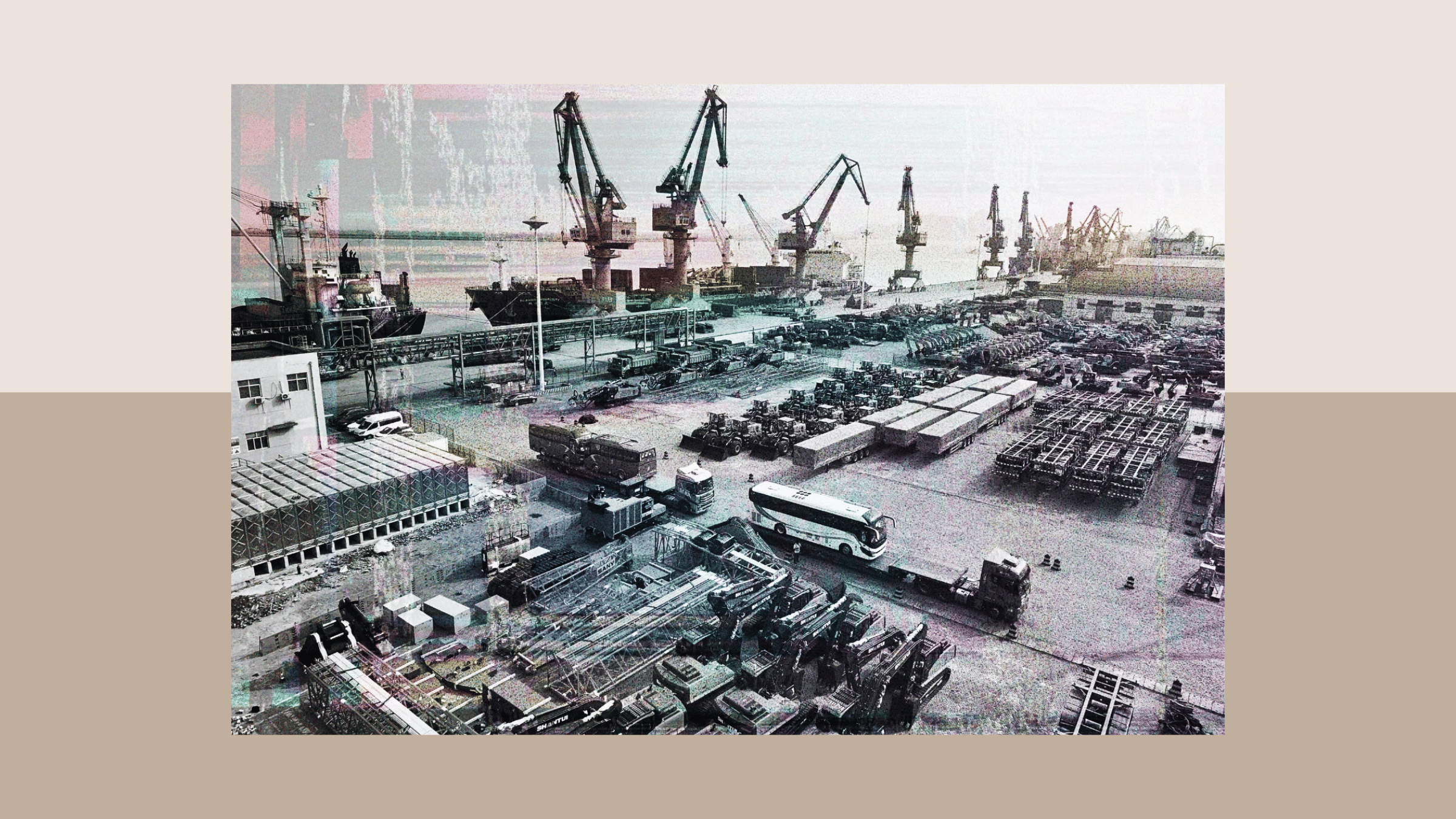
Over the past two decades, the so-called China Shock has gone global, as Chinese exports have surged around the world without a comparable rise in China’s imports.
asserted
exports → call → imports
The world may soon experience the convergence of two enormous economic shocks, each reinforcing the other in terms of their direction and magnitude: The China Shock and the AI Productivity Shock.
uncertain
each → experience → direction
The consequences of AI-driven productivity growth remain contested.
asserted
consequences → drive → growth
But the fear is that AI will enable companies to dramatically increase output without employing more people or raising the income of ordinary citizens.
asserted
AI → enable → citizens
The China Shock has a similar effect.
asserted
Shock → have → effect
China has become a dominant force in advanced manufacturing in electric vehicles, batteries, solar panels, artificial intelligence, and robotic technology.
asserted
China → become → vehicles
But China’s growing competitiveness has led to a global surge of Chinese exports without a corresponding global surge of Chinese imports.
asserted
competitiveness → grow → imports
On top of the China Shock, the AI Productivity Shock could further widen the gap between global supply and demand, and create new economic imbalances and strains on a scale the world has not witnessed.
uncertain
world → widen → scale
The coming AI productivity shock
The China Shock and the AI Productivity Shock share one critical feature: both can produce a glut of output without generating a corresponding increase in demand.
asserted
both → come → demand
In China, production has grown faster than consumption; with AI, the fear is that the technology will generate wealth without creating jobs.
asserted
technology → grow → jobs
In both cases, the gains tend to flow to the owners of capital—and in China’s case, also to the government—rather than to workers and households.
asserted
gains → tend → workers
But the iron law of economics still holds: supply requires demand, and an economy can absorb a large increase in output only if enough people have the income to buy what it produces.
asserted
it → hold → what
Economists have long described it as a problem of effective demand: the recognition that supply does not automatically create its own demand.
asserted
supply → describe → demand
For that to happen, greater production and supply have to translate into more jobs and higher incomes.
asserted
production → happen → jobs
Whether AI will create such an imbalance is still a matter of debate.
asserted
create → create → debate
Optimists point to earlier waves of automation.
asserted
Optimists → point → automation
Technologies such as the tractor and the spreadsheet displaced certain kinds of work but eventually helped create other kinds of work and generated jobs and additional income for workers.
asserted
Technologies → displace → workers
Only time will tell whether AI, which differs significantly from earlier technologies, will follow that pattern.
asserted
which → tell → pattern
What we do know is that this optimistic scenario of technological progress has yet to deliver the gains in employment and household purchasing power in China.
asserted
scenario → know → China
China is now regarded as one of the world’s leading technological powers.
asserted
China → regard → powers
In some industries, China’s factories are producing more than the global demand put together.
asserted
factories → produce → demand
China makes more than 80% of the world’s solar panels, and its factories can turn out roughly twice as many modules in a year as the entire planet installs.
asserted
planet → make → year
One projection suggests that, by 2030, China alone could produce more batteries than the whole world will use.
uncertain
world → suggest → batteries
But China’s technological advancement is far more visible in what its factories can produce than in what its households can afford to buy and consume.
asserted
households → produce → what
Youth unemployment in the country is rising, and domestic consumption has stagnated.
asserted
consumption → rise → country
…and 42 more, not listed.
 The Aporia