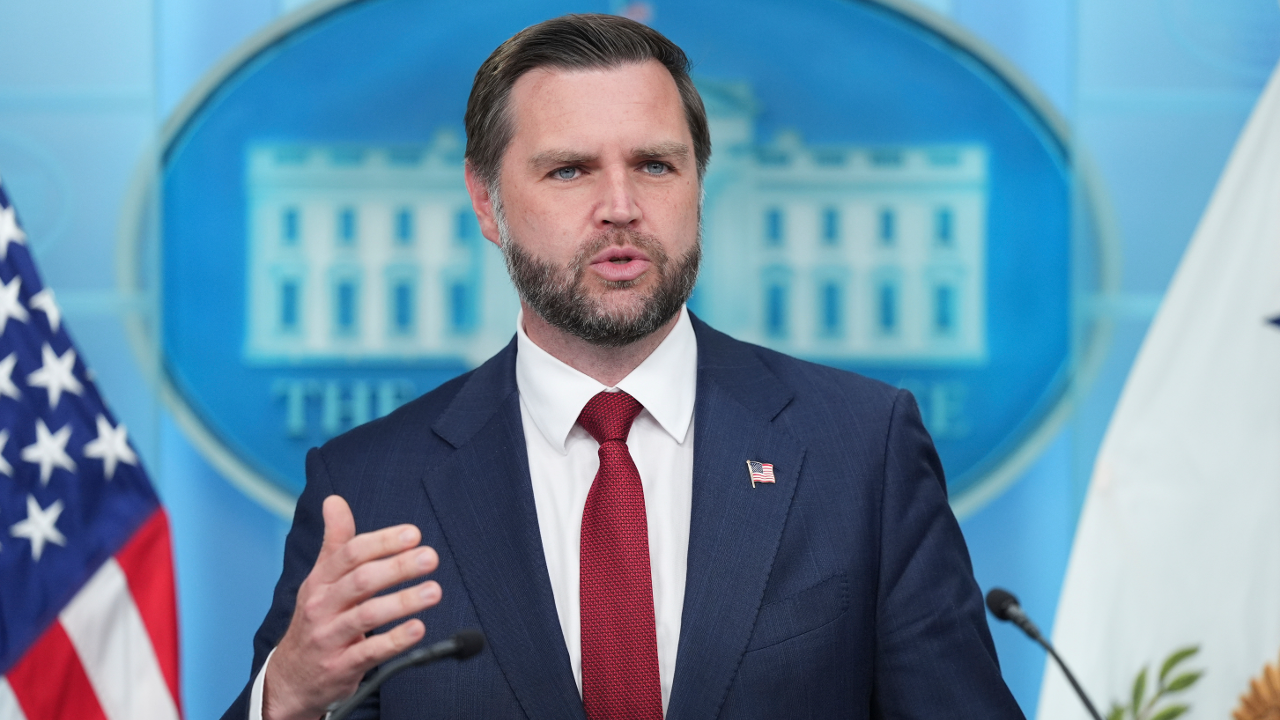
Vice President JD Vance has long been viewed as President Donald Trump's heir apparent, but a string of developments following Republicans' bruising midterm losses is raising new questions about his potential path to the White House in 2028.
asserted
string → view → 2028
Vance is facing criticism from some Republicans over his explanation for the party's election defeats, particularly his decision to blame the Iran war.
asserted
Vance → face → war
Meanwhile, other prominent Republicans are beginning to draw support for potential 2028 bids, complicating the political picture for the vice president.
asserted
Republicans → begin → president
The political debate follows a devastating election for Republicans, who lost their majorities in both chambers of Congress beginning next year, with at least 30 GOP House members losing their races.
asserted
members → follow → races
The losses have prompted competing explanations from within the party over what went wrong and what Republicans should do differently.
asserted
Republicans → prompt → what
Some of Vance's allies have reportedly urged him to consider sitting out the 2028 race following the midterm losses, The Wall Street Journal reported Nov. 7.
uncertain
Journal → urge → losses
However, others close to the vice president still expect him to run, The Washington Post reported Friday, underscoring the uncertainty surrounding his political future.
asserted
Post → expect → future
A Vance ally pushed back on suggestions that the midterm losses have diminished his 2028 prospects, saying the vice president will decide whether to run on his own timeline.
The ally also argued that Vance would be better served by winning a competitive Republican primary than being handed the nomination, expressing confidence in his ability to prevail if he runs.
asserted
he → push → ability
In a Nov. 4 post on X, Vance identified several concerns among voters who abandoned Republicans, including inflation, America First priorities and the U.S. relationship with Israel, but singled out the Iran war as the main reason for the party's defeats.
"The reason we lost is the war.
asserted
we → identify → defeats
The president himself said so last night," Vance wrote, adding that Republicans needed to acknowledge the political cost of the conflict as they consider where to go next.
asserted
they → say → conflict
The post drew sharp criticism from Rep. Randy Fine, R-Fla., who told Fox' LiveNOW in a Nov. 8 interview that he would not support Vance in a potential 2028 presidential primary.
asserted
he → draw → primary
"I definitively will not be supporting the vice president in that nominating contest," Fine said, comparing Vance's remarks to rhetoric from "1932 Germany."
asserted
Fine → support → Germany
Fine, who is Jewish, accused Vance of blaming Jewish people for the Republican losses, pointing to his criticism of the war and the pollster's finding that some voters wanted a change in America's relationship with Israel.
asserted
voters → accuse → Israel
Vance did not explicitly blame Jewish people in his post, and his office previously declined to respond to Fine's characterization.
asserted
office → blame → characterization
Some Republicans are already expressing support for possible alternatives to Vance.
asserted
Republicans → express → Vance
Rep. Marlin Stutzman, R-Ind., told Fox News Digital after the midterms that he was "all in" for Secretary of State Marco Rubio, describing him as a potential unifying figure for Republicans following their election losses.
asserted
he → tell → losses
Rubio is among several prominent Republicans whose names have surfaced as possible 2028 presidential contenders, along with Florida Gov. Ron DeSantis and Sen. Ted Cruz of Texas.
asserted
names → surface → Texas
Former Vice President Mike Pence also disputed Vance's explanation for Republicans' midterm losses, arguing in an exclusive Fox News Digital interview Thursday that voters had grown frustrated not because Trump launched the Iran war, but because his administration failed to finish it.
"
asserted
administration → dispute → it
There's no question that the war in Iran became a frustration for millions of Americans, but it wasn't because President Trump started the war or took on Iran.
asserted
Trump → be → Iran
It's because we stopped short and didn't finish it," Pence said.
asserted
Pence → stop → it
"As Americans saw the politics of appeasement that the administration embraced, one negotiation after another, I think people became ... frustrated with the lack of progress, frustrated with the price of fuel at the pump."
asserted
people → see → pump
Trump, meanwhile, has publicly defended Vance's assessment of the midterms, rejecting suggestions that the remarks damaged their relationship.
asserted
remarks → defend → relationship
"No, not at all," Trump told reporters Sunday when asked whether Vance's comments had strained their relationship, according to The Hill.
uncertain
comments → tell → Hill
But the president also stood by his decision to launch the war, arguing that he would make the same choice again despite the political fallout.
asserted
he → stand → fallout
Donald Trump Jr. also backed Vance's assessment, writing "Every word of this is [100 emojis]" in response to his Nov. 4 post on X.
On Thursday, Trump directed Vance to focus his attention on alleged corruption and crime in Democratic-led cities and states rather than pursuing negotiations with Iran, declaring that the United States no longer needed a deal with Tehran.
asserted
States → back → Tehran
Vance had played a central role in diplomatic efforts involving Iran, including negotiations over a short-lived truce earlier this year.
asserted
Vance → play → truce
"The Blue States, such as Minnesota, California, Illinois, and many more, are all poorly run, corrupt disasters," Trump wrote in the post.
asserted
Trump → run → post
"Billions of Dollars is being stolen each and every month.
asserted
Billions → steal → Dollars
Our Budget could be quickly BALANCED with the correction of this large scale criminal activity.
uncertain
Budget → balance → activity
"We don’t need a deal with Iran.
asserted
We → need → Iran
Those days have long since passed.
asserted
days → pass → ?
We’ve got their money, Hundreds of Billions of Dollars, and we’ve got their Strait!" the president continued.
asserted
president → get → Strait
Trump has previously signaled support for Vance as his potential successor, telling donors during an Oval Office meeting over the summer that Republicans needed to elect the vice president in 2028, Fox News Digital reported at the time.
But Trump has stopped short of publicly endorsing Vance, and the president has continued to leave open the possibility of other Republicans entering the race.
When asked on Nov. 4 whether he had talked about a prospective 2028 White House run with Vance, Trump replied that the two discuss "a lot of things," Axios reported.
asserted
Axios → signal → things
Trump added: "Maybe he [Vance] won't run.
asserted
he → add → ?
I don't know who's going to run.
asserted
who → know → ?
Still, Vance told Mark Halperin in an October interview that he believes Trump would back him if he jumps into the presidential race, ABC 7 reported.
asserted
ABC → tell → race
"I really have not made up my mind about what to do in 2028.
asserted
I → make → 2028
I just haven't focused on it.
asserted
I → focus → it
We, you, and I have talked about that.
asserted
I → talk → that
Look, I think if I run, the president will endorse me," Vance said during the interview.
asserted
Vance → look → interview
…and 1 more, not listed.
 The Aporia