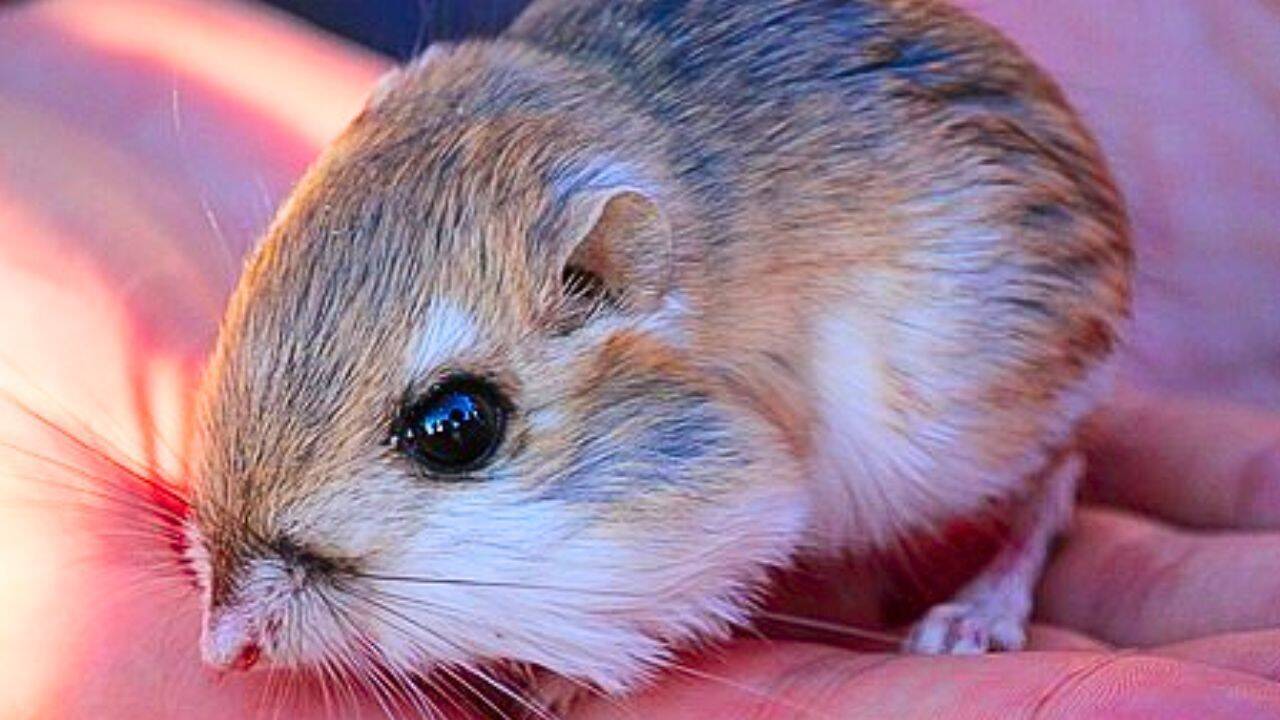
Photo via Times of India

Scientists removed kangaroo rats for 13 years to reveal their hidden role in desert vegetation

Read the original at Times of India ↗
Cite

TOI World Desk. (2026, September 17). Scientists removed kangaroo rats for 13 years to reveal their hidden role in desert vegetation. Times of India. https://timesofindia.indiatimes.com/world/rest-of-world/scientists-removed-kangaroo-rats-from-desert-plots-for-13-years-revealing-how-the-rodents-shape-vegetation-in-the-chihuahuan-desert/articleshow/134302283.cms

Dated when The Aporia collected the article, usually within hours of publication. Check the original for its exact date and byline.

Times of India · collected 2026-09-17 · by TOI World Desk

Quick Summary

Between 1977 and 1990, scientists conducted a 13-year experiment in the Chihuahuan Desert by excluding three species of kangaroo rats from certain plots to observe how their absence affected plant life. The study found that two grasses—tall annual 'Aristida adscensionis' and perennial bunchgrass 'Eragrostis lehmanniana'—became significantly more abundant in the absence of kangaroo rats. Researchers suggested that this increase could be due to reduced soil disturbance and lower predation on large seeds, indicating a hidden role of these rodents in maintaining vegetation structure and diversity.
Written by AI on 2026-09-17, from this article's own text only (the story summary below draws on all the coverage).

AI analysis

Story summary

Between 1977 and 1990, researchers in the Chihuahuan Desert conducted a 13-year experiment by excluding three species of kangaroo rats from certain plots to study their impact on vegetation. The absence of these rodents led to significant increases in two types of grasses: Aristida adscensionis and Eragrostis lehmanniana. Researchers suggest that without the kangaroo rats, there was less soil disturbance and lower predation rates for large seeds, which contributed to the growth of these grass species. Published in Oecologia, this study highlights how critical kangaroo rats are in shaping desert vegetation dynamics.

Written for “Kangaroo Rat Ecological Impact” on 2026-10-30, grounded in this article and the 0 other(s) covering the same event.

Story

📰 Kangaroo Rat Ecological Impact
Environment · 1 article(s) covering the same event.

Compared with similar articles

Nothing to compare against. No article is close enough to this one for the pipeline to have linked or judged the pair.
How this article was measured signals, leaning charts, publisher record, byline, topics and claims

Signals How these are calculated →

Claims extracted
32
sentences that state something as happening or true
Uncertain
19%
6 of 32 hedged ("reportedly", "may", "according to")
Leaning
not political
takes no side on a contested political question
Publisher signals
59/100
Times of India's corrections and hedging, across everything collected from it. Not a measure of accuracy.
Outlets on this story
1
Environment
Same framing elsewhere
1
articles that frame the event the way this one does
Analyzed 2026-09-17 · how these are computed

How this is being covered How these are calculated →

Article leaning vs. publisher reliability
Source leaning vs. consistency

Publisher

Times of India · 3707 article(s) · 2 correction(s) detected
Running correction rate · 2 correction(s)

Who wrote this

TOI World Desk
1240 article(s) here · 1 carrying a prediction
🔮 People from outside Indiana University had also contacted Brian Williams, a professor at the Kelley School of Business who helped develop the programme, expressing interest in taking the course.
🔮 Thus, a decade ago, he began collecting Halloween costumes for kids who couldn't afford them.
🔮 He expressed concern that the confrontation could cost him his job.
🔮 They said the celebrity's "suicide risk" could be lowered through treatment.
🔮 In one recording, Higby explained that they wanted to find out whether people could vote without showing identification.
🔮 According to Farm Journal, Pottinger discovered Sabanto, a company developing technology to convert conventional tractors into autonomous machines, after his lender suggested further equipment savings could improve the farm’s cash flow.
🔮 Under the West Virginia law that was struck down, a person could be sued and face set damages for showing or publishing covered personal information online.
🔮 An Australian man searching desperately for his missing dog offered a A$10,000 reward for its safe return, hoping someone would help bring his beloved pet home.
🔮 For weeks, it may have been hiding in plain sight, tucked beneath rows of corn in an otherwise unremarkable Minnesota field.
🔮 Over the next few years, the owners put the land up for sale but could not find a buyer.
Wire or desk byline, not an individual reporter.
Also by TOI World Desk
Nothing else under this byline is closely related to this article, so these are simply their most recent.
All 1240 articles by TOI World Desk →

Topics

Oecologia United States/

Subjects

Daveynin PERSON · 1× Oecologia ORG · 1× United States/ GPE · 1×

Narrative

PC: Daveynin from United States/ Wikipedia How did researchers study the role of kangaroo rats in vegetation The experiment examined how vegetation changed when kangaroo rats were kept out of selected plots over a long period.
framing: assertive · carried by 1 article(s) · first seen 2026-09-17
🔮 ,’ researchers indicated that reduced soil disturbance and lower predation on large seeds may have contributed to the increase in grasses.

Claims (32 extracted, 6 hedged)

In the Chihuahuan Desert, kangaroo rats play an important role in shaping vegetation. asserted
rats → play → vegetation
Between 1977 and 1990, researchers excluded three kangaroo rat species from experimental plots to see how their absence affected plants and other animals. asserted
absence → exclude → plants
The 13-year experiment found that two grasses became significantly more abundant in plots without the rodents that are the tall annual ‘Aristida adscensionis’ and the perennial bunchgrass Eragrostis lehmanniana. asserted
that → find → rodents
,’ researchers indicated that reduced soil disturbance and lower predation on large seeds may have contributed to the increase in grasses. uncertain
disturbance → indicate → grasses
How did kangaroo rat removal affect the plants asserted
removal → affect → plants
The researchers found that excluding the three kangaroo rat species led to clear changes in vegetation. asserted
excluding → find → vegetation
During the 1977 to 1990 experiment, two grasses became significantly more abundant in plots where the rodents were absent. asserted
rodents → become → plots
Both Aristida adscensionis, a tall annual grass, and Eragrostis lehmanniana, a perennial bunch grass, became more abundant. asserted
adscensionis → become → ?
These vegetation changes also altered plant cover across the plots, which affected how other animals used the area. asserted
animals → alter → area
Several rodent species and foraging birds changed their use of the plots as the vegetation shifted. asserted
vegetation → forage → plots
Together, these findings indicated that kangaroo rats played an important role in shaping both plant cover and species composition in this environment. asserted
rats → indicate → environment
PC: Daveynin from United States/ Wikipedia How did researchers study the role of kangaroo rats in vegetation The experiment examined how vegetation changed when kangaroo rats were kept out of selected plots over a long period. asserted
rats → study → period
The exclusion ran from 1977 through 1990 and involved three kangaroo rat species. asserted
exclusion → run → species
This extended period allowed researchers to track changes beyond short-term fluctuations. asserted
researchers → allow → fluctuations
The study site was located in a natural transition between desert scrub and grassland, where environmental conditions and interactions among species influence vegetation. asserted
conditions → locate → vegetation
By comparing plots with kangaroo rats to those where the rodents were excluded, researchers could assess differences in plant abundance and diversity. uncertain
researchers → compare → abundance
Why did grass abundance increase after kangaroo rats were removed The researchers proposed two linked mechanisms that may explain the vegetation changes. uncertain
that → increase → changes
The first mechanism was a reduction in soil disturbance after the rodents were removed. asserted
rodents → remove → disturbance
Removing the rodents reduced soil disturbance, which may have altered conditions for plants and seeds. uncertain
which → remove → plants
Their absence also meant less predation on larger seeds, which kangaroo rats normally consume. asserted
rats → mean → which
Fewer kangaroo rats feeding on larger seeds may have allowed more of these seeds to remain in the plots, thereby contributing to the increase in grass abundance. uncertain
more → feed → abundance
The researchers noted that these mechanisms were possible explanations, but the study did not show that either process alone caused the vegetation changes. asserted
process → note → changes
How did different plant groups respond to kangaroo rat removal The experiment did not affect all plant groups in the same way. asserted
experiment → respond → way
Summer annual dicots had greater species diversity in plots where kangaroo rats remained present, a pattern the researchers said was consistent with predictions from keystone predator models. asserted
researchers → have → models
However, they could not determine whether this difference resulted directly from kangaroo rat activity or indirectly from the increase in grass cover after exclusion. uncertain
difference → determine → exclusion
Among winter annual dicots, the study found no experimental effect on species diversity. asserted
study → find → diversity
These contrasting results indicate that removing kangaroo rats changed some parts of the plant community, but did not lead to a uniform shift in diversity across all plant groups. asserted
removing → contrast → groups
Kangaroo rat removal changed how other animals used the plots The vegetation changes also affected other animals using the experimental plots. asserted
changes → change → plots
As grass cover increased after kangaroo rats were excluded, several other rodent species changed how they used the plots. asserted
they → increase → plots
Foraging birds responded to the altered vegetation as well. asserted
birds → forage → vegetation
The effects of excluding kangaroo rats therefore extended beyond the plant community, changing conditions for other animals in the area. asserted
effects → exclude → area
The study site was a natural transition between desert scrub and grassland, where environmental conditions and interactions among species shape vegetation structure. asserted
conditions → shape → structure

💬Give feedback
🕘History 🎫Support