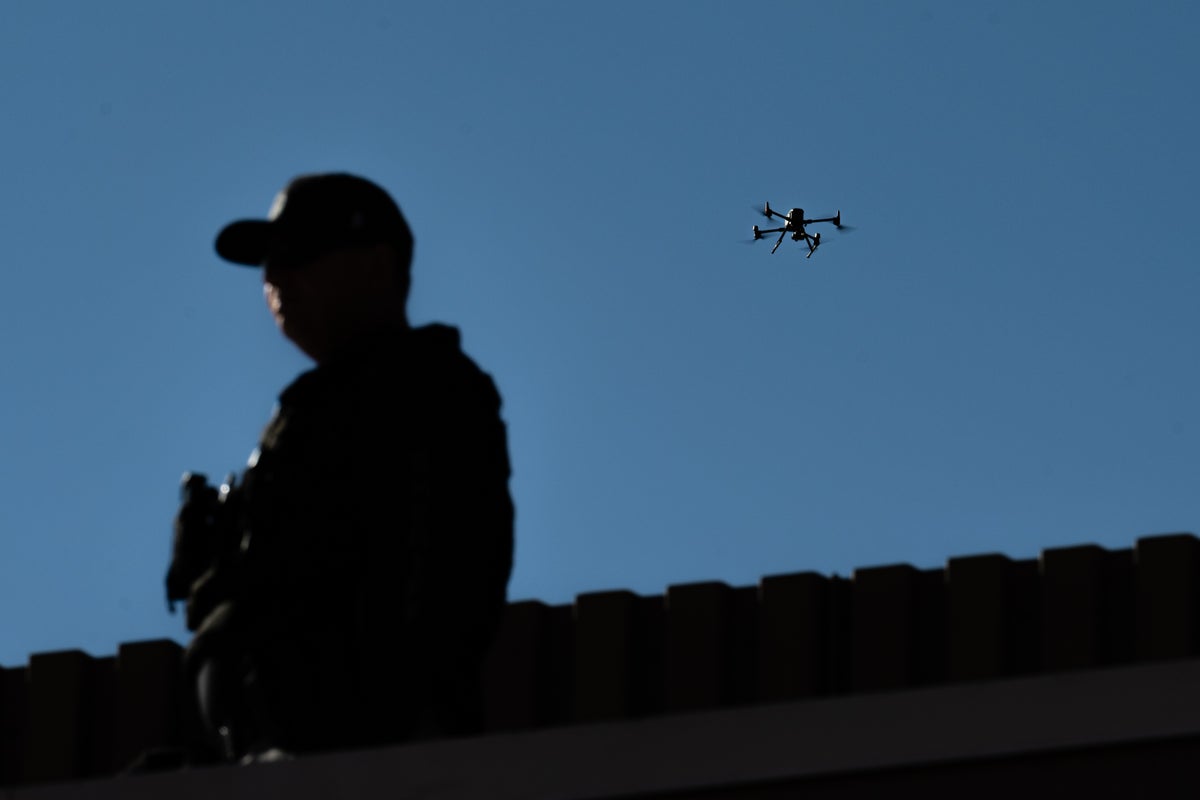
In a growing number of U.S. cities, the first responder on the scene of a 911 call is no longer a police car but rather a drone launched from a nearby precinct roof.
asserted
responder → grow → roof
From departments in Chula Vista, California, to larger agencies like the Las Vegas Metropolitan Police Department and the NYPD, law enforcement is increasingly turning to rooftop-launched aircraft to cut response times, give dispatchers live overhead video in minutes, and provide early intel before cruisers even roll out.
asserted
cruisers → turn → intel
Proponents say the technology cuts response times and relieves pressure on depleted police forces but privacy advocates warn that airborne cameras are expanding public surveillance faster than state laws and local regulations can adapt.
asserted
laws → say → surveillance
Brandon Henderson, a criminal defense attorney at HMW Law in Cleveland, Ohio, whose practice involves challenging police technology used as evidence, told The Independent that drones offer clear benefits and can “puts eyes on a scene faster without putting help there.”
asserted
drones → involve → help
But he added: “It cannot make an arrest, secure a scene, or put hands on a patient.”
asserted
It → add → patient
In St. Louis, Missouri — a city that has battled severe police staffing shortages and high violent crime rates — a new drone program was adopted earlier this month by city police.
asserted
program → battle → police
The “Aerial Response Unit” of two drones, operated by department drone pilots, takes off from launch pads on the North and Central Patrol division’s roof to answer 911 calls and assist ground response.
asserted
Unit → operate → response
Within hours of the program’s approval, drone pilots made their first flights and helped officers in the search for a missing boy who was safely returned home.
asserted
who → make → boy
“While officers searched on the ground, the drones checked several locations the boy was known to frequent or may have traveled to,” St. Louis Police Department said.
uncertain
Department → search → locations
“By covering those areas from the air, the drones freed ground officers to search other locations.
asserted
drones → cover → locations
An officer on the ground ultimately located the boy, and he was safely returned home.”
asserted
he → locate → boy
The department’s director of public affairs, Mitch McCoy, told KSDK that drones can be on scene within 70 seconds of a 911 call being dispatched.
asserted
call → tell → seconds
McCoy added that the aerial units would assist with “calls in progress” and “calls for shots fired or shot spotter activations.”
asserted
units → add → shots
“This truly will help us even potentially free up officers where a drone might be able to respond to a call instead of a police officer,” McCoy added.
uncertain
McCoy → help → call
Eyes in the sky
St. Louis is just one of many law enforcement agencies which has adopted drones after struggling to fill positions.
asserted
which → adopt → positions
From 2019 through 2024, officer resignations and retirements reduced police staffing nationwide, according to the Government Accountability Office.
uncertain
resignations → reduce → Office
In North Carolina, the Durham and Fayetteville police departments approved their drone programs earlier this year.
asserted
departments → approve → programs
The Raleigh Police Department is currently “gathering information” about the technology, WRAL reported.
asserted
WRAL → gather → technology
In New York City, the NYPD operates a Drone as First Responder program across precincts in Brooklyn, the Bronx and Manhattan.
asserted
NYPD → operate → Brooklyn
Deployed remotely from station houses, the drones fly autonomously to select priority calls — including ShotSpotter alerts, robberies and missing person searches —to stream live video to responding officers’ smartphones.
asserted
drones → deploy → smartphones
And in Las Vegas, the Metropolitan Police Department formally launched a drone program after first using the aircraft to map the extensive crime scene of the 2017 Route 91 Harvest music festival mass shooting.
asserted
Department → launch → shooting
Today, the department deploys a fleet of unmanned aircraft to cut emergency response times, inspect building interiors and assist ground personnel with search-and-rescue operations.
asserted
department → deploy → operations
Chula Vista Police Department in California was the one of the first law enforcement agencies to launch a drone program in the U.S. in 2018 and has flown more than 25,000 missions.
asserted
Department → launch → missions
The department reports its drones arrive in about 97 seconds, on average, resolving roughly one in five calls without patrol units.
asserted
drones → report → units
“What a drone offers that a patrol car cannot is information before anyone commits,” Henderson, the defense attorney, told The Independent.
asserted
Henderson → offer → Independent
“Officers arriving at a chaotic scene normally know only what a frightened caller managed to say.
asserted
caller → arrive → what
A live overhead view tells them whether a reported weapon is real, which way a suspect ran, whether a crowd is forming, and whether the emergency is an emergency at all.”
asserted
emergency → tell → way
Henderson added that resolving calls remotely can de-escalate situations before physical contact occurs.
asserted
contact → add → situations
Yet the expansion of the cameras has raised significant privacy concerns.
asserted
expansion → raise → concerns
“A drone answering a 911 call does not record only the caller or the suspect,” he said.
asserted
he → answer → caller
“It records everyone underneath it: neighbors in their yards, people on the street, families who never asked the government to watch them, most of whom never learn they were filmed at all.
asserted
they → record → whom
Academic research is beginning to measure the operational impact of these drone systems.
asserted
research → begin → systems
Scott Mourtgos, an assistant professor of criminology and criminal justice at the University of South Carolina, led what is believed to be the world’s first randomized control trial to gauge the effectiveness of using drones as first responders.
asserted
what → lead → responders
He studied the use of drones by departments in Montgomery County, Maryland, and Philadelphia, Pennsylvania, in trials that wrapped up earlier this year.
asserted
that → study → trials
His research was published in October.
asserted
research → publish → October
“What we found across both of those agencies is that certain drones in first responder programs, at least as implemented in those two agencies, certainly seem to have a positive benefit when it comes to being able to handle and respond to calls for service, 911 calls, more quickly,” Mourtgos told WRAL.
asserted
Mourtgos → find → WRAL
Mourtgos noted that the drones proved most effective when responding to so-called “Priority 2” calls — such as a retail theft or vandalism in progress — arriving roughly two minutes faster than typical response times.
asserted
drones → note → times
Yet the authors cautioned that the data could not determine whether faster arrival times outweighed the financial, organizational and privacy costs of the surveillance.
uncertain
times → caution → surveillance
Taking flight
Despite concerns, it doesn’t seem like rollout of police drones will be slowing down any time soon.
asserted
rollout → take → drones
“These programs will keep spreading because the economics work for stretched departments, and the FAA keeps making beyond-visual-line-of-sight flight easier to approve,” Henderson told The Independent.
asserted
Henderson → spread → Independent
…and 1 more, not listed.
 The Aporia