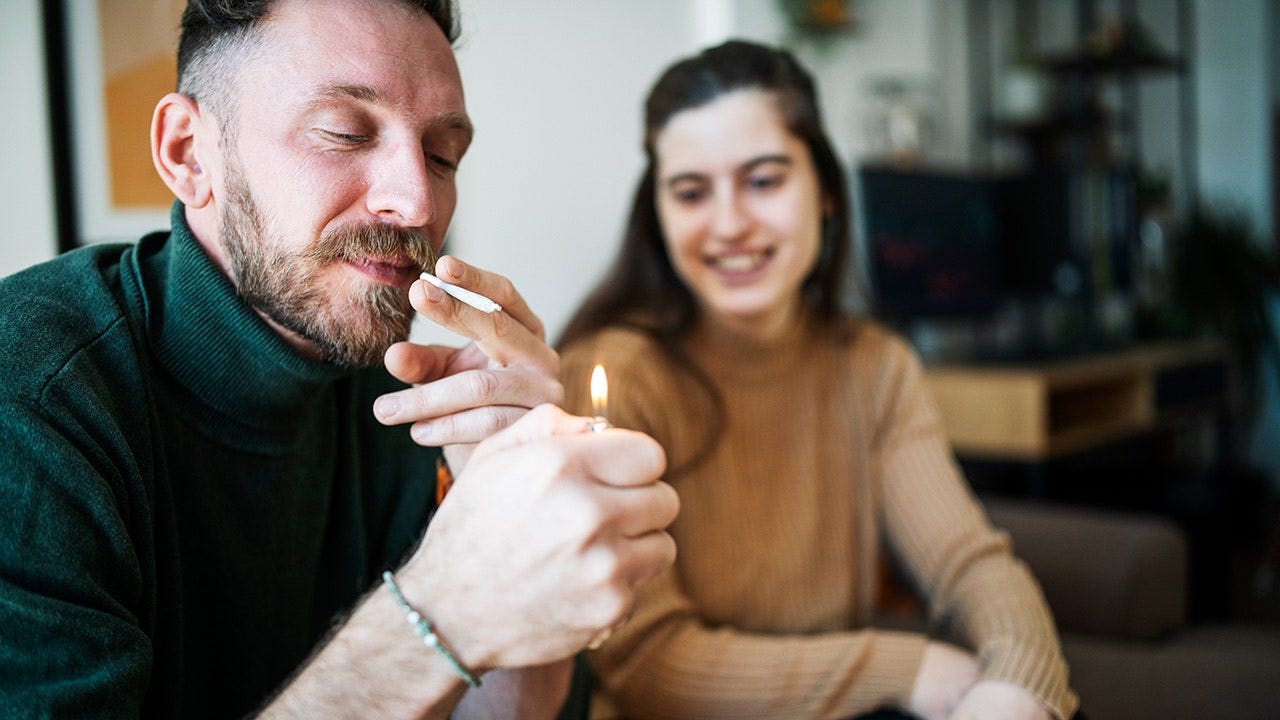
Marijuana may be making sleep quality worse, despite its widespread use as a sleep aid, a recent Northwestern Medicine study found.
uncertain
study → make → aid
The findings of the study, which included 1,266 participants, showed that both lifetime and recent cannabis users objectively had worse sleep quality, although they did not report their sleep to be worse.
asserted
sleep → include → quality
Participants were monitored for almost 35 years, from young adulthood into middle age, with scientists tracking their use of cannabis over time.
asserted
scientists → monitor → time
In middle age, participants wore a sleep monitor on their wrist for a week and filled out surveys about their sleep quality.
asserted
participants → wear → quality
This allowed researchers to compare objective and subjective reports of participants’ sleep.
asserted
researchers → allow → sleep
"Our data do not support the belief that cannabis is helpful as a sleep aid," said senior study author Mercedes R. Carnethon, Ph.D., as Northwestern Now reported.
asserted
Now → support → aid
"As cannabis becomes increasingly available and accepted, it's important to better understand its long-term associations with health behaviors such as sleep," Carnethon added.
asserted
Carnethon → become → sleep
Among all participants, a greater lifetime exposure to marijuana was linked to worse objective sleep quality.
asserted
exposure → link → quality
Those who had a higher cannabis usage over time were generally asleep for a lower percentage of the night and experienced more sleep disruption.
Similarly, recent cannabis users were more likely to have more sleep fragmentation and lower sleep efficiency, compared to people who never used the substance.
asserted
who → have → substance
The study also found there was a much higher chance that recent cannabis users would sleep longer than eight hours per night.
asserted
users → find → night
The study discusses the differences between objective and subjective reports of sleep quality.
asserted
study → discuss → quality
"What makes this study particularly interesting is that participants who used cannabis demonstrated objectively poorer sleep, yet their own assessments of sleep quality did not reflect those differences," Alfred Joshua, M.D., a board-certified emergency medicine physician based in California, told Fox News Digital.
asserted
Joshua → make → Digital
(He was not involved with the new study.)
asserted
He → involve → study
"In other words, someone may believe marijuana is helping them sleep, while objective measurements suggest otherwise."
Researchers considered multiple outside factors including age, race, sex, smoking frequency, alcohol consumption, physical activity and more.
uncertain
Researchers → believe → age
Even with these factors taken into account, the study found a consistent correlation between cannabis use and poorer objectively measured sleep.
asserted
study → take → use
The mode of cannabis consumption, such as smoking versus taking edibles, was not considered.
asserted
mode → smoke → edibles
"These findings raise important questions.
asserted
findings → raise → questions
"It is not surprising that the actual quality of sleep of these subjects, after chronic marijuana use, is poor compared to those who do not smoke marijuana because people who claim that they need to smoke marijuana before they go to sleep, in order to relax, are only kidding themselves," board-certified psychiatrist Carole Lieberman, M.D., of California told Fox News Digital.
uncertain
Lieberman → compare → Digital
(She, too, was not affiliated with the new study.)
asserted
She → affiliate → study
"It is more a psychological addiction than a physical one," she added.
asserted
she → add → one
"They enjoy the high that they get right away, but the marijuana doesn't help them to sleep better."
asserted
them → enjoy → that
"The researchers found that greater cumulative cannabis exposure was associated with reduced sleep efficiency, increased sleep fragmentation and more time spent awake after initially falling asleep," said Joshua, the board-certified emergency medicine physician.
asserted
Joshua → find → efficiency
"These findings raise important questions about whether habitual marijuana use is a sustainable strategy for managing sleep problems," he added.
asserted
he → raise → problems
Fox News Digital recently reported on other cannabis findings.
asserted
Digital → report → findings
A study of nearly 450,000 American adults, for instance, linked cannabis use to an increased risk of stroke and cardiovascular disease.
asserted
study → link → stroke
The findings were scheduled for presentation at the American Heart Association’s Scientific Sessions 2026 in Chicago Nov. 6–9.
asserted
findings → schedule → Chicago
They showed that both casual and heavy marijuana users have higher odds of heart conditions compared to non-users.
asserted
users → show → users
Khloe Quill of Fox News Digital contributed reporting.
asserted
Quill → contribute → reporting
 The Aporia