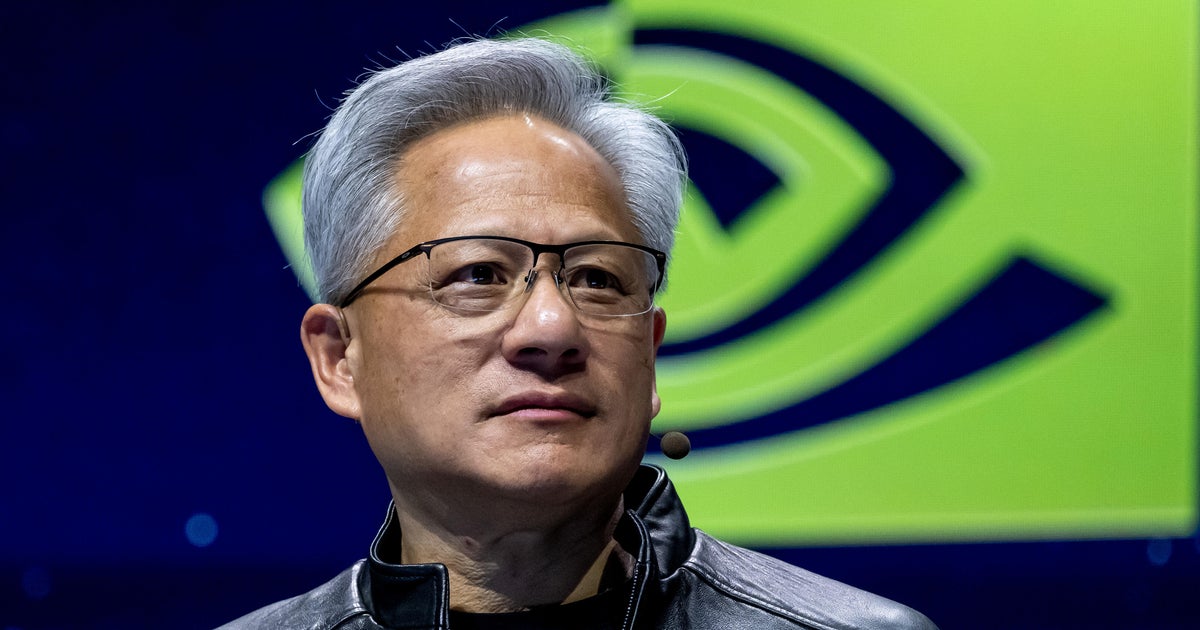
Photo via New York Post

Consider Nvidia’s Jensen Huang-led implosion a massive win for short sellers

Read the original at New York Post ↗
Cite

Gasparino, C. (2026, November 15). Consider Nvidia’s Jensen Huang-led implosion a massive win for short sellers. New York Post. https://nypost.com/2026/11/14/business/consider-nvidias-jensen-huang-led-implosion-a-massive-win-for-short-stock-sellers/

Dated from the outlet's own feed. Check the original for its byline.

Share
New York Post · collected 2026-11-15 · by Charles Gasparino

Quick Summary

This article discusses how recent events surrounding Nvidia CEO Jensen Huang, including allegations of misconduct, have been a win for short sellers. It argues that short sellers, often seen negatively, play a crucial role in checking the excessive optimism in markets by highlighting risks and potential downsides. The piece emphasizes that the ousting of Huang and the broader issues it exposes about corporate governance and market integrity underscore the importance of short sellers in providing a balanced view of stock performance.
Written by AI on 2026-11-15, from this article's own text only (the story summary below draws on all the coverage).

AI analysis

Story summary

Nvidia's CEO, Jensen Huang, was ousted due to sexual misconduct involving a woman whom federal authorities suspect may be a Chinese spy, leading to significant negative press for the company. This event has been a major win for short sellers, who profit from bets that stock prices will fall. Short sellers have been criticized as market villains but are now gaining positive attention for their role in exposing corporate governance issues and potential accounting irregularities. Huang's departure has highlighted the vulnerabilities in corporate oversight at Nvidia, which was once the world's most valuable company. This development underscores the impact of short sellers in the market, particularly in addressing inflated stock values and poor investments.

Written for “Nvidia's Stock Struggles” on 2026-11-16, grounded in this article and the 0 other(s) covering the same event.

Compared with similar articles

This article reads leans strongly left and hedges 10% of its claims. Each row says how that neighbour differs.
CBS News
Hedges 8 of 28 claims Outlet record 67/100
“The articles discuss different aspects of short selling related to Nvidia and its CEO Jensen Huang, but they do not describe the same specific event or incident.”
The Guardian
Hedges 3 of 29 claims Outlet record 65/100
“The articles describe different stages and perspectives of a developing situation involving Nvidia and Jensen Huang, not the same specific incident.”
CBS News
Hedges 0 of 3 claims Outlet record 67/100
“Article A discusses a specific demand for answers regarding Jensen Huang's affair, while Article B discusses the broader impact of revelations on Nvidia's stock and the benefit to short sellers.”
City AM
Leans right further right than this Hedges 3 of 16 claims Outlet record 94/100
“Article A reports on a shareholder lawsuit against Nvidia and its CEO, while Article B discusses the impact of the scandal on short sellers.”
CBC News
Hedges 9 of 34 claims Outlet record 72/100
“While both articles discuss the Nvidia scandal involving Jensen Huang's resignation, they focus on different aspects: the first on the market impact and stock performance, and the second on the implications for short sellers.”
The Sydney Morning Herald
Hedges 3 of 35 claims Outlet record 61/100
“Article A focuses on the impact of revelations about Nvidia CEO Jensen Huang on short sellers, while Article B discusses broader market volatility and mentions Huang's situation as one of several factors affecting the market.”
Semafor
Hedges 0 of 5 claims Outlet record 66/100
“The articles discuss the Nvidia scandal but focus on different aspects and outcomes: Article A on the impact on tech stocks and markets, while Article B focuses on the opportunity for short sellers.”

Story

Nvidia's Stock Struggles
Other · 1 article(s) covering the same event.
How this article was measured signals, leaning charts, publisher record, byline, topics and claims

Signals How these are calculated →

Claims extracted
39
sentences that state something as happening or true
Uncertain
10%
4 of 39 hedged ("reportedly", "may", "according to")
Leaning
Leans strongly left
of the writing, not the subject · beta estimate
Publisher signals
66/100
New York Post's corrections and hedging, across everything collected from it. Not a measure of accuracy.
Outlets on this story
1
Other
Same framing elsewhere
1
articles that frame the event the way this one does
Analyzed 2026-11-15 · how these are computed

How this is being covered How these are calculated →

Article leaning vs. publisher reliability
Source leaning vs. consistency

Publisher

New York Post · 20305 article(s) · 41 correction(s) detected
Running correction rate · 41 correction(s)

Who wrote this

Charles Gasparino
29 article(s) here · 1 carrying a prediction
They are reviled as the market’s villains: traders who seek to profit from bets that stocks will crater — and who sometimes even spill dirt they believe will scare investors into selling.
Maybe the worst part of the AI correction (or is it the start of a crash?) is that it has little to do with the revelations that Nvidia’s now-ex-CEO had a fling with a woman who the government alleges could also be a spy for the Chinese.
That’s instead of a management team that could and should have weighed in when whiffs of trouble began cropping up as early as last year, according to press accounts – and likely sooner.
Jensen Huang is not only a “key man” for Nvidia’s AI empire but more broadly for the US economy – but that doesn’t mean he and his job will be safe from the ire of Democrats on Capitol Hill next year.
The carnage might not end anytime soon.
The Iran conflict’s impact on fuel prices doesn’t help but the last time I checked, gas prices on average are not that different than when Biden was throttling drilling; the weakened mullahs will ultimately provide a peace dividend that many Americans favor.
OpenAI is saying it has no plans to go public this year – but senior Wall Street executives say they fully expect it will happen in the first quarter of 2027, On The Money has learned.
But as I’ve recently discovered, there’s a notable exception to this unhappy trend, and that would be Pot Inc.
“It will be years of hearings, investigations and nonstop turmoil,” one major Wall Street deal lawyer said.
With investors likely to get more details of Anthropic’s pending initial public offering as soon as Friday, the question is whether the official disclosures for the AI giant will actually stoke demand – or cause investors to think twice before tapping into stock, On The Money has learned.
Also by Charles Gasparino
Nothing else under this byline is closely related to this article, so these are simply their most recent.
All 29 articles by Charles Gasparino →

Topics

Chinese Nvidia

Subjects

Nvidia ORG · 6× Huang PERSON · 4× Chinese NORP · 3× Jensen Huang PERSON · 3× Christian Lamarco PERSON · 1× Culper Research ORG · 1×

Narrative

Huang’s ouster over his sexual escapades was more than an embarrassment for the company and the billionaire who built it; it exposed gross corporate governance flaws and potential accounting weirdness at what was once the world’s most valuable company. Among the takeaways: investors are so hooked on stock prices going up that they don’t dare to think how stocks can and will tank.
framing: assertive · carried by 1 article(s) · first seen 2026-11-15
They are reviled as the market’s villains: traders who seek to profit from bets that stocks will crater — and who sometimes even spill dirt they believe will scare investors into selling.

Claims (39 extracted, 4 hedged)

They are reviled as the market’s villains: traders who seek to profit from bets that stocks will crater — and who sometimes even spill dirt they believe will scare investors into selling. asserted
they → revile → selling
Now, with the seismic revelations about Nvidia CEO Jensen Huang, these supposed rogue speculators are getting a taste of the positive press that they have long deserved. asserted
they → suppose → that
I’m talking about short sellers, the investors who do something that seems counterintuitive: rooting for lower stock prices. asserted
that → talk → prices
Truth be told, short selling has been around for as long as there’s been markets for the simple reason they are addressing a major problem. asserted
they → tell → problem
That problem, of course, is the reality of markets being filled with touts pushing crappy investments. asserted
markets → fill → investments
The shorts provide a necessary check on the usual irrational exuberance. asserted
shorts → provide → exuberance
And yet, the shorts have taken a pounding in recent years amid the relentless bull market, fueled by super low interest rates and most recently, the AI revolution. asserted
shorts → take → rates
That is, until the tech explosion became an implosion, with a little help from Huang’s dalliance with a woman who the feds believe could be a Chinese spy. uncertain
feds → become → woman
Huang’s ouster over his sexual escapades was more than an embarrassment for the company and the billionaire who built it; it exposed gross corporate governance flaws and potential accounting weirdness at what was once the world’s most valuable company. Among the takeaways: investors are so hooked on stock prices going up that they don’t dare to think how stocks can and will tank. asserted
stocks → build → takeaways
They delight in making CEOs like Huang into superheroes when they are mere mortals prone to mistakes. asserted
they → delight → mistakes
They also have misplaced hate for short sellers. asserted
They → have → sellers
Rising share prices obscure such inconvenient facts until reality sets in, usually stoked by the shorts. asserted
reality → rise → shorts
Inside their bubbles, many investors are also too quick to demonize the very market players who call into question the prevailing and sometimes fantastical narratives. asserted
who → demonize → narratives
Indeed, there are investors who literally want to outlaw the practice of short selling. asserted
who → be → selling
Companies routinely complain to lawmakers about shorts ruining their business. asserted
shorts → complain → business
Time to bail “Pretty much all short sellers have been carried out in body bags over the past few years,” said one prominent short seller who asked not to be quoted by name. asserted
who → bail → name
“With the Huang mess, it really looks like the AI cycle is over,” the trader added, saying that’s “bad news for the market and the economy, but good news for short sellers and people who listen to them. asserted
who → look → them
For the unacquainted, short sellers make money by borrowing shares, selling them and hoping to buy them back at lower prices. asserted
sellers → make → prices
They often goose their positions by publishing negative research, another thing that rubs people the wrong way since we rely on the buoyant markets fueling retirement accounts. asserted
we → goose → accounts
Yet stocks never go straight up and shorts alert the markets when it’s time to bail, or at least take some of your winnings off the table. asserted
it → go → table
Yes, some shorts are bad actors, but anyone who knows the markets also knows the shorts aren’t the real problem facing long-term investors. asserted
shorts → know → investors
People have lost a hell of a lot more money being pushed to invest in highly touted shares that fizzle. asserted
that → lose → shares
If you don’t believe me, do a little research on the losses experienced by the meme-stock buying crowd over the past five years. asserted
you → believe → years
The shorts ID’d those meme stocks early on — just like they did the upheaval at Nvidia and Huang’s undoing. asserted
they → ID’d → Nvidia
One such player, Culper Research, headed by Christian Lamarco, raised some unsettling questions back in May about the market’s hottest stock and its rock star CEO in a detailed 40-page report titled “NVIDIA: The China Problem.” uncertain
player → head → report
The tome is instructive because most of its conclusions were either derided or ignored by the market that kept pushing Nvidia shares higher to its one-time $5 trillion valuation. asserted
that → deride → valuation
Here’s the latest on the Nvidia CEO’s affair with an alleged Chinese spy: asserted
latest → ’ → spy
- Nvidia’s Jensen Huang shamelessly flaunted Chinese ‘spy’ mistress in front of daughter - asserted
Huang → flaunt → daughter
How ex-Nvidia CEO Jensen Huang threw tantrums in the office, dressed down tech execs: ‘I hope you die’ asserted
you → throw → execs
Romantic photos show ex-Nvidia boss Jensen Huang with alleged Chinese spy lover as company faces legal peril - asserted
company → show → peril
How ex-Nvidia CEO kept top executives in dark about his string of affairs: ‘Jensen by design’ asserted
CEO → keep → design
Even more instructive is that Culper nailed it. asserted
nailed → nail → it
Not only did it warn about an Nvidia vendor named Megaspeed and suspicions that it was funneling AI chips to China in violation of US law, it also flagged that Huang had an “uncomfortably close relationship” with a senior employee of the company, a Chinese woman named Alice Huang. asserted
Huang → warn → company
As we now know, that relationship turned out to be very close indeed, and cost Huang his job. asserted
relationship → know → job
Nvidia’s shares have been getting trounced almost daily as one unseemly disclosure keeps piling on top of another. asserted
disclosure → trounce → another
It didn’t help matters that when confronted, the company initially suggested that Jensen Huang’s relationship with Alice Huang was purely business, just before it admitted that it wasn’t. uncertain
it → help → Huang
Putting out statements like that on material matters can be a significant violation of securities laws. asserted
Putting → put → laws
A company that was the ultimate market darling is facing an existential crisis. asserted
that → face → crisis
You could have seen all of this coming if you listened to the shorts. uncertain
you → see → shorts

Give feedback · no sign-in needed

No sign-in needed for now. Your note is sent without a name, so it cannot be answered.

History Support