HARARE, Zimbabwe (AP) — The electric vehicle revolution in Zimbabwe began on rural dirt paths.
asserted
revolution → begin → paths
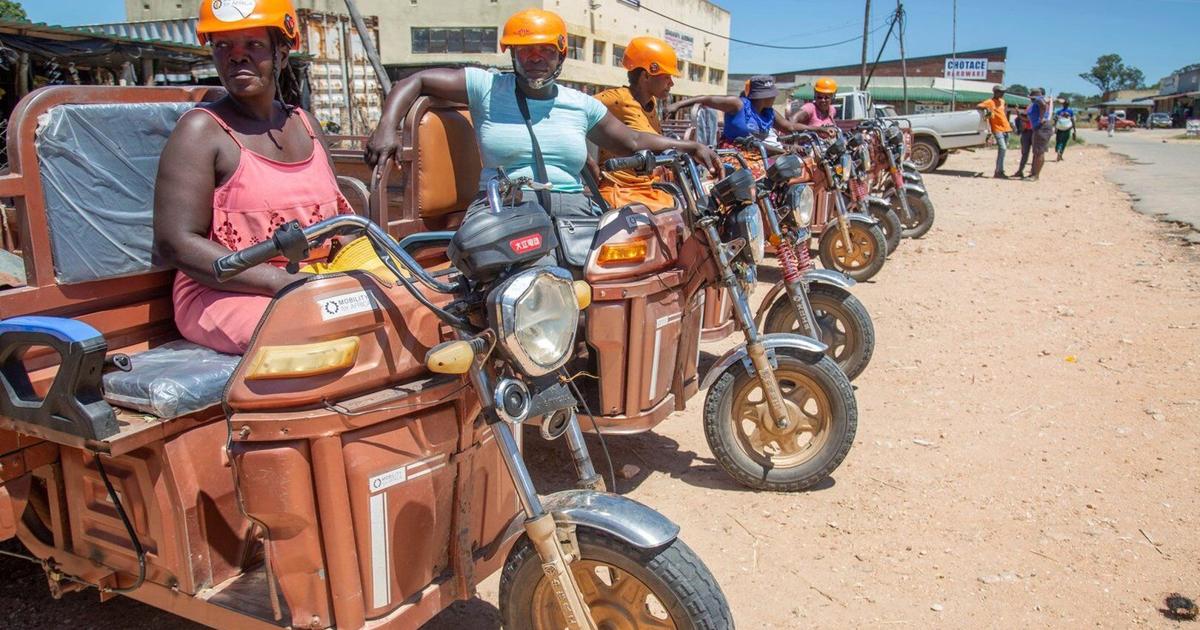
Three-wheeled vehicles carried cabbages to markets, women farmers to their fields and patients to clinics in communities where transport has long been scarce.
asserted
transport → carry → communities
For farmer Agefi Mutambo, the owner of an electric three-wheeler since 2021, it has transformed her business and family.
asserted
it → transform → business
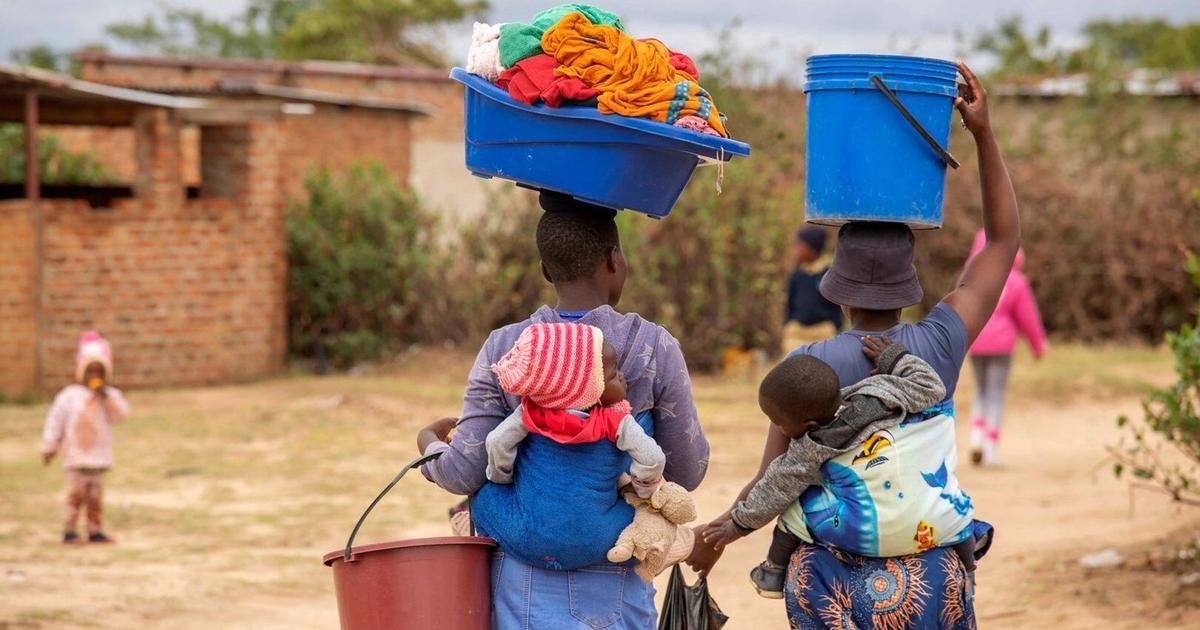
Before, she walked seven to 10 kilometers (4.3 to 6.2 miles) balancing a 20-kilogram (44-pound) bucket of tomatoes on her head that she sold for $6.
asserted
she → walk → 6
I would do a single trip a day, arrive at the market late and the produce would no longer be as fresh,” the 56-year-old said.
asserted
old → do → market
Now she makes two to three deliveries a week transporting 300 kilograms (661 pounds) of produce on each trip, grossing roughly $80 a trip supplying schools and clinics.
asserted
she → make → schools
She also ferries neighbors to hospital, sometimes at midnight for a woman in labor.
asserted
She → ferry → labor
“When my battery is low, I simply swap it for $4, and I am back on the road,” she said.
asserted
she → swap → road
The 3-wheelers are designed for rural entrepreneurs
Mutambo is among dozens of rural women entrepreneurs in Zimbabwe whose lives have been transformed by electric tricycles introduced by local social enterprise Mobility for Africa in 2019.
asserted
lives → design → 2019
The company introduced the solar-charged tricycles, powered by lithium-ion batteries, mainly for rural women, under a lease-to-own scheme costing about $30 a week.
asserted
company → introduce → 30
Called “Hamba,” meaning “go” in the local Ndebele language, the vehicles can carry loads of over 400 kilograms (880 pounds) and travel about 100 kilometers (62 miles) on a single charge.
asserted
vehicles → call → charge
Solar-powered charging stations and swappable batteries allow drivers to exchange depleted batteries rather than wait for them to recharge.
asserted
them → power → batteries
Across parts of Africa, motorcycles and three-wheelers are emerging as a route to electric mobility, particularly in rural communities long overlooked by conventional mobility businesses.
asserted
motorcycles → emerge → businesses
While electric cars gain ground in wealthier markets, these smaller vehicles can operate with less extensive and expensive charging infrastructure, offering a potentially cheaper leapfrog to electrification for the continent of 1.5 billion people.
asserted
vehicles → gain → people
Africa is starting from behind
Despite holding vast reserves of critical minerals used in electric vehicle batteries, Africa remains a minor player in the global EV market.
asserted
Africa → start → market
Africa sold about 25,000 electric cars in 2025, concentrated in Egypt, Morocco and South Africa, compared with more than 20 million worldwide, according to the International Energy Agency’s Global EV Outlook 2026.
uncertain
Africa → sell → Outlook
In 2026, the United Nations Economic Commission for Africa identified unreliable electricity infrastructure, limited technical capacity and weak regulation as barriers to adoption.
asserted
Commission → identify → adoption
But the market for small electric vehicles that are relevant to everyday transport, deliveries and commerce is growing, said Hezbon Mose, an e-mobility expert.
asserted
Mose → grow → transport
Africa’s transition is largely centered on income-earning motorcycles and three-wheelers, with Ethiopia an exception because of its car-focused policies, he said.
asserted
he → center → policies
2 and 3 wheels are the way to go on this continent
While two-wheelers remain dominant, a three-wheeler market is emerging.
asserted
market → go → continent
In Kenya, annual electric three-wheeler registrations rose from 39 in 2023 to 517 in 2025, reaching 1,965 by June this year, said Mose, co-founder of non-profit, E-Mobility Africa.
asserted
Mose → rise → Africa
The shift also has potential public health benefits.
asserted
shift → have → benefits
Electric motorcycles and three-wheelers produce no exhaust fumes, offering an opportunity to reduce roadside pollution.
asserted
motorcycles → produce → pollution
In Kenya’s capital, Nairobi, where motorcycles are part of public transport culture, road transport alone is responsible for 40% of fine particle air pollution, according to the Clean Air Fund.
uncertain
transport → accord → Fund
A 2025 study published in the World Electric Vehicle Journal also found that electrifying Nairobi’s motorcycle fleet would eliminate tailpipe particulate emissions from those vehicles, while cutting daily automotive carbon dioxide emissions by about 85%.
asserted
electrifying → publish → %
Analysts say electric cycles have a range of uses
For entrepreneurs, the appeal lies in the economics of income-generating vehicles rather than luxury, said Mose, the expert.
asserted
Mose → say → luxury
“Electric three-wheelers already pay for themselves for working drivers,” he said.
asserted
he → pay → drivers
A taxi electric three-wheeler in the Kenyan coastal city of Mombasa can save roughly $4 to $10 a day in running costs compared with a petrol-powered vehicle, with the higher purchase price recouped in five to 21 months, said Mose.
asserted
Mose → save → months
“They suit Africa because they are income assets, not consumer goods.
asserted
they → suit → Africa
The same chassis serves as taxi, last-mile delivery, waste collection, and produce haulage, widening the market well beyond public transport,” he said.
asserted
he → serve → transport
Citing industry figures, Mose said roughly 30 million Africans earn a living on two- and three-wheelers, yet fewer than 200,000 are electric.
asserted
200,000 → cite → wheelers
“An owner buys on daily cash flow, which is exactly where electric wins,” said Mose.
asserted
Mose → buy → flow
They bring distances within reach
Investors are backing businesses developing electric motorcycles, three-wheelers, charging infrastructure and battery-swapping systems, especially in East Africa.
asserted
Investors → bring → Africa
Shantha Bloemen, the Mobility for Africa founder, reckons lasting growth requires financing models that can survive beyond donor-funded projects.
asserted
that → reckon → projects
“We have seen what happens with aid, how temporary it is when countries look at other priorities,” she said.
asserted
she → see → priorities
“They cut Africa, their projects go to the ground.
asserted
projects → cut → ground
We need humanitarian assistance, but we need development finance more.”
asserted
we → need → finance
For Bloemen, the idea was to address basic obstacles to rural economic activity: the lack of reliable, affordable transport and funding.
asserted
idea → address → transport
“When transport is scarce, produce rots in fields, children miss school and families cannot access healthcare,” Bloemen said.
asserted
Bloemen → rot → healthcare
“Transport becomes the difference between subsistence and commerce.”
asserted
Transport → become → subsistence
…and 8 more, not listed.
 The Aporia