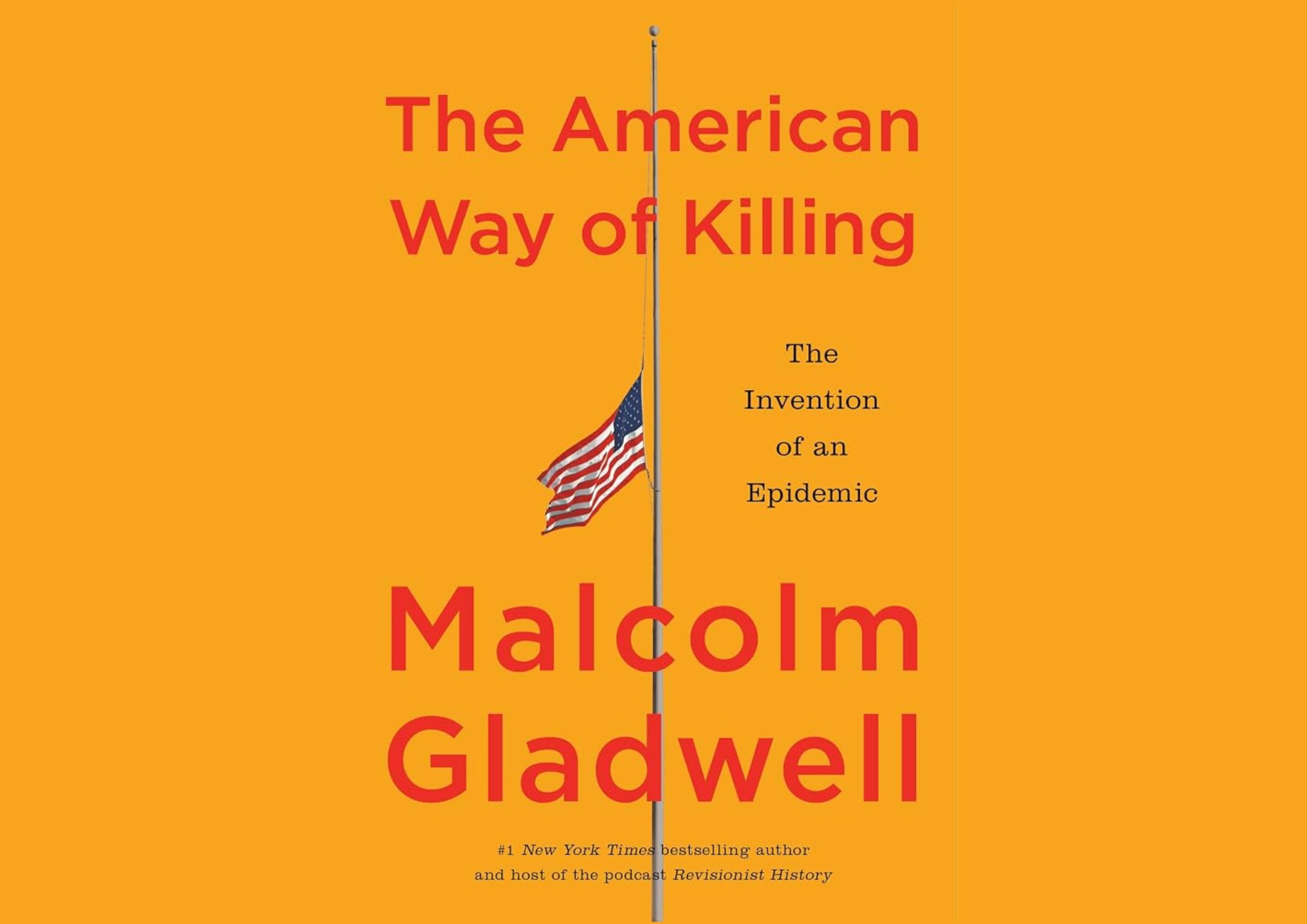
In The American Way of Killing, he takes on America's notorious problem with gun violence.
asserted
he → take → violence
Long after The Tipping Point, Gladwell hasn't lost his knack for highly digestible prose.
asserted
Gladwell → lose → prose
At its best, The American Way of Killing is a gripping story about our struggles to contain homicide, populated with compelling characters and full of interesting tidbits.
asserted
Way → contain → tidbits
At its worst, though, it can feel like Gladwell came up with a handful of murder- and gun-related topics he wanted to cover, and then simply picked at random which positions he'd take on them.
asserted
he → feel → them
He takes turns smacking around both the left and the right but too often leaves the reader tepidly unconvinced rather than impressed with his heterodoxy.
asserted
He → take → heterodoxy
The central conceit here is that the two sides of the debate are having "dishonest conversations," not necessarily lying to each other, but, for example, pretending irrelevant things are highly consequential or avoiding difficult conclusions.
asserted
things → have → conclusions
Clearly we need a real truth-teller, such as Malcolm Gladwell, to set us straight.
asserted
we → need → us
He begins this project with a chapter focusing on so-called assault weapons.
asserted
He → begin → weapons
Here he thinks it's the left that's failing to see things accurately, and conservatives might find themselves cheering at the recitation of their longstanding talking points.
Assault weapons do not spray bullets when you hold down the trigger like a machine gun, and the gun-control movement has long capitalized on confusion about this—going back to a 1988 report from the activist Josh Sugarmann, which forthrightly relished the fact that, in the public's eyes, "anything that looks like a machine gun is assumed to be a machine gun."
uncertain
that → think → gun
Assault weapons differ from other semiautomatic rifles mainly by including tactical features that are merely cosmetic for your typical gun owner, like a pistol grip or a folding stock.
asserted
that → differ → grip
Handguns are far more common than assault weapons in the everyday gun violence that claims countless lives, and have historically been more common in mass shootings too (though one might add this has been shifting in recent years).
uncertain
this → claim → years
But if you've been following the American gun-control debate for a while, you'll feel bored by these obvious points, if not sucked into a time warp.
asserted
you → follow → warp
How long can we stay mad about a cynical marketing ploy from 1988, anyway?
asserted
we → stay → 1988
I was four years old at the time, and I first read about it in college 20-some years ago.
asserted
I → read → college
I hate to say it, but I didn't even come away convinced that today's assault-weapon banners are all that dishonest.
asserted
banners → hate → it
Four decades ago, the call to ban assault weapons was a scheming ploy to undermine gun rights from a guy who'd been involved with an actual group called the National Coalition to Ban Handguns; today, the Supreme Court has taken handgun bans off the constitutional table, and banning assault weapons is a desperate attempt to find any type of gun that Americans, or at least folks in a handful of states, might be willing to part with.
uncertain
Americans → ban → states
A pending Supreme Court case might take them off the table, too.
uncertain
case → pende → table
Speaking of the Supreme Court, that's the next focus of Gladwell's quest to impose honesty on the discussions everyone else is having.
asserted
everyone → speak → discussions
In 2008's Heller decision, a conservative majority interpreted the Second Amendment to protect an individual right to keep and bear arms, even for those who don't serve in a militia.
asserted
who → interpret → militia
Of course, debates over this awkwardly phrased provision—"A well regulated Militia, being necessary to the security of a free State, the right of the people to keep and bear Arms, shall not be infringed"—have been a mainstay of the gun discussion forever.
asserted
right → phrase → discussion
There's no question the Founders were highly distrustful of standing armies and wanted to ensure local militias would not be disarmed, in light of the Constitution allowing the federal government to maintain an army and navy.
asserted
government → be → army
The big question is whether, by stating this purpose in the amendment's prefatory clause, they intended to limit the right to bear arms to militia participants.
asserted
they → state → participants
Gladwell thinks the Court gave short shrift to the amendment's first half, which has long been the core contention of those seeking to limit the provision's reach—but takes the additional step of insisting that, deep down, the Founders' concerns about militias were really about protecting the South from slave revolts.
asserted
concerns → think → revolts
If we buy this argument, first made by the legal scholar Carl Bogus, not only might the Second Amendment have created a right limited to militia members, but the entire thing might be built on a foundation every modern American would recognize as illegitimate.
uncertain
American → buy → foundation
Unfortunately, the claim fails to hold water.
uncertain
claim → fail → water
Southern militias were indeed used against slave revolts, but this was not the decisive reason the Constitution contains a right to keep and bear arms.
asserted
Constitution → use → arms
As Charlie Cooke (a former boss of mine) has explained in National Review, the theory fails to explain why Second Amendment-style language appears even in the constitutions of free states.
asserted
language → explain → states
The historian Noah Shusterman has further highlighted the genuine importance of the debates over militias and standing armies at the time.
asserted
historian → highlight → time
He concludes that "a Bill of Rights for a republic that stretched from Pennsylvania to New Hampshire would also have included an amendment dealing with militias and/or standing armies; and, when the First Congress wrote the original set of Amendments to send out for ratification, a Bill of Rights which did not mention the militia would have raised objections up and down the Atlantic Seaboard."
asserted
which → conclude → Seaboard
Some of the book's other chapters fare a bit better.
asserted
Some → fare → chapters
One details how—thanks to abundant practice opportunities—urban American trauma centers have gotten pretty good at saving gunshot victims who manage to make it to the hospital.
asserted
who → detail → hospital
I was a little perplexed when Gladwell blamed these improvements for creating "moral hazard" and giving Americans an easy way to "change the subject" from the thousands of gun murders that still happen, though.
asserted
that → perplex → murders
He also spends some time with the work of Jens Ludwig, whose book I reviewed in these pages.
asserted
I → spend → pages
Ludwig points out that most homicides are not elaborate Agatha Christie plots; they often grow out of routine arguments where tempers fly out of control, especially when the hotheads involved have guns.
asserted
hotheads → point → guns
Training high-risk individuals to control their impulses better is a fairly promising anti-violence approach.
asserted
Training → train → impulses
Gladwell winds the book down the way he began it, with chapters taking aim at each side of the political aisle.
asserted
chapters → wind → aisle
One argues that America is underpoliced relative to other developed countries—especially when one looks at how many officers a country has for each homicide it experiences, as opposed to focusing on total population.
asserted
it → argue → population
The other dives into the Supreme Court's other big recent pro-gun decision, 2022's Bruen, which recognized a right to carry a gun without proving a special need to do so to the government.
asserted
which → dive → government
Rather than reciting the usual arguments against the majority's core conclusion, Gladwell faults America's enchantment with running into the historical weeds in the service of pedantic legal arguments—spotlighting the outsized role that England's 1328 Statute of Northampton and the related Sir John Knight's Case (from 1686) ended up playing in the case.
asserted
Statute → recite → case
Not seeming to quite understand how a constitution works, Gladwell also wishes the Court had given more weight to the policy pros and cons of restricting gun carrying.
asserted
Court → seem → carrying
…and 9 more, not listed.
 The Aporia