Like clockwork, Anita McCulloch moves from house to house with a stack of flyers and letters tucked under her arm.
asserted
McCulloch → move → arm
The dogs know when the Canada Post mail carrier is coming up the driveway.
asserted
carrier → know → driveway
They perch on the windowsill at the sight of McCulloch’s bright green vest, their tails wagging as they rush to meet her at the front door before their owners know she’s there.
asserted
she → perch → door
It’s one of her favourite parts of the job — and on Friday, she said goodbye to all of it.
asserted
she → ’ → it
It was 60-year-old McCulloch’s last day of door-to-door delivery in Rexdale, her beloved northwest Toronto neighbourhood, filled with people she’s grown to care for over the last 2 1/2 years.
asserted
she → fill → years
“Even a smile or a ‘hello’ makes a difference in a person’s life, it makes a difference in mine,” McCulloch said, tearing up just before her shift began.
asserted
shift → make → mine
“That is now all changing.”
asserted
That → change → ?
Hundreds of homes and businesses in that part of the city had their last day of door-to-door delivery as Canada Post phases in community mailboxes for roughly four million addresses over several years.
asserted
Post → have → years
It’s a key pillar of the beleaguered Crown corporation’s plans to overhaul its business model amid the decline of letter mail and huge financial losses.
asserted
It → ’ → mail
The neighbourhood, decorated with old trees and crunchy autumn leaves, is on the list of Canada Post’s earliest home delivery conversions, starting on Monday, despite concerns over accommodation for those with accessibility issues.
asserted
neighbourhood → decorate → issues
Several other neighbourhoods in the Greater Toronto Area set to lose door-to-door mail delivery in 2027 include those in Pickering, Ajax, Mississauga and Brampton.
asserted
set → set → Pickering
In an April news release, Canada Post said the change will “strengthen the post service” and meet its mandate without being a “recurring burden on taxpayers.”
asserted
change → say → taxpayers
It added that nearly three out of every four Canadian addresses already receive their mail through “some form of centralized delivery.”
asserted
addresses → add → delivery
After the COVID-19 pandemic years, she said human contact has never been more important.
asserted
contact → say → years
She has countless stories of the connections she’s made over the years, including elderly residents who know her by name and dogs that follow her from home to home with their tails wagging.
asserted
tails → have → home
“Whether you’re a part of it for two years or 25 years, you are part of that community.
asserted
you → ’re → community
You know your people,” McCulloch said.
asserted
McCulloch → know → people
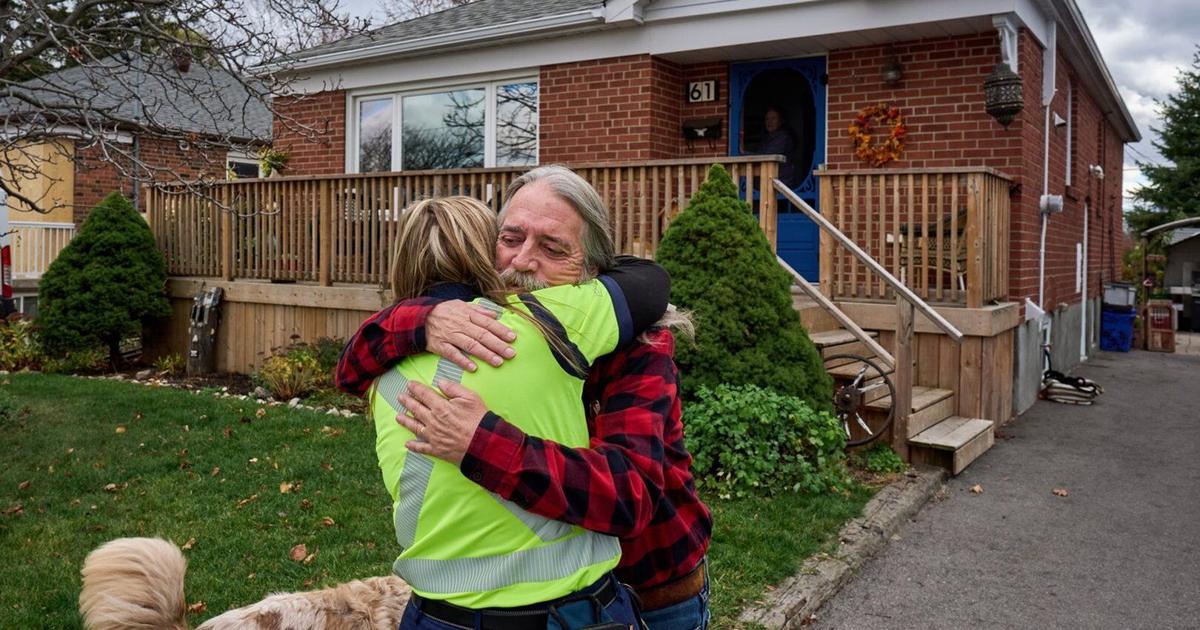
A thank-you message awaited McCulloch on Carol and Steve Kay’s driveway, written in brightly coloured chalk by the couple’s grandchildren.
asserted
message → await → grandchildren
As soon as the mail carrier saw it, she immediately teared up as the couple and their seven-year-old dog, Red, rushed down the steps to give her a hug goodbye.
asserted
couple → see → hug
Steve Kay said McCulloch has been almost a part of the family and has always looked out for the couple and their neighbours.
asserted
McCulloch → say → couple
“She cares about what she does,” Steve said.
asserted
Steve → care → what
“It’s just wrong to see her taken away.”
asserted
her → ’ → ?
The couple watched as Red followed McCulloch the rest of her route down the block.
asserted
Red → watch → block
It’s their normal routine every time the mail carrier comes by.
asserted
carrier → ’ → ?
“I can’t take the dog for a walk ‘till after she delivers (the mail),” Steve said.
asserted
Steve → take → mail
For the Kays and their neighbours, including Martin Murchie, the switch to community mailboxes has been an unwelcome change.
asserted
switch → include → mailboxes
“We’re not fond of the idea. We still prefer that door-to-door access,” Murchie said.
asserted
Murchie → prefer → access
“There’s a human element to this that I think everybody’s missing out on.”
asserted
everybody → ’ → that
Rain or shine, Katherine Petrie said she knew she’d be seeing McCulloch at her doorstep with a smile on her face.
asserted
she → say → face
Petrie, who has lived in her home for 59 years, said the mail carrier still stops by in any case to say hello.
asserted
carrier → live → case
Beyond not being able to see her favourite mail carrier every day, Petrie said she has concerns about possible community mailbox vandalism and having her mail stolen.
asserted
mail → see → vandalism
“I know I’m going to get my cheque and (McCulloch) will put it in the mailbox,” she said.
asserted
she → know → mailbox
But with community mailboxes, “you can never tell.”
asserted
you → tell → mailboxes
McCulloch’s role goes beyond slotting pieces of paper into people’s mailboxes; she also keeps an eye on residents that may need help.
uncertain
that → go → help
She recalled how a two-year-old girl wandered into the street one day as she was delivering mail in the neighbourhood and elderly residents who needed help after suffering an injury inside their home.
asserted
who → recall → home
“I can’t tell you the number of times 911 has been called because we’ve noticed something that’s not supposed to be in the community or something’s happened to somebody,” she said.
asserted
she → tell → somebody
“We’re there every day.”
asserted
We → ’re → ?
Zach Avdelopoulos, president of the Canadian Union of Postal Workers Toronto local, said the change will be difficult for mail carriers and they are urging communities to voice their concerns over the switch to community mailboxes.
asserted
they → say → mailboxes
The union has been advocating to keep home delivery, especially for residents with a disability or accommodation needs.
asserted
union → advocate → disability
“You see how much connection she has with the public,” he said of McCulloch.
asserted
he → see → McCulloch
…and 9 more, not listed.
 The Aporia