Migrant workers in Saudi Arabia continue to face widespread exploitation and barriers when accessing justice more than a year after the Kingdom overhauled controversial labour laws, a new report has found.
asserted
report → continue → laws
The report, compiled by UK-based rights organisation ALQST and shared exclusively with The Independent, concludes that little has changed for the over 14 million migrant workers based in the country, despite promises to end a pattern of ongoing exploitation.
asserted
little → compile → exploitation
Two-thirds of migrant workers surveyed by ALQST between March and May 2026 said they had not received their wages for months at a time, while a quarter said they had been falsely reported as absent from work - putting them at risk of deportation.
uncertain
they → survey → deportation
Only 22 per cent reported not facing any violations of their rights.
asserted
cent → report → rights
Contracts used to control workers
The Kafala system meant that foreign workers were dependent on their sponsors for their right to remain and leave the country, making them vulnerable to abuse and exploitation.
asserted
them → use → abuse
In March 2025 authorities announced that this would be abolished and labour reforms based on a “contractual relationship improvement initiative” were introduced.
But the report says that loopholes exist that are still being exploited by employers.
asserted
that → announce → employers
Under the reforms, if a worker wants to leave during the period of their contract for a holiday or for any other purpose, they must apply through a government website available only in Arabic and English and pay a non-refundable processing fee of SAR 200 or $53.
asserted
they → want → 200
The sponsor can object to the request on the grounds that they do not believe the worker will return and complete their contract, which then prevents the employee from leaving.
asserted
which → object → employee
Despite passport confiscation being illegal under Saudi law, the report says that the practice remains “common” and that “employers are rarely investigated or fined by the authorities”.
asserted
employers → say → authorities
It adds that sanad qabd, a practice entailing a worker being forced to sign a voucher for receipt of cash under threat or coercion for money not received, remains commonplace.
asserted
qabd → add → money
“ALQST has heard of employers requiring workers to sign receipts acknowledging payment of money they never received as a condition for not objecting to their request for an exit visa,” the report reads.
asserted
report → hear → visa
“Others have demanded that workers find a colleague to act as guarantor, agreeing to compensate the employer financially if the worker does not return and complete their contract.
asserted
worker → demand → contract
Although the reforms say that a worker can change employers if they secure a new job, they must however compensate their current employer for the remainder of their contract, pay contractual penalties and meet any other financial obligations within their contract.
asserted
they → say → contract
These costs can range between $173 for issuing a new resident permit up to $2,650 for multiple transfers.
asserted
costs → range → transfers
The costs can amount to four times the average monthly wage for non-Saudi workers
The report warns that the perception that conditions have improved could draw more vulnerable workers to Saudi Arabia, where they will continue to have little protection.
uncertain
they → amount → protection
‘I returned home with nothing’
asserted
I → return → nothing
Pearl Blignaut, a South African national and mother-of-one, moved to Saudi Arabia with her family after the reforms were introduced in August 2025.
asserted
reforms → move → August
She was promised accommodation, reimbursement for plane tickets, and funding for half of her son’s school costs.
asserted
She → promise → costs
However, she was not paid for this and on top had to pay additional fees for processing her visa.
asserted
she → pay → visa
She then discovered she was being paid less than promised after her attendance record was reportedly being manipulated to make it appear as if she was absent.
uncertain
she → discover → less
When she applied to a labour court to complain about her delayed wages, her employment contract was terminated.
asserted
contract → apply → wages
She says she was held hostage in Saudi Arabia while an exit visa was then issued, and fled while the case was ongoing amid fears she could be sent to a detention and deportation centre with her family.
uncertain
she → say → family
“It was a horrendous experience,” she told The Independent.
asserted
she → tell → Independent
“We were completely ignored.
asserted
We → ignore → ?
My last email I sent about a month ago where I was expressing my absolute disgust and the fact that I've still not been paid what is due to me, money that I owe my retired parents, which I cannot pay back.”
asserted
I → send → which
She says she came back to South Africa with “absolutely nothing”.
asserted
she → say → nothing
“I've never experienced such anxiety and helplessness, and the trauma it caused my son, who was only 10-years-old at the time.”
asserted
who → experience → time
She added: “I'm aware of a lot of teachers that have experienced things similar to what I've experienced as well.”
asserted
I → add → what
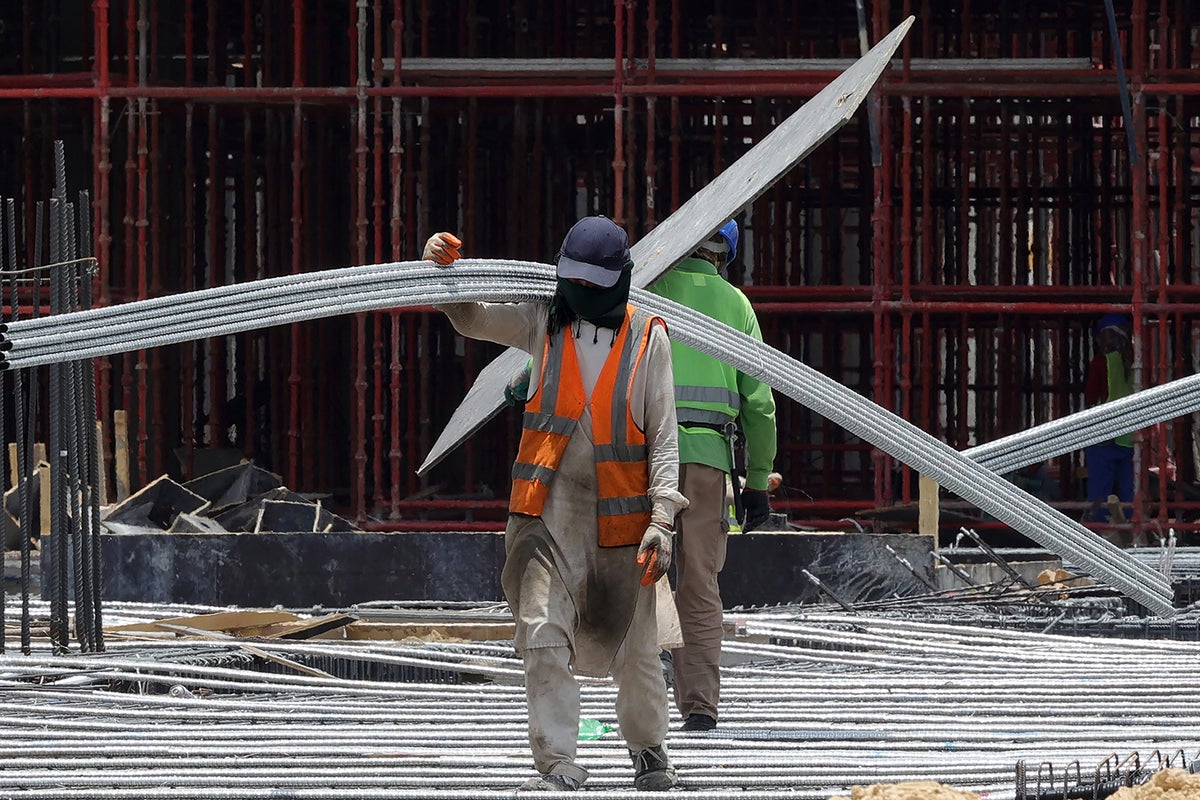
Large numbers of migrant workers in the Kingdom have died in huge construction projects working in harsh desert conditions and the searing heat.
asserted
numbers → die → conditions
Promises to improve health and safety conditions have not been implemented, the report suggests.
uncertain
report → improve → conditions
It adds that “putting workers at risk is not a criminal offence in Saudi Arabia and injured workers rarely receive compensation even if their employer is found to be at fault”.
asserted
employer → add → fault
In some cases low-paid workers have been asked to pay for their own safety equipment or have had the cost deducted from their wages.
asserted
cost → pay → wages
The report says that workers in excessively hot kitchens with poor ventilation “may suffer burns, heat-related illnesses, or injuries caused by slips and falls”.
uncertain
workers → say → slips
“In the construction sector, the absence of appropriate safety measures can lead to life-changing injuries, including the loss of limbs, permanent disabilities, or death,” it adds.
asserted
it → lead → limbs
It explains that conditions extend to accommodation that is often overcrowded and “fails to meet basic health and safety standards of sanitation and ventilation”.
asserted
that → explain → sanitation
Deaths by falls or accidents have also been not been investigated, say ALQST.
asserted
ALQST → investigate → falls
The report also highlights discrimination in recruitment with roles advertised for some nationalities and not others.
asserted
report → highlight → nationalities
Despite the government issuing a resolution to prohibit “any kind of discrimination”, regulations are “very weakly enforced and the only penalty for proven failure to comply is a small administrative fine”.
asserted
penalty → issue → failure
Two-thirds of workers reported not receiving wages due to falsely being recorded as absent from employment despite attendance.
asserted
thirds → report → attendance
A Human Rights Watch report in 2024 found that 128 out of 130 migrant workers in Saudi Arabia had paid illegal recruitment fees, with Amnesty International reporting large recruitment fees in November 2025.
asserted
International → find → November
…and 1 more, not listed.
 The Aporia