Dave Maass has been writing about comics for more than 20 years, and now he also writes comics.
asserted
he → write → comics
By day, he teaches tech investigative techniques at the University of Nevada, Reno Reynolds School of Journalism and researches surveillance at the Electronic Frontier Foundation.
asserted
he → teach → Foundation
If I was the manager of a comic book store, I’d create a section for “journalism nerdcore.”
asserted
I → create → nerdcore
It’s where I would stock Transmetropolitan, DMZ, and Abbott–comics that place fictional journalists in the center of genre stories, be it science fiction, action or horror.
asserted
it → ’ → stories
Despite their daylight jobs, Spider-Man and Superman wouldn’t be allowed there, but DC’s Lois Lane would find a home of her own.
asserted
Lane → allow → own
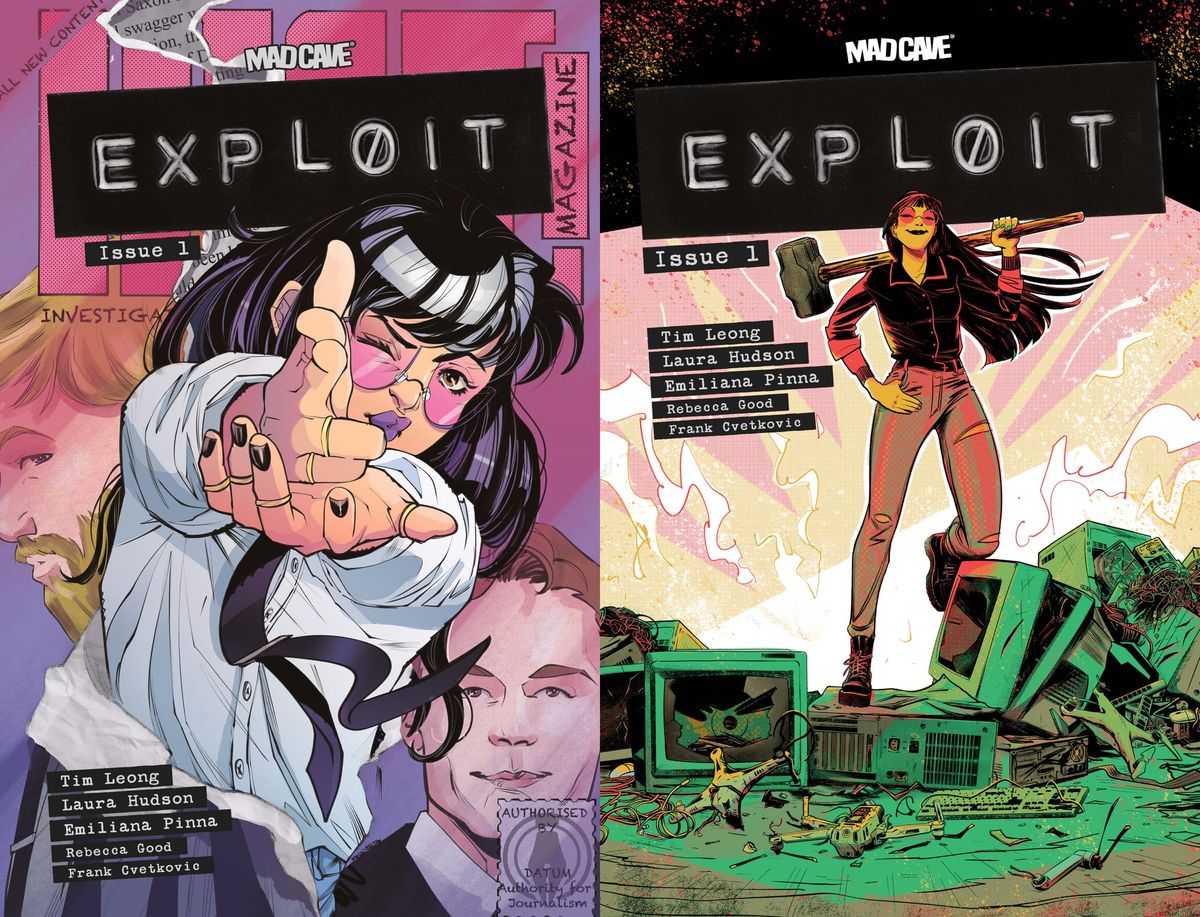
On the end-of-shelf display, with a big fat, Sharpie-written “Employee Pick of 2026” sign: Exploit, the new comic series from Laura Hudson and Tim Leong and illustrator Emiliana Pinna, which was just published last month by Mad Cave Studios in its collected trade paperback volume.
asserted
which → write → volume
It doesn’t get more journalism nerdcore than its tag line: “Don’t Bury The Lede. Bury Your Enemies!”
asserted
It → get → Enemies
Exploit is an action thriller inspired by the battle raging right now between the tech oligarchy and the independent press.
asserted
Exploit → inspire → oligarchy
Editorial intern Kirby Kuo is trying to score her first byline in RIOT!, a WIRED-style print magazine, before the newsroom is wiped out by its soon-to-be new owner, a thin-skinned Alex Karp-flavored cyberlibertarian-turned-technofascist.
asserted
newsroom → try → owner
But when the subject of her reporting is assassinated on a live stream, Kirby finds herself facing the blame, on the run and forced to place her trust in agoraphobic hacker Lenox and Cold War-alum cybermercenary Ipsum.
asserted
herself → assassinate → Lenox
Creators Hudson and Leong shared the masthead at WIRED (senior editor and director of digital design, respectively), but long before that they ran Comic Foundry, where they were “the team that changed comics journalism forever,” as ComicsBeat put it.
asserted
ComicsBeat → share → it
Their careers have dovetailed between comics and journalism for years, with Hudson putting time at The Verge and ComicsAlliance and logging bylines in The Guardian, The New York Times, and Slate, and Leong holding creative roles at Fortune and Entertainment Weekly, while also writing and designing the Super Graphic series.
asserted
Leong → dovetail → series
All that experience shows.
asserted
experience → show → ?
But the panels radiate with the earnest love for scrappy, independent journalism–especially print journalism–and a molten fury for those who threaten it.
asserted
who → radiate → it
I asked Hudson some questions to learn more about the heart and rage she poured into this series.
asserted
she → ask → series
The following has been edited for length and to avoid spoilers.
asserted
following → follow → spoilers
Comics love an origin story.
asserted
Comics → love → story
We've been working on Exploit since we met up in a diner in LA in 2019, pre-pandemic.
asserted
we → work → 2019
I don't live in LA but I was there working on a TV show, and it was the first time we'd lived in the same city since mid-aughts New York.
asserted
we → live → York
Tim fucking LOVES print, and we'd both spent the last decade watching print journalism collapse from the inside.
asserted
journalism → love → inside
There are definitely scenes in the comic, and a few darlings we had to cut, that were ripped directly from real life whether anyone believes us or not.
asserted
anyone → be → us
We arrived just after the good times had ended, in time to hear all the stories about how amazing it had been, and watch it get worse and worse.
asserted
it → arrive → stories
And of course, the generation just after us only experiences the wreckage.
asserted
generation → experience → wreckage
Tim had an idea for a comic set at a print magazine in New York, and I started imagining how I would feel, starting out as a journalist now.
asserted
I → have → journalist
It always makes me think of donut blocks, from Super Mario Bros 3 on.
asserted
me → make → 3
They're the round, cakey-looking blocks in the game that start shaking when you step on them, and then fall down.
asserted
you → start → them
So if you're going to walk across them, you better run, or you're gonna die.
asserted
you → go → them
If you stop, you're gonna die.
asserted
you → stop → ?
So, you can't stop.
asserted
you → stop → ?
I understand that feeling intimately, and I knew I could write from there.
uncertain
I → understand → feeling
And hell, I've wanted to make comics for over 30 years and now I'm finally doing it at 45?
asserted
I → want → 45
Exploit’s main protagonist is a journalist (technically an intern) working for a magazine that specializes in tech investigations.
asserted
that → work → investigations
It’s a WIRED meets Mother Jones kind of affair, but also if VICE’s Motherboard had been a standalone, hard-copy publication.
asserted
Motherboard → ’ → affair
It probably says something about me that this question baffles me.
asserted
question → say → me
Maybe I've just known too many good tech journalists, because to me it feels so obvious.
asserted
it → know → me
Technology and the internet have played, are playing, and will play transformative roles in our lives, often in ways that few people fully understand.
asserted
people → play → that
We're still governed by a gerontocracy where many of our leaders conceptualize the internet as a bewildering series of tubes, possibly now filled with AI.
uncertain
many → govern → AI
Our technology has surpassed our ability to legislate it or address it ethically to such an extreme degree that some tech leaders are actually asking to be stopped.
asserted
leaders → surpass → degree
The internet (or at least its infrastructure) is a hyperobject in the Mortonian sense of the word, something so massive, complex and distributed that people struggle to comprehend it fully.
asserted
people → struggle → it
We can see pieces of it, and effects of it, but it's impossible to perceive or experience it as a whole, even and especially when we are inside it.
asserted
we → see → it
…and 90 more, not listed.
 The Aporia