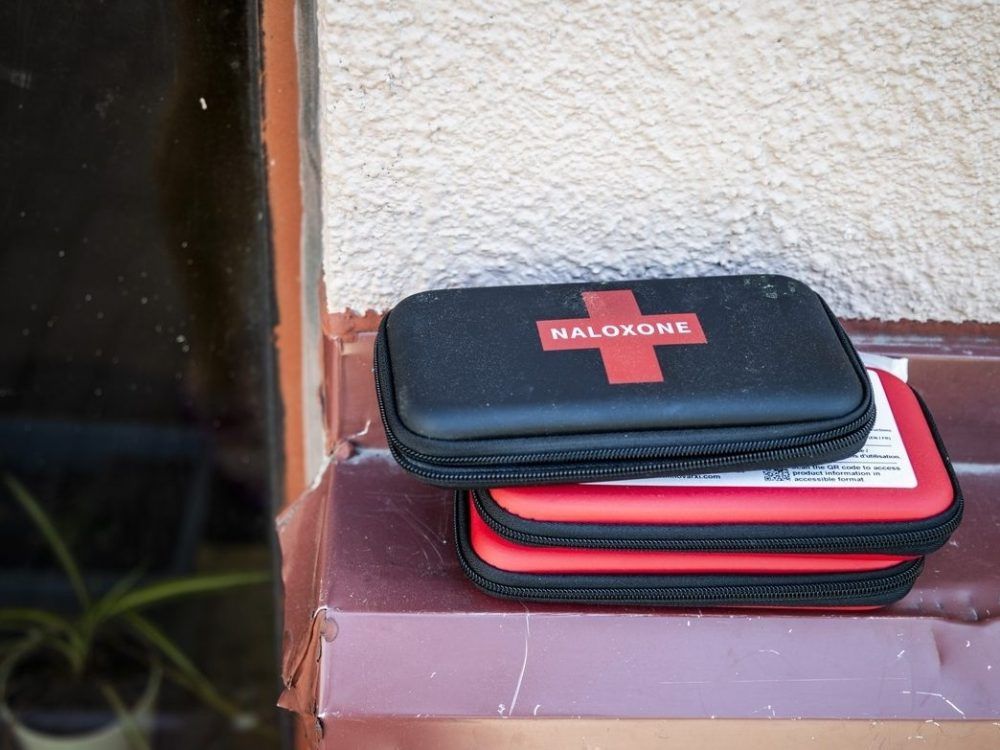
The human toll of Canada’s drug crisis is measured in the progressive decay of chronic addiction that strips users of functionality, dignity, and sanity long before claiming their lives.
asserted
that → measure → lives
Behind sterile public health debates, families endure a gauntlet of terror and grief.
asserted
families → endure → terror
Against this backdrop of social collapse, Canada’s approach to harm reduction faces its most critical reckoning yet.
asserted
approach → face → reckoning
What began as an effort to reduce deaths through government-funded “safer supply” initiatives has unlocked a devastating secondary disaster.
asserted
began → begin → disaster
Under the existing model, patients received multi-day supplies, known as “carries,” so they could avoid daily clinic or pharmacy visits.
uncertain
they → exist → visits
Dealers ruthlessly exploited this loophole, pressuring or paying vulnerable users for take-home prescriptions, funneling free opioids onto the black market and expanding youth experimentation.
asserted
Dealers → exploit → experimentation
Even more concerning is how corporate physician groups have industrialized this pipeline.
asserted
industrialized → industrialize → pipeline
Operating under the banner of pain management and addiction care, multi-location chains across Ontario, some with dozens of storefronts, have become high-volume safe supply conduits.
asserted
chains → operate → storefronts
Relying on brief virtual appointments and routine urine screening with minimal oversight, these networks have arguably created a larger diversion problem than standalone clinics.
asserted
networks → rely → clinics
On one side are cartels, and on the other are pill mills — leaving our healthcare system to cope with the fallout.
asserted
mills → leave → fallout
Where drug networks have taken over public spaces, residents and merchants pay a crushing price.
asserted
residents → take → price
Illicit drug activity has driven theft, property damage, social disorder, and erratic street violence, including gang turf warfare and unprovoked attacks on innocent bystanders by individuals with co-occurring mental health and substance use disorders.
asserted
activity → drive → health
Far from solving the crisis, the system has turned public spaces into zones of community fear.
asserted
system → solve → fear
Simultaneously, it inflicts a cruel irony on chronic pain patients; while family doctors fear regulatory backlash for prescribing legitimate pain relief, subsidized safe supply narcotics are traded on the sidewalk for pocket change.
asserted
narcotics → inflict → change
Meanwhile, small businesses face catastrophic losses and closures as customers flee out of fear.
asserted
customers → face → fear
While local dealers and addicts trade government-funded hydromorphone on the street for pocket change, OCGs act as the true “big fish” controlling the wholesale supply of cheap, ultra-potent illicit fentanyl.
asserted
OCGs → trade → fentanyl
Street users flip their pharma-grade pills for cash to buy fentanyl, allowing criminal networks to harvest diverted hydromorphone and traffic it into rural, suburban, and remote communities at a massive premium.
asserted
networks → flip → premium
This arbitrage is seeding a predatory second wave of addiction in new demographics.
asserted
arbitrage → seed → demographics
By marketing diverted safe-supply pills as a “clean, pharma-grade” high, OCGs exploit public trust in prescription medicine to trap teenagers and young adults into rapid dependency.
asserted
OCGs → market → dependency
Because these tablets look legitimate, first-time users let their guard down, unaware that these subsidized pharmaceuticals act as a gateway to hard-wired addiction, and that organized crime eventually floods the market with counterfeit knock-offs laced with lethal fentanyl, risking fatal overdoses.
asserted
crime → look → overdoses
This compounding failure stems from a fundamental policy error.
asserted
failure → compound → error
Dr. Gregory Shea, an expert in organizational change at the Wharton School of Management, writes that successful frameworks designed to produce a desired outcome must be carefully monitored.
asserted
frameworks → write → outcome
Canada missed this recipe, cherry-picking free narcotics while failing to build mandatory treatment pathways required for rehabilitation.
asserted
Canada → miss → rehabilitation
Governments simply poured funds into distributing free substances, ignoring the warning from Dr. João Goulão, the chief architect of Portugal’s policy: “Decriminalization is not a silver bullet …
asserted
Decriminalization → pour → policy
If you decriminalize and do nothing else, things will get worse.”
asserted
things → decriminalize → nothing
A long-overdue regulatory correction is finally beginning.
asserted
correction → begin → ?
Driven by concerned citizens, municipal stakeholders, and the Ontario government under Premier Doug Ford, the College of Physicians and Surgeons of Ontario (CPSO) and the Ontario College of Pharmacists (OCP) have implemented strict rules taking effect Nov. 16 — mandating “no carries,” mandatory opioid agonist therapy like methadone or Suboxone, and mandatory monthly in-person doctor visits.
asserted
College → drive → person
True systemic change requires moving past social media activism and applying sustained pressure on decision-makers.
asserted
change → require → makers
We must insist that MPs and MPPs fund treatment beds, and work with neighbourhood doctors and pharmacists to ensure these protective protocols are supported.
asserted
protocols → insist → doctors
His work blends lived experience and hard‑earned insight from a lifetime spent protecting others.
asserted
work → blend → others
 The Aporia