Photo via Blaze Media

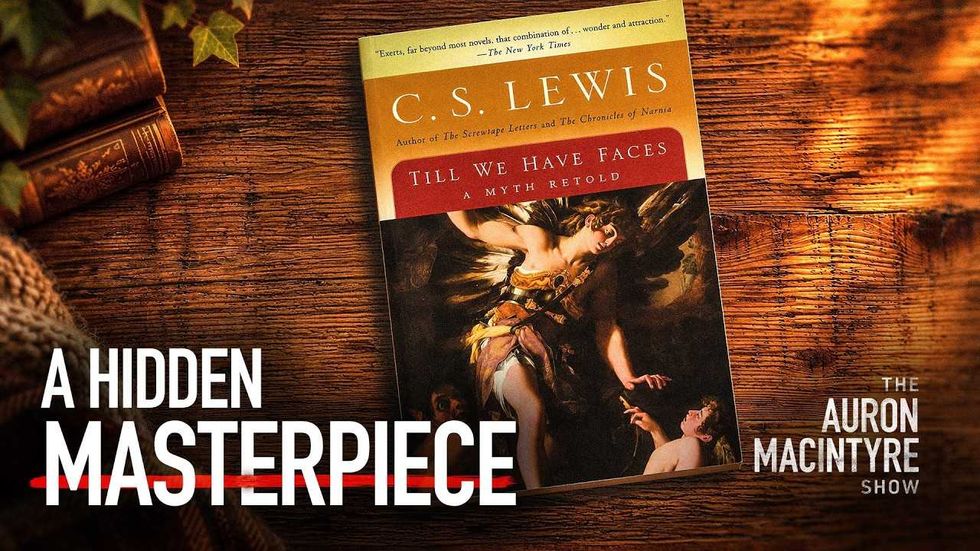
The CS Lewis masterpiece almost nobody reads — and why it’s his most Christian novel

Read the original at Blaze Media ↗
Cite

BlazeTV Staff. (2026, November 15). The CS Lewis masterpiece almost nobody reads — and why it’s his most Christian novel. Blaze Media. https://www.theblaze.com/shows/the-auron-macintyre-show/the-cs-lewis-masterpiece-almost-nobody-reads-and-why-its-his-most-christian-novel

Dated from the outlet's own feed. Check the original for its byline.

Blaze Media · collected 2026-11-15 · by BlazeTV Staff

Quick Summary

Auron MacIntyre and Nick Dixon discuss C.S. Lewis’s novel "Till We Have Faces," arguing it is his most Christian work despite its pagan myth origins. They claim the book mirrors Lewis’s personal conversion story and emphasizes the theme of repentance and reconciliation with the divine. Dixon highlights the significance of the 1931 meeting between Lewis and J.R.R. Tolkien, which led Lewis to accept Christianity as the true myth.
Written by AI on 2026-11-15, from this article's own text only (the story summary below draws on all the coverage).

AI analysis

Story summary

On the latest episode of "The Auron MacIntyre Show," host Auron MacIntyre and British commentator Nick Dixon discuss C.S. Lewis' novel "Till We Have Faces," arguing it is his "most underrated masterpiece" and a profound Christian conversion story. Despite being based on a Greek myth, the commentators contend that the book reflects Lewis' own journey from atheism to Christianity. The episode explores how the characters' spiritual transformations mirror Lewis' personal beliefs, challenging the perception that the novel is primarily pagan-themed.

Written for “CS Lewis Novel Controversy” on 2026-11-17, grounded in this article and the 0 other(s) covering the same event.

Compared with similar articles

Nothing to compare against. No article is close enough to this one for the pipeline to have linked or judged the pair.

Story

CS Lewis Novel Controversy
Entertainment · 1 article(s) covering the same event.
How this article was measured signals, leaning charts, publisher record, byline, topics and claims

Signals How these are calculated →

Claims extracted
19
sentences that state something as happening or true
Uncertain
5%
1 of 19 hedged ("reportedly", "may", "according to")
Leaning
not political
takes no side on a contested political question
Publisher signals
95/100
Blaze Media's corrections and hedging, across everything collected from it. Not a measure of accuracy.
Outlets on this story
1
Entertainment
Same framing elsewhere
1
articles that frame the event the way this one does
Analyzed 2026-11-15 · how these are computed

How this is being covered How these are calculated →

Article leaning vs. publisher reliability
Source leaning vs. consistency

Publisher

Blaze Media · 198 article(s) · 0 correction(s) detected
No corrections detected for this publisher. That may mean careful reporting, or simply that nothing has been checked.

Who wrote this

BlazeTV Staff
28 article(s) here · 0 carrying a prediction
Progressives promise cheaper housing and better health care, but Freitas warns that punishing producers and rewarding dependency will only make Americans poorer.
Just when you thought Gen Z couldn't make any more questionable decisions, cigarettes are apparently making a comeback.
Stu and Dave break down Trump's potential successors and the candidates who could challenge MAGA’s direction in 2028.
As progressives continue their anti-American crusade, BlazeTV host Nick Freitas fears America is hurtling toward a governance catastrophe that may culminate in violence.
“Is that just a response to looking for something that, you know, people will relate to?” he says.
If you put it up to a vote, people will vote for it.
“Her uniform was slashed open, and she couldn’t stand up because it meant being seen,” Blaze Media co-founder Glenn Beck explains.
If there was a government internship that only white Christians could apply for, the outrage would be immediate and unending.
However, she points out that the administration's push for mass deportations could result in “mistakenly detaining other people that are not necessarily here illegally or that maybe they’re still in the process of asylum.”
And they did everything they could.
Wire or desk byline, not an individual reporter.
Also by BlazeTV Staff
Nothing else under this byline is closely related to this article, so these are simply their most recent.
All 28 articles by BlazeTV Staff →

Topics

BlazeTV British Christian Christianity Greek

Subjects

Lewis PERSON · 8× Christian NORP · 4× Orual PERSON · 4× Auron MacIntyre PERSON · 3× Dixon PERSON · 3× Greek NORP · 3× MacIntyre PERSON · 3× Psyche PERSON · 3× British NORP · 2× Nick Dixon PERSON · 2×

Narrative

“I think that's kind of mirrored by the end of this book — the way that they've been messing around with paganism until there's this synthesis at the end, and the Fox realizes he was wrong, and Orual realizes she's been wrong, and Psyche, I suppose, has been vindicated really as the kind of Christlike figure
framing: assertive · carried by 1 article(s) · first seen 2026-11-15

Claims (19 extracted, 1 hedged)

Auron MacIntyre and British commentator Nick Dixon explain why Lewis’ retelling of a pagan myth is really a Christian conversion story that mirrors Lewis' own. asserted
that → explain → Lewis
With the exception of his children’s series “The Chronicles of Narnia,” C.S. Lewis is best remembered for his nonfiction works of Christian thought, especially “Mere Christianity,” “The Screwtape Letters,” and “The Problem of Pain.” asserted
Lewis → remember → Pain
But BlazeTV host Auron MacIntyre believes the world-renowned apologist was also a master of the novel. asserted
apologist → believe → novel
On this episode of “The Auron MacIntyre Show,” he is joined by British commentator and C.S. Lewis enthusiast Nick Dixon to dive into what they believe is Lewis’ “most underrated masterpiece”: “Till We Have Faces.” asserted
We → join → Faces
The novel, which is a retelling of the Greek myth of Cupid and Psyche, has sometimes been called Lewis’ “most pagan book,” but MacIntyre and Dixon contend the opposite, arguing the story mirrors Lewis’ own conversion. asserted
story → call → conversion
“Lewis, you know, thought about writing this book originally as an atheist and siding with kind of the screed against the gods — you know, the logic, the reason how you're a victim,” MacIntyre explains. asserted
MacIntyre → know → gods
He argues that by the time Lewis finally wrote it, late in life and long after his own conversion, he had come to see himself as “the author of [his] own woes” — and the novel reflects that. asserted
novel → argue → that
In the novel, Orual and her beloved younger half-sister, Psyche, are raised by the Fox, a Greek tutor who scoffs at the gods and champions pure reason. asserted
who → raise → reason
When Psyche is offered as a sacrifice to a mountain god and claims to be living happily in his invisible palace, Orual, unable to see it, refuses to believe her and destroys her sister’s happiness. uncertain
Orual → offer → happiness
Orual evolves from a woman raging at the gods over her own “victimhood” to recognizing that she was actually “the victimizer” all along, MacIntyre says. asserted
MacIntyre → evolve → victimhood
“I think this is one of his most Christian books, because even though he's telling this pagan myth ... this kind of repentance, this touch of the divine is something that is so analogous to his own kind of experience in life when encountering and converting to Christianity,” he adds. asserted
he → think → Christianity
“It redeems the character [Orual] in a way that I don't think you'd see in a Greek myth, right?” he continues. asserted
he → redeem → myth
“Like I don't think you'd see this kind of repentance and understanding and coming to reconciliation with the gods.” asserted
you → think → gods
Dixon agrees. asserted
Dixon → agree → ?
Even though in the book “Christ isn't named as such … it's clear that it is a Christian conversion story,” he says. asserted
he → name → book
Calling himself “obsessed with these biographical readings” of “Till We Have Faces,” Dixon retells the story of Sept. 19, 1931 — the night J.R.R. Tolkien convinced Lewis that “Christianity is the one true myth,” a turning point that soon ended his years-long journey from atheism to Christianity. asserted
that → call → Christianity
“I think that's kind of mirrored by the end of this book — the way that they've been messing around with paganism until there's this synthesis at the end, and the Fox realizes he was wrong, and Orual realizes she's been wrong, and Psyche, I suppose, has been vindicated really as the kind of Christlike figure asserted
I → think → figure
,” he says. asserted
he → say → ?
To enjoy more of this YouTuber and recovering journalist's commentary on culture and politics, subscribe to BlazeTV — the largest multi-platform network of voices who love America, defend the Constitution, and live the American dream. asserted
who → enjoy → dream

Give feedback · no sign-in needed

No sign-in needed for now. Your note is sent without a name, so it cannot be answered.

History Support