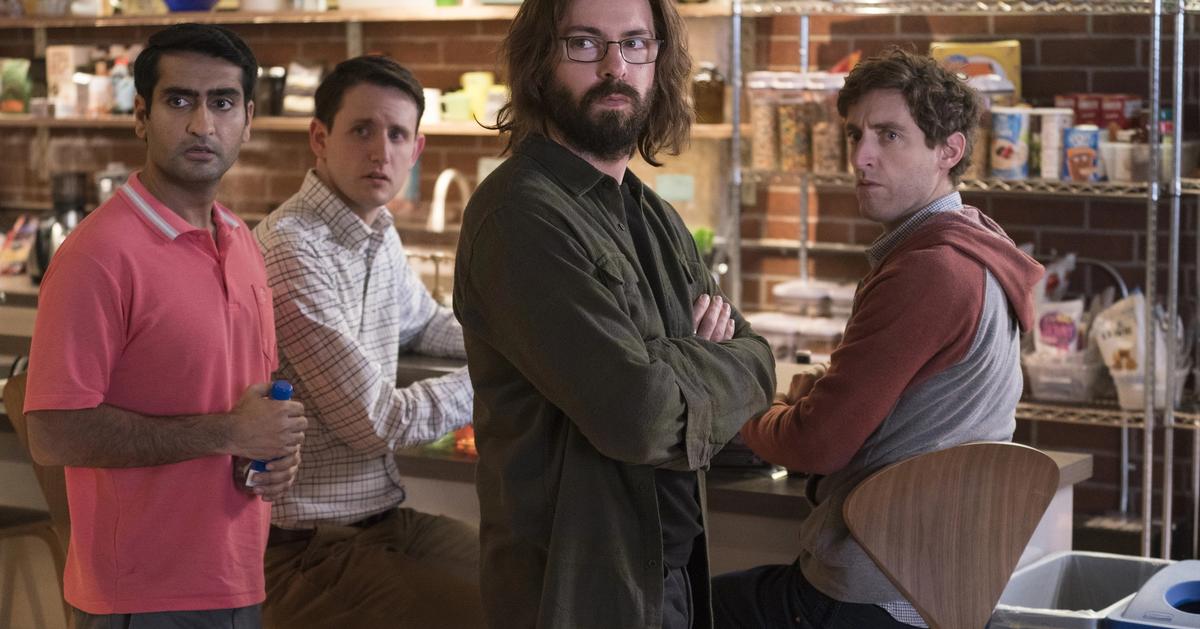
A year before the iconic show Silicon Valley debuted on HBO in April of 2014, the writer Alec Berg met the show’s creator, Mike Judge, in an anonymous Santa Monica office.
asserted
writer → debut → office
Judge was wrestling with the pilot for a show about Silicon Valley’s power and its eccentricity, but it wasn’t working and he wanted a second opinion.
asserted
he → wrestle → opinion
Berg thought he saw part of the problem.
asserted
he → think → problem
There was a scene in the pilot where Richard Hendricks, the protagonist and founder of the company Pied Piper, is trying to buy a car he can’t afford.
asserted
he → be → car
Berg told Judge the scene didn’t make sense: “This is not a guy who’s materialistic,” he said.
asserted
he → tell → sense
“He’s an artist.”
asserted
He → ’ → ?
Berg took over the writer’s room and would eventually become showrunner of the comedy, which ran for six seasons and helped shape the culture it depicted, parodied, and at times glorified.
asserted
it → take → times
We reached him in Los Angeles Thursday to ask him how he and Judge and their cast had nailed the Silicon Valley scene of the mid-2010s app boom — and, above all, why the show remains uncannily relevant today, from its depiction of tortured founders and unreflective investors to the uncanny conclusion in which the Pied Piper crew builds an AI model too powerful to release.
asserted
crew → reach → model
Their moment of realization comes when their AI, Son of Anton, let loose on Pied Piper’s code, concludes that the most efficient way to eliminate bugs is to delete the software.
asserted
way → come → software
That has, of course, happened.
asserted
That → happen → course
Clips of it now circulate as proof the show “called it.”
asserted
show → circulate → it
Even throwaway comic plots, like when a household prank ends up hacking together a rogue swarm of smart refrigerators to keep Pied Piper’s servers running, have come eerily true in the AI-run-amok era.
asserted
prank → end → era
A member of the team getting trapped in an autonomous car that heads to a shipping container bound for a Pacific island foreshadowed a thousand videos of confused Waymos.
asserted
that → trap → Waymos
Berg helped reshape the pilot of the first episode to open with a wild-but-lame party, featuring Kid Rock, thrown by founders who had just cashed out, to contrast the ascetic, mission-driven Richard with a culture obsessed with exits and “three-comma” fortunes.
asserted
who → help → exits
The show “was about how Richard had discovered fire, and he was trying to keep it safe from all of these assholes,” Berg said.
asserted
Berg → discover → assholes
“He was ill-prepared to shepherd a company, but he didn’t want to surrender this thing to people who would use it for nefarious purposes.
asserted
who → prepare → purposes
The writers were obsessed with making the show “photorealistic.”
asserted
show → obsess → ?
Berg called up a Harvard classmate and venture capitalist Marc Bodnick, who introduced him to Facebook COO Sheryl Sandberg; the team spoke to other Silicon Valley figures and hired a technical consultant, Jonathan Dotan, who assembled a revolving cast of founders, lawyers, VCs, and professors to stress-test storylines.
asserted
who → call → storylines
As they were writing the first season, one of their Silicon Valley sources remarked that the Pied Piper crew would be angling for a slot at TechCrunch Disrupt.
asserted
crew → write → Disrupt
“We were like, ‘I’ve never heard those words before, but that sounds hilarious.
asserted
that → hear → words
They learned that it was a kind of American Idol for startups, and it became the core of the first season.
asserted
it → learn → season
In the climactic scene, the Pied Piper team is holed up in a hotel room the night before the Disrupt finals when one of the team vows to win even if he has to manually pleasure every man in the audience.
asserted
he → hole → audience
The engineers calculate “mean jerk time” and sort the crowd by “dick-to-floor” ratio — delivering an unexpected mathematical breakthrough for Richard.
asserted
engineers → calculate → Richard
As the first few episodes began to drive fans, the writers giddily anticipated episode eight.
asserted
writers → begin → episode
“We felt like we were sitting on pocket aces because we knew,” he recalled.
asserted
he → feel → aces
“Wait till they see that dick joke.
asserted
they → wait → joke
They’re going to lose their minds.”
asserted
They → go → minds
(Berg won an Emmy for the episode.)
asserted
Berg → win → episode
Dotan introduced the writers to Stanford’s Tsachy Weissman, and the show invented a “Weissman score” for compression efficiency, a metric that computer scientists now actually use.
asserted
scientists → introduce → that
The ultimate compliment, he said, came from tech workers who told him they couldn’t watch the show “because it makes me nauseous.
asserted
me → say → show
How Mark Cuban inspired ‘three-comma’ Russ
asserted
Cuban → inspire → Russ
As the show grew, it caricatured real Silicon Valley figures.
asserted
it → grow → figures
Perhaps the most recognizable was Russ Hanneman, played by Chris Diamantopoulos, who arrived in season two.
asserted
who → play → season
The character began with the idea that Richard, under pressure, would be forced to accept an investment from a sinister figure the writers called “Bad Money,” who would break his promises and try to manipulate them.
asserted
who → begin → them
While they were writing, they received an invitation from the star of another show shooting on the Sony lot.
asserted
they → write → lot
Mark Cuban was a fan of Judge, best known for Beavis and Butt-Head, King of the Hill, and Office Space, and had enjoyed season one.
asserted
Cuban → know → season
An intermediary invited them to the Shark Tank set to meet the billionaire.
asserted
intermediary → invite → billionaire
Berg and Judge arrived excited to meet him, then sat there for an hour waiting.
asserted
Berg → arrive → hour
“We walked out of there going, ’What the f*ck was that?
asserted
that → walk → ?
We’re supposed to have an audience with the king, and then he f*cks us around for an hour,” they fumed.
asserted
they → suppose → hour
…and 17 more, not listed.
 The Aporia