One patient in five feels unsafe in Blacktown or St Vincent’s emergency departments, government data has revealed, with almost one in 10 emergency patients not feeling safe statewide.
asserted
patients → feel → departments
Of 23,621 NSW patients asked whether they felt threatened by other patients or visitors in the emergency department, 1601– about 9 per cent – answered “yes, definitely” or “yes, to some extent”, according to the Bureau of Health Information’s 2024-25 Emergency Department Patient Survey.
uncertain
1601 → ask → Survey
At Royal Prince Alfred and Westmead, nearly one in five (19 per cent) felt threatened, as were 18 per at Liverpool and Auburn EDs.
asserted
per → feel → EDs
Around the state, women were less likely to feel safe than men; 11 per cent answered “yes” compared to 8 per cent of male respondents.
asserted
cent → feel → respondents
Patients aged 18-34 were the most likely to report feeling threatened, at 14 per cent.
asserted
Patients → age → cent
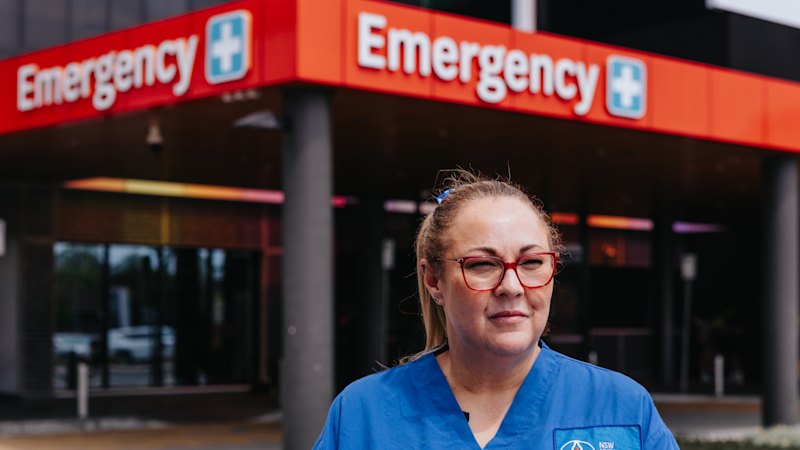
Registered nurse and union delegate Colette Duff said she encountered violence every shift in a busy Sydney emergency department, particularly from elderly patients with dementia or affected by drugs.
asserted
she → say → drugs
“I’ve been punched a number of times, I’ve been scratched, people try to bite me, swearing, threatening to hurt me,” the NSW Nurses and Midwives’ Association councillor said.
asserted
councillor → punch → me
At times, “you absolutely feel frightened”.
asserted
you → feel → times
Instances of healthcare workers being assaulted and hospitalised have more than doubled in the past decade, Australian Institute of Health and Welfare data found.
asserted
data → assault → Health
Assault accounts for 15.4 per cent of healthcare worker injuries, against 3.8 per cent in the general population.
asserted
Assault → account → population
Last week, a nurse in Concord Hospital’s emergency department had her wrist broken after she and a doctor were allegedly assaulted by a patient.
uncertain
she → have → patient
Last month, a patient at Prince of Wales Hospital doused three patients in petrol before setting one on fire.
asserted
patient → douse → fire
The NSW government committed last week to an extra 129 full-time equivalent security staff for the state’s emergency departments, in response to the safety taskforce set up with nurses, doctors and allied health unions.
asserted
government → commit → nurses
This will implement around-the-clock security at 27 hospitals.
asserted
This → implement → hospitals
Emergency departments set to benefit include Prince of Wales, St Vincent’s, Blacktown, Royal Prince Alfred, Concord, Liverpool and Westmead.
asserted
departments → set → Wales
NSW Health Minister Ryan Park said the emergency departments with the largest volumes of patients tended to be hotspots for violence, as the stress of a hospital environment was exacerbated by drugs, alcohol and mental health conditions.
asserted
stress → say → drugs
“Back 20 years ago, the drug of choice, heroin at the time, had a very different effect on the body than the types of drugs that we see now, particularly methamphetamine,” Park said.
asserted
Park → have → that
“That can have big impacts on the way people present to our emergency departments … [and] can also be pretty frightening for patients and visitors.
asserted
people → have → patients
“We think having additional boots on the ground, having additional security in place, will … not eliminate, but will go some way to reducing the impact.”
asserted
having → think → impact
Park said the government had already increased security staff by 13 per cent since taking office in 2023.
asserted
government → say → 2023
During the same time period, security incidents decreased by about 12 per cent.
asserted
incidents → decrease → cent
However, many violent incidents go unreported, according to Dr Rachael Gill.
uncertain
incidents → go → Gill
“The frequency of minor and moderate events is so high that the clinicians and staff working in that space become habituated and desensitised in a way that’s not similar to other workplaces,” said Gill, NSW branch chair of the Australian College of Emergency Medicine.
asserted
Gill → work → Medicine
Gill said emergency departments often have to call on hospital-wide security staff as violence and aggression can escalate quickly.
asserted
violence → say → staff
She said having extra staff dedicated to EDs was “extremely important” for defusing or de-escalating conflicts or providing a rapid response when needed.
asserted
staff → say → response
NSW Nurses and Midwives’ Association General Secretary Michael Whaites said preventative measures, such as adequate staff to address wait times, were vital to minimise violence in health settings.
asserted
measures → say → settings
“While we welcome the announcement of additional security staff, the government and Ministry of Health have to deliver more to ensure our members are safe at work,” Whaites said.
asserted
Whaites → welcome → work
These included improvements in dealing with duress.
asserted
These → include → duress
A spokesperson from Sydney Local Health District said staff and witnesses to the alleged assault at Concord were being provided with support: “Any form of violence or harassment in our hospitals is unacceptable, and we have a zero tolerance approach to it.”
asserted
we → say → it
A St Vincent’s Hospital, a spokesperson said at its emergency department, mental health-related presentations were among the highest proportions in the state, and behaviour of these patients could be confronting.
uncertain
behaviour → say → patients
In the past year, the hospital had made significant investments in ED safety, including dedicated 24-hour security officers.
asserted
hospital → make → officers
 The Aporia