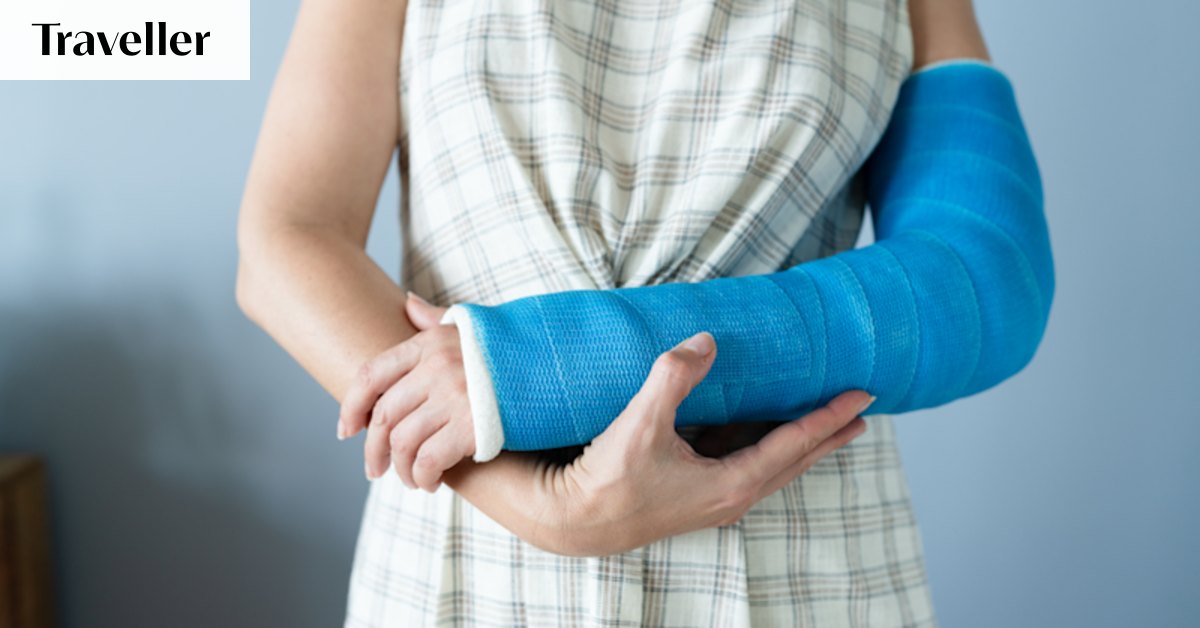
Photo via The Sydney Morning Herald

Mum broke her shoulder in Paris. Then she read the insurance fine print

Read the original at The Sydney Morning Herald ↗
Cite

Meneguzzi, J. (2026, November 15). Mum broke her shoulder in Paris. Then she read the insurance fine print. The Sydney Morning Herald. https://www.smh.com.au/traveller/reviews-and-advice/mum-broke-her-shoulder-in-paris-then-she-read-the-insurance-fine-print-20261116-p61e1f.html?ref=rss&utm_medium=rss&utm_source=rss_feed

Dated from the outlet's own feed. Check the original for its byline.

The Sydney Morning Herald · collected 2026-11-15 · by Justin Meneguzzi

Quick Summary

A retiree celebrating her retirement with a three-month trip to Europe broke her shoulder in Paris, discovering her travel insurance did not cover her return home to recover. The article highlights the complexity of "resumption of travel" clauses, which typically only apply to close relatives back home rather than the policyholder herself. Insurance expert Travis Wendt emphasizes the need to carefully read policy details, as requirements can vary widely among insurers and may include stringent conditions like needing medical documentation or a significant portion of the trip remaining.
Written by AI on 2026-11-15, from this article's own text only (the story summary below draws on all the coverage).

AI analysis

Story summary

A woman in her retirement broke her shoulder while crossing the road in Paris on the fifth day of a planned three-month trip to celebrate her retirement. She assumed her travel insurance would allow her to return home, recover, and resume her trip, but upon reading the policy's fine print from her hospital bed, she found out she couldn't claim under the "resumption of travel" benefit. This benefit is typically available only for a close relative or business partner back home, not for the policyholder herself. The incident highlights the importance of thoroughly understanding travel insurance policies before embarking on a trip, as only 22.2% of claims were certain, with the rest being uncertain due to such fine print details.

Written for “Mom's Injury in Paris” on 2026-11-17, grounded in this article and the 0 other(s) covering the same event.

Compared with similar articles

Nothing to compare against. No article is close enough to this one for the pipeline to have linked or judged the pair.

Story

Mom's Injury in Paris
Other · 1 article(s) covering the same event.
How this article was measured signals, leaning charts, publisher record, byline, topics and claims

Signals How these are calculated →

Claims extracted
27
sentences that state something as happening or true
Uncertain
22%
6 of 27 hedged ("reportedly", "may", "according to")
Leaning
not political
takes no side on a contested political question
Publisher signals
61/100
The Sydney Morning Herald's corrections and hedging, across everything collected from it. Not a measure of accuracy.
Outlets on this story
1
Other
Same framing elsewhere
1
articles that frame the event the way this one does
Analyzed 2026-11-15 · how these are computed

How this is being covered How these are calculated →

Article leaning vs. publisher reliability
Source leaning vs. consistency

Publisher

The Sydney Morning Herald · 7402 article(s) · 15 correction(s) detected
Running correction rate · 15 correction(s)

Who wrote this

Justin Meneguzzi
1 article(s) here · 1 carrying a prediction
She assumed her travel insurance would allow her to return home and resume her holiday once she had recovered.
The only article under this byline in the corpus.

Topics

Paris Sage Insurance Traveller World Nomads’

Subjects

Wendt PERSON · 3× Paris GPE · 2× Sage Insurance ORG · 2× Travis Wendt PERSON · 2× Traveller ORG · 1× World Nomads’ ORG · 1×

Narrative

The only catch is that the condition for which you are treated then becomes a pre-existing condition under the policy, meaning there is no additional cover if symptoms emerge again or the injury is aggravated during the resumed trip.
framing: mixed · carried by 1 article(s) · first seen 2026-11-15
She assumed her travel insurance would allow her to return home and resume her holiday once she had recovered.
2026-11-15 · The Sydney Morning Herald
Mum broke her shoulder in Paris. Then she read the insurance fine print · mixed framing

Claims (27 extracted, 6 hedged)

It was meant to be the trip of a lifetime. asserted
It → mean → lifetime
My mum had spent a year planning a three-month victory lap of Europe to celebrate retirement. asserted
mum → spend → retirement
While crossing the road in Paris on the fifth day of her trip, she fell and broke her shoulder. asserted
she → cross → shoulder
She assumed her travel insurance would allow her to return home and resume her holiday once she had recovered. asserted
she → assume → holiday
Reading the policy’s fine print from her hospital bed, she discovered she wasn’t eligible to claim. uncertain
she → read → bed
“Resumption of travel” is a benefit typically buried in the cancellation section of a travel insurer’s policy. asserted
Resumption → bury → policy
At first glance, it permits travellers to return home early and then resume travel at a later date, but claiming the benefit isn’t as simple as travellers think. asserted
travellers → permit → benefit
The biggest catch is that most clauses don’t apply to the policyholder, but to a close relative or business partner back home. asserted
clauses → apply → relative
Travis Wendt at Sage Insurance says this most often means elderly relatives, providing travellers with peace of mind that they can return home if their loved one is hospitalised or dies suddenly while the policyholder is on holiday. asserted
policyholder → say → holiday
“The devil’s always going to be in the detail. asserted
devil → go → detail
Insurers can be quite prescriptive about what events need to occur for this benefit to be triggered,” says Wendt, noting there is no consistency across travel insurers. asserted
Wendt → need → insurers
For instance, some require medical documentation that could be challenging to obtain due to privacy restrictions. uncertain
that → require → restrictions
Others require more than 50 per cent of your trip to be outstanding when you make a claim. uncertain
you → require → claim
Policy limits can also vary dramatically from $1500 to $10,000. asserted
limits → vary → 10,000
Depending on the time of year, a $1500 reimbursement to resume your trip would barely cover a return flight to Paris. asserted
reimbursement → depend → Paris
“The devil’s always going to be in the detail. asserted
devil → go → detail
Insurers can be quite prescriptive about what events need to occur for this benefit to be triggered. asserted
benefit → need → ?
Another detail to look out for is the window of coverage. asserted
detail → look → coverage
There may be a deadline by which you must resume your travel, or the benefit may only apply within a specified window of coverage. uncertain
benefit → resume → coverage
“An exclusion that a lot of people don’t consider is when the triggering event must occur. asserted
event → consider → people
If the event happens before you depart, it won’t be covered by the resumption clause,” says Wendt. asserted
Wendt → happen → clause
This could put travellers in a compromised position as cancelling an upcoming trip due to a relative’s ill health may not be covered under standard cancellation clauses. uncertain
cancelling → put → clauses
World Nomads’ insurance does include a resumption of travel clause that covers the policyholder’s own medical repatriation. asserted
that → include → repatriation
Combined with their medical treatment and repatriation benefits, their policy is an outlier in the sense that travellers will be covered for their recovery and picking up where they left off. asserted
they → combine → recovery
The only catch is that the condition for which you are treated then becomes a pre-existing condition under the policy, meaning there is no additional cover if symptoms emerge again or the injury is aggravated during the resumed trip. asserted
injury → treat → trip
Because of the inconsistency across the industry, Wendt says the best advice for travellers is to find an insurer who spells out their terms in clear language and look for three key criteria. asserted
who → say → criteria
“Check the limit, check what the triggers are, and check what documents are needed to substantiate your claim.” uncertain
documents → check → claim

Give feedback · no sign-in needed

No sign-in needed for now. Your note is sent without a name, so it cannot be answered.

History Support