Two weeks ago, Australian technology juggernaut Canva announced it would sack, restructure or relocate more than 1200 of its employees.
asserted
it → announce → employees
Afterwards, there was a rush of Canva employees seeking out their union.
asserted
employees → be → union
According to The Australian Financial Review, meetings suddenly grew five times more popular.
uncertain
meetings → accord → Review
Tech, with all its talk of individual genius and creative destruction, doesn’t seem like an obvious growth area for unions – and yet that is exactly what we might see.
uncertain
we → seem → what
While Canva did not attribute those job losses to AI, other companies announcing mass sackings, such as Atlassian, have.
asserted
companies → attribute → Atlassian
It is also true that tech may be the canary in the coalmine, with redundancies in other industries to follow.
uncertain
tech → follow → industries
Which means, in turn, that we may be about to witness the single biggest contributor to union membership in decades.
uncertain
we → mean → decades
If that occurs, its significance will go well beyond the usual political questions of industrial relations regulation.
asserted
significance → occur → regulation
Unions have played a major role in shaping Australia’s sense of itself – for example, the fact we are governed by a party literally named Labor.
asserted
we → play → party
But the influence extends further still.
asserted
influence → extend → ?
Consider the Coalition government’s actions during the pandemic, which indisputably saved thousands of jobs.
asserted
which → consider → jobs
Two years ago, the Productivity Commission made the point that one of the reasons productivity did not recover very well here afterwards was the fact those jobs had been saved.
asserted
jobs → make → reasons
In America, jobs had been lost, businesses had died – meaning workers went to more productive parts of the economy.
asserted
workers → lose → economy
Here, relatively unproductive businesses survived.
asserted
businesses → survive → ?
And the fact unemployment stayed low under the Albanese government also contributed to poor productivity, because more young, inexperienced workers are working.
asserted
workers → stay → productivity
But it points to the far more potent questions hiding just behind an often sterile topic: what is the fundamental character of this country?
asserted
character → point → country
During the pandemic and after, both Coalition and Labor answered: Australia is a nation in which we look after each other and prioritise jobs and social stability over market forces – and, yes, to some extent over productivity.
asserted
we → answer → productivity
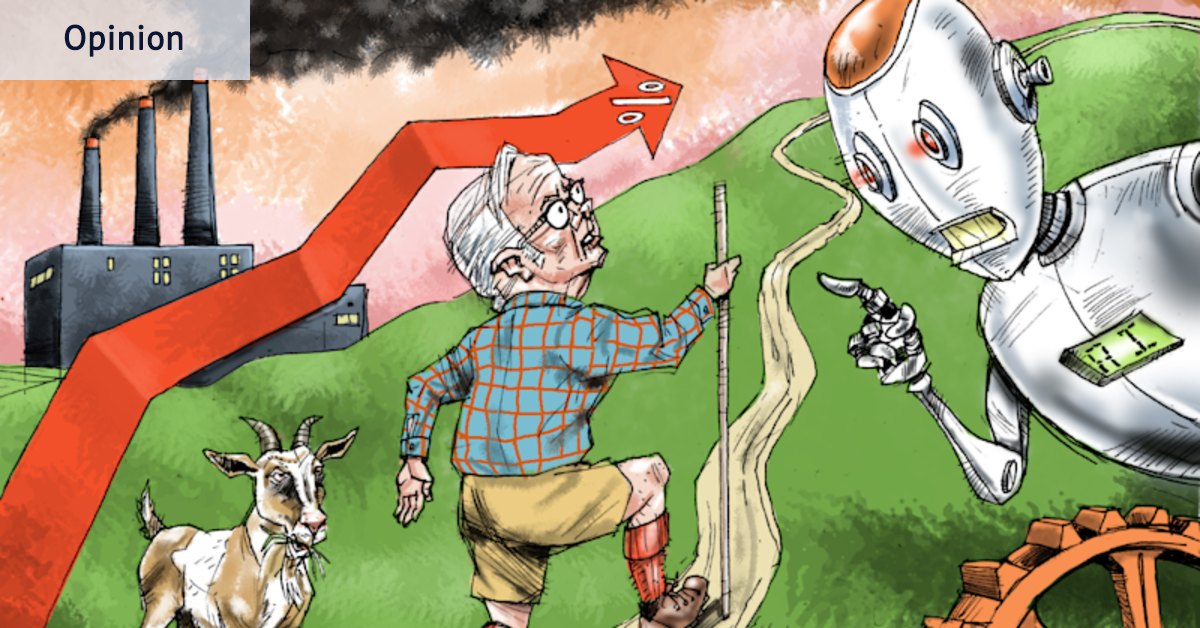
We are living through a period in which cries for increased productivity dominate public debate.
asserted
cries → live → debate
At the same time, unemployment is rising, as are living costs.
asserted
costs → rise → time
And many of the “solutions” put forward to the productivity malaise, like making it easier for businesses to sack workers or keep their wages low, cut directly against those concerns.
asserted
businesses → put → concerns
At a time when we can’t have it all, what do we prioritise and how?
asserted
we → have → what
What are the qualities of this country that we prize most?
asserted
we → prize → that
These are questions for us all – though ones we rely on governments to answer for us.
asserted
we → rely → us
Public debate is awash with such choices right now, in which two incompatible goals seem to sit side by side.
asserted
goals → seem → side
Climate Change Minister Chris Bowen is in Turkey this week, urging other countries to do more to tackle climate change; last week he was joined by Anthony Albanese.
asserted
he → urge → Albanese
Meanwhile, Australia remains one of the world’s largest exporters of fossil fuels – a fact Labor largely skates past.
asserted
Labor → remain → fuels
In his role leading climate change negotiations, Bowen is arguing for electrification.
asserted
Bowen → lead → electrification
Back in Australia, where Labor needs to cut spending, there is speculation subsidies for home batteries and electric vehicles may be trimmed.
uncertain
subsidies → need → batteries
There is some justification for this: across a range of areas, this government has spurned means-testing, rather than targeting benefits to those who most need them.
asserted
who → be → them
But is climate the area in which to start cracking down?
asserted
climate → start → which
And consider the fact many of the middle-class people accessing such benefits are being hit hard by rising mortgage payments.
asserted
many → consider → payments
Is this the time to target them?
asserted
this → target → them
Earlier this year, Labor moved towards cutting migration – just when the economy seems finally to be slowing, making our need for migration to drive economic growth stronger than ever.
asserted
need → move → growth
With a budget update looming, demands to cut spending are everywhere – but as I wrote six weeks back, such cuts may arrive just when interest rate rises are already slowing the economy.
uncertain
rises → loom → economy
No doubt voters would like some of the cost-of-living relief they received last term, but every dollar the government releases into the economy risks more inflation.
asserted
government → like → inflation
The contradictions are apparent in policies the government is already pursuing.
asserted
government → pursue → policies
But they have come at a time when house prices are falling anyway and the economics of construction are already under pressure, meaning housing supply may not grow as quickly as hoped.
uncertain
supply → come → pressure
Data centres, a source of economic growth, are adding further to those pressures because they take builders away from building homes – and they are keeping inflation high as well.
asserted
they → add → inflation
The government wants universal childcare – but how will that interact with house prices, as more parents head back to work earlier?
asserted
parents → want → work
Considering the increasing role of unions, it is interesting to consider what place their recent proposals – like shorter working weeks – might assume over time, and how businesses, demanding policies that drive growth, might react.
uncertain
that → consider → growth
…and 9 more, not listed.
 The Aporia