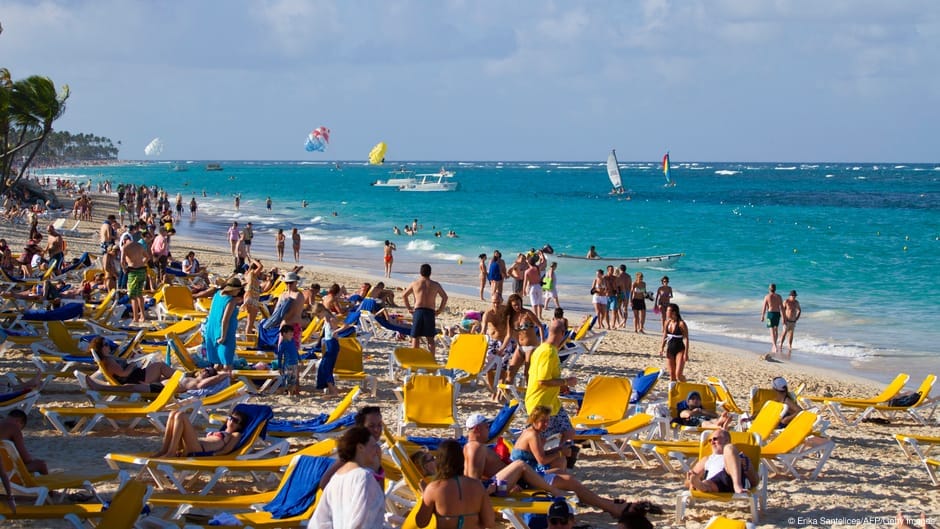
According to UN Tourism, the United Nations agency responsible for promoting responsible tourism, international arrivals in South America grew by 7% last year, while Central America saw a 5% increase, both above the global average.
uncertain
America → accord → average
But the boom comes at a price: overtourism.
asserted
boom → come → price
In some destinations, the sheer number of visitors is creating environmental and social problems, fueling tensions and raising questions about who really benefits from the business.
asserted
who → create → business
One famous example is Machu Picchu, the Inca citadel in Peru, which lures up to 5,600 visitors a day.
asserted
which → lure → visitors
In 2025, Peru's official watchdog warned that more tickets were being sold than permitted, potentially putting the site at risk of being added to UNESCO's List of World Heritage in Danger.
asserted
tickets → warn → Danger
The UNESCO World Heritage Committee has already expressed its concern.
asserted
Committee → express → concern
In a bid to protect the Galapagos Islands and its bountiful ecosystems that inspired Charles Darwin, Ecuador doubled the entrance fee for foreign visitors to $200 in 2024.
asserted
Ecuador → protect → 2024
Even so, pressure is mounting to construct new hotels and tourist apartments.
asserted
pressure → mount → hotels
And in Mexico City, the influx of tourists and digital nomads into neighborhoods such as Roma and Condesa has fueled protests over rising rents.
asserted
influx → fuel → rents
What can be done to make tourism more inclusive and sustainable?
asserted
tourism → do → ?
At ITB Americas, an international travel trade fair in Guadalajara, Mexico, DW spoke with three experts.
asserted
DW → speak → experts
Sustainable travel moving from niche to mainstream
asserted
travel → move → mainstream
Richard Bazan is a regional manager for the Americas at Planeterra, a nonprofit organization that promotes and supports community-based tourism.
asserted
that → promote → tourism
He said several trends are emerging: group sizes are shrinking and travelers are seeking more intimate experiences.
asserted
travelers → say → experiences
"Where groups of 20 used to travel together, now it's four or five," he told DW.
asserted
he → use → DW
So-called "nature-positive" tourism is also gaining traction, with travel programs that help fund, for example, reforestation projects.
asserted
that → call → projects
Bazan said even all-inclusive resorts are realizing that they can no longer shut themselves off from their surroundings.
asserted
they → say → surroundings
Instead, they need to offer authentic experiences that connect visitors with the destination.
asserted
that → need → destination
"Community-based tourism is no longer a niche," he said.
asserted
he → base → ?
Pressure for change is also coming from travelers themselves.
asserted
Pressure → come → travelers
According to Booking.com's 2025 annual survey, which polled 32,000 people in 34 countries, 93% said they wanted to make more sustainable travel choices.
uncertain
they → accord → choices
Communities know what's best for their land
asserted
what → know → land
Sarah Payne, director of the Reset Tourism Fund at the UnTours Foundation, pointed to the underlying problem.
asserted
Payne → point → problem
In the traditional tourism business model, most of the money generated never reaches local communities, the people who actually live with the influx of visitors.
asserted
who → generate → visitors
"Access to financing is key, yet extremely difficult for communities," she explained.
asserted
she → explain → communities
The financial products on the market tend to be expensive and inflexible, as tourism is considered a high-risk sector.
asserted
tourism → tend → market
Her foundation's fund offers low-interest loans with flexible repayment terms.
asserted
fund → offer → terms
Its guiding principle is that communities generally know what's best for their own land.
asserted
what → guide → land
Sebastian Munoz, co-founder of Rutopia, a platform specializing in ecotourism and community-based tourism, has brought his experience from the nonprofit sector into social enterprise.
asserted
Munoz → specialize → enterprise
His believes tours must be designed in partnership with communities so they feel a sense of ownership, rather than seeing them as something imposed from outside.
asserted
they → believe → outside
Bazan, meanwhile, thinks community-based tourism should not be approached as a humanitarian project, but through a market-driven lens: understanding what visitors are looking for and then planning hand-in-hand with the local community.
asserted
visitors → think → community
"It's not sustainable to create a product if no one comes to experience it," he said.
asserted
he → create → it
The challenge: Rethinking growth
The big question is how to grow without sacrificing sustainability.
asserted
question → rethink → sustainability
For Bazan, that decision doesn't belong to the tourism industry.
asserted
decision → belong → industry
Communities themselves must decide how they want to grow, and outside players should not pressure them.
asserted
players → decide → them
Their role, he said, is to amplify local voices, not to bring solutions or investments.
asserted
he → say → solutions
"We have to learn to listen," he said.
asserted
he → have → ?
The impact of community-based tourism is difficult to measure, Munoz acknowledged, because it has social impacts that go beyond the numbers.
asserted
that → base → numbers
He cited the example of the Indigenous Mixtec community in Mexico that receives tourists interested in learning the local language.
asserted
that → cite → language
Suddenly, children who today speak only Spanish began joining the classes and asking their grandparents to teach them the language, too.
asserted
who → speak → language
…and 5 more, not listed.
 The Aporia