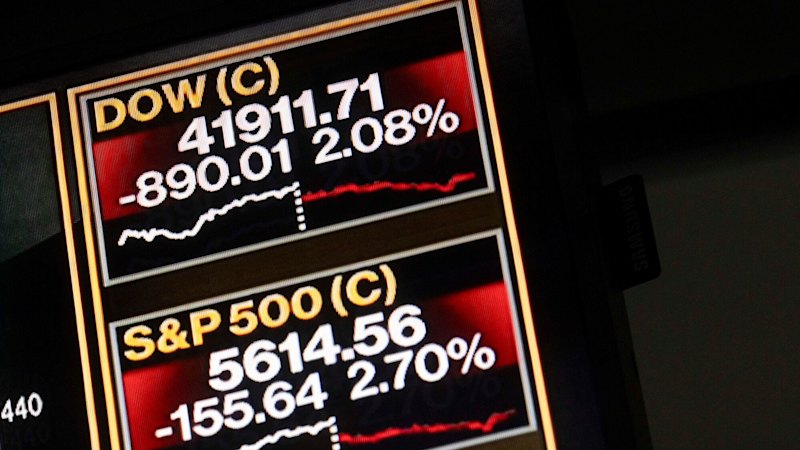
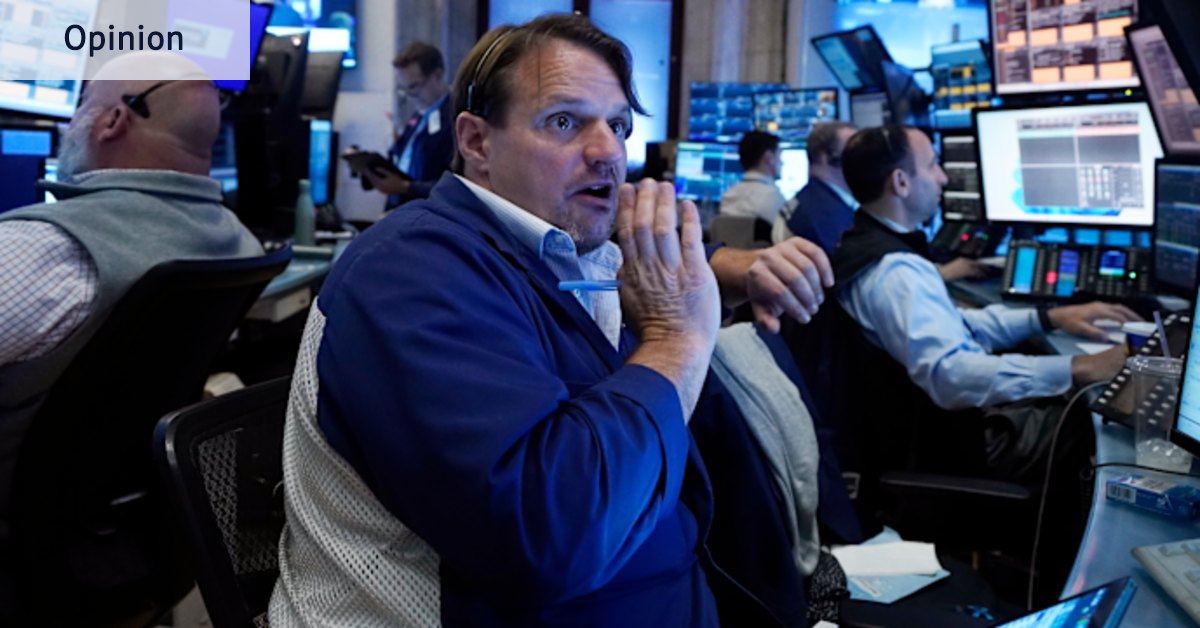
If you were looking for a single barometer of the state of the world – or of a particular copper-rich sector – it would be hard to go past the copper price.
asserted
it → look → price
Since late October, it has slumped 7.3 per cent.
asserted
it → slump → October
Much of the bullishness that pushed the price to record levels in September related to the extraordinary sums being spent on artificial intelligence and the infrastructure to host it.
asserted
that → push → it
While the initial sell-off from that peak related to Donald Trump’s tariffs and the deferment of the foreshadowed tariff on US copper imports that copper bulls had anticipated, the rest of the decline would appear to be linked heavily to a shift in perceptions about the future of AI and, most recently and specifically, in perceptions of the future of Nvidia, the company at the epicentre of the AI boom and its financing.
asserted
rest → relate → boom
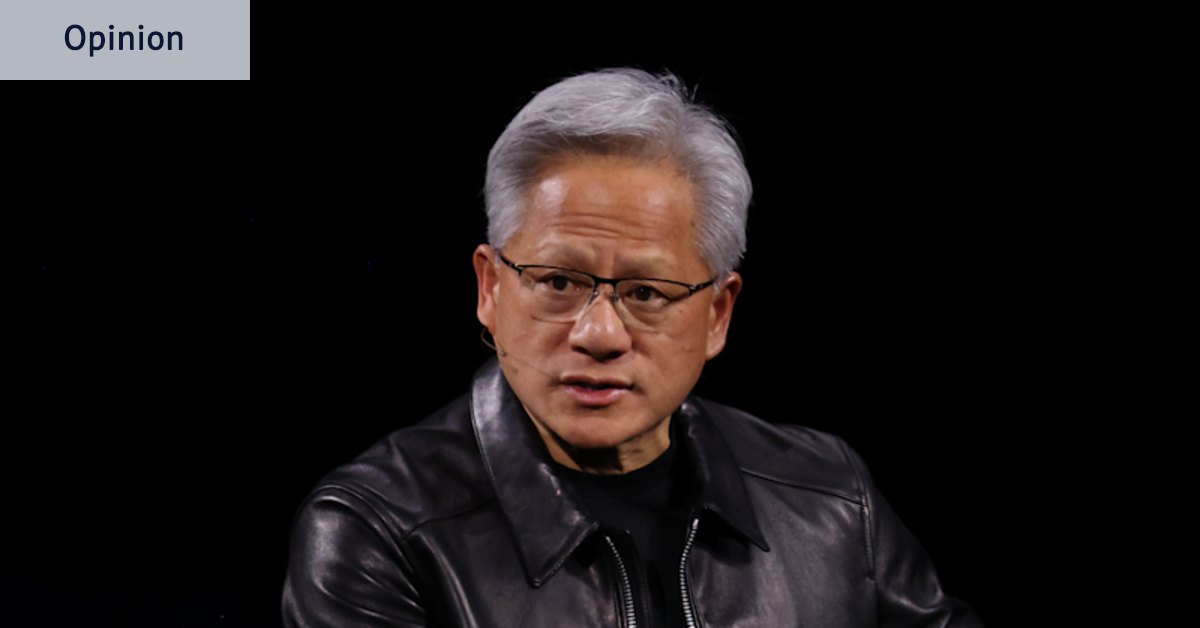
On October 28, the New York Times first reported the relationship between Nvidia’s chief executive, Jensen Huang, and a suspected Chinese spy, Alice Huang (no relation).
asserted
Times → report → executive
The copper price fell 2.84 per cent.
asserted
price → fall → ?
On November 3, in response to the “blue tsunami” in the midterms by Democrats who made opposition to the massive buildout of data centres a central issue in their campaigns, it fell another 2.8 per cent.
asserted
it → make → campaigns
On November 8, when Jensen Huang admitted to the affair, the price fell 1.7 per cent.
asserted
price → admit → affair
Last week, when he resigned/was forced out by his board it was down another 1.8 per cent.
asserted
it → resign → board
If “Doctor Copper,” as the metal is often labelled, has diagnosed the patient, AI has some significant health problems.
asserted
AI → label → problems
Nvidia itself has lost nearly $US2 trillion ($2.9 trillion), or about a third of its market capitalisation, since its October peak.
asserted
Nvidia → lose → peak
The recent falls illustrate how central Huang is seen to be to the company, in which he has no obvious successor, and to the sector, where his personal indiscretions overlay mounting concerns about the ever-increasing cost of the AI build and the ways bin which it is being financed.
asserted
it → illustrate → which
One is the view that Huang is irreplaceable, which explains why there is lobbying for his reinstatement.
asserted
which → explain → reinstatement
The other is that the model he built, where Nvidia essentially has been funding demand for its chips and underwriting a significant slice of the industry, will implode if he isn’t at the company’s helm.
asserted
he → build → helm
Nvidia’s chief financial officer, Colette Kress, who is now acting as CEO, is known to be sceptical about the ways in which Nvidia has been providing neoclouds and other data centre developers with chips, finance and guarantees that they couldn’t access elsewhere.
asserted
they → act → that
Nvidia has purchasing commitments, financial and contractual obligations, including contingent guarantees, of more than $US530 billion.
asserted
Nvidia → have → billion
The $US279 billion of purchasing commitments to its own suppliers are one side of a coin, with the various other real and contingent liabilities supporting the appetite of the smaller AI labs and the construction of the data centres that will provide the demand for its chips representing the coin’s other face.
asserted
that → purchase → face
There is a very real question raised by Huang’s exit from Nvidia as to whether a different leadership might pull the rug from under the weaker – the non-hyperscaler – players in the sector.
uncertain
leadership → be → sector
Combined with the likely slower roll-out of new data centres – only those already built or approved and under construction are likely to be unaffected by the Democrat landslide at both the federal and state government levels – the turmoil within Nvidia has the potential to blow up a substantial slab of the sector and Nvidia’s revenues and earnings in the process.
asserted
turmoil → combine → process
One certainty emanating from the controversies around Huang is that the US Congress will tighten up restrictions on the sale of America’s most advanced chips (which means Nvidia’s Blackwell chips and their successors) to China.
asserted
which → emanate → China
It’s not that Nvidia sells many of its chips directly to China.
asserted
Nvidia → ’ → China
The Biden administration significantly tightened the restrictions and, while Donald Trump approved the sale of Nvidia’s second-tier H200 chips to China (with a 25 per cent commission for his Treasury), the official sales are modest.
asserted
sales → tighten → Treasury
However – and this is where Alice Huang entered the picture – a host of data centres have sprung up in South-East Asia, hosting the Blackwell chips and renting their capacity to Chinese companies to train their AI models or, it is suspected, simply smuggling those chips to China.
asserted
it → enter → China
Alice Huang helped set up a company, Megaspeed, in Singapore in 2023.
asserted
Huang → set → 2023
Between early 2024 and June 2025, according to the Wall Street Journal, Megaspeed smuggled nearly $US12 billion of Nvidia’s most advanced chips to China.
uncertain
Megaspeed → accord → China
How could he not be aware that his mistress’ company was buying the sort of volumes that could only be explained if there were Chinese end-buyers?
uncertain
that → buy → volumes
Nvidia claims to be able to track its chips.
uncertain
Nvidia → claim → chips
It should have (must have?) known where they were ending up.
asserted
they → know → ?
Jensen Huang is inevitably going to be grilled by congressional committees about his knowledge and actions.
asserted
Huang → go → knowledge
Congress has before it three bi-partisan bills forcing location verification and reporting for advanced chips, a prohibition on the sale of chip-making equipment to China and whistleblower protections for those reporting suspected export control violations.
asserted
Congress → have → violations
Those bills, and the more intense scrutiny of where its chips end up, appear a threat to the Nvidia business model.
asserted
chips → end → model
Nvidia’s $US279 billion of purchasing commitments represent agreements to buy chips from its manufacturer, Taiwan’s TSMC, and other components and services from third parties.
asserted
billion → purchase → parties
It needed a market for all the chips it has in the pipeline, which explains why Huang has been investing in, supplying finance to, guaranteeing data centre finance and capacity and providing guarantees that it will buy back unused chips from its customers.
asserted
it → need → customers
The need to help his customer base expand has been accentuated by Nvidia’s reliance on OpenAI and Anthropic and the hyperscalers.
asserted
base → help → OpenAI
With Google, Amazon, Meta and Microsoft developing their own chips, the frontier labs rapidly diversifying their supply bases and competitors like AMD, Broadcom and a hoist of start-ups closing the gap on the performance of its chips, Nvidia – with a market share of around 90 per cent – has a lot to lose.
asserted
Nvidia → develop → lot
Should its “circular finance” model start to unwind, there’d be neocloud and data centre builders in immediate strife and Nvidia would be left with a lot of chips and a big hole in the bullish assumptions of its continued revenue and earnings growth.
asserted
Nvidia → start → growth
The fallout from Huang’s sexual adventures – there are also reports of affairs with at least one, and possibly more, Nvidia executives – is not just a threat to the company and the segment of the AI sector that is fed by it.
uncertain
that → be → it
It’s also a threat to the White House and China.
asserted
It → ’ → House
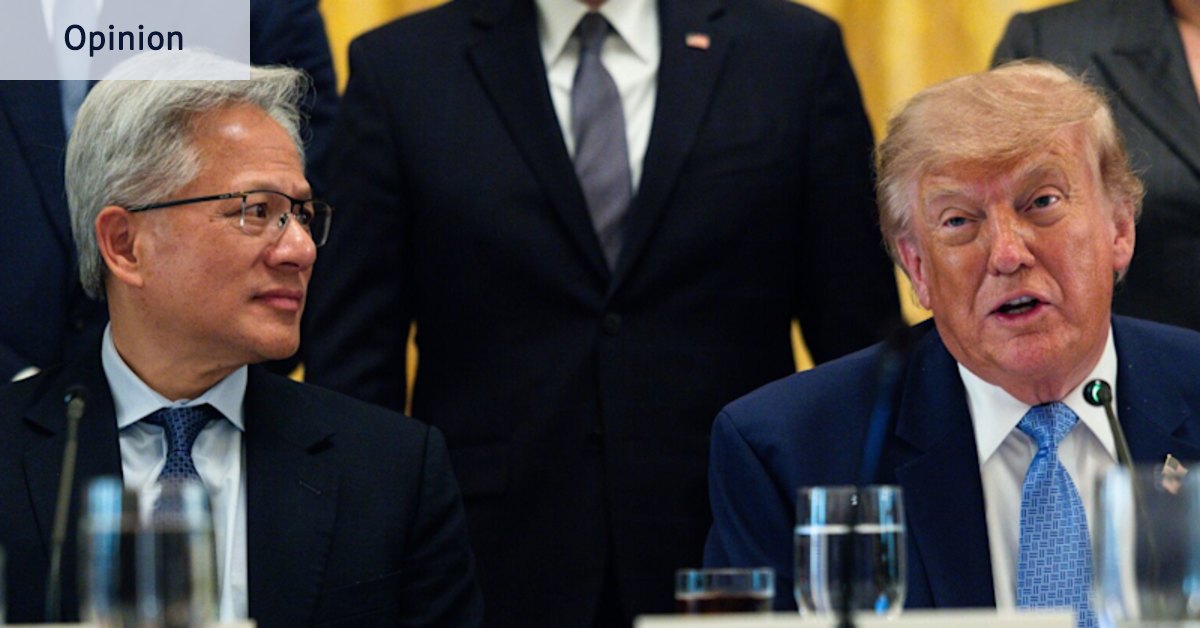
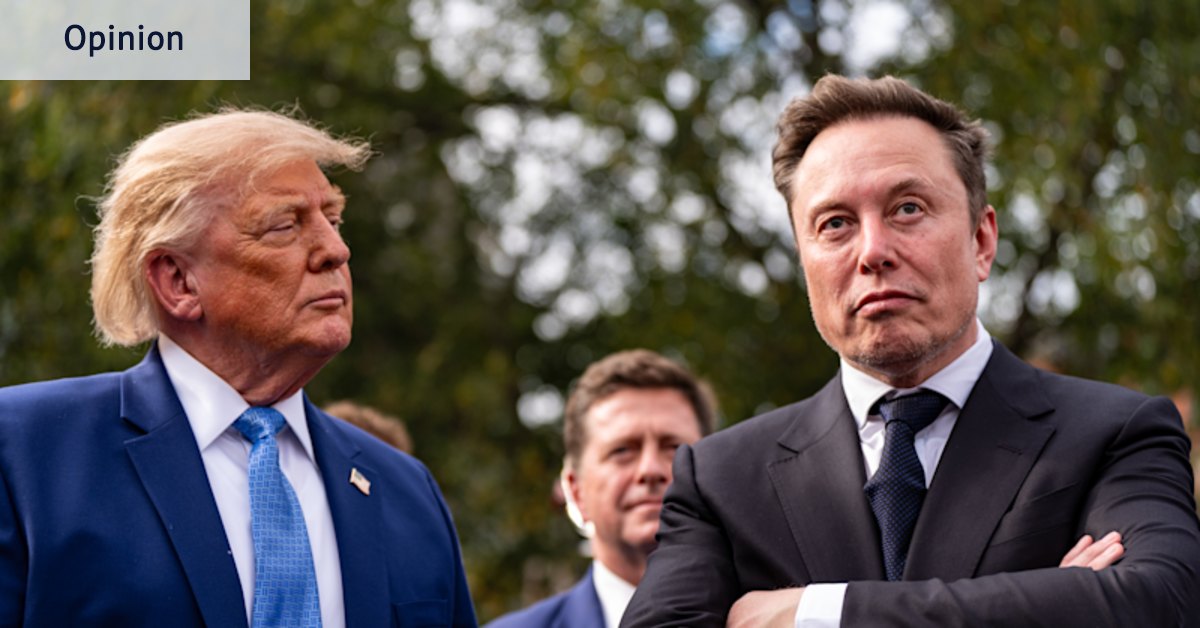
The White House is caught up in it because, Trump, despite being warned of the relationship between the two Huang and the possibility that Alice Huang was a Chinese spy, is close to Huang.
asserted
Huang → catch → Huang
Huang – a donor of $US25 million o Trump’s ballroom – has played an influential role in Trump’s decision to leave the US AI sector largely unregulated.
asserted
Huang → play → sector
…and 6 more, not listed.
 The Aporia