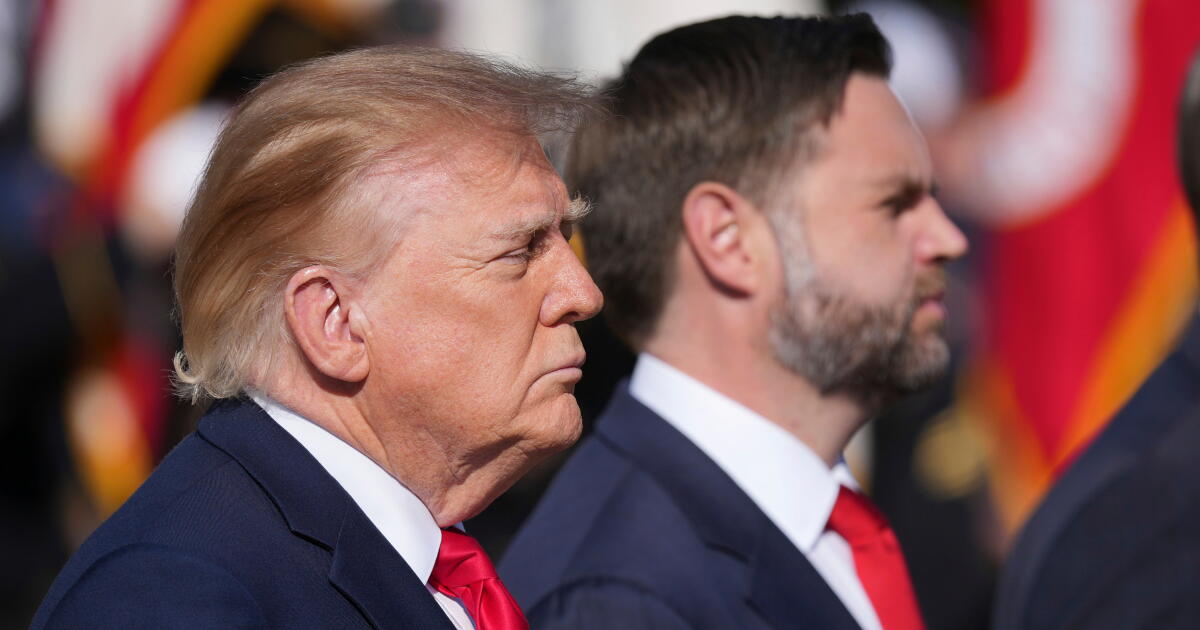
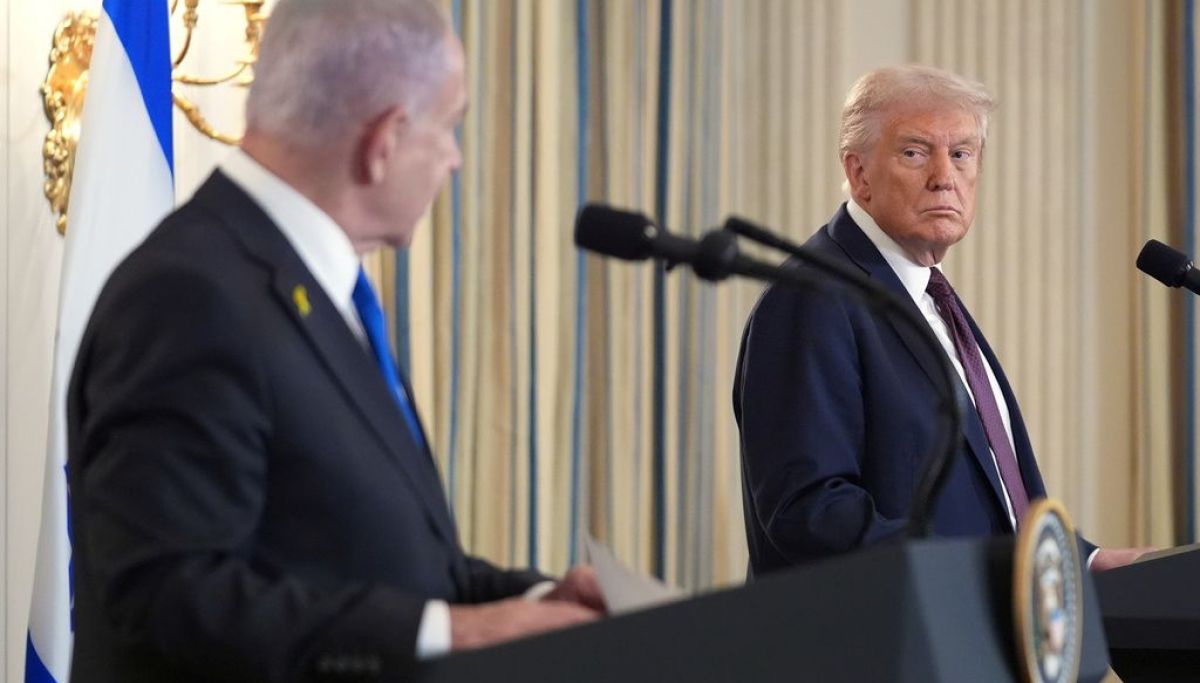
Photo via Washington Examiner

JD Vance and the debate over victory in Iran

Read the original at Washington Examiner ↗
Cite

York, B. (2026, November 16). JD Vance and the debate over victory in Iran. Washington Examiner. https://www.washingtonexaminer.com/daily-memo/4804369/jd-vance-debate-victory-iran/

Dated from the outlet's own feed. Check the original for its byline.

Washington Examiner · collected 2026-11-16 · by Byron York

Quick Summary

JD Vance, Vice President under President Donald Trump, initially disagreed with Trump’s decision to start a war against Iran in February 2026, viewing it as a potential disaster. Despite his misgivings, Vance publicly supported the move and later attempted to negotiate peace, which ultimately failed. The article focuses on the debate over whether the war achieved its goal of preventing Iran from obtaining nuclear weapons, with Vance and other officials asserting that the U.S. has significantly set back Iran’s nuclear program, though the exact timeline for Iran’s recovery remains unclear.
Written by AI on 2026-11-16, from this article's own text only (the story summary below draws on all the coverage).

AI analysis

Story summary

Vice President JD Vance supported President Donald Trump's decision to initiate military action against Iran in February 2026, despite his skepticism about the wisdom of the war. Vance, along with other officials like Secretary of State Marco Rubio and CIA Director John Ratcliffe, was initially wary of Israeli Prime Minister Benjamin Netanyahu's push for regime change in Iran. According to reports, Vance privately believed a regime-change war with Iran would be a disaster. However, Vance publicly backed the decision to attack Iran on February 28, 2026. Later, Vance's handling of peace talks with Iran, aimed at concluding a Memorandum of Understanding, was criticized for overestimating Iran's willingness to negotiate seriously.

Written for “JD Vance and Iran Debate” on 2026-11-17, grounded in this article and the 0 other(s) covering the same event.

Compared with similar articles

This article reads leans right and hedges 7% of its claims. Each row says how that neighbour differs.
The Straits Times
Hedges 1 of 8 claims Outlet record 64/100
“The articles discuss different aspects of Trump's and Vance's stances on Iran, not the same specific incident.”
Washington Examiner
Leans right Hedges 2 of 2 claims Outlet record 67/100
“The articles discuss different aspects of JD Vance's involvement with Iran policy and do not describe the same specific incident.”
Daily Mail
Hedges 2 of 16 claims Outlet record 70/100
“The articles describe different aspects of the relationship between Trump, Vance, and the Iran situation, not the same specific event or incident.”
The Independent
Hedges 5 of 26 claims Outlet record 59/100
“The articles describe different points in time and different actions: Article A discusses Trump ordering Vance to drop negotiations with Iran, while Article B discusses Vance's disagreement with Trump's decision to initiate a war against Iran.”
Toronto Star
Hedges 3 of 45 claims Outlet record 64/100
“The articles describe different aspects of JD Vance's relationship with President Trump regarding the Iran war, not the same specific incident.”
Los Angeles Times
Hedges 2 of 39 claims Outlet record 95/100
“Article A describes Trump pulling JD Vance from Iran talks, while Article B discusses Vance's disagreement with Trump's decision regarding the war with Iran, covering different aspects of the relationship between Vance and Trump.”
New York Post
Leans strongly right further right than this Hedges 2 of 10 claims Outlet record 66/100
“The articles discuss different aspects of the U.S. strategy and leadership regarding Iran, not the same specific event.”
Just The News
Leans right Hedges 7 of 44 claims Outlet record 94/100
“The articles discuss different aspects of JD Vance's role and opinions regarding Iran and domestic policy, not the same specific incident.”
Fox News
Centre further left than this Hedges 0 of 29 claims Outlet record 67/100
“The articles discuss different aspects of the Iran war and its political consequences, not the same specific incident.”
The Daily Caller
Leans strongly right further right than this Hedges 1 of 14 claims Outlet record 92/100
“Article A describes Trump ordering Vance to focus on corruption instead of Iran negotiations, while Article B discusses Vance's disagreement with Trump's decision to start a war with Iran.”

Story

JD Vance and Iran Debate
Politics · 1 article(s) covering the same event.
How this article was measured signals, leaning charts, publisher record, byline, topics and claims

Signals How these are calculated →

Claims extracted
82
sentences that state something as happening or true
Uncertain
7%
6 of 82 hedged ("reportedly", "may", "according to")
Leaning
Leans right
of the writing, not the subject · beta estimate
Publisher signals
67/100
Washington Examiner's corrections and hedging, across everything collected from it. Not a measure of accuracy.
Outlets on this story
1
Politics
Same framing elsewhere
1
articles that frame the event the way this one does
Analyzed 2026-11-16 · how these are computed

How this is being covered How these are calculated →

Article leaning vs. publisher reliability
Source leaning vs. consistency

Publisher

Washington Examiner · 4996 article(s) · 11 correction(s) detected
Running correction rate · 11 correction(s)

Who wrote this

Byron York
19 article(s) here · 1 carrying a prediction
As for the vice president, Vance reportedly “believed a regime-change war with Iran would be a disaster.”
2026-11-16 · assertive framing · JD Vance and the debate over victory in Iran
“Over the course of an hour, Netanyahu made a hard sell about how ripe Iran was to be overwhelmed,” the authors wrote, “and how this could finally be the moment for regime change brought about by a joint U.S.-Israeli assault.”
2026-11-12 · assertive framing · Trump and Netanyahu, again
(Both figures might rise even higher as the last few races are decided.)
2026-11-10 · assertive framing · Trump yields on immigration enforcement
But this year, the Democratic wave might be seen as the end of one 2028 race and the beginning of another.
2026-11-06 · assertive framing · In the GOP, a new 2028 race
It has long been a truism that a president’s job approval rating is the best indicator of how his party will perform in midterm elections.
2026-11-04 · assertive framing · The arrival of divided government
After many hints that she might not support el Sayed, Stevens rocked the party Sunday morning by endorsing Republican candidate Mike Rogers.
All signs point to Democrats winning control of the House, and it is entirely possible they will win the Senate, too.
For one, he seemed to be saying that he, JD Vance, would not have used the word “jihadist” to describe Abdul el Sayed.
2026-10-29 · assertive framing · Trump, Vance, and the ‘jihadist’ el Sayed
Trump couldn’t believe that on the Alaska ballot the real and the fake Dan Sullivan appeared indistinguishable.
2026-10-24 · assertive framing · Trump and the MAGA enthusiasm strategy
One place that theory could be tested is the race for Senate in Michigan.
Also by Byron York
Trump and Netanyahu, again
2026-11-12 · Washington Examiner
Trump yields on immigration enforcement
2026-11-10 · Washington Examiner
In the GOP, a new 2028 race
2026-11-06 · Washington Examiner
The arrival of divided government
2026-11-04 · Washington Examiner
Nothing else under this byline is closely related to this article, so these are simply their most recent.
All 19 articles by Byron York →

Topics

American IRAN Iranian Iranians U.S.

Subjects

IRAN GPE · 16× Vance PERSON · 15× Trump PERSON · 5× U.S. GPE · 5× Iranian NORP · 4× American NORP · 3× Iranians NORP · 3× JD VANCE PERSON · 2× Donald Trump PERSON · 1× Israeli NORP · 1×

Narrative

Yet in recent months, there has been a tendency among some of the war’s most fervent supporters to conflate the two goals, arguing that regime change is necessary to ensure that Iran never, ever, ever develops a nuclear weapon, and therefore anything short of a resumption of major combat operations to topple the regime falls short of the war’s purpose.
framing: assertive · carried by 1 article(s) · first seen 2026-11-16
As for the vice president, Vance reportedly “believed a regime-change war with Iran would be a disaster.”
2026-11-16 · Washington Examiner
JD Vance and the debate over victory in Iran · assertive framing

Claims (82 extracted, 6 hedged)

Vice President JD Vance famously disagreed with President Donald Trump’s decision to start the war against Iran. asserted
Vance → disagree → Iran
Vance was one of the skeptics — there were several — after Israeli Prime Minister Benjamin Netanyahu visited the White House in February and sought to persuade Trump and top U.S. officials to initiate strikes not only to knock out Iran’s nuclear weapons program but also to bring about regime change. asserted
Netanyahu → be → change
According to published reports, top officials such as Secretary of State Marco Rubio and CIA Director John Ratcliffe characterized Netanyahu’s pitch as “bulls***” and “farcical.” uncertain
officials → accord → *
As for the vice president, Vance reportedly “believed a regime-change war with Iran would be a disaster.” uncertain
war → believe → Iran
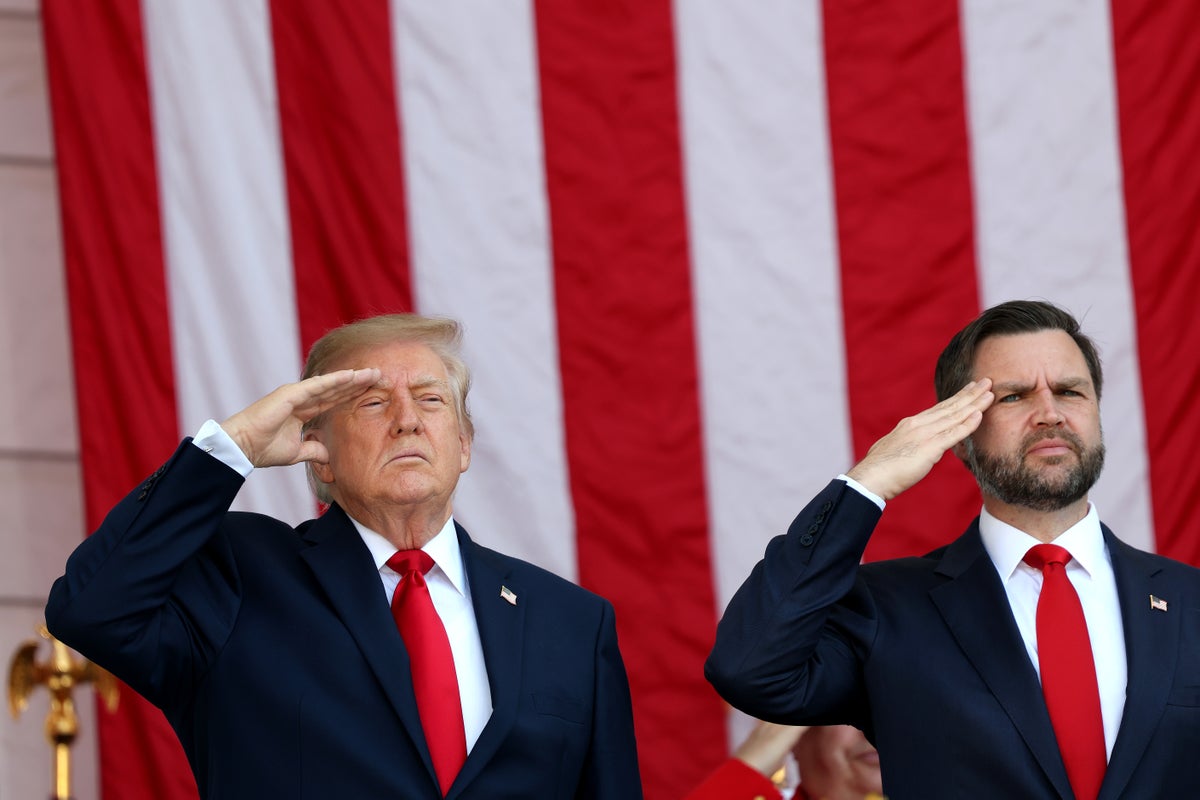
Nevertheless, when Trump decided to attack on Feb. 28, Vance stood up, saluted, and publicly supported the move. asserted
Vance → decide → move
Still, everyone knew Vance did not believe the war was a good idea. asserted
war → know → ?
And then he ended up bungling the peace talks that led to the ultimately meaningless Memorandum of Understanding between the U.S. and Iran. asserted
that → end → U.S.
In those talks, Vance placed too much faith in the Iranians’ hoped-for willingness to negotiate seriously. asserted
Vance → place → willingness
It turned out there was no such willingness, and there have not been serious negotiations since. asserted
It → turn → ?
In the big picture, though, there is no question that the U.S. has achieved the war’s main goal, which was ensuring that Iran cannot obtain a nuclear weapon. asserted
Iran → be → weapon
Starting with the American bombing raid of June 2025 and continuing with the current war that began in February 2026, American forces have pounded every component of Iran’s nuclear weapons program. asserted
forces → start → program
It will take a long time for Iran to recover. asserted
Iran → take → time
At various times since the 2025 strike, Trump has said it would take Iran “a couple of years” or “years” or “25 years” or “basically decades” to rebuild its nuclear weapons program. asserted
it → say → program
Other senior U.S. officials have said American strikes have done serious damage to Iranian capabilities. asserted
strikes → say → capabilities
Speaking at Naval Air Station Oceana in Virginia in July, Vance said, “If you look at what our own intelligence says about their nuclear program, they are farther away from developing a nuclear bomb than they have ever been since basically the last 20 or 30 years.” asserted
they → speak → years
Early this month, Vance said, “Having destroyed their nuclear program, we want to make sure they don’t rebuild or try to rebuild it.” asserted
they → say → it
There seems no doubt that Vance agrees that Iran should not have a nuclear weapon. asserted
Iran → seem → weapon
If more evidence is needed, here are a few examples of him saying so: asserted
him → need → ?
- In July 2024, during the presidential campaign, Vance said, “I think war often leads to unintended consequences, but preventing Iran from getting a bomb — really, really important.” asserted
war → say → bomb
Referring to Trump’s penchant for quick, forceful attacks, like taking out Iranian Quds Force leader Qasem Soleimani, Vance said, “If you’re going to punch the Iranians, you punch them hard.” asserted
you → refer → them
- In June 2025, shortly before the U.S. bombing of Iranian nuclear facilities, Vance said, “POTUS has been amazingly consistent, over ten years, that Iran cannot have a nuclear weapon … asserted
Iran → say → weapon
the president has made clear that Iran cannot have uranium enrichment.” asserted
have → make → enrichment
- In June 2025, immediately after the bombing, Vance said, “We do not want war with Iran. asserted
We → say → Iran
We actually want peace, but we want peace in the context of them not having a nuclear weapons program.” asserted
them → want → program
- In June 2025, also shortly after the bombing, Vance said, “Iran was very close to having a nuclear weapon … asserted
Iran → say → weapon
now Iran is incapable of building a nuclear weapon with the equipment they have, because we destroyed it … asserted
we → build → it
President Trump has obliterated the Iranian nuclear program.” asserted
Trump → obliterate → program
- In February 2026, before the start of the war, Vance said, “The president has told his entire senior team that we should be trying to cut a deal that ensures the Iranians don’t have nuclear weapons. asserted
Iranians → say → weapons
But if we can’t cut that deal, then there’s another option on the table.” asserted
we → cut → table
- Also in February, Vance said, “The president has been as crystal clear as he could be: Iran can’t have a nuclear weapon … uncertain
Iran → say → weapon
I think most Americans understand that you can’t let the craziest and worst regime in the world have nuclear weapons.” asserted
regime → think → weapons
- On May 19, 2026, in the third month of the war, Vance said, “Loud and clear since day one: Iran can NEVER have a nuclear weapon.” uncertain
Iran → say → weapon
A June 2025 article in Politico noted Vance’s support in light of his previously stated opposition to a wider war in the Middle East. asserted
article → note → East
“The vibe shift from [Vance] is notable, and it underscores the political currency that the president has built up within his own party,” Politico reported. asserted
Politico → underscore → party
“A longtime isolationist who served with the Marines in Iraq, Vance previously opposed any proactive military intervention against Iran in its own territory. asserted
Vance → serve → territory
But last week, he responded to debate around Trump’s political authority and decision-making with an impassioned post on social media, arguing: ‘The president has earned some trust on this issue.’” asserted
president → respond → issue
In that post, Vance also said, “I have yet to see a single good argument for why Iran needed to enrich uranium well above the threshold for civilian use. asserted
Iran → say → use
I’ve yet to see a single good argument for why Iran was justified in violating its non-proliferation obligations. asserted
Iran → see → obligations
I’ve yet to see a single good pushback against the IAEA’s findings. asserted
I → ’ve → findings
There seems to be little doubt that, certainly by the time of the 2025 strike on the Iranian nuclear facilities, Vance supported what would become the primary goal of the war — to ensure that Iran does not obtain a nuclear weapon. asserted
Iran → seem → weapon
…and 42 more, not listed.

Give feedback · no sign-in needed

No sign-in needed for now. Your note is sent without a name, so it cannot be answered.

History Support