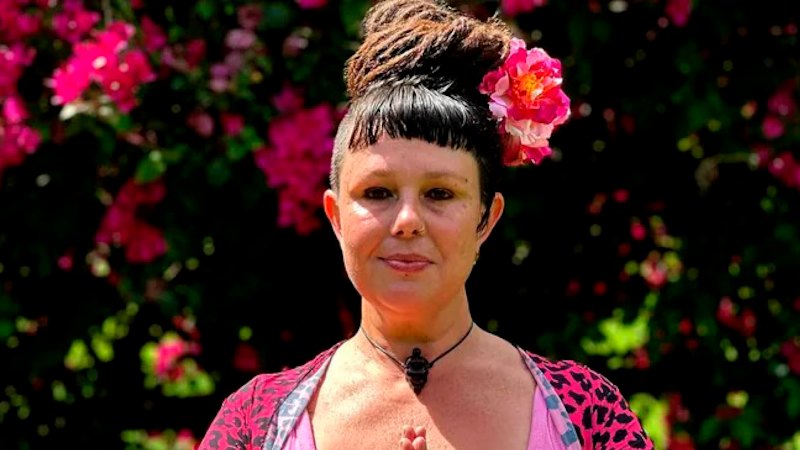
Photo via The Guardian

Birth keeper told mother of baby who later died to ‘go home and rest’, NSW inquest hears

Read the original at The Guardian ↗
Cite

Chenery, S. (2026, November 16). Birth keeper told mother of baby who later died to ‘go home and rest’, NSW inquest hears. The Guardian. https://www.theguardian.com/australia-news/2026/nov/16/nsw-inquest-four-babies-freebirth-home-birth-northern-rivers-ntwnfb

Dated from the outlet's own feed. Check the original for its byline.

The Guardian · collected 2026-11-16 · by Susan Chenery

Quick Summary

At a New South Wales coroner’s inquest, it was revealed that a birth keeper named Sita Tara Kali advised a pregnant woman to rest at home instead of seeking urgent medical care at a hospital, despite an ultrasound showing the baby was severely compromised at 43 weeks. This advice came after the woman, who had a distrust of hospitals and preferred a home birth, was told by an obstetrician to urgently present to the emergency department. The baby, later named Baby R, was born at home and died 14 hours later, with the cause of death determined to be unascertained but likely due to hypoxic-ischemic encephalopathy from post-maturity. The inquest is examining the appropriateness of care provided by unregistered support workers in home births.
Written by AI on 2026-11-16, from this article's own text only (the story summary below draws on all the coverage).
See how they differ ↓

AI analysis

Story summary

The NSW Coroner’s Court is currently examining the deaths of four babies born through free birth or homebirth in the NSW Northern Rivers region between 2022 and 2024. The two-week inquest, led by Deputy State Coroner Joan Baptie, began on Monday at Lismore Local Court. A self-described "birth keeper," Sita Kali, advised one expectant mother to "go home and rest" after she had been instructed by doctors to urgently seek medical care at the emergency department. The inquest will investigate whether care by unregistered support workers like Kali was reasonable and appropriate before, during, and after the birth. Families of the deceased babies declined to participate in the inquest. The court will also look into factors such as women's traumatic experiences with hospitals and lack of trust in medical professionals that may have influenced their decision to opt for free birth.

Written for “Inquest into Baby Deaths” on 2026-11-17, grounded in this article and the 3 other(s) covering the same event.

How they differ

3 outlets covered “Inquest into Baby Deaths”.

What each outlet says

One AI summary per outlet of its latest article on this story, written from that article alone and checked against it. Open the article for the outlet's own words.

The GuardianThis outlet16 Nov

At a New South Wales coroner’s inquest, it was revealed that a birth keeper named Sita Tara Kali advised a pregnant woman to rest at home instead of seeking urgent medical care at a hospital, despite an ultrasound showing the baby was severely compromised at 43 weeks. This advice came after the woman, who had a distrust of hospitals and preferred a home birth, was told by an obstetrician to urgently present to the…

Birth keeper told mother of baby who later died to ‘go home and rest’, NSW inquest hears (this article)
ABC News (AU)17 Nov

An inquest in New South Wales is examining the deaths of four babies, including twins born at home without a registered midwife. One twin was stillborn, and the other died shortly after birth. Midwifery expert Hannah Dahlen testified that with proper antenatal care, the babies likely would have survived, though with some risk. The mother chose a freebirth due to a previous traumatic hospital birth experience and…

Twins' death after freebirth could have been avoided, inquest hears →2 articles from ABC News (AU) on this story
Sydney Morning Herald16 Nov

At an inquest in Lismore Local Court, the role of Sita Kali, a birth keeper, is being examined in the context of a newborn baby’s death that occurred after a free-birth in the Northern Rivers region of New South Wales in 2022. Kali advised the mother to rest at home despite medical professionals urging her to go to the emergency department, leading to the baby’s compromised health upon birth. The inquest covers four…

‘Go home and rest’: Byron birth keeper’s role in newborn baby’s death examined →

Where they agree and split

Framing

How the first headlines put it

Stated as fact3
The headlines (3)

‘Go home and rest’: Byron birth keeper’s role in newborn baby’s death examined Sydney Morning Herald · stated as fact

Inquest examines what led to deaths of four babies born at home ABC News (Australia) · stated as fact

Birth keeper told mother of baby who later died to ‘go home and rest’, NSW inquest hears The Guardian · stated as fact

The full story: what happened, how it changed, and all 4 articles →

Compared with similar articles

This article reads leans left and hedges 0% of its claims. Each row says how that neighbour differs.
The Sydney Morning Herald
Leans strongly right further right than this Hedges 2 of 32 claims Outlet record 61/100
ABC News (AU)
Hedges 0 of 25 claims Outlet record 67/100

Story

Inquest into Baby Deaths
Health · 4 article(s) covering the same event. Compare every outlet's account →
How this article was measured signals, leaning charts, publisher record, byline, topics and claims

Signals How these are calculated →

Claims extracted
24
sentences that state something as happening or true
Uncertain
0%
0 of 24 hedged ("reportedly", "may", "according to")
Leaning
Leans left
of the writing, not the subject · beta estimate
Publisher signals
65/100
The Guardian's corrections and hedging, across everything collected from it. Not a measure of accuracy.
Outlets on this story
4
Health
Same framing elsewhere
1
articles that frame the event the way this one does
Analyzed 2026-11-16 · how these are computed

How this is being covered How these are calculated →

Article leaning vs. publisher reliability
Source leaning vs. consistency

Publisher

The Guardian · 3568 article(s) · 7 correction(s) detected
Running correction rate · 7 correction(s)

Who wrote this

Susan Chenery
2 article(s) here · 1 carrying a prediction
The inquest will examine the deaths of four babies born in free births or home births who died in the northern rivers region between 2022 and 2024.
The inquest will examine whether the care was reasonable in the circumstances and whether care by an unregistered support worker was reasonable and appropriate before, during and after the birth.
Also by Susan Chenery
Nothing else under this byline is closely related to this article, so these are simply their most recent.

Topics

Lismore NSW New South Wales

Subjects

Kali PERSON · 2× Hannah Dahlen PERSON · 1× Lismore GPE · 1× NSW ORG · 1× New South Wales GPE · 1× Ragni Mathur PERSON · 1× Sita Tara Kali PERSON · 1×

Narrative

The counsel assisting, Ragni Mathur, told the court women were choosing unregulated free birthing because of “traumatic or coercive experiences, fragmented care, lack of trust in clinicians, lack of available clinicians, lack of services in regional NSW, and including child protection notifications and regulatory actions against new lives”.
framing: assertive · carried by 1 article(s) · first seen 2026-11-16
The inquest will examine whether the care was reasonable in the circumstances and whether care by an unregistered support worker was reasonable and appropriate before, during and after the birth.

Claims (24 extracted, 0 hedged)

A self-described birth keeper advised a pregnant woman whose baby later died to “go home and rest” after she was given urgent medical advice to present to an emergency department, the New South Wales coroner’s court has heard. asserted
court → describe → department
Sita Tara Kali was involved in the care of two of four babies born in free births or home births who died in the northern rivers region between 2022 and 2024. asserted
who → involve → 2022
An inquest into the deaths began in the Lismore local court on Monday. asserted
inquest → begin → Monday
The inquest will examine whether the care was reasonable in the circumstances and whether care by an unregistered support worker was reasonable and appropriate before, during and after the birth. asserted
care → examine → birth
Baby R’s mother had a distrust of hospitals in general, the court heard. asserted
court → have → hospitals
She was aligned with and trusted Kali. asserted
She → align → Kali
She felt that having a home birth would give her a stronger connection to the baby. asserted
having → feel → baby
In a police statement she said she felt threatened by her experiences at the hospital. asserted
she → say → hospital
At 43 weeks, an ultrasound confirmed that the baby was extremely compromised. asserted
baby → confirm → weeks
She was urged to attend emergency and strongly advised against a home birth, the inquest heard. asserted
inquest → urge → birth
She called Kali, who said in a police statement, “she was quite upset and anxious. asserted
she → call → statement
I advised her to go home and rest. asserted
I → advise → her
Calm yourself down and consider what you want to do.” asserted
you → calm → what
Baby R was born outside into his father’s hands at 9.51am. asserted
R → bear → 9.51am
Two doulas were in attendance; neither had medical training. asserted
neither → have → training
He never latched on to feed. asserted
He → latch → ?
About 14 hours later, the ambulance was called. asserted
ambulance → call → ?
The umbilical cord and placenta were still attached. asserted
cord → attach → ?
Baby R died on the way to a waiting helicopter at 12.22am. asserted
R → die → 12.22am
The cause of his death was determined to be unascertained. asserted
cause → determine → death
But an expert neonatologist surmised that it was caused by hypoxic-ischemic encephalopathy resulting from severe post-maturity – being born at 43 weeks. asserted
it → surmise → weeks
Prof Hannah Dahlen, a midwifery academic who has attended thousands of births, told the court that this was a baby “I would have been watching closely” as a midwife attending a birth. asserted
I → attend → birth
She said the difference between a doula and a birthing midwife “is the theoretical knowledge that we add on to that clinical experience, which gives us an understanding and an ability to interpret signs and symptoms and to identify what pathology is going on, or what physiology is not actually working at this time and making a decision”. asserted
physiology → say → decision
The counsel assisting, Ragni Mathur, told the court women were choosing unregulated free birthing because of “traumatic or coercive experiences, fragmented care, lack of trust in clinicians, lack of available clinicians, lack of services in regional NSW, and including child protection notifications and regulatory actions against new lives”. asserted
women → assist → lives
Give feedback · no sign-in needed

No sign-in needed for now. Your note is sent without a name, so it cannot be answered.

History Support