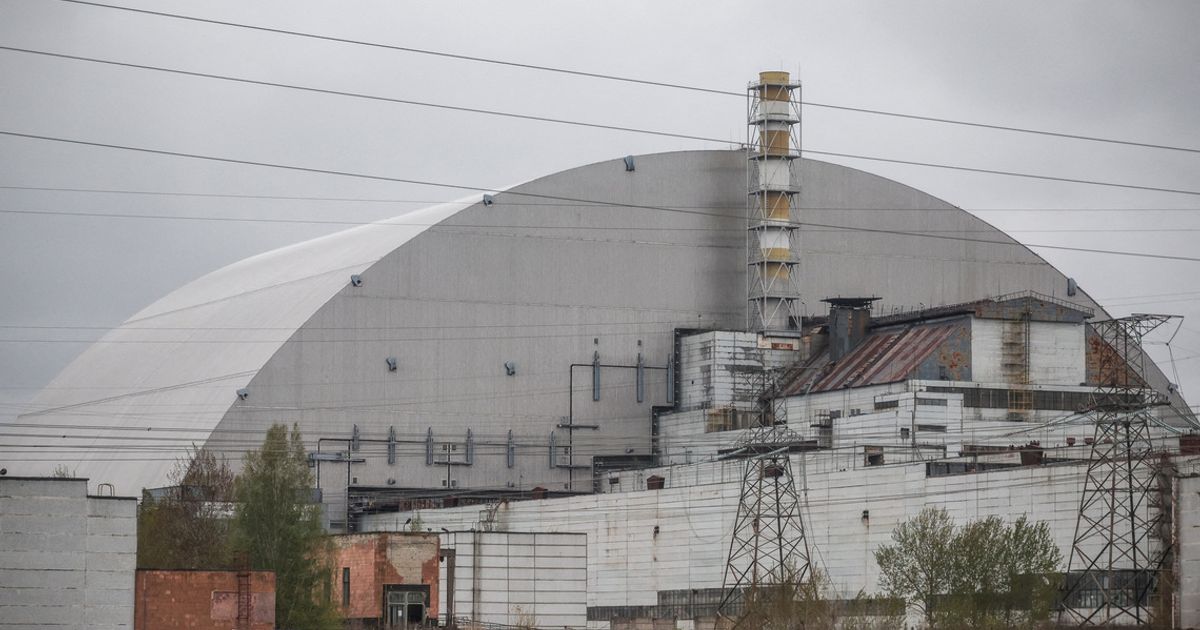
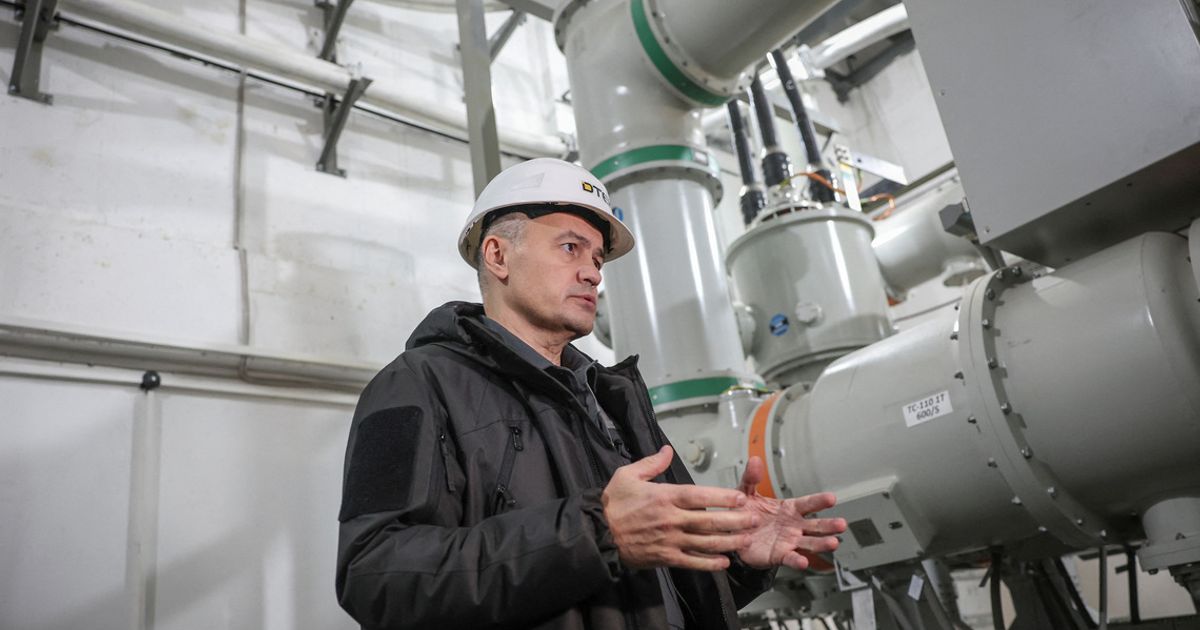
Photo via New York Post

‘Deeop concern’ of nuclear accident in Ukraine increasing over Russian airstrikes, officials warn

Read the original at New York Post ↗
Cite

Reyes, R. (2026, November 16). ‘Deeop concern’ of nuclear accident in Ukraine increasing over Russian airstrikes, officials warn. New York Post. https://nypost.com/2026/11/16/world-news/risk-of-nuclear-accident-in-ukraine-increasing-over-russian-airstrikes-officials-warn/

Dated from the outlet's own feed. Check the original for its byline.

New York Post · collected 2026-11-16 · by Ronny Reyes

Quick Summary

Nuclear safety regulators from 38 countries have expressed deep concern over increasing risks to nuclear safety in Ukraine due to Russian attacks on the country’s energy infrastructure. The regulators warn that such attacks could lead to a nuclear accident, potentially releasing radioactive material across Europe, similar to the 1986 Chernobyl disaster. Chief of the Heads of the European Radiological Protection Competent Authorities and the Nordic Radiation Safety Authorities, Per Strand, specifically highlights the threat posed by Russia’s new tactic of using larger bomb payloads and warns of the risk of a nationwide blackout affecting all nine of Ukraine’s nuclear reactors this winter.
Written by AI on 2026-11-17, from this article's own text only (the story summary below draws on all the coverage).
See how they differ ↓

AI analysis

Story summary

On November 16, 2026, the European Union accused Russia of prolonging peace talks in Ukraine while simultaneously bombing power plants and other infrastructure to exacerbate civilian hardships as winter approaches. At talks in Brussels, EU foreign ministers expressed concern over Russia's attacks on Ukraine's energy infrastructure, which are seen as an attempt to weaken NATO by forcing the military alliance to redeploy troops and equipment westward. Additionally, international nuclear safety regulators representing 38 countries, including all EU nations, the U.S., Britain, Canada, and Japan, warned that the risk of a nuclear accident in Ukraine is increasing due to Russia's attacks on power infrastructure, which could lead to releases of radioactivity similar to the 1986 Chernobyl disaster.

Written for “Nuclear Accident Risk in Ukraine Increasing” on 2026-11-17, grounded in this article and the 6 other(s) covering the same event.
Why this leaning score
The model judged this article politically coded and scored it -0.65, but 2 quote(s) could not be found in the article and the other 2 are attributed speech rather than the article's own narration, so the score is not published.
Written under an earlier scoring contract, which gave a paragraph rather than checkable quotes. Re-analysing this article replaces it.
Leaning score withheld for article 158112: no verified evidence · logged 2026-11-17

How they differ

6 outlets covered “Nuclear Accident Risk in Ukraine Increasing”.

What each outlet says

One AI summary per outlet of its latest article on this story, written from that article alone and checked against it. Open the article for the outlet's own words.

New York PostThis outlet16 Nov

Nuclear safety regulators from 38 countries have expressed deep concern over increasing risks to nuclear safety in Ukraine due to Russian attacks on the country’s energy infrastructure. The regulators warn that such attacks could lead to a nuclear accident, potentially releasing radioactive material across Europe, similar to the 1986 Chernobyl disaster. Chief of the Heads of the European Radiological Protection…

‘Deeop concern’ of nuclear accident in Ukraine increasing over Russian airstrikes, officials warn (this article)
The Independent16 Nov

International nuclear safety regulators have warned that Russia's attacks on Ukraine's power grid increase the risk of a nuclear accident this winter. These regulators from 38 countries have called on Russia to cease targeting nuclear facilities and electricity lines, citing the critical need for a stable power supply to prevent reactor malfunctions. The concern is heightened by recent Russian tactics involving more…

Russia’s attacks on Ukraine’s power grid raise fears of a nuclear accident this winter →2 articles from The Independent on this story
The Hindu16 Nov

On November 16, 2026, EU foreign ministers in Brussels accused Russia of delaying peace talks and escalating attacks on Ukrainian infrastructure as winter approaches. The ministers, including EU foreign policy chief Kaja Kallas and Irish Foreign Minister Helen McEntee, emphasized the need for a ceasefire and criticized Russia for starting the nearly five-year war and continuing to attack civilians. They also…

EU accuses Russia of stalling Ukraine peace talks to target power plants as winter nears →
The Straits Times16 Nov

Nuclear safety regulators from 38 countries, including representatives from Europe, the United States, and Japan, have expressed growing concern over the risk of a nuclear accident in Ukraine this winter. This heightened risk is attributed to Russia's intensified attacks on Ukraine's energy infrastructure, which includes power plants and substations, exacerbating an already weakened system due to the ongoing…

Risk of nuclear accident in Ukraine increasing this winter, atomic safety regulators say →
Toronto Star16 Nov

European Union foreign ministers accused Russia of prolonging peace talks while intensifying attacks on Ukrainian infrastructure, particularly power plants, as winter approaches. The EU imposed sanctions on nearly 50 Russian banks and financial institutions, along with several businesspeople linked to energy and oil trade. EU officials, including foreign policy chief Kaja Kallas, stressed the need for a ceasefire…

EU accuses Russia of stalling Ukraine peace talks to target power plants as winter nears →
Daily Mail16 Nov

Nuclear safety regulators from 38 countries have issued a warning about the increased risk of a nuclear accident in Ukraine due to Russia's attacks on the country's power infrastructure. The regulators, including HERCA, WENRA, and NORA, expressed deep concern over the potential for a blackout that could cause a meltdown in Ukraine's nine nuclear reactors, similar to the Chernobyl disaster in 1986. They urge Russia…

Power blackout could cause meltdown in ALL Ukrainian nuclear reactors and spark second Chernobyl, atomic safety chiefs warn →

Where they agree and split

Framing

How the first headlines put it

Attributed to a source1
Stated as fact5
The headlines (6)

Risk of nuclear accident in Ukraine increasing this winter, atomic safety regulators say The Straits Times · attributed to a source

EU accuses Russia of stalling Ukraine peace talks to target power plants as winter nears The Independent · stated as fact

EU accuses Russia of stalling Ukraine peace talks to target power plants as winter nears The Hindu · stated as fact

EU accuses Russia of stalling Ukraine peace talks to target power plants as winter nears Toronto Star · stated as fact

Power blackout could cause meltdown in ALL Ukrainian nuclear reactors and spark second Chernobyl, atomic safety chiefs warn Daily Mail · stated as fact

‘Deeop concern’ of nuclear accident in Ukraine increasing over Russian airstrikes, officials warn New York Post · stated as fact

Words to watch (1)

Power blackout could cause meltdown in ALL Ukrainian nuclear reactors and spark second Chernobyl, atomic safety chiefs warn Daily Mail

The full story: what happened, how it changed, and all 7 articles →

Compared with similar articles

This article reads unscored and hedges 18% of its claims. Each row says how that neighbour differs.
The Independent
Leans left Hedges 6 of 21 claims Outlet record 59/100
Daily Mail
Leans strongly left Hedges 2 of 23 claims Outlet record 70/100
The Straits Times
Hedges 2 of 23 claims Outlet record 64/100
The Straits Times
Hedges 4 of 43 claims Outlet record 64/100
“While both articles discuss the impact of Russian attacks on Ukrainian energy infrastructure, they describe different aspects and times of the ongoing situation.”
BBC News
Leans left Hedges 1 of 63 claims Outlet record 66/100
“The articles discuss related but different aspects of the situation in Ukraine, with one focusing on the impact of power outages on civilians and the other on the risk of nuclear accidents due to Russian airstrikes.”

Story

Nuclear Accident Risk in Ukraine Increasing
World · 7 article(s) covering the same event. Compare every outlet's account →
How this article was measured signals, leaning charts, publisher record, byline, topics and claims

Signals How these are calculated →

Claims extracted
11
sentences that state something as happening or true
Uncertain
18%
2 of 11 hedged ("reportedly", "may", "according to")
Leaning
withheld
no quote in the article backed the model's score
Publisher signals
66/100
New York Post's corrections and hedging, across everything collected from it. Not a measure of accuracy.
Outlets on this story
7
World
Same framing elsewhere
1
articles that frame the event the way this one does
Analyzed 2026-11-17 · how these are computed

How this is being covered How these are calculated →

Article leaning vs. publisher reliability
Source leaning vs. consistency

Publisher

New York Post · 20671 article(s) · 41 correction(s) detected
Running correction rate · 41 correction(s)

Who wrote this

Ronny Reyes
86 article(s) here · 1 carrying a prediction
The president has since said that he’s not interested in reigniting the war and signaled that he would let America’s economic pressure campaign play out to force Iran to negotiate seriously.
With Russia stepping up attacks on Ukraine’s energy infrastructure in an attempt to freeze the country, nuclear safety regulators representing 38 nations fear that the lack of stable electricity could threaten the country’s power plants’ ability to stay cool and avoid a meltdown.
The figure would match what is already known about Iran’s production capacity.
Any savings from buying the cheaper Russian diesel would be easily wiped out by potential legal fees, likely upcoming congressional investigations, and reputation damage of going through with the exchange, said Jeremy Paner, a former US sanctions official.
President Trump’s special envoy Steve Witkoff said the negotiations would focus on a “post-war security arrangement” and “de-escalation.”
Trump has reiterated that he would keep pushing for diplomacy in Iran, declaring on Monday that the war was “effectively over” despite negotiators being nowhere near to reaching a peace deal.
Additionally, selling more chips to the world’s second largest economy could only help Nvidia’s bottom line.
Alleged Chinese spy Alice Huang may have extracted key details on Nvidia’s products and thoughts on President Trump’s AI stance during “pillow talk” with CEO Jensen Huang, experts said.
Suddenly, that middle seat on a packed commercial flight might not look so bad.
Iranian officials mocked President Trump over Republicans’ midterm losses and warned that the regime would deploy “new weapons” if he chooses to restart the war.
Also by Ronny Reyes
Nothing else under this byline is closely related to this article, so these are simply their most recent.
All 86 articles by Ronny Reyes →

Topics

Belarus Chernobyl Russia Soviet Ukraine

Subjects

Ukraine GPE · 8× Russia GPE · 7× Belarus GPE · 1× Chernobyl GPE · 1× Per Strand PERSON · 1× Reuters ORG · 1× Russians NORP · 1× Soviet NORP · 1× the European Radiological Protection Competent Authorities ORG · 1× the Nordic Radiation Safety Authorities ORG · 1×

Narrative

The Soviet-era accident spread radioactivity across Ukraine, Belarus, Russia, and northern and central Europe, threatening to poison a vast swath of the continent. Per Strand, chief of the Heads of the European Radiological Protection Competent Authorities and the Nordic Radiation Safety Authorities, said regulators are particularly worried about Russia’s growing payload sizes attached to their bombs.
framing: assertive · carried by 1 article(s) · first seen 2026-11-17
With Russia stepping up attacks on Ukraine’s energy infrastructure in an attempt to freeze the country, nuclear safety regulators representing 38 nations fear that the lack of stable electricity could threaten the country’s power plants’ ability to stay cool and avoid a meltdown.

Claims (11 extracted, 2 hedged)

With Russia stepping up attacks on Ukraine’s energy infrastructure in an attempt to freeze the country, nuclear safety regulators representing 38 nations fear that the lack of stable electricity could threaten the country’s power plants’ ability to stay cool and avoid a meltdown. uncertain
lack → step → meltdown
“Together we… express our deep concern about the increasing risks to nuclear safety arising from Russia’s war against Ukraine, and its continued attacks on the country’s energy infrastructure,” the bodies said in a joint statement. asserted
bodies → express → statement
“Together, (we) see an urgent need for Russia to cease attacks against Ukraine’s nuclear facilities and the energy infrastructure essential to their safe operation,” the regulators added. asserted
regulators → see → operation
In the event of a meltdown, the affected plants could release radioactive material into the air in a repeat of the 1986 Chernobyl disaster, which is considered the worst civil nuclear accident in history. uncertain
which → affect → history
The Soviet-era accident spread radioactivity across Ukraine, Belarus, Russia, and northern and central Europe, threatening to poison a vast swath of the continent. Per Strand, chief of the Heads of the European Radiological Protection Competent Authorities and the Nordic Radiation Safety Authorities, said regulators are particularly worried about Russia’s growing payload sizes attached to their bombs. asserted
regulators → spread → bombs
“Because of this new tactic of the Russians, … clearly the highest risk will be this winter for a nuclear accident,” he told Reuters. asserted
he → tell → Reuters
The worst case scenario would be if Russia triggers a nationwide blackout on Ukraine’s power grid, which would affect all of Ukraine’s nine nuclear reactors. asserted
which → trigger → reactors
“Nine reactors at the same time with the potential of (radioactive) releases would be quite a severe situation,” Strand warned. asserted
Strand → warn → releases
Ukraine has four nuclear power plants, three of which are in operation and provide around 80% of power used in the winter. asserted
three → have → winter
Experts have long warned that Russia would ramp up its attacks on Ukraine’s energy grid ahead of winter, repeating last year’s brutal strategy, in a ploy to inflict maximum damage on its people and force Kyiv to make concessions to end the war. asserted
Russia → warn → war
The fourth plant, in Zaporizhzhia, stands as the largest atomic station in Europe and is currently under Russian occupation. asserted
plant → stand → occupation
Give feedback · no sign-in needed

No sign-in needed for now. Your note is sent without a name, so it cannot be answered.

History Support