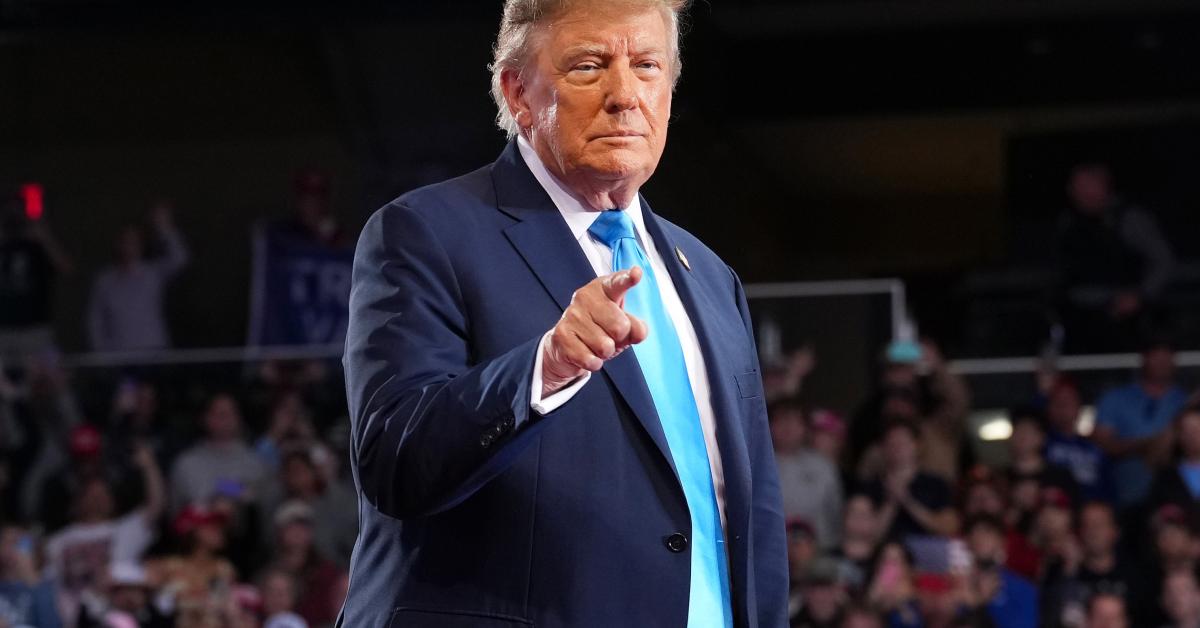
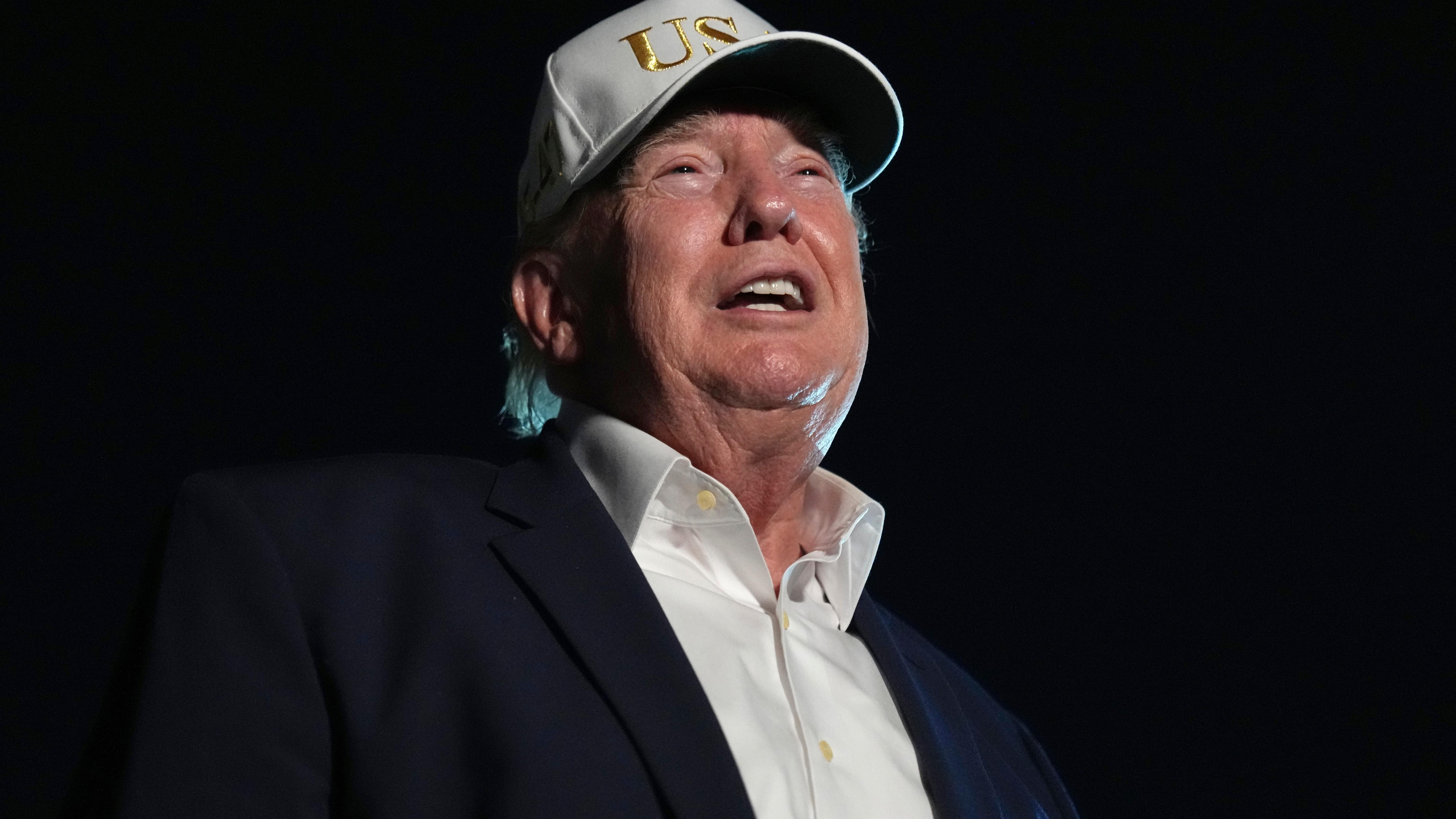
Photo via TIME

Why Trump Is Throwing His Weight Behind a Hollywood Tax Credit

Read the original at TIME ↗
Cite

Schneid, R. (2026, November 16). Why Trump Is Throwing His Weight Behind a Hollywood Tax Credit. TIME. https://time.com/article/2026/11/16/why-trump-is-throwing-his-weight-behind-a-hollywood-tax-credit/

Dated from the outlet's own feed. Check the original for its byline.

TIME · collected 2026-11-16 · by Rebecca Schneid

Quick Summary

President Donald Trump is advocating for a federal tax incentive for the film and television industry, aiming to counter the loss of productions to countries offering more favorable tax conditions. Introduced by Senator Tim Scott, the bipartisan bill proposes a base 20% federal tax credit for qualifying U.S. labor costs, which has garnered support from several lawmakers. Trump highlights the bill’s potential to create jobs and boost the economy, though critics like Tracy Gordon and Adam Michel question its efficacy and cost, with estimates ranging from $3.3 billion to $4.9 billion annually.
Written by AI on 2026-11-17, from this article's own text only (the story summary below draws on all the coverage).
See how they differ ↓

AI analysis

Story summary

President Donald Trump is advocating for the passage of the Motion Picture, Television, and Entertainment Revitalization Act, a bipartisan bill aimed at revitalizing the U.S. film and television industry. The bill, introduced by Republican Senator Tim Scott in September, proposes a base 20% federal tax credit for qualifying U.S. labor costs. Trump has teamed up with a range of lawmakers, including Democrats Adam Schiff, Alex Padilla, and Raphael Warnock, as well as Republicans John Cornyn and others, to support this initiative. The President asserts that foreign tax incentives are driving American productions overseas, leading to a significant decline in domestic entertainment production. Trump's goal is to bring back production to the U.S., creating jobs and boosting the economy. The bill aims to address the economic impact of foreign tax incentives that have made it more attractive for productions to take place in countries like Australia, Canada, and the United Kingdom.

Written for “Trump Backs Hollywood Tax Credit” on 2026-11-17, grounded in this article and the 3 other(s) covering the same event.

How they differ

2 outlets covered “Trump Backs Hollywood Tax Credit”.

What each outlet says

One AI summary per outlet of its latest article on this story, written from that article alone and checked against it. Open the article for the outlet's own words.

TimeThis outlet16 Nov

President Donald Trump is advocating for a federal tax incentive for the film and television industry, aiming to counter the loss of productions to countries offering more favorable tax conditions. Introduced by Senator Tim Scott, the bipartisan bill proposes a base 20% federal tax credit for qualifying U.S. labor costs, which has garnered support from several lawmakers. Trump highlights the bill’s potential to…

Why Trump Is Throwing His Weight Behind a Hollywood Tax Credit (this article)
Just the News17 Nov

President Donald Trump has endorsed a bipartisan bill aimed at revitalizing the American film industry by offering federal tax credits for domestic film and television productions. The bill, introduced in September, would provide a 20% federal tax credit for qualifying productions spending at least $1 million and shooting at least 75% of principal photography in the U.S., rising to 30% with additional incentives…

Only in Hollywood: Can Trump unite with fiercest rivals to save American film industry? →3 articles from Just the News on this story

Compared with similar articles

This article reads leans right and hedges 7% of its claims. Each row says how that neighbour differs.
Just The News
Leans strongly right further right than this Hedges 0 of 17 claims Outlet record 94/100
The Independent
Leans strongly right further right than this Hedges 3 of 23 claims Outlet record 59/100
“The articles describe different aspects of President Trump's activities, one focusing on his meetings during a ground stop crisis and the other on his push for a Hollywood tax credit. They do not describe the same specific incident.”
Just The News
Leans left further left than this Hedges 4 of 39 claims Outlet record 94/100

Story

Trump Backs Hollywood Tax Credit
Politics · 4 article(s) covering the same event. See how they differ ↑
How this article was measured signals, leaning charts, publisher record, byline, topics and claims

Signals How these are calculated →

Claims extracted
54
sentences that state something as happening or true
Uncertain
7%
4 of 54 hedged ("reportedly", "may", "according to")
Leaning
Leans right
of the writing, not the subject · beta estimate
Publisher signals
60/100
TIME's corrections and hedging, across everything collected from it. Not a measure of accuracy.
Outlets on this story
4
Politics
Same framing elsewhere
1
articles that frame the event the way this one does
Analyzed 2026-11-17 · how these are computed

How this is being covered How these are calculated →

Article leaning vs. publisher reliability
Source leaning vs. consistency

Publisher

TIME · 983 article(s) · 2 correction(s) detected
Running correction rate · 2 correction(s)

Who wrote this

Rebecca Schneid
38 article(s) here · 1 carrying a prediction
The President also expressed confidence that the bill would create jobs and help drive the economy, writing: “Importantly, hundreds of thousands of Blue Collar Workers will be positively affected, BIG TIME, by the passage of this Bill.”
He went on to say that the course would close on Nov. 15 to undergo renovations, which would take 15 months to complete.
The incident raised questions about what might have led to the historic event—only the second nationwide ground stop since 9/11—and what authorities were doing to prevent it from happening again.
It’s the first of several steps necessary to determine the next Prime Minister—but a potentially months-long process could leave Benjamin Netanyahu in power for the foreseeable future.
Trump’s unsubstantiated fraud claims come nearly two weeks after he told reporters on Oct. 27 that he would respect the election results “if they’re honest elections.” As results came in throughout Nov. 3 and into Nov. 4, Trump seemed to accept the outcome.
2026-11-09 · mixed framing · Trump Casts Doubt on Midterm Election Results
Experts tell TIME that the threats themselves might be the point—launching a fear campaign meant to disrupt systems and put millions of people on edge.
2026-11-08 · assertive framing · Europe’s Bomb Threats Raise Fears of Hybrid Warfare
Experts weigh in on what may have prompted the shifts.
But in recent weeks the election forecaster twice shifted the race toward Democrats as polls showed Hamilton narrowing the gap with Marshall, moving it first to “Lean Republican” on September 23 and then to a true “Toss Up” on Oct. 6. Republicans took notice in the past two months, diverting resources from swing-state Senate battles like that in North Carolina to defend Marshall’s seat.
The Trump Administration has said that construction could begin as early as next week.
A more coordinated reporting system could help researchers and advocates better assess the scale of the problem.
Also by Rebecca Schneid
Nothing else under this byline is closely related to this article, so these are simply their most recent.
All 38 articles by Rebecca Schneid →

Topics

Congress Democrats Republican TIME U.S.

Subjects

Congress ORG · 4× Trump PERSON · 4× U.S. GPE · 4× Canada GPE · 2× Democratic NORP · 2× Democrats NORP · 2× House ORG · 2× Republican NORP · 2× Senate ORG · 2× TIME ORG · 2×

Narrative

The Motion Picture, Television, and Entertainment Revitalization Act introduces a federal subsidy for movie studios and production companies to keep projects in the U.S. The bill would establish a new federal tax credit for qualifying film and television production, supplementing existing state incentives and echoing similar efforts in 65 countries worldwide.
framing: assertive · carried by 1 article(s) · first seen 2026-11-17
The President also expressed confidence that the bill would create jobs and help drive the economy, writing: “Importantly, hundreds of thousands of Blue Collar Workers will be positively affected, BIG TIME, by the passage of this Bill.”
2026-11-17 · TIME
Why Trump Is Throwing His Weight Behind a Hollywood Tax Credit · assertive framing

Claims (54 extracted, 4 hedged)

President Donald Trump is pushing for Congress to pass a sweeping federal tax incentive for the film and television industry, arguing that foreign tax incentives have driven American productions overseas and hollowed out the domestic entertainment business. asserted
incentives → push → business
In a Truth Social post on Nov. 13, Trump said the support has been “unbelievable” for the Motion Picture, Television, and Entertainment Revitalization Act, a bipartisan bill introduced by Republican Senator Tim Scott in September to establish a base 20% federal tax credit on qualifying U.S. labor costs. asserted
support → say → costs
Republican Senator John Cornyn and Democratic Senator Adam Schiff are among the lawmakers on both sides of the aisle lauding the bill’s potential to retain production spending, create jobs, and make the U.S. industry more competitive. asserted
industry → laud → jobs
In his post, Trump pointed out that much of entertainment production is being outsourced to countries where television and movies are cheaper to produce. asserted
television → point → countries
“Hollywood, and so many other places, have been virtually ‘emptied out’ by the Tax Incentives, and much more, given by other Countries,” he wrote, noting that Australia, Canada, and the United Kingdom are all attracting entertainment production. asserted
Australia → empty → production
The President also expressed confidence that the bill would create jobs and help drive the economy, writing: “Importantly, hundreds of thousands of Blue Collar Workers will be positively affected, BIG TIME, by the passage of this Bill.” asserted
thousands → express → Bill
He did not explain the calculations behind the figure that he cited. asserted
he → explain → that
Similarly, he wrote that “the amount of money spent on these Tax Incentives will be made up tenfold by the money pouring into the Treasury’s coffers,” without providing evidence to that effect. asserted
amount → write → effect
TIME has reached out to the White House for comment. asserted
TIME → reach → comment
In her analysis of the proposed credit from Nov. 4, Tracy Gordon of the Tax Policy Center questioned whether there was meaningful evidence that the revenue generated would outpace the program’s costs. asserted
revenue → propose → costs
She also flagged that the bill does not currently include a spending cap. asserted
bill → flag → cap
Adam Michel, the director of tax policy studies at the Cato Institute, estimated that the program could cost taxpayers between $3.3 billion and $4.9 billion each year. uncertain
program → estimate → billion
“Film tax incentives like this don't work,” Michel tells TIME. asserted
Michel → work → TIME
“They don't lead to more jobs, they don't lead to stable industries,” he says. asserted
he → lead → industries
The bill represents an opportunity for Congress to demonstrate a cooperative spirit ahead of a massive shift of power, with Democrats poised to take control of both the House and Senate in January. asserted
Democrats → represent → January
Trump urged lawmakers to move the bill forward amid concerns that it might otherwise languish during Congress’s “lame duck” period—referring to the session between November’s elections and the start of the new Congress in January. uncertain
it → urge → January
“Hopefully Republicans and Democrats will get together and finalize this already very actively negotiated Legislation,” Trump wrote. asserted
Trump → get → Legislation
The bill is currently under consideration in House and Senate committees, but Congressional leadership has not yet advanced it toward a vote. asserted
leadership → advance → vote
Speaking with Politico on Nov. 13, Democratic Representative Don Beyer of Virginia said that while he supports the subsidy, the chances of passing any tax bill during the lame-duck session were "pretty low." asserted
chances → speak → session
What would the federal film tax credit do? asserted
credit → do → What
The Motion Picture, Television, and Entertainment Revitalization Act introduces a federal subsidy for movie studios and production companies to keep projects in the U.S. The bill would establish a new federal tax credit for qualifying film and television production, supplementing existing state incentives and echoing similar efforts in 65 countries worldwide. asserted
bill → introduce → countries
The conditions of those subsidies vary widely, but the most competitive outpace even what legislators are proposing in the U.S. asserted
legislators → vary → U.S.
Other countries offer a range of production incentives. asserted
countries → offer → incentives
In Ontario, Canada, combined federal and provincial credits can provide an effective rate of 34.1% on qualifying labor costs. asserted
credits → combine → costs
The United Kingdom’s standard film credit provides 34% of qualifying expenditure, or 25.5% after corporation tax, subject to spending limits. asserted
credit → provide → limits
The proposed tax credit in the U.S. would cover 20% to 30% of workers’ pay on qualifying projects, supplementing existing state credits. asserted
credit → propose → credits
Projects would be eligible if they cost more than $1 million, with at least 75% of principal photography days occurring in the U.S. Why do supporters want a federal film tax credit? asserted
supporters → cost → credit
Lawmakers supporting the tax credit argue that the subsidy would help repatriate some of the money that has been lost in the film industry as production moves away from the U.S. Schiff said in March that 45% of all American-made films and scripted television shows were shot internationally in 2025, up from about 33% in 2022. asserted
% → support → 2022
According to Scott, the film and television production industry “supported nearly 2.74 million jobs and generated $242 billion in wages” in 2022. uncertain
industry → accord → 2022
By 2024, “those numbers dropped to 2.01 million jobs and $202 billion in wages.” asserted
numbers → drop → wages
A 2026 report by consulting firm EY documented the shift, but noted that there were factors in play beyond competitive international tax credits. asserted
report → consult → credits
The report said that declines in domestic production coincided with several changes in the film industry, including the rise in streaming services and trickle-down effects from the pandemic. asserted
declines → say → pandemic
For Schiff, this demonstrates that existing U.S. tax credits—offered by more than half of the nation’s states and territories—are not enough. asserted
credits → demonstrate → states
“State programs cannot simply substitute for the kind of global, federal, and competitive tax incentives that are needed to bring production back to American soil and stop its offshoring,” Schiff said at a news conference in March. asserted
Schiff → substitute → March
Industry leaders tend to agree with Schiff. asserted
leaders → tend → Schiff
Representatives of large industry unions like SAG-AFTRA, the Writers Guild of America, and Directors Guild of America joined a rally in October supporting the bill. asserted
Representatives → join → bill
They pointed to studies done on the potential effectiveness of job growth, including one by consulting firm Olsberg SPI, commissioned by the Motion Picture Associated. asserted
They → point → Associated
It claimed that a federal incentive program could lead to an additional 143,500 full-time-equivalent jobs every year through 2035. uncertain
program → claim → 2035
But Michel says that to say these film productions are moving overseas is “misleading.” asserted
productions → say → ?
He points to the EY study, which documented a substantial decline in the U.S. share of production budgets for films and television episodes made by major studios over the last 25 years. asserted
which → point → years
…and 14 more, not listed.
Give feedback · no sign-in needed

No sign-in needed for now. Your note is sent without a name, so it cannot be answered.

History Support