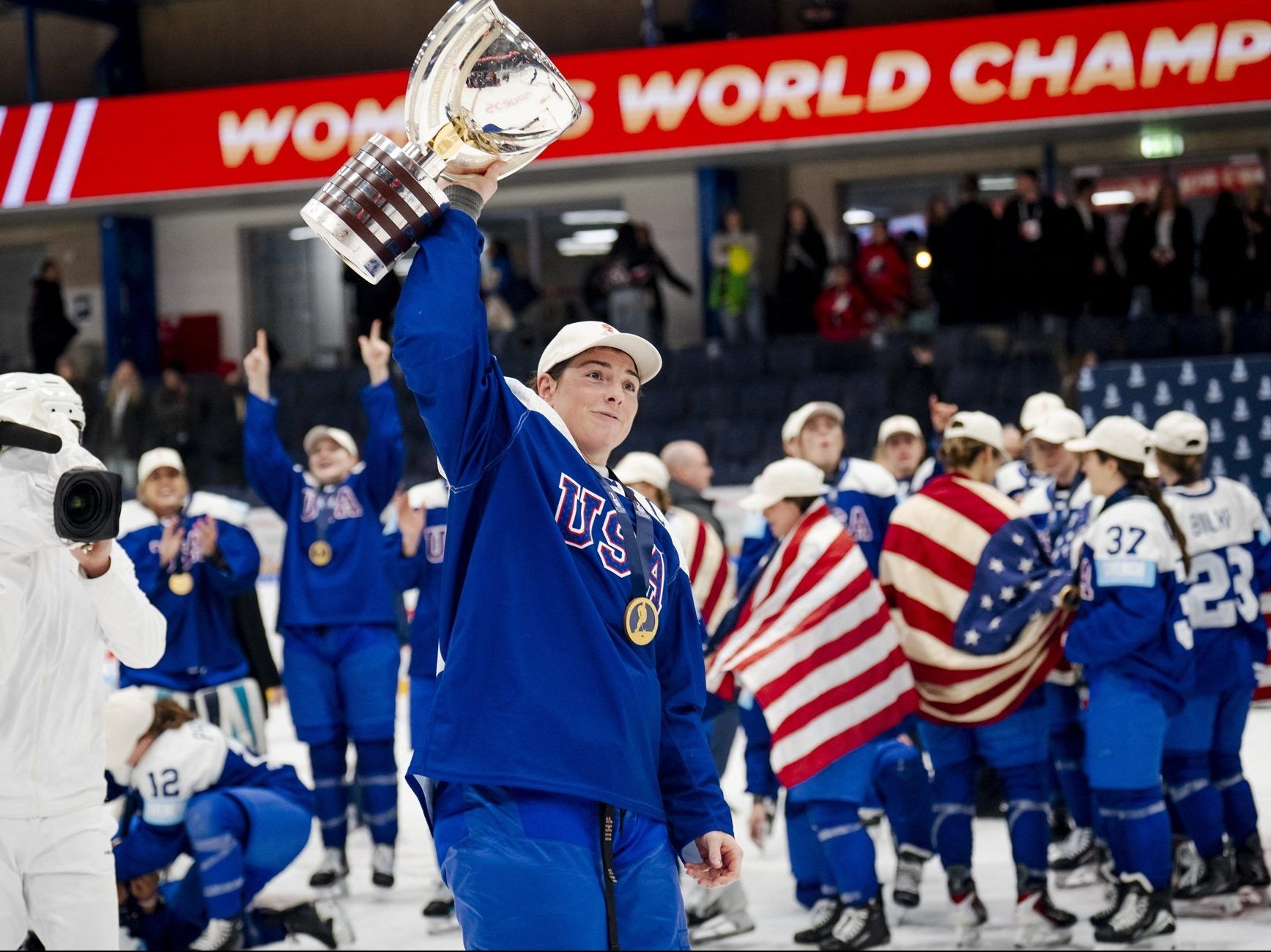
Canada will have to settle for second best once again as the women’s senior national team endured a 6-2 loss in the gold-medal final at the 2026 IIHG Women’s World Championship in Denmark while Americans took home the top prize.
asserted
Americans → have → prize
The showing reveals much about the work ahead for the national team if it is to top the podium again any time soon.
asserted
it → reveal → podium
While the Canadian program has undergone an overhaul following its silver-medal performance at the Milan Cortina Games — with Daniele Sauvageau and Cori Cheveries replacing Gina Kingsbury and Troy Ryan as general manager and coach while retooling the roster to focus on young talent in the pipeline — the efforts still weren’t enough to seriously threaten the supremacy of the American women’s hockey team, which sailed through the tournament with 56 goals and just four goals against.
asserted
which → undergo → goals
The gold-medal win marks a 21-game win streak for the Americans in this tournament, if you count their undefeated performance at the 2025 worlds in Czechia.
asserted
you → mark → Czechia
Here’s what to take away from Canada’s performance in Denmark.
asserted
take → ’ → Denmark
Canada’s youth movement is arriving too late
asserted
movement → arrive → ?
After taking a veteran-heavy roster to the Milan Cortina Games, Canada has finally made room for young talent.
asserted
Canada → take → talent
But, have they waited too long?
asserted
they → wait → ?
Only 13 players from the silver-winning Olympic Games squad returned to the roster for the world championships, while seven rookies made their senior national team debuts.
asserted
rookies → win → debuts
That brought the roster’s average age down to 26 years old, significantly lower than the average age of the former roster, which was just shy of 30 years.
asserted
which → bring → years
Not only are those players young, but they now have gold-medal experience in their arsenal; 20 Olympians played for the U.S. in Denmark.
asserted
Olympians → have → Denmark
Canada lost January’s under-18 championship final 2-0 to the Americans on home ice.
asserted
Canada → lose → ice
Critics have long feared the Canadian women’s hockey development pipeline is weak, and those predictions could be playing out in real time.
uncertain
predictions → fear → time
Canada’s chasing a new standard on the blue line
Monday’s gold-medal final crystalized the importance of puck-moving defenders to drive offence.
asserted
final → chase → offence
Five American defenders assisted on four goals.
asserted
defenders → assist → goals
First, Laila Edwards came up big in the first-period to set Hilary Knight up to score the equalizer.
asserted
Edwards → come → equalizer
Then, Megan Keller, who scored the gold medal game winning goal at the Winter Games, assisted on Knight’s go-ahead goal.
asserted
who → score → goal
Cayla Barnes fired a shot from the point that found the back of the net with a little redirect from Kelly Pannek early in the third period, while Caroline Harvey assisted on Lacey Eden’s goal.
asserted
Harvey → fire → goal
Speaking of Harvey, she finished the tournament with six goals and 16 points, a record for a defender at the tournament.
asserted
she → speak → tournament
She was named tournament MVP.
asserted
She → name → ?
Talk about a challenge for Canada, who fired off just 20 shots on Monday.
asserted
who → talk → Monday
co-captain Renata Fast was the only defender to notch a point in the final.
asserted
Fast → notch → final
While Canada has defensive promise, including 19-year-old Chloe Primerano, who finished the tournament with six points, and Kendall Cooper, who contributed five, the Americans are clearly establishing the benchmark for offensive production from the blue line.
asserted
Americans → have → line
Canada didn’t make opportunities count
asserted
opportunities → make → ?
For five minutes and 14 seconds in Monday’s final, Canada had something no opponent had managed all tournament: A lead on the Americans.
asserted
opponent → have → Americans
Fillier’s first-period goal gave Canada the lead and a strong enough start that it was briefly possible to imagine the gold medal final might unfold differently.
uncertain
final → give → lead
Instead, the Americans owned the moments that followed.
asserted
that → own → moments
The game was effectively decided within the first three minutes of the third period, when Pannek and Eden scored goals 79 seconds apart.
asserted
Pannek → decide → goals
And Canada did little to maximize the chances they did earn during the game.
asserted
they → do → game
They entered the final with a 41.2 per cent power-play success rate, having scored eight goals on 19 opportunities.
asserted
They → enter → opportunities
However, they went 0-for-4 with the advantage in the final.
asserted
they → go → final
Against an opponent with so little room for error, those missed chances add up.
asserted
chances → miss → error
Sarah Fillier is ready to lead
One bright spot for Canada is Fillier’s performance in Denmark.
asserted
spot → lead → Denmark
Though she missed the first two games due to a shoulder injury from Canada’s earlier pre-tournament matchups against the U.S., she scored six goals in five games after she returned to play.
asserted
she → miss → games
Fillier accounted for Canada’s entire offensive production in the final, scoring both goals and earning her a spot on the tournament all-star team.
asserted
Fillier → account → team
The question for Canada is whether the team can build a championship offence that doesn’t depend on one or two exceptional players.
asserted
that → build → players
While the Canadians sailed through the tournament until the gold medal final, the Americans are clearly the powerhouse to judge them against.
asserted
Americans → sail → them
With such a revealing loss so early in the quad, Canada now has a clear picture of the deficiencies they need to address in order to make a competitive showing against the U.S. four years from now at the 2030 Winter Games in the French Alps.
asserted
they → have → Alps
 The Aporia
