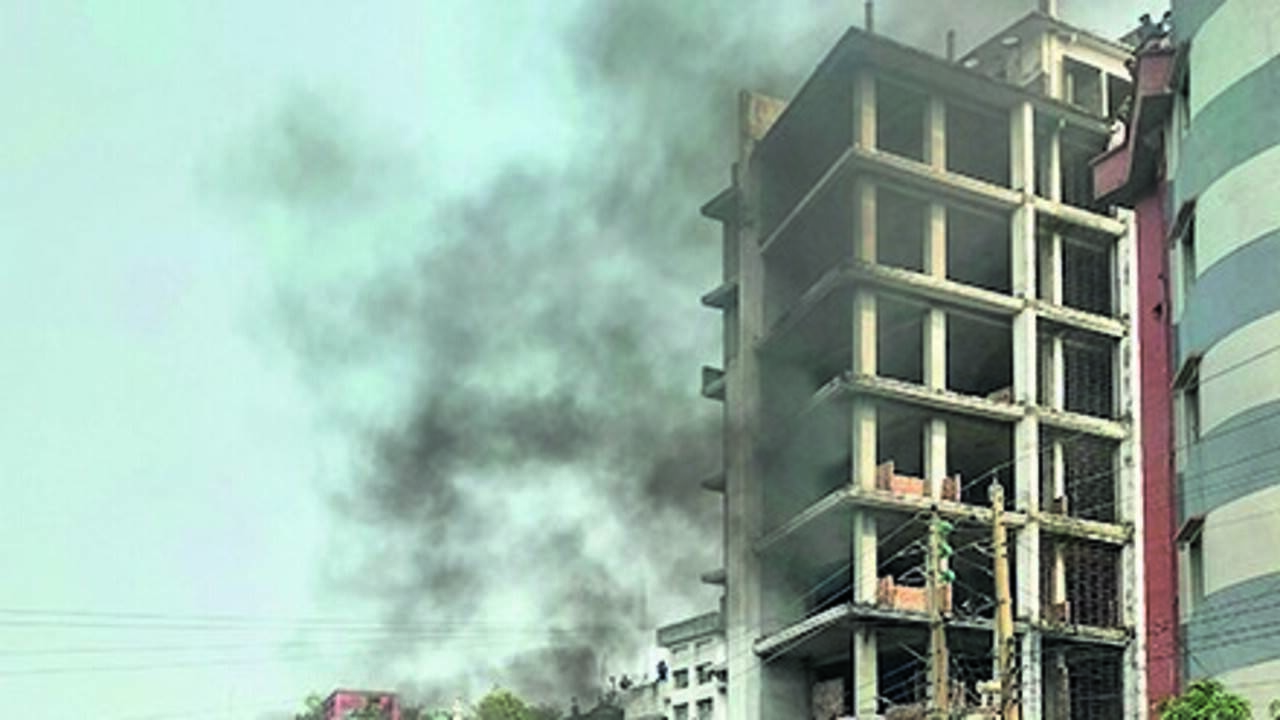
Authorities in Bangladesh on Tuesday (November 17, 2026) deployed more than 1,000 paramilitary personnel as garment workers staged demonstrations and clashed with police in the industrial belt around Dhaka, demanding higher wages and blocking three major highways.
asserted
workers → deploy → highways
Police and paramilitary personnel used tear gas shells, sound grenades and batons to disperse protesters who blocked the Dhaka-Aricha, Dhaka-Tangail and Dhaka-Mymensingh highways, disrupting traffic and causing long tailbacks.
asserted
who → use → tailbacks
The demonstrations are part of weeks of intermittent protests that began in late October across Bangladesh's major garment-producing areas.
asserted
that → begin → areas
The workers have been demanding an increase in the minimum monthly wage from the existing Tk 12,500 ($100) to Tk 30,000 ($240), citing rising costs of food, housing, transport and healthcare.
asserted
workers → demand → food
The sector employs more than four million workers and accounts for more than 80% of the country's export earnings, with prolonged disruption threatening production schedules, international buyers' confidence and global apparel supply chains.
asserted
disruption → employ → schedules
The paramilitary Border Guard Bangladesh (BGB) said it had deployed 42 platoons of personnel in the industrial hubs of Ashulia, Gazipur and Narayanganj.
asserted
it → say → Ashulia
Officials said the personnel were also using drones to maintain surveillance over readymade garment factory workers.
asserted
personnel → say → workers
Police said two of the three highways had been cleared, but intermittent blockades continued to cause heavy traffic congestion on the Dhaka-Mymensingh highway.
asserted
blockades → say → highway
"We are working to clear the highways and disperse the protesters," a police spokesperson said.
asserted
spokesperson → work → protesters
The industrial unrest also affected factory operations.
asserted
unrest → affect → operations
Police said at least 37 garment factories across the industrial belt were declared closed on Tuesday, while dozens more temporarily suspended production after workers left their workplaces to join demonstrations.
asserted
workers → say → demonstrations
In Dhaka, garment workers gathered in the Darus Salam and Shah Ali police station areas of Mirpur on Tuesday morning and attempted to move towards the Mirpur-10 roundabout, the Prothom Alo newspaper reported.
asserted
newspaper → gather → roundabout
Police stopped them and later fired sound grenades to disperse the crowd at around 10.30 a.m. local time, Mirpur police station Officer-in-Charge Hafizur Rahman said, according to the report.
uncertain
Rahman → stop → report
In Savar, workers blocked the Dhaka-Aricha Highway in the Fulbaria area around 11 a.m. local time, disrupting traffic in both directions.
asserted
workers → block → directions
The blockade continued until around 11.50 a.m., causing long tailbacks and inconvenience to commuters, the Dhaka Tribune newspaper reported.
asserted
newspaper → continue → commuters
“Earlier, clashes and chases were reported in the Padmar Mor area of Hemayetpur and the Khejur Bagan and Jamgora areas of Ashulia,” the report said.
asserted
report → report → Ashulia
Workers allegedly attempted to block roads by setting tyres on fire and burning waste, prompting police and BGB personnel to use tear gas shells and sound grenades to disperse them, Prothom Alo reported.
uncertain
Alo → attempt → them
“Clashes broke out when police and BGB personnel tried to clear the road, with workers allegedly throwing bricks and stones at law enforcement personnel,” Dhaka Tribune reported.
uncertain
Tribune → break → personnel
“The workers later scattered and took positions on nearby roads and in adjoining alleys, where clashes continued intermittently.
asserted
clashes → scatter → alleys
Some workers also entered nearby factories but reportedly continued work stoppages inside,” the newspaper said.
uncertain
newspaper → enter → stoppages
The protests have centred on workers' demand for a "living wage to survive", with employees saying their earnings have failed to keep pace with inflation and rising household expenses.
asserted
earnings → centre → inflation
The government formed a six-member Minimum Wage Board on November 1 to recommend a revised pay structure following demonstrations in major garment industrial zones.
asserted
government → form → zones
The board comprises representatives of workers, factory owners and the government and is chaired by a senior district judge.
asserted
board → comprise → judge
The board has held two meetings, on November 4 and 9, to discuss the proposed wage revision.
asserted
board → hold → revision
It had earlier agreed to finalise its recommendations by the end of November.
asserted
It → agree → November
The board's third meeting, scheduled for November 16, was postponed at short notice.
asserted
meeting → schedule → notice
The Daily Star newspaper reported that the board had cited the illness of one of its members, while officials later attributed the postponement to "unavoidable circumstances".
asserted
officials → report → circumstances
In a statement issued on Tuesday, the board said its third meeting would now be held on November 23.
asserted
meeting → issue → November
“The factory owners' representative is expected to present a proposed pay scale at the meeting, while the workers' representative has already submitted a proposal,” The Daily Star reported.
asserted
Star → expect → proposal
The government had earlier said the revised pay structure would take effect from January.
asserted
structure → say → January
However, amid intensified protests, the authorities announced that the new wage structure would be implemented from December 1, with workers expected to receive their first salaries under the revised scale in January.
asserted
workers → intensify → January
Bangladesh supplies major international fashion brands, including H&M, Zara and Gap.
asserted
Bangladesh → supply → H&M
The sector has also been facing pressure from rising production costs, inflation and intense competition in global markets.
asserted
sector → face → markets
Factory owners have warned that prolonged disruption during the peak production season for spring and summer orders could delay shipments, affect overseas buyers' confidence and lead to cancellations.
uncertain
disruption → warn → cancellations
The protests turned violent in the first week of November, with demonstrators setting ablaze police vans and public transport vehicles and blocking two major highways.
asserted
demonstrators → turn → highways
Ruling Bangladesh Nationalist Party (BNP) activists also took to the streets in anti-protest campaigns, carrying bamboo sticks to maintain order and resist what they described as "infiltrators".
asserted
they → rule → infiltrators
BNP leaders have accused deposed prime minister Sheikh Hasina and her supporters of trying to destabilise the government through the protests, while the former premier has rejected such allegations in media interviews.
asserted
premier → accuse → interviews
Prime Minister Tarique Rahman's information affairs adviser Zahedur Rahman had earlier accused Hasina of fuelling the unrest, saying, "Sheikh Hasina will not let the government remain in peace as long as she is alive".
asserted
she → accuse → peace
The factory protests have also coincided with political tensions in the country over Hasina's intended plans to return to Bangladesh in December, despite a death sentence handed down against her.
asserted
protests → coincide → her
A student-led uprising toppled Hasina's government on August 5, 2024, forcing her to flee to India.
asserted
uprising → lead → India
…and 1 more, not listed.
 The Aporia