A Hudson homeowner spent months criticising the city’s council president, Christopher Foster, at public meetings.
asserted
homeowner → spend → meetings
The council president sued him for defamation.
asserted
president → sue → defamation
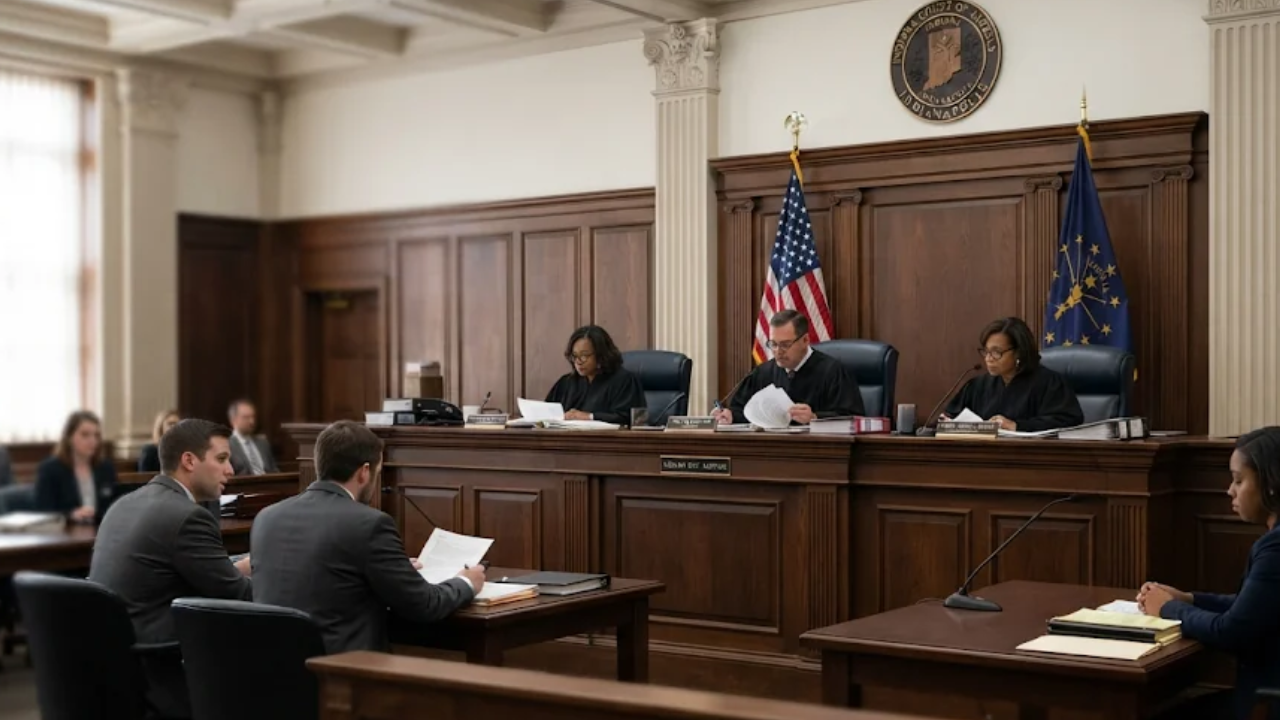
On Thursday, 12 November, the Ninth District Court of Appeals in Summit County
overturned a lower court’s ruling on Ravida’s request to end the case early.
asserted
Court → overturn → case
The lower court had not explained its reasoning clearly enough for the appeals court to review.
asserted
court → explain → reasoning
The case now goes back for a more detailed decision, and the question of whether Ravida’s words were defamatory remains unanswered.
asserted
words → go → decision
A fence dispute that started it all
The dispute began in 2023, when Anthony Ravida, a Hudson homeowner, asked the city for permission to build a fence.
asserted
Ravida → start → fence
The fence he built did not meet the city’s codes, and he refused to fix it.
asserted
he → build → it
A jury later convicted him of a zoning violation, and he appealed.
asserted
he → convict → violation
While the appeal was pending, he began attending council meetings and using the public comment period to talk about his case.
asserted
he → pende → case
During meetings in early 2025, the homeowner stated that his conviction for violating the zoning code was based on a “false narrative” created by the city manager and council president.
asserted
conviction → state → manager
The homeowner also claimed that Foster was “basically above the law”, as the council president had the city repair his driveway without a permit.
asserted
city → claim → permit
By May, he was calling for Foster to be suspended, investigated by the state attorney general and possibly removed from office.
uncertain
Foster → call → office
He also called him corrupt.
asserted
He → call → him
The council president defended the city’s actions on the record.
asserted
president → defend → record
Foster stated that Ravida’s fence plainly violated zoning rules.
asserted
fence → state → rules
He also responded to the homeowner’s allegations: “Yeah, simple issues, blown into conspiracy theories about taking bribes, getting kickbacks from people for putting sidewalks around the community really is pretty sad but I appreciate you coming out here and straightening that out.”
asserted
you → respond → that
The city manager said the driveway work was an emergency repair following a sinkhole in the public right of way.
asserted
work → say → way
A construction company owner later told the council that a combination of personal circumstances and miscommunication had led to the permit being missed, and she denied any intentional wrongdoing.
asserted
she → tell → wrongdoing
In May 2025, the council president filed a civil complaint against the homeowner, alleging defamation and false light invasion of privacy.
uncertain
president → file → privacy
The homeowner asked a judge to dismiss the case under Ohio’s Uniform Public Expression Protection Act, a law that took effect on 9 April 2025.
asserted
that → ask → April
The law is intended to protect people from expensive lawsuits over their speech on public matters.
asserted
law → intend → matters
The trial court said the law applied only to statements made after the Act came into effect.
asserted
Act → say → effect
It dismissed claims based on name-calling, such as calling Foster a liar or a thief, ruling that these were opinions.
uncertain
these → dismiss → Foster
It retained claims based on accusations of bribery and fraud, finding that factual disputes remained to be resolved.
uncertain
disputes → retain → bribery
For statements made before 9 April, the court did not apply the new law at all.
asserted
court → make → law
Appeals court calls for reconsideration
The appeals court reversed the lower court’s ruling, finding that it had not properly applied Ohio’s Uniform Public Expression Protection Act (UPEPA).
asserted
it → call → Act
The trial court had applied the law only to statements the homeowner made after 9 April 2025, even though Foster had filed the lawsuit after that date.
asserted
Foster → apply → date
The appeals court also said the lower court had not properly explained its decision or addressed the arguments made by both sides.
asserted
court → say → sides
It sent the case back for “a sufficiently detailed judgment entry” that would allow meaningful review.
asserted
that → send → review
The appeals court also said the trial court was wrong to exclude the earlier statements.
asserted
court → say → statements
The lawsuit was filed after 9 April, and the law states that it applies to civil actions filed on or after that date.
asserted
it → file → date
The appeals court did not decide whether the homeowner’s statements were defamatory.
asserted
statements → decide → ?
That question still needs to be examined by the trial court.
asserted
question → need → court
The appeals court’s ruling was supported by two judges, while the third agreed with the judgment but not the reasoning.
asserted
third → support → judgment
The case now returns to the trial court.
asserted
case → return → court
 The Aporia