Photo via National Post

FIRST READING: Stunning byelection upset may portend Alberta conservative fracture

Read the original at National Post ↗
Cite

Hopper, T. (2026, September 17). FIRST READING: Stunning byelection upset may portend Alberta conservative fracture. National Post. https://nationalpost.com/opinion/stunning-byelection-upset-may-portend-alberta-conservative-fracture

Dated when The Aporia collected the article, usually within hours of publication. Check the original for its exact date and byline.

National Post · collected 2026-09-17 · by Tristin Hopper analysis

Quick Summary

In a surprising turn of events, the Alberta NDP won Calgary-Shaw in a byelection, traditionally one of Canada’s most conservative ridings. The NDP candidate Kyle Campbell secured 46% of the vote, marking the party's strongest performance there. This outcome contrasts with the UCP's previous strong showing, winning 56.3% in the last general election but slipping to just 43% this time. Calgary Herald columnist Don Braid and former premier Jason Kenney attribute this shift to voter concerns over the Alberta independence movement, which is set for a preliminary referendum on October 19.
Written by AI on 2026-09-17, from this article's own text only (the story summary below draws on all the coverage).

AI analysis

Story summary

On September 18, voters in Calgary's Calgary-Shaw riding participated in a provincial byelection to fill a seat left vacant since May when Rebecca Schulz resigned. The race was closely watched as a potential indicator of Premier Danielle Smith’s United Conservative Party (UCP) popularity before an upcoming referendum on Alberta's future within Canada.

NDP candidate Kyle Campbell won the election, securing 7,461 votes compared to UCP candidate Mike Derry's 6,879, a margin of 582 votes. This victory marked the first time since 2015 that the NDP has held this seat traditionally viewed as a Conservative stronghold.

Campbell’s win is seen by some political analysts and Alberta NDP leader Naheed Nenshi as a sign that concerns over potential separation from Canada may have influenced voter behavior, helping his party gain support in an area previously solidly behind conservative parties.

Written for “Alberta Byelection Upset” on 2026-11-01, grounded in this article and the 5 other(s) covering the same event.

Story

📰 Alberta Byelection Upset
Politics · 6 article(s) covering the same event. Compare every outlet's account →

Compared with similar articles

This article reads unscored and hedges 11% of its claims. Each row says how that neighbour differs.
The Globe and Mail
⚖️ Leans left Hedges 1 of 17 claims Outlet record 52/100
The Globe and Mail
⚖️ Leans left Hedges 0 of 2 claims Outlet record 52/100
CBC News
⚖️ Leans left Hedges 4 of 47 claims Outlet record 74/100
“The articles discuss different events; one is about a poll regarding separatist expectations and the other reports on a byelection upset in Calgary-Shaw.”
Global News
Hedges 1 of 9 claims Outlet record 63/100
“Article A describes the byelection taking place and the candidates involved, while Article B discusses historical voting patterns in Calgary-Shaw and suggests a potential upset in the byelection.”
Global News
Hedges 1 of 16 claims Outlet record 63/100
National Post
Hedges 6 of 35 claims Outlet record 60/100
“The articles discuss different political events and contexts, one focusing on a by-election upset in Alberta while the other discusses internal strife within the B.C. Conservative Party.”
National Post
⚖️ Leans left Hedges 1 of 3 claims Outlet record 60/100
“Article A describes the details of a byelection upset in Calgary-Shaw, while Article B discusses broader political implications and a coming referendum, not focusing on the same specific byelection incident.”
How this article was measured signals, leaning charts, publisher record, byline, topics and claims

Signals How these are calculated →

Claims extracted
46
sentences that state something as happening or true
Uncertain
11%
5 of 46 hedged ("reportedly", "may", "according to")
Leaning
withheld
no quote in the article backed the model's score
Publisher signals
60/100
National Post's corrections and hedging, across everything collected from it. Not a measure of accuracy.
Outlets on this story
6
Politics
Same framing elsewhere
1
articles that frame the event the way this one does
Analyzed 2026-09-17 · how these are computed

How this is being covered How these are calculated →

Article leaning vs. publisher reliability
Source leaning vs. consistency

Publisher

National Post · 1242 article(s) · 2 correction(s) detected
Running correction rate · 2 correction(s)

Who wrote this

Tristin Hopper
24 article(s) here · 1 carrying a prediction
🔮 The basic premise of U.S. President Donald Trump’s trade war on Canada was simple: The massive U.S. economy could dictate favourable terms to a smaller and more dependent neighbour.
🔮 But even this reduced number will end up charting as one of the highest annual intakes of permanent residents over the last century.
🔮 Framers of the Indian Act at the time were open about its paternalistic goals, agreeing in House of Commons debates that Indians were “like children to a very great extent” who “required a great deal more protection than white men.” Nowadays, it would be difficult to name a piece of Canadian federal legislation that is more disliked than the Indian Act.
🔮 If they are a non-citizen, a judge may consider the “immigration consequences” of a conviction and assign a lighter sentence than would be received by a citizen who had committed the same crime.
🔮 In 2024, a Nova Scotia grandmother was in a hospital gown being prepared for breast cancer surgery when, out of the blue, a doctor suggested she could instead consider death. Miriam Lancaster, 84, had just arrived at Vancouver General Hospital with severe back pain when she was offered MAID in the ER.
🔮 Across Canada, rents have been in decline almost from the moment that the federal government announced in October 2024 that it would be “turning off the taps” on what had previously been the largest migration surge in Canadian history.
🔮 It may sound like standard Ottawa boilerplate, but the rhetoric is eerily similar to one of the preferred themes of Prime Minister Mark Carney, who is similarly known to begin speeches with a description of the planet being plagued by division and uncertainty.
2026-10-08 · assertive framing · FIRST READING: Mark Carney’s favourite catchphrase
🔮 In one exchange, killer Jesse Van Rootselaar, an 18-year-old male who identified as female, worried that a video livestream of the massacre might reveal his “ugly” voice.
🔮 That would be the Order of Merit, a decoration handed out under the personal discretion of the British sovereign and limited to 24 living recipients at any one time.
Also by Tristin Hopper
Nothing else under this byline is closely related to this article, so these are simply their most recent.
All 24 articles by Tristin Hopper →

Topics

Alberta Calgary-Shaw Canada NDP UCP

Subjects

Alberta GPE · 9× NDP ORG · 7× Calgary-Shaw GPE · 5× UCP ORG · 5× Calgary GPE · 3× Canada GPE · 3× Smith PERSON · 3× Kenney PERSON · 2× Progressive Conservative NORP · 1× the Progressive Conservatives ORG · 1×

Narrative

Since most EU countries are members of NATO, there is already heavy coordination between the Canadian Armed Forces and its European counterparts (Canada’s largest single military deployment, in fact, is in Europe; there are about 2,220 Canadian troops in Latvia).
framing: assertive · carried by 1 article(s) · first seen 2026-09-17
🔮 That election, 30.7 per cent of the riding voted for the Progressive Conservatives and 30.4 per cent voted for the Wildrose Party, thus allowing NDP candidate Graham Sucha to slip into power with a vote share of just 31.27 per cent (he’d lose the riding by 40 points after just one term). But with the Alberta NDP on Monday clinching a decisive byelection victory that nobody saw coming, it may represent the first material sign of a conservative bloc that is being fractured by the question of Alberta independence. “The NDP has won Calgary Shaw, one of the most conservative big city ridings in this country.

Claims (46 extracted, 5 hedged)

Ever since its creation in 1986, the suburban riding of Calgary-Shaw has voted for conservatives. asserted
riding → vote → conservatives
In the year of the provincial riding’s creation, the conservative candidate won by 61.5 per cent. asserted
candidate → win → cent
Nearly 40 years later, in the last general election, the conservative candidate won by a comparable 56.3 per cent. asserted
candidate → win → cent
Even the teenagers in Calgary-Shaw vote conservative. asserted
teenagers → vote → Shaw
On occasions when the riding’s two high schools have participated in straw polls during provincial elections, the results have always been blowout Progressive Conservative victories. asserted
results → participate → elections
Until this week, the only time Calgary-Shaw hasn’t gone for a conservative was due to a wild anomaly in 2015. asserted
Shaw → go → 2015
That election, 30.7 per cent of the riding voted for the Progressive Conservatives and 30.4 per cent voted for the Wildrose Party, thus allowing NDP candidate Graham Sucha to slip into power with a vote share of just 31.27 per cent (he’d lose the riding by 40 points after just one term). But with the Alberta NDP on Monday clinching a decisive byelection victory that nobody saw coming, it may represent the first material sign of a conservative bloc that is being fractured by the question of Alberta independence. “The NDP has won Calgary Shaw, one of the most conservative big city ridings in this country. uncertain
NDP → vote → country
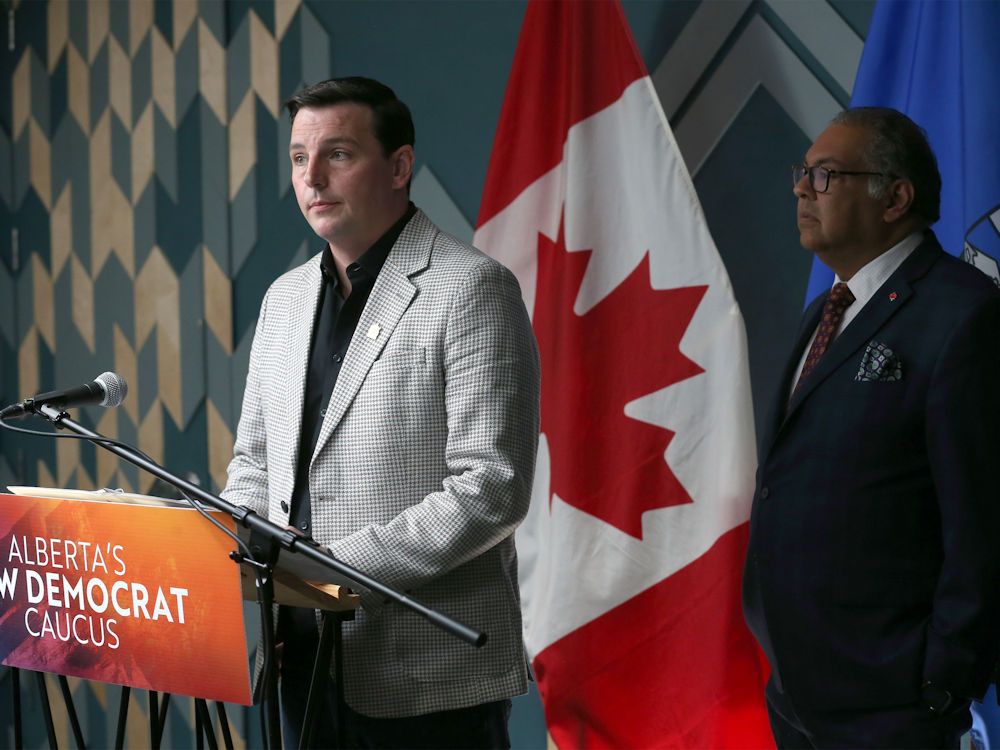
Early results show that NDP candidate Kyle Campbell won the riding by 46 per cent, the party’s best result in Calgary-Shaw. asserted
Campbell → show → Shaw
NDP Leader Naheed Nenshi called it a “political earthquake,” and described Campbell’s headquarters as being filled with incredulous cries of “oh my God we won!” asserted
we → call → oh
In the 2023 Alberta general election, the UCP won Calgary-Shaw with a comfortable 56.3 per cent of the vote. asserted
UCP → win → vote
This time around, just 43 per cent of Calgary-Shaw voters showed up for the UCP candidate. asserted
cent → show → candidate
According to former Alberta premier Jason Kenney, UCP voters were being turned off by the Alberta independence cause. uncertain
voters → accord → cause
“Folks planning to vote ‘to send a message’ by starting the separation process: please take note of the NDP’s win tonight in the most conservative part of urban Canada,” Kenney wrote in a social media post reacting to Monday’s upset. asserted
Kenney → plan → upset
On Oct. 19, Albertans are set to vote in a preliminary referendum on the issue of Alberta independence. asserted
Albertans → set → independence
“Should Alberta remain a province of Canada, or should the Government of Alberta commence the legal process required under the Canadian Constitution to hold a binding provincial referendum on whether or not Alberta should separate from Canada asserted
Alberta → remain → Canada
?” reads the draft ballot question. asserted
question → read → ?
Kenney has long been one of Alberta’s most vocal anti-independence voices, and he wrote on Tuesday that the separatist campaign was causing “patriotic conservative voters to support the Liberals and NDP.” asserted
voters → write → Liberals
“A vote to separate is a vote to help the NDP win the next provincial election,” he said. asserted
he → separate → election
But he blamed the result on Premier Smith’s strategy of approving the Oct. 19 referendum while actively campaigning for a federalist victory. asserted
he → blame → victory
The result being, he said, that a not-insignificant cohort of pro-independence UCP supporters are now souring on the party. asserted
cohort → say → party
But he also cautioned fellow separatists against the notion that Smith should endorse independence outright. asserted
Smith → caution → independence
“This byelection showed that would be political suicide,” he said. asserted
he → show → ?
“There isn’t enough bloody support for a party to do that yet.” asserted
party → be → that
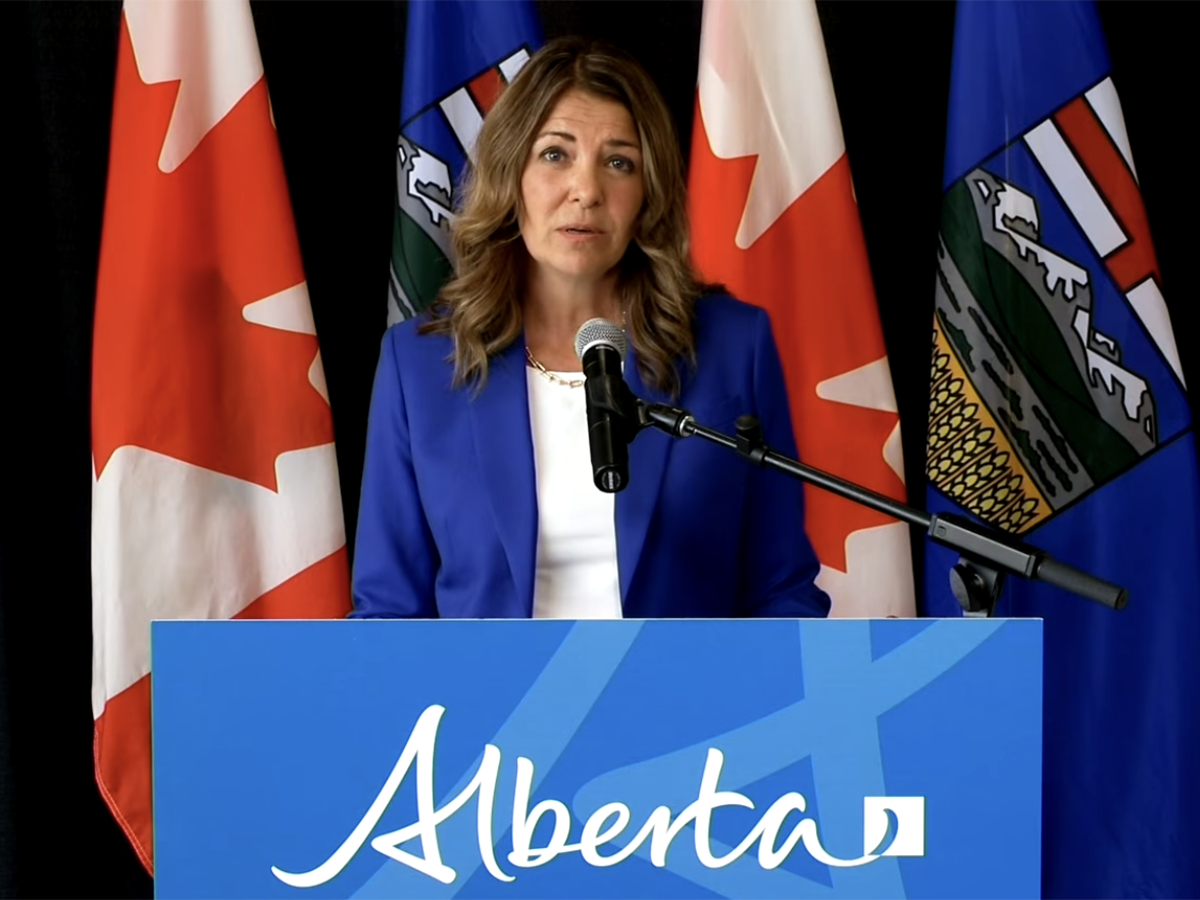
Although Smith’s office didn’t directly credit the independence issue for the Calgary-Shaw loss, a spokesperson did make reference to a “split” in conservative sentiments. asserted
spokesperson → credit → sentiments
“A split of the conservative vote along with a low overall turnout were the primary reason for the byelection result,” Sam Blackett, a spokesperson for the premier, said in a statement. asserted
Blackett → say → statement
Although the Alberta independence cause has enjoyed a notable renaissance since Prime Minister Mark Carney won the 2025 federal election, polls have consistently shown that outright independence remains broadly unpopular among voters. asserted
independence → enjoy → voters
An Abacus Data poll published this week found that 64 per cent of Alberta voters intended to vote against the “proceed” option in the Oct. 19 referendum. asserted
cent → publish → referendum
And even among those who plan to endorse a second vote on independence, just two-thirds said they were committed to voting yes. asserted
they → plan → independence
“That puts the separatist vote at 18 per cent of Albertans,” read an accompanying analysis. asserted
analysis → put → Albertans
But the separatist/federalist split is almost entirely reserved to Albertans who vote conservative. asserted
who → reserve → Albertans
Last month, an Angus Reid Institute poll found just 33 per cent of Albertans endorsing a “binding” referendum on separation, with 61 per cent favouring the “Alberta should remain a province of Canada” option. asserted
Alberta → find → option
One of the most telling indicators from the Calgary-Shaw results is the 978 voters who marked a ballot for the “Progressive Tories,” an upstart political party that has framed itself as an explicitly anti-independence conservative option. asserted
that → mark → option
Had all those 978 voted UCP instead, it would have been enough to deny the NDP the riding. asserted
it → vote → riding
IN OTHER NEWS Canadian federal politics has been dominated this week by a “will they/won’t they” drama playing out between Ottawa and the European Union. asserted
they → dominate → Ottawa
Bloomberg News and the Wall Street Journal reported over the weekend that Prime Minister Mark Carney was seeking to make Canada an “associate member” of the EU. asserted
Canada → report → EU
This caused Carney to publicly deny the report, saying he’s actually seeking a “unique alliance” with the European body, rather than associate membership. asserted
he → cause → body
Then, on Wednesday morning, EU President Ursula von der Leyen publicly invited Canada to be an “associate member.” asserted
Leyen → invite → Canada
Only for this to garner backlash from EU member states, who complained it’s not von der Leyen’s call to decide which non-EU countries are allowed special attention. asserted
countries → garner → attention
“First and foremost the member states should be the ones to express what kind of relationship the EU wants to have with any third country,” one Eurocrat told the Daily Mail. asserted
Eurocrat → express → Mail
Conversely, the same argument could be made for Carney; his courtship of the EU being one of several international entanglements he is seeking without any kind of Parliamentary approval. uncertain
he → make → approval
…and 6 more, not listed.

💬Give feedback
🕘History 🎫Support