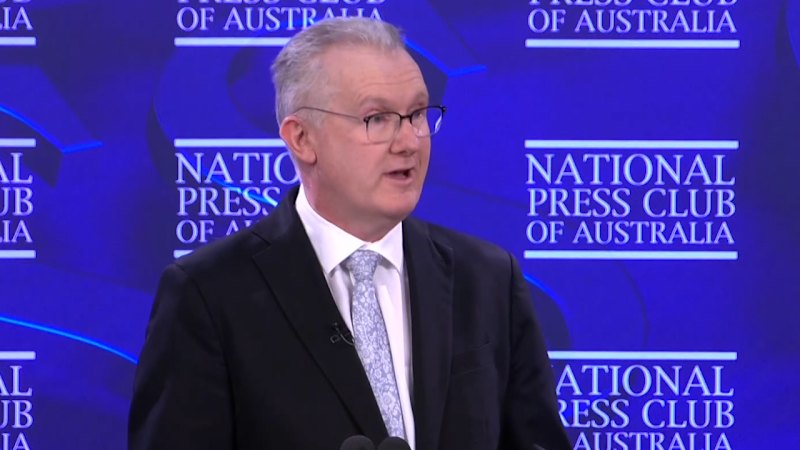
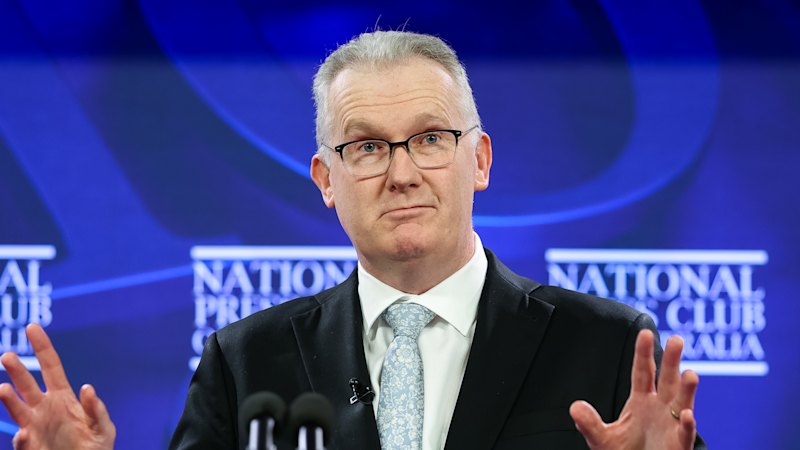
Tony Burke has promised to make Labor’s existing migration policy work better rather than announcing a dramatic cut in numbers, arguing that populist promises to slash net overseas migration will “trash Australian services and trash the Australian economy”.
asserted
promises → promise → economy
The home affairs minister’s message was immediately endorsed by employer groups, who over recent days have made it clear that steps to arbitrarily slash migrant numbers would compound already severe skills shortages and hurt businesses, especially those in the regions.
asserted
steps → endorse → regions
“We need immigration.
asserted
We → need → immigration
We just need to make sure that it is targeted for the needs of Australia in numbers and across the different categories that work for our economy,” Burke said in his long-awaited address to the National Press Club on Thursday.
asserted
Burke → need → Thursday
“We talk about the need for extra housing.
asserted
We → talk → housing
It’s pretty hard to get a house built without having a plasterer involved.
asserted
plasterer → ’ → ?
In both Sydney and Melbourne, close to two-thirds of the plasterers we have were born overseas.”
asserted
we → have → plasterers
Bran Black, the chief executive of the Business Council in Australia, welcomed the government’s efforts to “restore integrity to the migration system”, even as he argued against new rules that would limit the length of stay for most backpackers.
asserted
that → welcome → backpackers
“The starting point for migration policy should not be a number to cut to, but what our economy genuinely needs,” Black said.
asserted
Black → cut → what
That translates to not enough workers building homes, caring for us in hospitals and aged care homes, delivering infrastructure and powering the energy transition.
asserted
workers → translate → transition
That is the challenge that any migration policy should be looking to solve.”
asserted
policy → look → that
Labor has taken a long time to come up with its policy prescription to fix the country’s migration settings which, after the post-pandemic surge in new arrivals, have become a source of growing popular discontent.
asserted
which → take → discontent
Spurious claims of “mass migration” have fanned the flames of this discontent, but few would argue that our system is working well and in the best interests of the country – or in the best interests of a ballooning number of people trapped in a kind of temporary visa limbo that has strained public infrastructure and patience.
uncertain
that → fan → infrastructure
Alan Gamlen, the director of the ANU’s migration hub, said Burke appeared to have announced the right mix of measures that would give the government the capacity to regulate an out-of-control temporary visa system without damaging the economy.
asserted
that → say → economy
“They don’t seem to have fallen into the trap of chasing a net migration number,” Gamlen said.
asserted
Gamlen → seem → number
“Burke made it pretty clear, and in a convincing way, that this is the result of a well-considered process that has been going on for a while and which addresses long-term structural issues, rather than just a kneejerk response to One Nation.
asserted
which → make → Nation
One Nation has committed to lowering net overseas migration to 130,000 a year, and the Coalition somewhere between 150,000 and 170,000.
asserted
Nation → commit → 150,000
In comparison, Burke stuck to the government’s forecast of 225,000 people by 2027-28.
asserted
Burke → stick → 2027
He did, however, acknowledge that there was now a public expectation that the government would pull the levers necessary to get there.
asserted
government → acknowledge → levers
“Net overseas migration has been viewed as a budget forecast.
asserted
migration → view → forecast
Last couple of years, people have talked about it as a budget target,” he said.
asserted
he → talk → target
“That is a very different way of looking at it.
asserted
That → look → it
But given that we have the challenges we have with housing in Australia at the moment, I do think we need to be able to have these additional tools to make sure that what is published and forecast is reached.”
asserted
published → give → tools
With business groups already suffering from skills shortages even at a time of high immigration, the home affairs minister articulated why he believed the government can win the political argument against those competing to announce the lowest targeted Nom.
asserted
government → suffer → Nom
“The lower [Nom] levels will trash Australian services and trash the Australian economy,” he said.
asserted
he → trash → economy
Burke pointed out that denying skilled foreign workers the opportunity to bring in family members – as proposed by One Nation – would not free up more visas for more workers.
asserted
denying → point → workers
Instead, that approach would slash the number of foreign doctors, tradies, nurses and aged care workers willing to come to our country.
“
asserted
approach → slash → country
The proportion of doctors who come to Australia with family attached to their application?
asserted
who → come → application
How many construction workers come with family attached to their application?
asserted
workers → come → application
How many nurses and aged care workers come with family attached to their application?
asserted
nurses → come → application
Two-thirds.”
Whether Burke and the Albanese government can convince the public its measured approach is enough is an open question.
asserted
approach → convince → public
“Let’s see if this lets out some of the hot air in the migration debate,” Gamlen said.
asserted
Gamlen → see → debate
 The Aporia