As a strategic communications exercise, the Liberal government’s pursuit of some kind of enhanced relationship with the European Union has officially reached the status of farce.
asserted
pursuit → enhance → farce
Prime Minister Mark Carney quickly and unambiguously tamped that down on Sunday: “We’re not looking to become a member of the European Union,” he said.
asserted
he → tamp → Union
Then, the Journal, citing a “senior Canadian government official,” reported Wednesday that it was Canada who hatched the “associate membership” idea, and had to convince von der Leyden and others to adopt it.
asserted
who → cite → it
“We were the ones who proposed associate membership,” a senior Canadian official said.
asserted
official → propose → membership
“Let’s bundle it together, let’s give it a name.”
asserted
’s → let → name
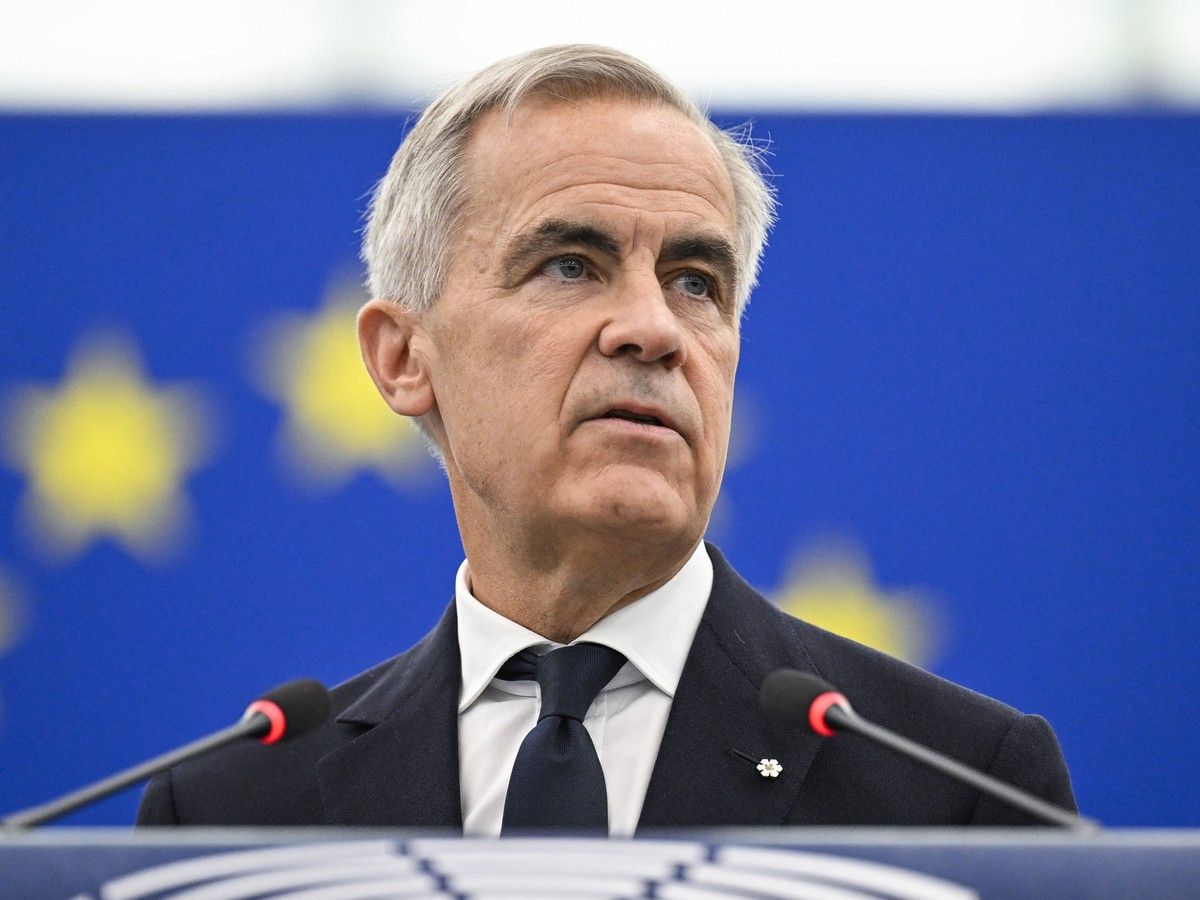
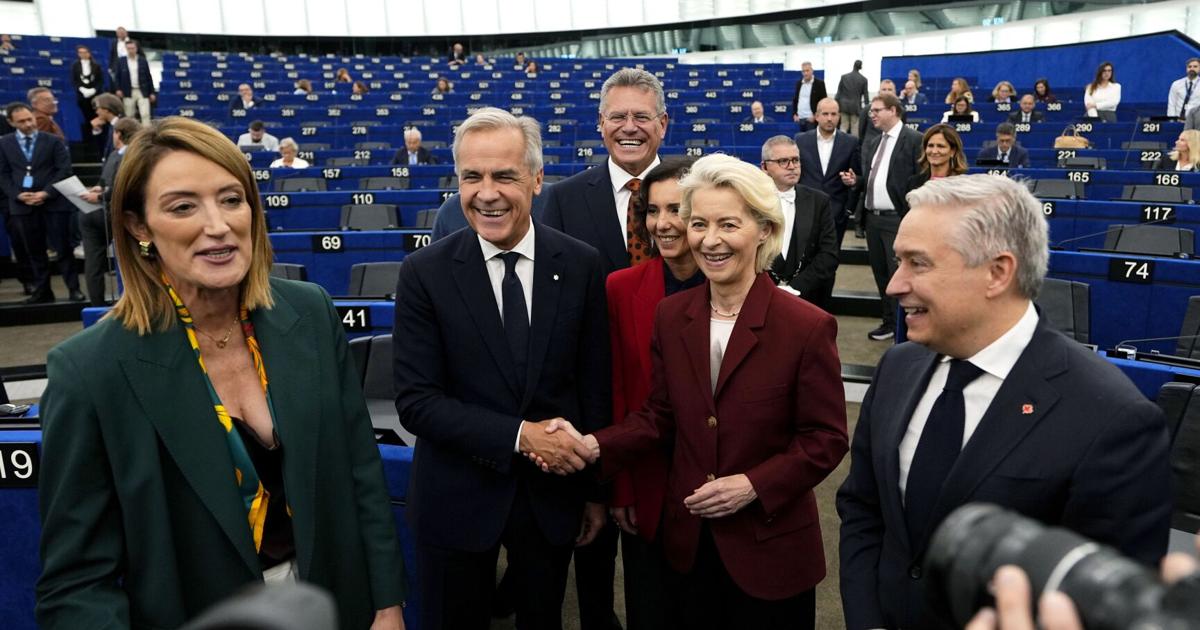
And in Carney’s Thursday speech to the European Parliament in Strasbourg, France, the prime minister fulsomely embraced the moniker he had disavowed just a couple of days before.
asserted
he → embrace → days
“Yesterday, President von der Leyen spoke of … opening the door to Canada becoming the European Union’s first associate member.
asserted
Canada → speak → member
Canada welcomes this ambition,” he said.
asserted
he → welcome → ambition
This month, 49 per cent of Canadians told pollster Abacus Data they support Canada becoming a full-on “member state of the European Union,” with only 30 per cent opposed.
asserted
cent → tell → Union
Asked about “deepening strategic cooperation” or “closer integration” with the EU, fully 80 per cent of poll respondents said they were on board.
asserted
they → ask → board
So, I have no idea why the Liberals seem determined to play silly buggers instead of speaking plain English.
asserted
Liberals → have → English
It seems like it could only make people more dubious.
uncertain
people → seem → ?
Maybe the Red Team just knows no other way.
asserted
Team → know → way
(Carney did at least confirm any deal would be brought before Parliament for a vote, which is at least something — even if it’s the bare minimum.)
asserted
it → confirm → vote
Shambolic communications aside, Carney did put some meat on the bones of this idea in Strasbourg.
asserted
Carney → put → Strasbourg
Notably, he said he desired free movement of “youth” between Canada and the EU for the purposes of studying and work.
asserted
he → say → studying
Canada has a similar agreement with Australia and the United Kingdom, among other countries — including EU members France and Germany.
asserted
Canada → have → France
But it will be interesting to see what Canadians make of that idea.
asserted
Canadians → see → idea
Many are leery about anything that sounds like easier entry for foreign students and workers.
asserted
that → sound → students
That went wrong very recently, to the point that Carney himself has spoken of having “taken back control of immigration.”
asserted
Carney → go → immigration
Beyond that, however, Carney mostly spoke of Canada and the EU as hugely high-functioning countries pursuing synergies.
asserted
Carney → speak → synergies
“Europe brings … market power, research depth, advanced manufacturing, the ability and the will to set standards that the world frequently adopts, (and) a defence-industrial base that’s being rebuilt at speed,” said Carney.
asserted
Carney → bring → speed
It got me more to thinking about the things Canada could and should learn from Europe, new alliance or not.
uncertain
Canada → get → Europe
The EU’s standards and regulations are famously numerous, but their commonality is certainly something to which Canadian jurisdictions should aspire.
asserted
jurisdictions → aspire → which
Estimates vary on how much such interprovincial barriers cost the Canadian economy, but however much it is, it’s 100 per cent too much.
asserted
it → vary → economy
Europe’s rapidly growing “defence-industrial base” is something Canada should be paying attention to for sure.
asserted
Canada → grow → attention
Europe is facing a serious threat from Russia, of a sort that Canadians simply aren’t used to.
asserted
Canadians → face → that
Our unearned sense of security is part of the reason governments have been able to treat military procurement first and foremost as a political football.
asserted
governments → treat → football
Carney didn’t mention them, but health care and infrastructure spending are other areas where Canada should be paying close attention to the EU.
asserted
Canada → mention → EU
No European country’s health-care system is perfect, and metrics vary significantly between countries, but many have far more resources and produce better health outcomes for less or the same expenditure.
asserted
many → vary → expenditure
(Germany spends roughly what Canada does on health care, as a percentage of GDP.
asserted
Canada → spend → GDP
Germany has 39 ICU beds per 100,000 population, while Canada boasts 14.)
asserted
Canada → have → 14
Needless to say, Europeans aren’t much bothered about “two-tier” systems so long as they get the care they need.
asserted
they → say → care
Meanwhile, it’s universally acknowledged that Canada (and the United States) spend vastly more on infrastructure — railways, roads, bridges, everything else — than most of our European peers do.
asserted
most → acknowledge → peers
We just don’t want to know them.
asserted
We → want → them
Europe does.
asserted
Europe → do → ?
 The Aporia