Photo via New York Post

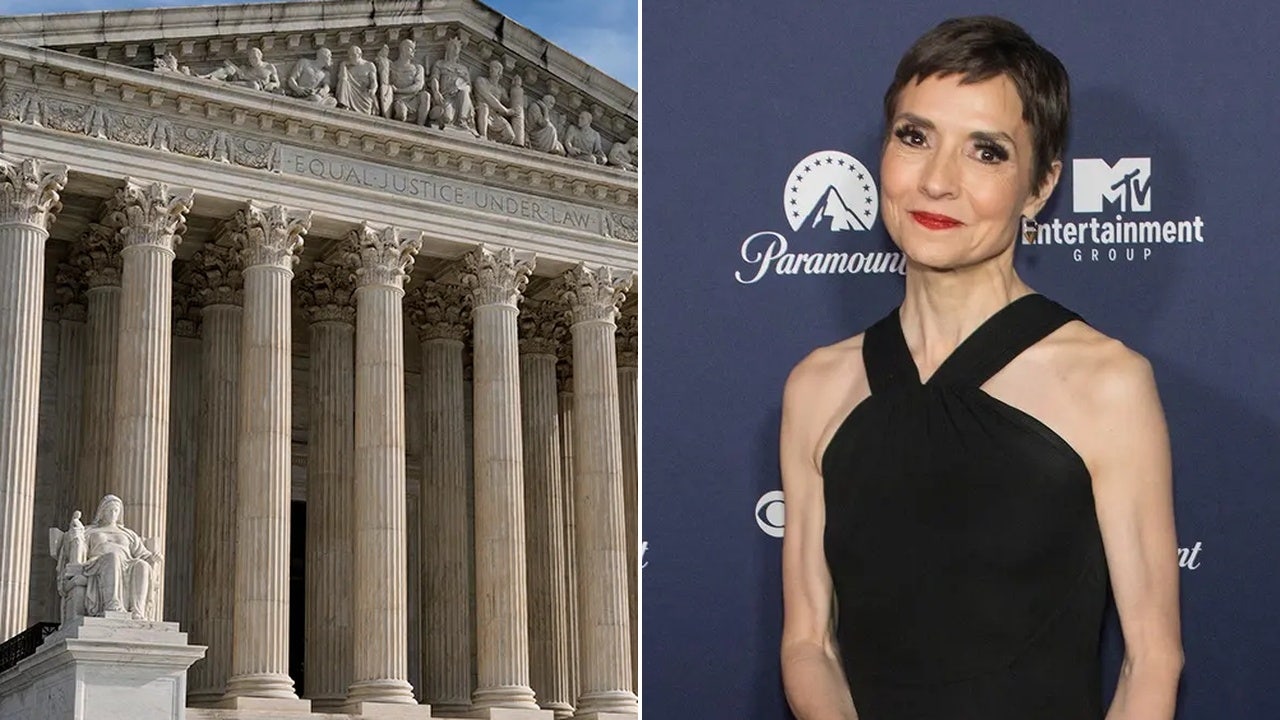
Supreme Court that Left calls ‘biased’ was near unanimous 62% of the time

Read the original at New York Post ↗
Cite

Turley, J. (2026, September 18). Supreme Court that Left calls ‘biased’ was near unanimous 62% of the time. New York Post. https://nypost.com/2026/09/18/opinion/supreme-court-that-left-calls-biased-was-near-unanimous-62-of-the-time/

Dated when The Aporia collected the article, usually within hours of publication. Check the original for its exact date and byline.

New York Post · collected 2026-09-18 · by Jonathan Turley

Quick Summary

The article counters the narrative of the Supreme Court being ideologically biased and divided, highlighting that nearly two-thirds (62%) of its rulings were unanimous or near-unanimous last term. This includes cases where liberal justices often sided with conservatives, such as Justice Ketanji Brown Jackson agreeing with Justices Samuel Alito and Clarence Thomas in half their cases. The piece also points out the court's higher approval ratings compared to Congress and political parties, despite recent claims of unpopularity.
Written by AI on 2026-09-19, from this article's own text only (the story summary below draws on all the coverage).

AI analysis

Story summary

The Supreme Court has faced criticism for being overly ideological and biased, with some media outlets suggesting it is unpopular. However, data shows that in over 44% of cases, the Court reached unanimous decisions, a rate slightly higher than the previous year. When considering nearly unanimous rulings (8-1, 7-1, or 7-2), this percentage rises to 62%. Additionally, ideological splits, often highlighted by critics, were present in less than 25% of cases. Even Justice Ketanji Brown Jackson, frequently cited as a liberal voice, was in the majority in 72% of her rulings last term, contradicting claims of an ideologically divided court.

Written for “Supreme Court Bias” on 2026-11-02, grounded in this article and the 0 other(s) covering the same event.

Story

📰 Supreme Court Bias
Politics · 1 article(s) covering the same event.

Compared with similar articles

This article reads leans right and hedges 3% of its claims. Each row says how that neighbour differs.
Toronto Star
⚖️ Leans left further left than this Hedges 1 of 30 claims Outlet record 64/100
“Article A discusses Trump's reaction to a Supreme Court decision regarding mail ballots, while Article B provides a broader analysis of the Supreme Court's rulings and its popularity.”
How this article was measured signals, leaning charts, publisher record, byline, topics and claims

Signals How these are calculated →

Claims extracted
31
sentences that state something as happening or true
Uncertain
3%
1 of 31 hedged ("reportedly", "may", "according to")
Leaning
Leans right
of the writing, not the subject · beta estimate
Publisher signals
66/100
New York Post's corrections and hedging, across everything collected from it. Not a measure of accuracy.
Outlets on this story
1
Politics
Same framing elsewhere
1
articles that frame the event the way this one does
Analyzed 2026-09-19 · how these are computed

How this is being covered How these are calculated →

Article leaning vs. publisher reliability
Source leaning vs. consistency

Publisher

New York Post · 16008 article(s) · 35 correction(s) detected
Running correction rate · 35 correction(s)

Who wrote this

Jonathan Turley
11 article(s) here · 1 carrying a prediction
🔮 A longtime Chicago native, the Pope mailed an absentee ballot to Will County, and the clerk’s office confirmed to Fox News Digital that "Robert Prevost is on the list of individuals who requested a Vote by Mail ballot."
🔮 A court later rescinded the fines, but they will be reimposed unless the Supreme Court takes Herridge’s case and reverses the lower courts.
🔮 Those words from MS NOW's Chris Hayes say all you need to know (and likely all you will get) from his interview on Wednesday with Rep. Ilhan Omar of Minnesota.
🔮 Brown appears to be eager to jump on the same rage train and pledged that he will vote against any Republican judicial nominee regardless of their qualifications or background.
🔮 May you never feel welcome here again."
🔮 As I have previously discussed, the case involving the liability of energy companies for nuisance actions tied to climate change could have sweeping implications for the country.
🔮 Conversely, he saw government controls and subsidies as forms of control and potentially forms of suppression of the human will.
🔮 Some cases will break along a 6-3 ideological divide, but many more will be decided by unanimity or mixed majorities, as in past years.
🔮 Philadelphia District Attorney Larry Krasner has long been to the law what Philly fans are to football: they are simply willing to do things that others will not do.
🔮 The other thing we know is that he will likely get away with spreading fake polling results.
Also by Jonathan Turley
Nothing else under this byline is closely related to this article, so these are simply their most recent.
All 11 articles by Jonathan Turley →

Topics

Congress Court The Philadelphia Inquirer The Supreme Court The Supreme Court’s

Subjects

Congress ORG · 4× Trump PERSON · 3× Court ORG · 2× The Supreme Court ORG · 2× Clarence Thomas PERSON · 1× Jackson GPE · 1× Ketanji Brown Jackson PERSON · 1× Samuel Alito PERSON · 1× The Philadelphia Inquirer ORG · 1× The Supreme Court’s ORG · 1×

Narrative

The narrative also ignores major losses by the Trump administration in cases dealing with birthright citizenship, mail-in ballots, tariffs, the Federal Reserve Board members and even Trump’s personal defamation case.
framing: assertive · carried by 1 article(s) · first seen 2026-09-19
🔮 Some cases will break along a 6-3 ideological divide, but many more will be decided by unanimity or mixed majorities, as in past years.

Claims (31 extracted, 1 hedged)

The Supreme Court is once again under attack from those calling for packing, or even eliminating, the institution as hopelessly ideological and divided. asserted
Court → call → institution
The Philadelphia Inquirer recently proclaimed that “The Supreme Court’s conservative majority keeps choosing ideology over impartiality.” asserted
majority → proclaim → impartiality
Other media outlets reported “devastating” polling showing the Court as unpopular and losing institutional respect. asserted
outlets → report → respect
Looking at the actual rulings disproves the argument of a “biased” court. asserted
Looking → look → court
The Court ruled unanimously in more than 44% of cases, slightly up from the prior year. asserted
Court → rule → cases
When you add the roughly 11% of opinions that were 8-1 and 6% that were 7-1 or 7-2, the rate of unanimous or nearly unanimous jumps to 62%. asserted
rate → add → %
While slightly up, the ideological split emphasized in the coverage is found in less than a quarter of the cases. asserted
split → emphasize → cases
Justice Ketanji Brown Jackson had the lowest percentage in the majority in the last term. However, she was still in the majority in 72% of cases. asserted
she → have → cases
Crossing the prez Jackson even agreed with Justice Samuel Alito in 49% of the cases and with Justice Clarence Thomas in half of the cases. asserted
Jackson → cross → cases
The narrative also ignores major losses by the Trump administration in cases dealing with birthright citizenship, mail-in ballots, tariffs, the Federal Reserve Board members and even Trump’s personal defamation case. asserted
narrative → ignore → citizenship
Just this week, the court issued a ruling that President Trump called “a big loss for Republicans” in rejecting a mail-in ballot change for the next election. asserted
Trump → issue → election
Those cases saw conservatives voting with their liberal colleagues. asserted
conservatives → see → colleagues
Indeed, Chief Justice John Roberts, Justice Amy Coney Barrett, Justice Brett Kavanaugh, and Justice Neil Gorsuch are generally viewed as “in play” in a variety of cases in creating mixed majorities. asserted
Roberts → view → majorities
Critics aren’t just wrong that the court is biased, it’s incorrect that the Supremes are particularly unpopular. asserted
Supremes → bias → ?
A recent Marquette Law School poll shows that the court remains slightly underwater in popularity — with 47% favor, 53% disfavor. asserted
% → show → favor
The unpopularity of Congress hit a whopping 86% this year. asserted
unpopularity → hit → %
Gallup found that only 10% of the American people hold a favorable view of Congress. asserted
% → find → Congress
Trump’s popularity stands at around 40%. asserted
popularity → stand → %
So the Supreme Court has the highest approval rate and is massively more popular than Congress. asserted
Court → have → Congress
Yet, these members want to trash the most popular institution among the three branches. asserted
members → want → branches
Plenty of unanimity This term is shaping up as another blockbuster, with major cases on gun rights, parental rights, immigration, climate change and other issues. asserted
term → shape → rights
Some cases will break along a 6-3 ideological divide, but many more will be decided by unanimity or mixed majorities, as in past years. asserted
more → break → years
That problem is that many in the media and politics will continue to demonize the court for those cases upon which they disagree and ignore the many cases upon which most of the justices agree. asserted
most → continue → justices
That includes exaggerated claims of the court “killing democracy.” uncertain
court → include → democracy
The move to pack the court is based on a long-standing radical agenda to change the constitutional system on the left. asserted
move → pack → left
The court is standing in the way and these figures know that it is not easy to get a free people to give up on protections for those freedoms. asserted
people → stand → freedoms
They have to be very angry or very afraid. asserted
They → have → ?
As a result, the court will resume hearing cases in an atmosphere of rage directed at its institution. asserted
court → resume → institution
This court continues to function as designed as a principled, independent institution. asserted
court → continue → institution
On our 250th anniversary, we should celebrate, not demonize, our highest court. asserted
we → celebrate → court
Jonathan Turley is a law professor and the best-selling author of “Rage and the Republic: The Unfinished Story of the American Revolution.” asserted
Turley → sell → Revolution

💬Give feedback
🕘History 🎫Support