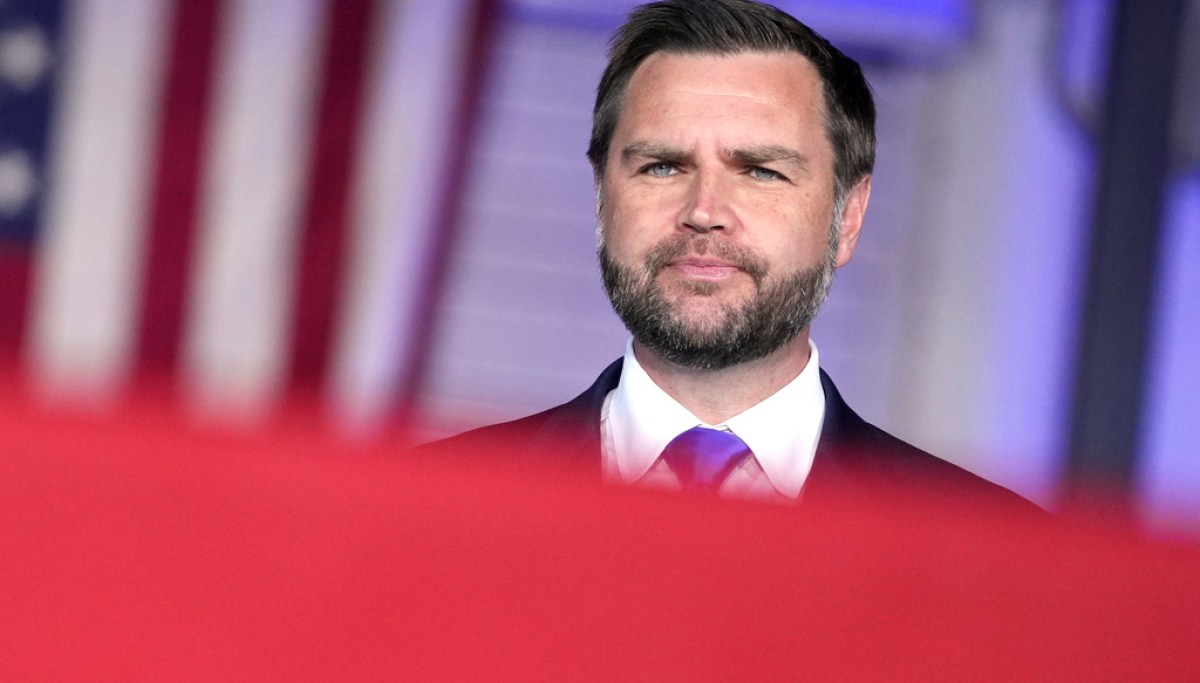
Photo via Washington Examiner

JD Vance is half right: America isn’t Israel’s puppet — it’s Europe’s guard dog

Read the original at Washington Examiner ↗
Cite

Kimball, E. (2026, September 18). JD Vance is half right: America isn’t Israel’s puppet — it’s Europe’s guard dog. Washington Examiner. https://www.washingtonexaminer.com/op-eds/4731108/jd-vance-america-israel-puppet-europe-guard-dog/

Dated when The Aporia collected the article, usually within hours of publication. Check the original for its exact date and byline.

Washington Examiner · collected 2026-09-18 · by EJ Kimball

Quick Summary

JD Vance, during an interview on the All-In Podcast Summit, commented that former President Donald Trump showed less subservience to Israel than previous administrations have, while also questioning America’s complete adherence to NATO policies. Critics suggest Vance's use of "subservient" could be seen as a coded message about Jewish influence in politics. The article counters Vance by highlighting instances where U.S. presidents, including Reagan and Obama, took actions against Israeli interests. However, it agrees with Vance that the U.S. has indeed been more subservient to Europe through its commitments under NATO, such as stationing troops and providing financial support for defense purposes.
Written by AI on 2026-09-19, from this article's own text only (the story summary below draws on all the coverage).

AI analysis

Story summary

During an appearance on the All-In Podcast Summit, Vice President JD Vance commented that former president Donald Trump demonstrated more willingness than any president in the last 40 years to diverge from Israel's government interests when they conflicted with American national interests. Vance also drew a parallel between the U.S.’s stance on NATO and its relationship with Israel, suggesting that while alliances are important, America shouldn’t make its European foreign policy subservient to NATO in the same manner it avoids being subservient to Israel's interests in the Middle East.

Vance’s remarks sparked debate, particularly over his use of the term “subservient,” which some perceived as an indirect reference to anti-Semitic tropes. While critics argued that U.S. foreign policy has never been fully subservient to Israel, Vance was correct in pointing out Trump's willingness to challenge traditional alliances when he believed it served American interests better.

Written for “JD Vance Critique Usa Foreign Policy” on 2026-11-02, grounded in this article and the 0 other(s) covering the same event.

Story

📰 JD Vance Critique Usa Foreign Policy
Politics · 1 article(s) covering the same event.

Compared with similar articles

This article reads leans left and hedges 0% of its claims. Each row says how that neighbour differs.
Daily Mail
⚖️ Leans right further right than this Hedges 3 of 26 claims Outlet record 68/100
“While both articles discuss JD Vance's comments at an All-In Summit about US relations with Israel and Trump's willingness to part ways with Netanyahu, they describe different aspects or times within the same event.”
How this article was measured signals, leaning charts, publisher record, byline, topics and claims

Signals How these are calculated →

Claims extracted
30
sentences that state something as happening or true
Uncertain
0%
0 of 30 hedged ("reportedly", "may", "according to")
Leaning
Leans left
of the writing, not the subject · beta estimate
Publisher signals
70/100
Washington Examiner's corrections and hedging, across everything collected from it. Not a measure of accuracy.
Outlets on this story
1
Politics
Same framing elsewhere
1
articles that frame the event the way this one does
Analyzed 2026-09-19 · how these are computed

How this is being covered How these are calculated →

Article leaning vs. publisher reliability
Source leaning vs. consistency

Publisher

Washington Examiner · 3905 article(s) · 7 correction(s) detected
Running correction rate · 7 correction(s)

Who wrote this

EJ Kimball
1 article(s) here · 1 carrying a prediction
🔮 He said, “I think that, more than frankly any president in the last 40 years, [Trump] has shown a willingness to actually part ways with Bibi Netanyahu when he feels like the interests of the American people are different from the interests of the government of Israel …
The only article under this byline in the corpus.

Topics

American European Israel NATO U.S.

Subjects

Israel GPE · 13× American NORP · 5× U.S. GPE · 5× NATO ORG · 4× European NORP · 2× Gaza GPE · 2× Israeli NORP · 2× Saudi Arabia GPE · 2× Vance PERSON · 2× Washington GPE · 2×

Narrative

By the way, you see a similar push back when the president makes the argument that he’s made about NATO, which is yes, obviously a lot of important relationships, a lot of important partnerships in NATO, but that doesn’t mean that we’re going to completely make our European foreign policy subservient to NATO in the same way that we cannot let our Middle Eastern foreign policy be subservient to the state of Israel.
framing: assertive · carried by 1 article(s) · first seen 2026-09-19
🔮 He said, “I think that, more than frankly any president in the last 40 years, [Trump] has shown a willingness to actually part ways with Bibi Netanyahu when he feels like the interests of the American people are different from the interests of the government of Israel …

Claims (30 extracted, 0 hedged)

Asked about the U.S. relationship with Israel during the All-In Podcast Summit, Vice President JD Vance made some remarks that are raising eyebrows. asserted
that → ask → eyebrows
He said, “I think that, more than frankly any president in the last 40 years, [Trump] has shown a willingness to actually part ways with Bibi Netanyahu when he feels like the interests of the American people are different from the interests of the government of Israel … asserted
interests → say → Israel
By the way, you see a similar push back when the president makes the argument that he’s made about NATO, which is yes, obviously a lot of important relationships, a lot of important partnerships in NATO, but that doesn’t mean that we’re going to completely make our European foreign policy subservient to NATO in the same way that we cannot let our Middle Eastern foreign policy be subservient to the state of Israel. asserted
policy → see → Israel
Because it’s currently fashionable on the political left and reactionary right to suggest that Israel and “the Jews” control our country, Vance’s use of “subservient” seemed like a dog whistle to many. asserted
use → ’ → many
In fact, Washington has repeatedly disagreed with Israeli governments and used American leverage when interests required it. asserted
interests → disagree → it
In 1981, Ronald Reagan proceeded with the sale of AWACS aircraft to Saudi Arabia despite strong Israeli opposition. asserted
Reagan → proceed → opposition
Reagan also suspended deliveries of F-16 aircraft after Israel destroyed Iraq’s Osirak nuclear reactor. asserted
Israel → suspend → reactor
Later administrations likewise exerted pressure on Israel. asserted
administrations → exert → Israel
When Saddam Hussein fired SCUD missiles at Israel in the 1991 Gulf War, George H.W. Bush blocked Israel from responding with airstrikes. asserted
Bush → fire → airstrikes
In 2004, former President George W. Bush strong-armed Israel into leaving Gaza and allowing Hamas to run in elections, leading to the takeover of the strip by the terrorists. asserted
Hamas → arm → terrorists
A decade later, Barack Obama pushed through a “deal” allowing Iran to become a nuclear threshold country and develop ballistic missiles. asserted
Iran → push → missiles
Even in the wake of the Oct. 7, 2023, massacre, former President Joe Biden implemented an arms embargo on Israel as it was trying to rescue hostages, including Americans, from the terror dungeons of Gaza. asserted
it → implement → Gaza
NATO is a treaty alliance, and Article 5 creates a collective defense commitment. asserted
Article → create → commitment
American troops are stationed throughout Europe to protect it from Russian aggression. asserted
troops → station → aggression
We spend tens of billions of dollars to pay those troops, house and arm them, and maintain those bases. asserted
We → spend → bases
The U.S. should neither dominate nor kowtow to our allies. asserted
U.S. → dominate → allies
Neither of these paradigms has benefited U.S. interests nor been successful. asserted
Neither → benefit → interests
This is where Vance gets it right: President Donald Trump is pursuing a more realistic and respectful policy. asserted
Trump → get → policy
He is building a dynamic where allies act like independent sovereign nations pursuing their own interests and align where those interests overlap. asserted
interests → build → interests
An ally that can defend itself, contribute military power, share intelligence, develop useful technology, and act decisively can become a meaningful strategic partner. asserted
that → defend → technology
Israel has demonstrated substantial military and intelligence capabilities, while Ukraine has demonstrated the capacity to fight for its own sovereignty. asserted
Ukraine → demonstrate → sovereignty
Both illustrate why American assistance can have greater strategic value when it reinforces partners that are actively pursuing their own security. asserted
that → illustrate → security
These are allies vigorously pursuing their interests to the benefit of the United States. asserted
These → pursue → States
We help them with weapons, advisers, and even kinetic action — not because we are subservient to them, but because it benefits us. asserted
it → help → us
America does not need allies who are unable or unwilling to protect their own interests. asserted
who → need → interests
We don’t need more allies like Saudi Arabia and Qatar in the Middle East, or France and England in Europe. asserted
We → need → Europe
Washington should not expect Israel to subordinate its security decisions to American preferences any more than America should subordinate its Middle Eastern policy to Israel. asserted
America → expect → Israel
It also means European governments should not expect the United States to carry responsibilities that they can reasonably carry themselves. asserted
they → mean → that
Allies should remain sovereign, pursue their own interests, bear meaningful responsibility for their security, and cooperate with the United States where their interests converge. asserted
interests → remain → States
It is a more demanding definition of what an alliance means. asserted
alliance → mean → what

💬Give feedback
🕘History 🎫Support