Photo via NPR

South Africa 'feels like a prison' for women amid spate of femicides

Read the original at NPR ↗
Cite

Bartlett, K. (2026, September 18). South Africa 'feels like a prison' for women amid spate of femicides. NPR. https://www.npr.org/2026/09/18/nx-s1-5973822/south-africa-feels-like-a-prison-for-women-amid-spate-of-femicides

Dated when The Aporia collected the article, usually within hours of publication. Check the original for its exact date and byline.

NPR · collected 2026-09-18 · by Kate Bartlett
Content note This article describes sexual violence.

Quick Summary

In Johannesburg, South Africa, Elizabeth Moselakgomo’s murder is part of a recent surge where nine women have been found slain within weeks, mostly sexually assaulted and unrecognizable. This spike has alarmed the public and sparked protests demanding action against gender-based violence, with activists calling for more than just platitudes from the government. The article highlights the fear among South African women who feel their country is unsafe, reflecting on the broader issue of femicide rates in a nation where over 100 rapes are reported daily.
Written by AI on 2026-09-18, from this article's own text only (the story summary below draws on all the coverage).

AI analysis

Story summary

South African police are investigating the deaths of nine women whose bodies were discovered near Johannesburg over two months. The killings have raised fears of a serial killer or multiple perpetrators targeting women in Ekurhuleni and Kempton Park areas east of Johannesburg. Some victims were found naked, showing signs of sexual violence, causing widespread alarm and condemnation from civil society groups. President Cyril Ramaphosa vowed that "no stone will be left unturned" to bring the killers to justice. While police have not confirmed a serial killer, they are intensifying investigations due to similarities in the cases and urging public caution.

Written for “South African Women Killings Investig…” on 2026-11-02, grounded in this article and the 22 other(s) covering the same event.

Story

📰 South African Women Killings Investig…
Crime & Law · 23 article(s) covering the same event. Compare every outlet's account →

Compared with similar articles

This article reads unscored and hedges 4% of its claims. Each row says how that neighbour differs.
The Sydney Morning Herald
Hedges 5 of 29 claims Outlet record 61/100
The Independent
⚖️ Leans left Hedges 3 of 45 claims Outlet record 59/100
The Straits Times
Hedges 1 of 12 claims Outlet record 66/100
“Article A mentions an investigation into seven female victims over two months, while Article B details the case of Elizabeth Moselakgomo, identified as one of nine recent femicide cases.”
South China Morning Post
Hedges 1 of 5 claims Outlet record 63/100
“Article A describes the discovery of a seventh body near Johannesburg within a series of incidents over two months, while Article B provides details about a specific victim named Elizabeth Moselakgomo whose death is part of but not identical to the broader pattern mentioned in Article A.”
Al Jazeera
Hedges 4 of 24 claims Outlet record 60/100
“While both articles discuss the series of murders and the ninth victim's body being discovered, Article B focuses on Elizabeth Moselakgomo specifically and describes her disappearance and murder in detail, while Article A does not mention this specific case.”
Daily Mail
Hedges 3 of 32 claims Outlet record 69/100
The Straits Times
Hedges 1 of 10 claims Outlet record 66/100
Al Jazeera
Hedges 2 of 16 claims Outlet record 60/100
“The articles describe two different violent incidents: one involving femicide in Johannesburg and another involving a shooting at a house party in Durban.”
Toronto Star
Hedges 4 of 21 claims Outlet record 64/100
“While both articles discuss femicide cases in South Africa, Article B focuses on a specific victim named Elizabeth Moselakgomo whose death is part of the larger discussion but not identical to the event described as 'eight women' in Article A.”
BBC News
Hedges 1 of 8 claims Outlet record 68/100
“While both articles mention Elizabeth Moselakgomo's murder and a subsequent vigil organized for her, Article A describes the incident of her disappearance and discovery, while Article B focuses on vigils held in response to her death.”
How this article was measured signals, leaning charts, publisher record, byline, topics and claims

Signals How these are calculated →

Claims extracted
26
sentences that state something as happening or true
Uncertain
4%
1 of 26 hedged ("reportedly", "may", "according to")
Leaning
withheld
no quote in the article backed the model's score
Publisher signals
60/100
NPR's corrections and hedging, across everything collected from it. Not a measure of accuracy.
Outlets on this story
23
Crime & Law
Same framing elsewhere
1
articles that frame the event the way this one does
Analyzed 2026-09-18 · how these are computed

How this is being covered How these are calculated →

Article leaning vs. publisher reliability
Source leaning vs. consistency

Publisher

NPR · 1019 article(s) · 3 correction(s) detected
Running correction rate · 3 correction(s)

Who wrote this

Kate Bartlett
6 article(s) here · 1 carrying a prediction
🔮 He ate a French Dip Cheeseburger and told journalists afterwards: "I had a great meal, always have a great meal, and I would just tell the Martha's Vineyard set to give it a try," in an apparent reference to the Obamas who are known to holiday on the exclusive island.
🔮 The first Ebola patient confirmed in Nigeria may have crossed paths with the first Kenyan Ebola patient at a Ugandan airport, health officials said Thursday.
🔮 They had been demonstrating against the country's pass laws – which restricted black people's movements and where they could live and work.
🔮 Sally Rooney's books will no longer be sold in UK after Palestinian Action support Irish author Sally Rooney has long been described as "the voice of a generation" for her best-selling novels that are ostensibly about millennial relationships but also explore deeper questions of class, gender and politics.
🔮 "I hid under my bed," said Angela Mopayi, 54, at the time, "I couldn't breathe, I couldn't do anything, I thought I was dying."
🔮 President Cyril Ramaphosa has promised "no stone will be left unturned" in the hunt for the perpetrator or perpetrators.
Also by Kate Bartlett
Nothing else under this byline is closely related to this article, so these are simply their most recent.
All 6 articles by Kate Bartlett →

Topics

JOHANNESBURG NPR South Africa South Africa's South Africans

Subjects

South Africa GPE · 6× JOHANNESBURG GPE · 3× Moselakgomo PERSON · 3× NPR ORG · 2× South Africans NORP · 2× Amnesty International's ORG · 1× Cyril Ramaphosa PERSON · 1× Elizabeth Moselakgomo PERSON · 1× Shenilla Mohamed PERSON · 1× South Africa's GPE · 1×

Narrative

"And we still haven't really, I think, dealt with all of the legacies of apartheid – this is I think one of the ways it's manifesting." Some academic research supports this idea, with studies suggesting years of brutal white-minority rule, under which Black men were denied agency and autonomy, has led to a crisis of masculinity and the entrenchment of patriarchal attitudes.
framing: assertive · carried by 1 article(s) · first seen 2026-09-18
🔮 President Cyril Ramaphosa has promised "no stone will be left unturned" in the hunt for the perpetrator or perpetrators.

Claims (26 extracted, 1 hedged)

South Africa 'feels like a prison' for women amid spate of femicides JOHANNESBURG– asserted
Africa → feel → femicides
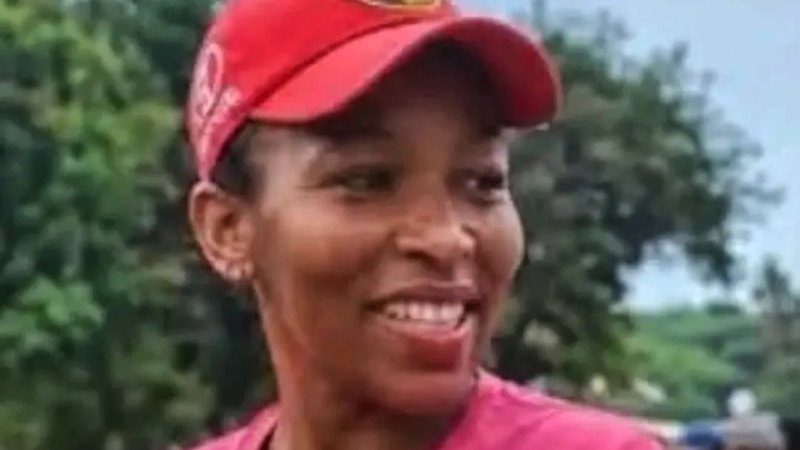
Elizabeth Moselakgomo, a 38-year-old manager, mother, and keen runner, went out for her usual afternoon jog in her neighborhood near the Johannesburg airport last week and never returned. asserted
Moselakgomo → go → airport
When she failed to come home, her 8-year-old daughter called relatives, who contacted the police. asserted
who → fail → police
Five days later Moselakgomo's half-naked body was found in the area, with her face so badly beaten it was unrecognisable. asserted
it → find → area
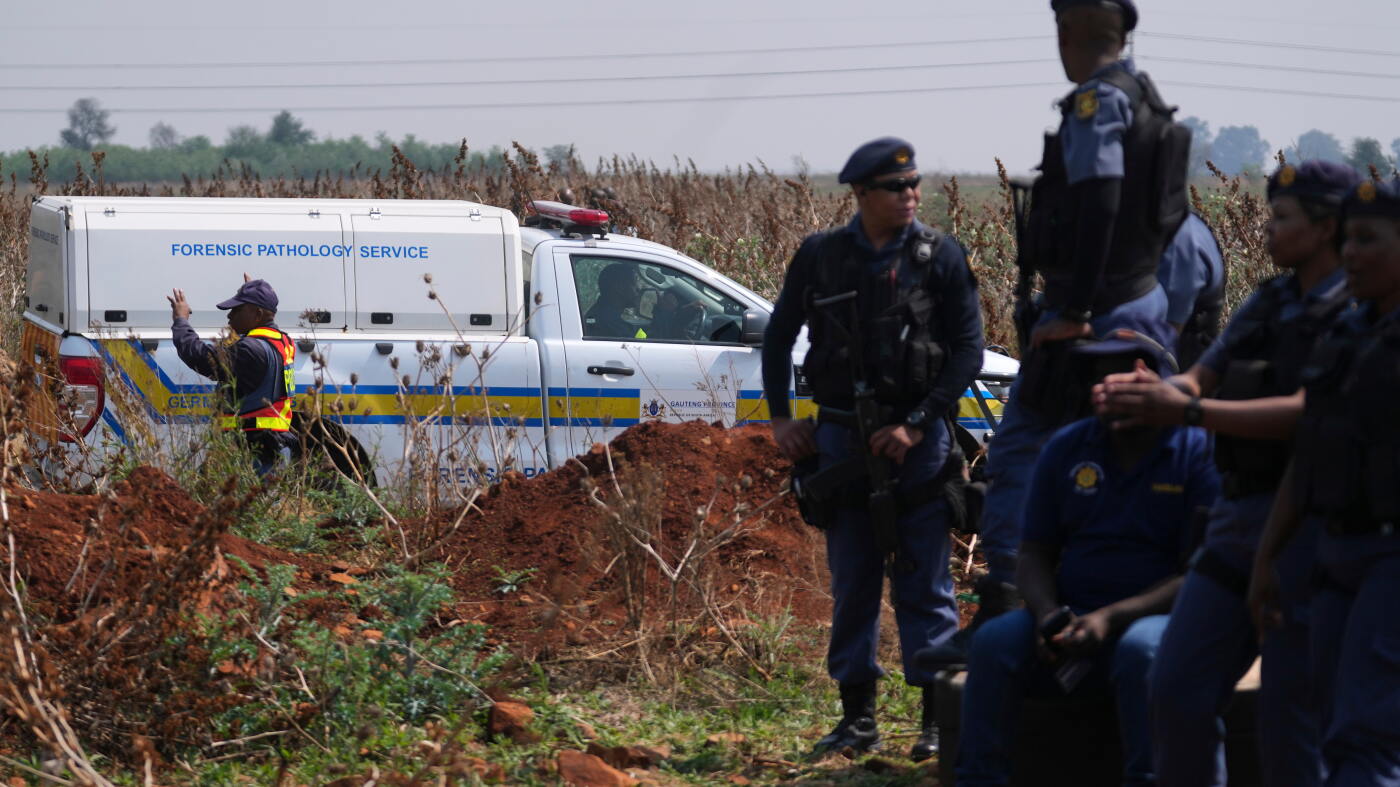
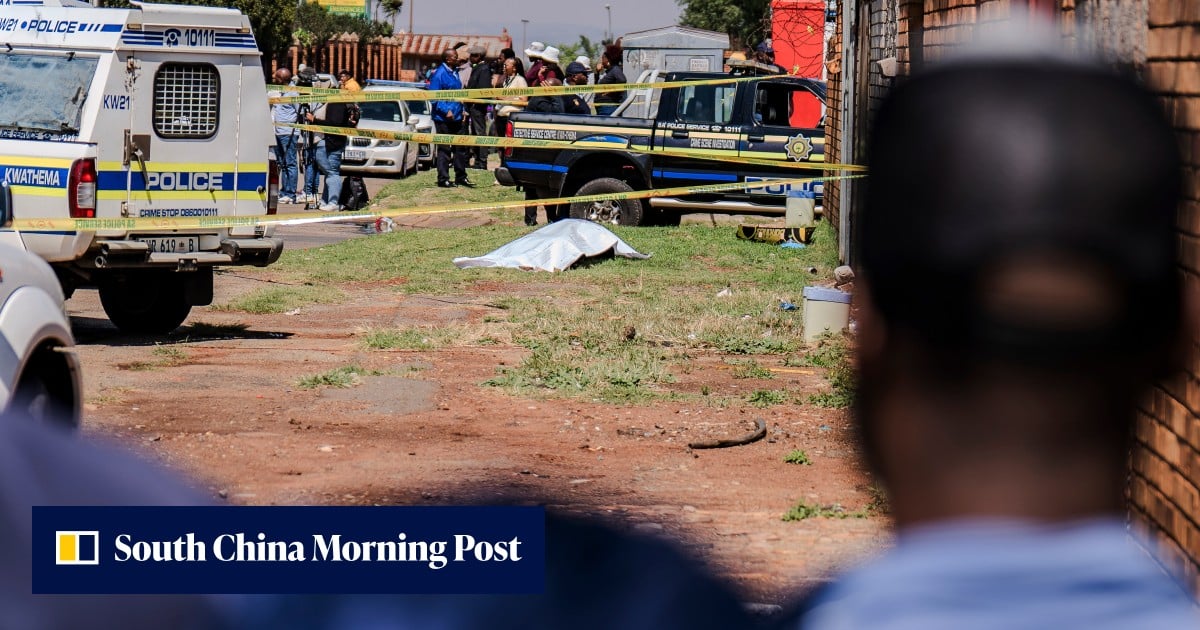
Moselakgomo is one of nine women who police say have been found slain, most of them in a period of a few weeks, in the same area of South Africa's biggest city. asserted
police → say → city
The majority of them were sexually assaulted. asserted
majority → assault → them
Even in a country notorious for some of the highest rates of gender-based violence in the world – with over 100 rape cases reported and some 15 women killed daily, according to police statistics -- the latest spate of murders has left South Africans shocked, angry and afraid. uncertain
spate → base → Africans
Police haven't ruled out a serial killer and have warned women to be "vigilant" and not to walk or run alone. asserted
Police → rule → women
The approach is drawing backlash from women on social media who said the onus should be on the police to protect them, not for them to have to curtail their movements. asserted
them → draw → movements
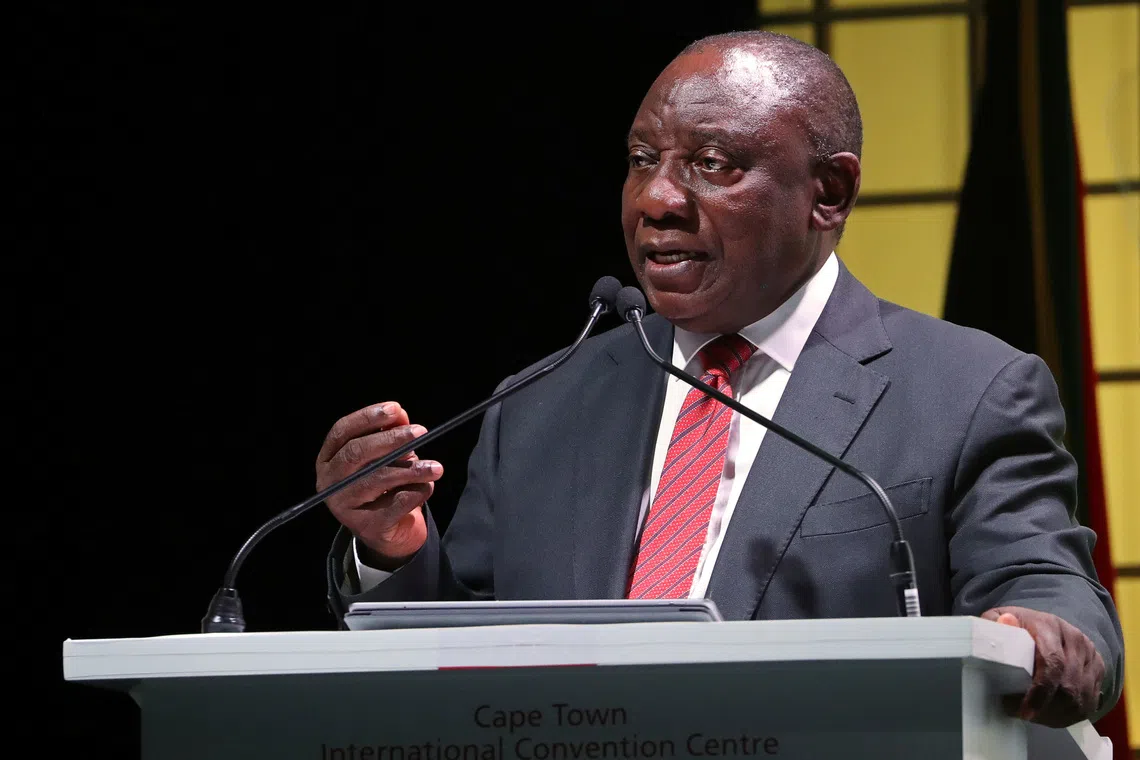
President Cyril Ramaphosa has promised "no stone will be left unturned" in the hunt for the perpetrator or perpetrators. asserted
stone → promise → perpetrator
But many South Africans say the government – which declared gender-based violence and femicide a national disaster in 2025 -- has not done enough to keep women and girls safe. asserted
which → say → women
"Women in South Africa continue to be hunted and denied the most basic right to life and security," said Amnesty International's South Africa Director Shenilla Mohamed. asserted
Mohamed → continue → life
We want to know what is going to be done to make women and children feel safe. asserted
women → want → ?
'I can't move freely' asserted
I → move → ?
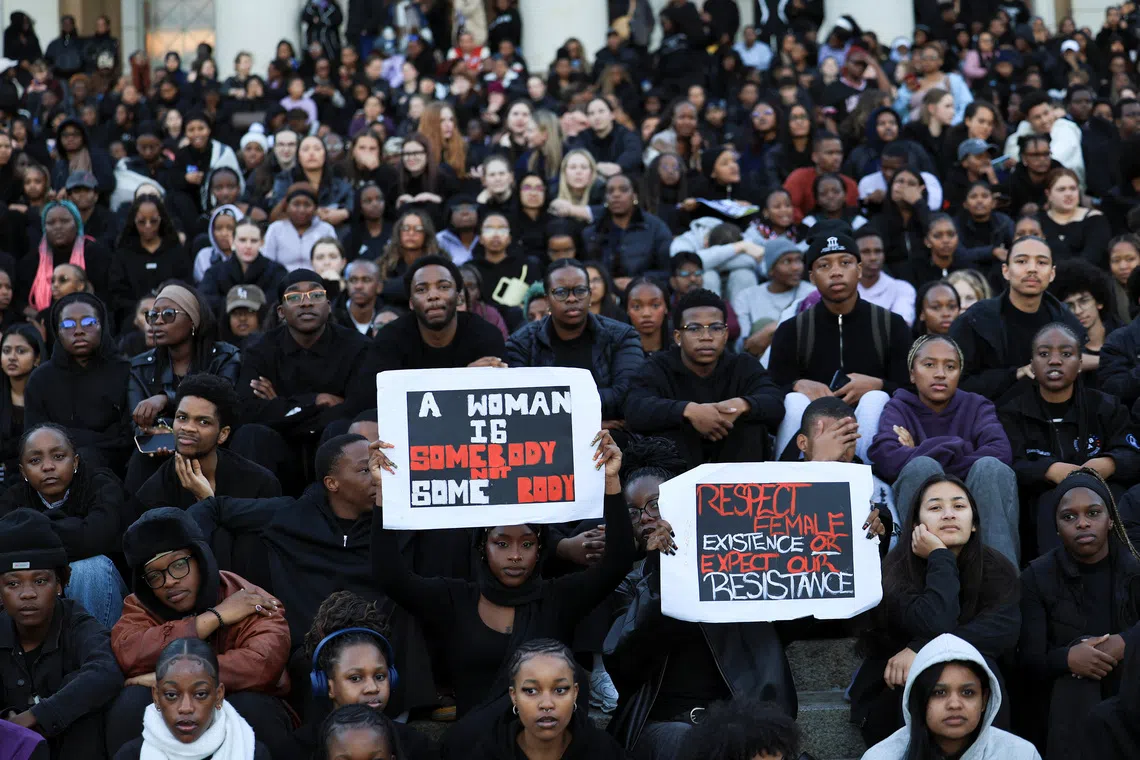
There have been protests in Kempton Park, the suburb where many of the killings have been, as well as in Cape Town, with South African women saying enough is enough. asserted
enough → say → Town
As Moselakgomo was a keen runner, many local running clubs across the country have been holding runs in her honour and in remembrance of all the victims. asserted
clubs → hold → victims
At one in Johannesburg, men and women of all ages and races came dressed in black and held a minute's silence before they set off. asserted
they → come → silence
"Gender-based violence, but particularly femicide, is such a big issue in South Africa. asserted
violence → base → Africa
As a woman you can't do anything alone," one of the runners, 26-year-old Shari Maluluke, told NPR. asserted
one → do → NPR
"You jog, you can get killed, you go to the post office, you can get killed, in your homes you can get killed… asserted
you → jog → homes
It just makes me angry that I can't move freely, my whole country feels like a prison. asserted
country → make → prison
" All the women NPR spoke to at the event said they did not feel safe in South Africa. asserted
they → speak → Africa
"You send your location, you share your Ubers," said 31-year-old Didi Tsitsi of the precautions women have to take. asserted
women → send → precautions
Asked why she thought femicide was such a big problem in South Africa, Tsitsi said she thought there were a number of factors. asserted
she → ask → factors
"Failure of government and policing, I do think there's a deep-rooted societal issue of what men are brought up to be and what they believe it is to be a man," she said. asserted
she → think → what
"And we still haven't really, I think, dealt with all of the legacies of apartheid – this is I think one of the ways it's manifesting." Some academic research supports this idea, with studies suggesting years of brutal white-minority rule, under which Black men were denied agency and autonomy, has led to a crisis of masculinity and the entrenchment of patriarchal attitudes. asserted
men → think → attitudes

💬Give feedback
🕘History 🎫Support