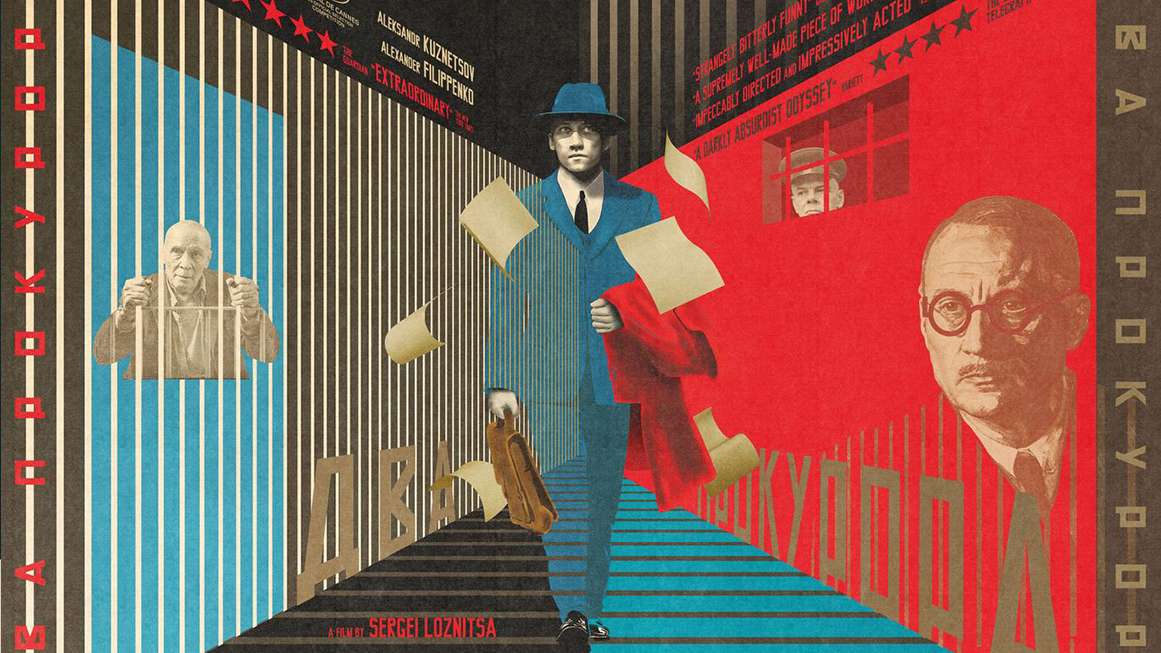
Photo via Reason

Review: An Idealistic Young Attorney in Stalin's Soviet Union

Read the original at Reason ↗
Cite

Walker, J. (2026, September 18). Review: An Idealistic Young Attorney in Stalin's Soviet Union. Reason. https://reason.com/2026/09/18/two-prosecutors/

Dated when The Aporia collected the article, usually within hours of publication. Check the original for its exact date and byline.

Reason · collected 2026-09-18 · by Jesse Walker

Quick Summary

Sergei Loznitsa's film "Two Prosecutors" tells the story of a young attorney in 1930s Soviet Union who naively believes in the rule of law during Stalin’s purges. The movie highlights the protagonist’s disillusionment as he uncovers the truth about widespread injustice and torture, contrasting his idealism with that of prisoners who remain hopeful despite their circumstances.
Written by AI on 2026-09-18, from this article's own text only (the story summary below draws on all the coverage).

AI analysis

Story summary

Sergei Loznitsa's film Two Prosecutors, reviewed in Reason Magazine by Jesse Walker, tells the story of a young attorney who believes in the rule of law during Stalin's purges in the 1930s Soviet Union. The attorney is shocked to discover that an innocent prisoner is being tortured but remains hopeful about justice, unlike the prisoner who naively trusts Stalin might intervene. Despite its predictable conclusion for those familiar with Soviet history, the film effectively captures the protagonist's journey and elicits both drama and dark humor.

Written for “Stalin Era Soviet Law Review” on 2026-11-02, grounded in this article and the 0 other(s) covering the same event.

Story

📰 Stalin Era Soviet Law Review
Politics · 1 article(s) covering the same event.

Compared with similar articles

Nothing to compare against. No article is close enough to this one for the pipeline to have linked or judged the pair.
How this article was measured signals, leaning charts, publisher record, byline, topics and claims

Signals How these are calculated →

Claims extracted
7
sentences that state something as happening or true
Uncertain
14%
1 of 7 hedged ("reportedly", "may", "according to")
Leaning
Leans left
of the writing, not the subject · beta estimate
Publisher signals
67/100
Reason's corrections and hedging, across everything collected from it. Not a measure of accuracy.
Outlets on this story
1
Politics
Same framing elsewhere
1
articles that frame the event the way this one does
Analyzed 2026-09-18 · how these are computed

How this is being covered How these are calculated →

Article leaning vs. publisher reliability
Source leaning vs. consistency

Publisher

Reason · 1070 article(s) · 4 correction(s) detected
Running correction rate · 4 correction(s)

Who wrote this

Jesse Walker
1 article(s) here · 1 carrying a prediction
🔮 It's the prisoner himself, who thinks Stalin might step in and fix things if only he knew what the local secret police have been up to.
The only article under this byline in the corpus.

Topics

Bolshevik Soviet

Subjects

Bolshevik NORP · 1× Josef Stalin's PERSON · 1× Loznitsa PERSON · 1× Sergei Loznitsa's PERSON · 1× Soviet NORP · 1× Stalin PERSON · 1×

Narrative

Yet the story's most deluded idealist isn't this fledgling prosecutor, a man naive enough to be shocked when he learns that an innocent prisoner is being tortured.
framing: assertive · carried by 1 article(s) · first seen 2026-09-18
🔮 It's the prisoner himself, who thinks Stalin might step in and fix things if only he knew what the local secret police have been up to.
2026-09-18 · Reason
Review: An Idealistic Young Attorney in Stalin's Soviet Union · assertive framing

Claims (7 extracted, 1 hedged)

Sergei Loznitsa's Two Prosecutors is a film about a young attorney who believes in the rule of law. asserted
who → believe → law
He lives, unfortunately, at one of the worst possible times and places for such idealism: during Josef Stalin's purges of the 1930s. asserted
He → live → 1930s
Yet the story's most deluded idealist isn't this fledgling prosecutor, a man naive enough to be shocked when he learns that an innocent prisoner is being tortured. asserted
prisoner → shock → ?
It's the prisoner himself, who thinks Stalin might step in and fix things if only he knew what the local secret police have been up to. uncertain
police → think → what
Even a Bolshevik can believe a version of Good czar, bad boyars. asserted
Bolshevik → believe → czar
How Loznitsa's tale ends will not surprise a viewer with any knowledge of Soviet history. asserted
ends → end → history
But it does come as a surprise to the protagonist, and the movie wrings genuine drama—and some very dark humor—from his path to an inevitable destination. asserted
movie → come → destination
💬Give feedback
🕘History 🎫Support