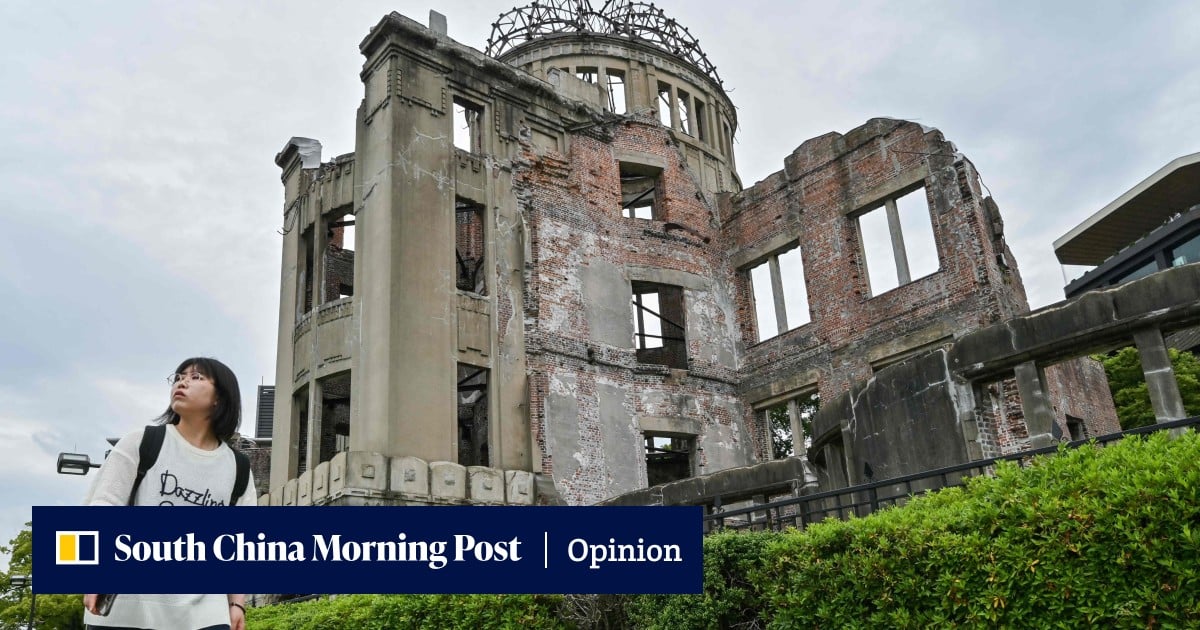
Photo via South China Morning Post

Ending the nuclear arms race starts with cities doing their part

Read the original at South China Morning Post ↗
Cite

Snyder, S. (2026, September 18). Ending the nuclear arms race starts with cities doing their part. South China Morning Post. https://www.scmp.com/opinion/world-opinion/article/3367530/ending-nuclear-arms-race-starts-cities-doing-their-part?utm_source=rss_feed

Dated when The Aporia collected the article, usually within hours of publication. Check the original for its exact date and byline.

South China Morning Post · collected 2026-09-18 · by Susi Snyder

Quick Summary

The article argues that cities should play an active role in pushing for the elimination of nuclear weapons because they are primary targets and suffer severe humanitarian consequences from their use. It emphasizes that nuclear deterrence policies keep urban areas under threat, affecting not just current populations but future generations as well due to long-term radioactive contamination and destruction of essential infrastructure.
Written by AI on 2026-09-18, from this article's own text only (the story summary below draws on all the coverage).

AI analysis

Story summary

Cities bear significant risk as primary targets for nuclear attacks, making them crucial players in advocating for the elimination of such threats. Susi Snyder argues that even the smallest nuclear weapons currently available would trigger severe humanitarian crises if deployed on urban areas. She emphasizes that while nations use terms like "nuclear deterrence" to justify maintaining these weapons, it essentially means keeping cities under constant threat. Cities' cultural, educational, commercial, infrastructure, and healthcare facilities face destruction from both immediate blasts and long-term radioactive contamination. Snyder calls for city leaders to engage in nuclear policy discussions to address the devastating impacts on urban populations.

Written for “Cities And Nuclear Disarmament” on 2026-11-03, grounded in this article and the 0 other(s) covering the same event.

Story

📰 Cities And Nuclear Disarmament
Politics · 1 article(s) covering the same event.

Compared with similar articles

Nothing to compare against. No article is close enough to this one for the pipeline to have linked or judged the pair.
How this article was measured signals, leaning charts, publisher record, byline, topics and claims

Signals How these are calculated →

Claims extracted
8
sentences that state something as happening or true
Uncertain
0%
0 of 8 hedged ("reportedly", "may", "according to")
Leaning
Leans strongly left
of the writing, not the subject · beta estimate
Publisher signals
63/100
South China Morning Post's corrections and hedging, across everything collected from it. Not a measure of accuracy.
Outlets on this story
1
Politics
Same framing elsewhere
1
articles that frame the event the way this one does
Analyzed 2026-09-18 · how these are computed

How this is being covered How these are calculated →

Article leaning vs. publisher reliability
Source leaning vs. consistency

Publisher

South China Morning Post · 3615 article(s) · 7 correction(s) detected
Running correction rate · 7 correction(s)

Who wrote this

Susi Snyder
1 article(s) here · 1 carrying a prediction
🔮 The use of even the smallest nuclear weapons in today’s arsenals would cause a humanitarian emergency in cities.
The only article under this byline in the corpus.

Topics

No topics tagged.

Subjects

No subjects extracted.

Narrative

Through this, nations are looking for ways to reduce and prevent the known reverberating effects of explosive ordnance contamination in urban areas, effects which are compounded and made long-lasting by the destruction of cultural, educational, commercial, infrastructure and healthcare facilities.
framing: assertive · carried by 1 article(s) · first seen 2026-09-18
🔮 The use of even the smallest nuclear weapons in today’s arsenals would cause a humanitarian emergency in cities.
2026-09-18 · South China Morning Post
Ending the nuclear arms race starts with cities doing their part · assertive framing

Claims (8 extracted, 0 hedged)

Ending the nuclear arms race starts with cities doing their part As cities are the main targets of nuclear weapons, they have a responsibility to speak out and encourage efforts to eliminate them asserted
they → end → them
The catastrophic danger posed to cities by nuclear weapons is nothing new. asserted
danger → pose → weapons
Putting major urban areas at risk across generations is, in fact, the point of these weapons of terror. asserted
Putting → put → terror
The practice of doing so is benignly called nuclear deterrence, but it requires holding the cities of adversaries – real and imagined – under constant threat. asserted
it → do → threat
The use of even the smallest nuclear weapons in today’s arsenals would cause a humanitarian emergency in cities. asserted
use → cause → cities
That is why city leadership should have a voice in nuclear policymaking. asserted
leadership → have → policymaking
Through this, nations are looking for ways to reduce and prevent the known reverberating effects of explosive ordnance contamination in urban areas, effects which are compounded and made long-lasting by the destruction of cultural, educational, commercial, infrastructure and healthcare facilities. asserted
which → look → facilities
Nuclear weapons are highly explosive weapons which also leave a lasting radioactive legacy. asserted
which → leave → legacy
💬Give feedback
🕘History 🎫Support