Photo via Times of India

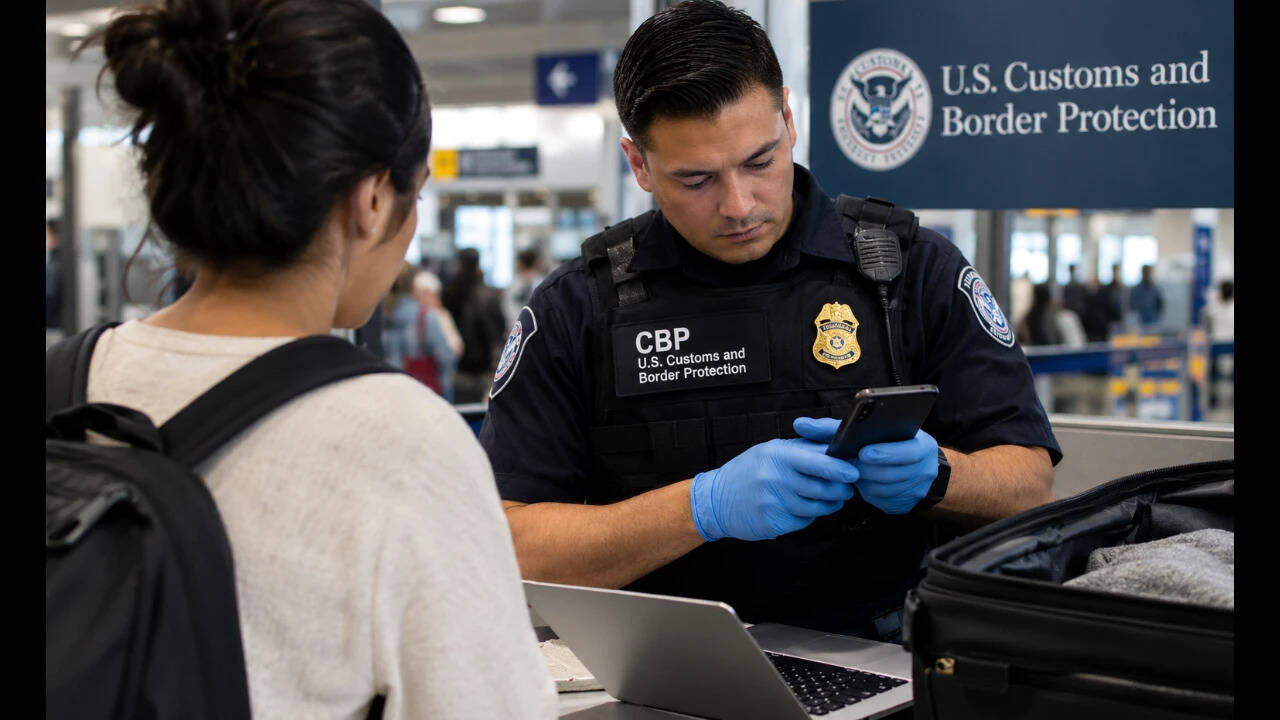
US border agents can search any traveler's phone or laptop without a warrant; judges say it's like checking suitcases

Read the original at Times of India ↗
Cite

Ghosh, P. (2026, September 18). US border agents can search any traveler's phone or laptop without a warrant; judges say it's like checking suitcases. Times of India. https://timesofindia.indiatimes.com/world/us/us-border-agents-can-search-any-travelers-phone-or-laptop-without-a-warrant-judges-say-its-like-checking-suitcases/articleshow/134335822.cms

Dated when The Aporia collected the article, usually within hours of publication. Check the original for its exact date and byline.

Times of India · collected 2026-09-18 · by Poulomi Ghosh

Quick Summary

A U.S. appeals court has ruled that border agents can search travelers' electronic devices like phones and laptops without a warrant under the longstanding border-search exception. This decision was made in response to a case brought by Chinwendu Alisigwe, whose phone was searched at JFK International Airport, leading to his conviction for bank fraud and money laundering. The court rejected arguments that cellphones should receive special protection due to the amount of personal data they contain, treating them similarly to other belongings like luggage or notebooks during border searches.
Written by AI on 2026-09-18, from this article's own text only (the story summary below draws on all the coverage).

AI analysis

Story summary

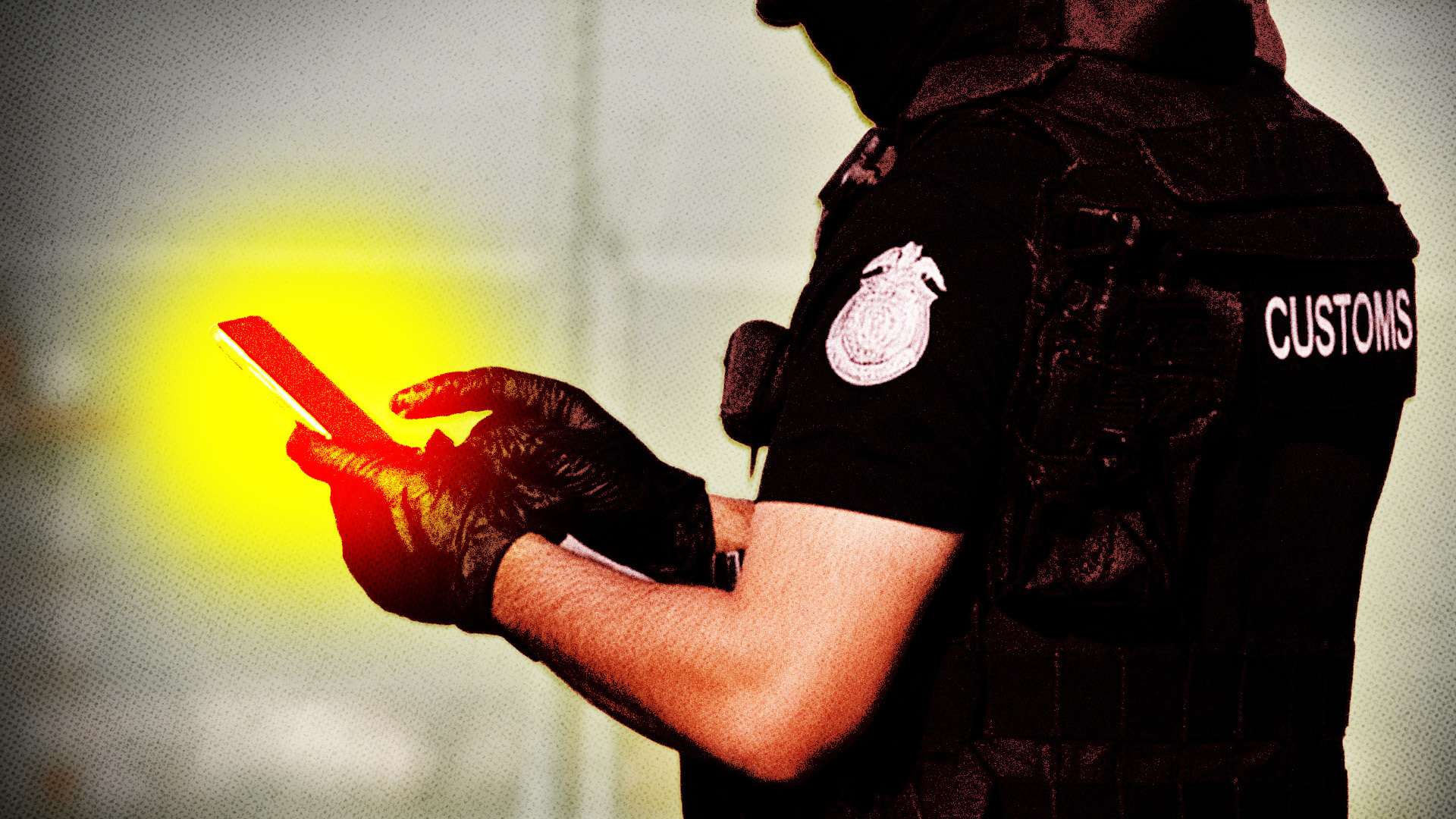
In a recent ruling, the U.S. Court of Appeals for the Second Circuit upheld that border agents can search travelers' cell phones without a warrant or suspicion of criminal activity. The decision was based on U.S. v. Flores-Montano (2004), where the Supreme Court established that searches at borders are reasonable due to the government's interest in preventing the entry of unwanted persons and effects. This ruling stems from a case involving Chinwendu Alisigwe, a Green Card holder whose phone was searched during his arrival at John F Kennedy International Airport in New York City, leading to his conviction for bank fraud and money laundering. The judges rejected arguments that cell phones should receive special constitutional protection due to the vast amount of personal data they contain, likening digital searches to routine physical luggage checks.Critics argue this decision could undermine freedom of speech and privacy rights, while proponents maintain it is necessary for national security and border control.
Written for “Border Phone Searches Allowed” on 2026-11-01, grounded in this article and the 2 other(s) covering the same event.

Story

📰 Border Phone Searches Allowed
Politics · 3 article(s) covering the same event. See how they differ ↓

Compared with similar articles

This article reads unscored and hedges 4% of its claims. Each row says how that neighbour differs.
Reason
⚖️ Leans strongly right Hedges 1 of 31 claims Outlet record 67/100
Reason
⚖️ Leans strongly left Hedges 12 of 95 claims Outlet record 67/100
“The articles discuss related rulings about border searches but do not describe the exact same legal decision or incident.”
How this article was measured signals, leaning charts, publisher record, byline, topics and claims

Signals How these are calculated →

Claims extracted
24
sentences that state something as happening or true
Uncertain
4%
1 of 24 hedged ("reportedly", "may", "according to")
Leaning
withheld
no quote in the article backed the model's score
Publisher signals
59/100
Times of India's corrections and hedging, across everything collected from it. Not a measure of accuracy.
Outlets on this story
3
Politics
Same framing elsewhere
1
articles that frame the event the way this one does
Analyzed 2026-09-18 · how these are computed

How this is being covered How these are calculated →

Article leaning vs. publisher reliability
Source leaning vs. consistency

Publisher

Times of India · 3858 article(s) · 2 correction(s) detected
Running correction rate · 2 correction(s)

Who wrote this

Poulomi Ghosh
90 article(s) here · 1 carrying a prediction
🔮 46-year-old Simeswell Cyril, an Indian national, is now being held in Sydney immigration detention and will be facing deportation from the country because of his fraudulent compensation claim.
🔮 US President Donald Trump has agreed to grant an immediate visa to the mother of 15-year-old Javits Frimpong, who was fatally shot while walking to school in New York City's Bronx neighbourhood, Mayor Zohran Mamdani announced on Saturday.
🔮 She would stop them for a few minutes as they travelled along the sidewalk carrying food orders.
🔮 Dozens of Afghan migrants detained in the United States are expected to be deported as early as next week, potentially including relatives of Afghans who worked alongside American military forces during the war in Afghanistan.
🔮 Soldiers with the 3rd Corps Sustainment Command and the 20th Engineer Brigade, based in Fort Bragg, North Carolina, as well as religious support personnel like military chaplains, used diggers and excavators to see how effectively they could be used to help preserve bodies intact until they could be identified and repatriated to the US.
🔮 Viral dad Walt Z told the prankster that he was already running behind his schedule despite working nonstop, and while the influencer was making the prank video to get views that may translate into money, Walt has four children at home and a mortgage that he can't pay.
🔮 After Walt Z, a Michigan pizza store worker, went viral for standing up to the harassment of an influencer in the name of a prank video, social media users speculated that the video may cost Walt Z his job.
🔮 The staff then had to remind the event organizers that Vance is the Vice President and he was running about 30 minutes behind for a MAHA summit with RFK Jr. Musk and Huang were wrapping up and soon Vance was on the stage for his fireside chat with Joe Gebbia, the co-founder of Airbnb -- running behind the schedule. 'Complete fabrication' JD Vance's deputy chief of staff William Martin said he was there and that the account of Vance losing his cool and then cursing was a complete fabrication.
🔮 The Federal Aviation Administration said the flight returned safely and that it would investigate the incident.
🔮 Elliot's Wood Fired Kitchen in Newark said in the comments section of a recent Facebook post that it would not host the Ohio GOP's planned event on Tuesday, Newsweek reported.
Also by Poulomi Ghosh
Nothing else under this byline is closely related to this article, so these are simply their most recent.
All 90 articles by Poulomi Ghosh →

Topics

California New York City The Second Circuit the First Amendment the United States

Subjects

The Second Circuit ORG · 2× California GPE · 1× Chinwendu Alisigwe PERSON · 1× New York City GPE · 1× Riley PERSON · 1× The Knight First Amendment Institute ORG · 1× The Second Circuit's ORG · 1× the Fourth Circuit ORG · 1× the US Supreme Court ORG · 1× the United States GPE · 1×

Narrative

The judges rejected the argument that a cellphone should receive special constitutional protection simply because it contains substantially more personal information than conventional belongings such as luggage or notebooks.
framing: assertive · carried by 1 article(s) · first seen 2026-09-18
🔮 The Knight First Amendment Institute, which participated in the case, said the decision could have implications for freedom of speech, association and the press.

Claims (24 extracted, 1 hedged)

Border agents do not require a search warrant to stop a traveler and go through their electronic items like phones and laptops, an appeals court panel has now ruled. asserted
panel → require → phones
They said the First Amendment does not create a separate requirement that officers obtain a warrant before examining information on a person's phone. asserted
officers → say → phone
The case was brought by Chinwendu Alisigwe, a Green Card holder, whose phone was searched at John F Kennedy International Airport in New York City. asserted
phone → bring → City
He was later convicted of bank fraud and money laundering and it was those border agents who found evidence on his phone. asserted
who → convict → phone
Why the court allowed the phone search The court treated a manual search of a cellphone as a routine border search. asserted
court → allow → search
Under the longstanding border-search exception, government officials generally have broad authority to inspect people and belongings entering the United States without obtaining a warrant. asserted
officials → have → warrant
The judges rejected the argument that a cellphone should receive special constitutional protection simply because it contains substantially more personal information than conventional belongings such as luggage or notebooks. asserted
it → reject → luggage
The ruling also distinguished border searches from ordinary police searches inside the US. asserted
ruling → distinguish → US
In its 2014 decision in Riley v California, the US Supreme Court generally required police to obtain a warrant before searching the contents of a cellphone seized during an arrest. asserted
Court → require → arrest
The Second Circuit concluded that this rule does not apply in the same way at the international border. asserted
rule → conclude → border
The case also raised concerns under the First Amendment because phones can contain journalists' work, private messages, political views, photographs and information about a person's professional and personal associations. asserted
phones → raise → associations
The Second Circuit nevertheless rejected the argument that the First Amendment creates a separate warrant requirement for cellphone searches at the border. asserted
Amendment → reject → border
The court noted that phones can contain both constitutionally protected expression and information that does not receive First Amendment protection. asserted
that → note → protection
It also pointed to the government's authority to enforce immigration and border laws, including restrictions involving certain forms of extremist or terrorist-related expression. asserted
It → point → expression
What does this mean for travellers? asserted
this → mean → travellers
For people entering the US, the ruling means that a border officer does not necessarily need to show evidence of wrongdoing before conducting a manual search of a cellphone. asserted
officer → enter → cellphone
That can potentially affect US citizens, Green Card holders, foreign visitors, students, business travellers and others crossing the US border. asserted
That → affect → border
Civil liberties groups have warned that the ruling leaves highly sensitive personal information accessible to border officials without any suspicion requirement. asserted
ruling → warn → requirement
The Knight First Amendment Institute, which participated in the case, said the decision could have implications for freedom of speech, association and the press. uncertain
decision → participate → speech
Not all phone searches are covered by the ruling An important distinction is that the court ruled on manual searches, such as an officer scrolling through information stored on a phone. asserted
officer → cover → phone
It did not resolve all questions surrounding more intrusive forensic searches, in which specialised tools can extract and copy large amounts of data from a device. asserted
tools → resolve → device
Other US appeals courts have also drawn a distinction between manual and forensic searches. asserted
courts → draw → searches
In July 2026, the Fourth Circuit ruled that manual cellphone searches at the border are routine searches that do not require individualized suspicion, while treating forensic searches differently. asserted
that → rule → searches
The Second Circuit's ruling therefore does not mean that every possible form of digital search at the US border has been definitively cleared of constitutional restrictions. asserted
form → mean → restrictions
💬Give feedback
🕘History 🎫Support