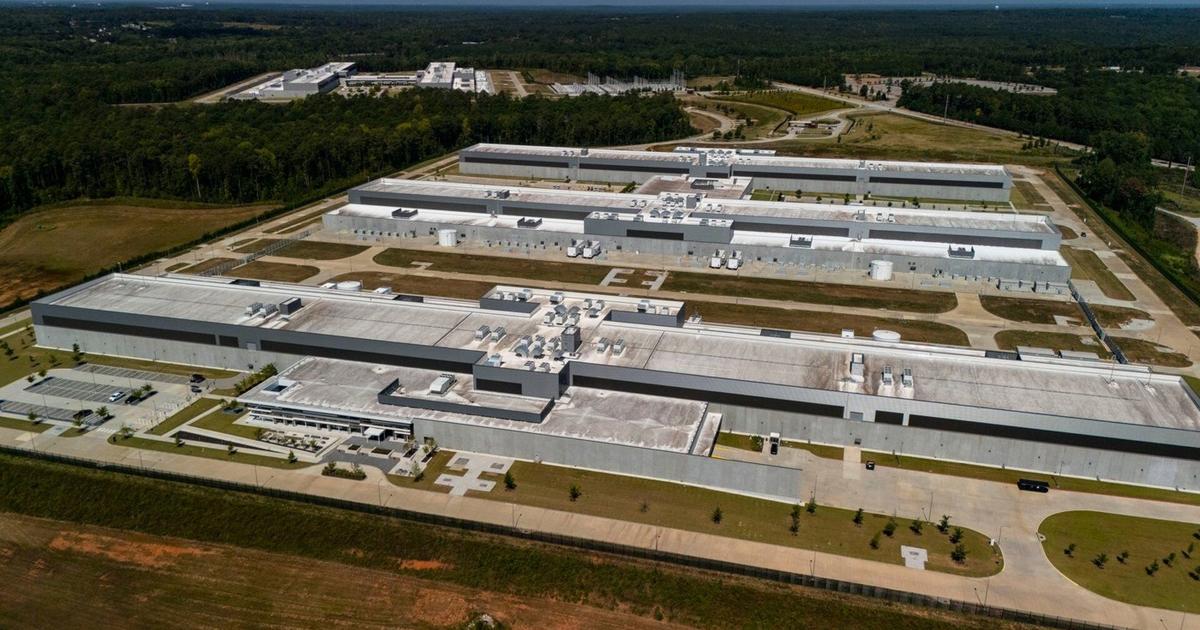
Photo via New York Post

Single Senate Dem torpedoes bipartisan data center power bill after House passes it 417-3

Read the original at New York Post ↗
Cite

Goelz, A. (2026, September 18). Single Senate Dem torpedoes bipartisan data center power bill after House passes it 417-3. New York Post. https://nypost.com/2026/09/18/us-news/single-senate-dem-torpedoes-bipartisan-data-center-power-bill-after-house-passes-it-417-3/

Dated when The Aporia collected the article, usually within hours of publication. Check the original for its exact date and byline.

New York Post · collected 2026-09-18 · by Ally Goelz

Quick Summary

Sen. Martin Heinrich (D-NM) blocked the bipartisan Ratepayer Protection Act, which passed the House with a vote of 417-3, arguing it did not sufficiently address issues related to data center power costs for everyday utility customers. Heinrich proposed his own GRID Savings Act instead, requiring large electricity users like data centers to pay for grid infrastructure and establishing federal standards for large-load interconnections. The dispute highlights the political sensitivity around AI data centers ahead of the November midterms, particularly affecting Sen. Jon Husted (R-Ohio) who faces criticism over this issue in his re-election campaign.
Written by AI on 2026-09-18, from this article's own text only (the story summary below draws on all the coverage).

AI analysis

Story summary

On Thursday, Senator Martin Heinrich of New Mexico blocked a Republican-led effort in the Senate to pass the Ratepayer Protection Act, which had previously passed the House by a vote of 417 to 3. The act aimed to prevent tech companies from passing on the costs of new energy infrastructure used for data centers to consumers. Heinrich argued that the bill did not go far enough and did not address his concerns about the adequacy of protections for American families. Ohio Senator Jon Husted, a Republican, had attempted to move the legislation forward under unanimous consent but was opposed by Heinrich. The dispute highlights ongoing tensions between Democrats and Republicans over how to regulate large tech companies' energy usage and costs.

Written for “Data Center Power Bill Blocked” on 2026-11-03, grounded in this article and the 1 other(s) covering the same event.

Story

📰 Data Center Power Bill Blocked
Politics · 2 article(s) covering the same event. See how they differ ↓

Compared with similar articles

This article reads leans left and hedges 6% of its claims. Each row says how that neighbour differs.
CBS News
Hedges 1 of 21 claims Outlet record 66/100
Washington Examiner
Hedges 1 of 16 claims Outlet record 70/100
“Article A reports on the planned floor vote for the Ratepayer Protection Act, while Article B describes a single Democrat blocking the fast-tracking of the bill.”
The Straits Times
Hedges 1 of 21 claims Outlet record 66/100
“While both articles discuss the passage and subsequent Senate action on the Ratepayer Protection Act, they describe different stages of a process: Article A covers the House passing the bill, while Article B reports on a Democratic senator blocking it in the Senate.”
Fox News
Hedges 0 of 25 claims Outlet record 69/100
“While both articles discuss the passage and subsequent blocking of the Ratepayer Protection Act in relation to data center costs, they describe different stages of the legislative process occurring on separate days.”
Fox News
Hedges 3 of 23 claims Outlet record 69/100
“Article A discusses a Republican senator's intent to introduce legislation targeting tax loopholes for data centers, while Article B reports on a single Democratic senator blocking a bipartisan bill in the Senate aimed at regulating power usage by big tech companies.”
Semafor
⚖️ Leans right further right than this Hedges 5 of 14 claims Outlet record 59/100
“Article A discusses the potential for the House to take up and pass a bill, while Article B reports on the actual passage of the bill in the House and its subsequent blockage by a Senate Democrat.”
The Independent
⚖️ Leans left Hedges 2 of 14 claims Outlet record 59/100
“Article A discusses the impending vote in the House of Representatives, while Article B describes a subsequent Senate action where a single Democrat blocks the bill after it has passed the House.”
Washington Examiner
Hedges 0 of 24 claims Outlet record 70/100
“Article A reports on the House passing a bill, while Article B covers a subsequent Senate action where a single Democrat Senator blocks the bill's fast-tracking after its House passage.”
CBS News
⚖️ Leans right further right than this Hedges 4 of 23 claims Outlet record 66/100
“While both articles discuss the passage of the Ratepayer Protection Act in the House, Article B focuses on a subsequent Senate action blocking the bill's fast-tracking, which is a different incident.”
Toronto Star
⚖️ Leans left Hedges 0 of 3 claims Outlet record 64/100
“Article A reports on the House passing a bill, while Article B discusses a Senate Democrat blocking the same bill after it passed in the House.”
How this article was measured signals, leaning charts, publisher record, byline, topics and claims

Signals How these are calculated →

Claims extracted
18
sentences that state something as happening or true
Uncertain
6%
1 of 18 hedged ("reportedly", "may", "according to")
Leaning
Leans left
of the writing, not the subject · beta estimate
Publisher signals
66/100
New York Post's corrections and hedging, across everything collected from it. Not a measure of accuracy.
Outlets on this story
2
Politics
Same framing elsewhere
1
articles that frame the event the way this one does
Analyzed 2026-09-18 · how these are computed

How this is being covered How these are calculated →

Article leaning vs. publisher reliability
Source leaning vs. consistency

Publisher

New York Post · 16405 article(s) · 35 correction(s) detected
Running correction rate · 35 correction(s)

Who wrote this

Ally Goelz
29 article(s) here · 1 carrying a prediction
🔮 “Democrats should understand that the allegation is almost certainly true — whatever conclusions they draw from that point could vary — and her denials calling it a right-wing, Islamophobic or racist conspiracy are almost certainly not,” Radinovich wrote.
🔮 National GOP operatives now fear the fallout could threaten the Senate re-election campaign of Republican Jon Husted in a state Trump won by 11 percentage points two years ago.
🔮 News of the search warrant, whether properly predicated or not, could affect voters’ decisions, which is exactly why federal law enforcement should not engage in such conduct when voters are casting their ballots.
🔮 But residents are worried that those who would want to return to Ukrainian-controlled areas could instead be taken to Russia or occupied Crimea.
🔮 The White House initially pegged the price at $200 million, but a contractor’s estimate obtained by The Washington Post put the broader project’s cost at $600 million, a substantial portion expected to come from taxpayers — despite Trump previously saying private donors would cover the ballroom.
🔮 Rep. Ilhan Omar insisted she’ll keep voting in Minnesota as federal investigators probe her immigration history, brushing off questions about whether the investigation could threaten her US citizenship.
🔮 Vice President JD Vance revealed “there’s a chance” he won’t run for president in 2028 — and second lady Usha and the couple’s four young kids could help make the decision for him.
🔮 Rogers said Sunday that he would have voted for the bipartisan sanctions legislation that Trump is now declining to enforce, arguing that the administration needs to do more to bring down soaring diesel prices hitting Michigan residents. “I would have voted for the sanctions bill on Russia,” Rogers said during a CNN State of the Union appearance with Dana Bash.
🔮 However, unlike other Senate elections, the Alaska result will be determined by ranked-choice voting, meaning each of the four candidates will be eliminated until one gets more than 50%.
🔮 The high court rejected Jesus Herrera-Salazar’s request to review his case, in part because he has already been deported, but Sotomayor and Gorsuch made clear they “hope the facts of this case are anomolous.”
Also by Ally Goelz
Nothing else under this byline is closely related to this article, so these are simply their most recent.
All 29 articles by Ally Goelz →

Topics

American Democrat Ohio Senate the Ratepayer Protection Act

Subjects

American NORP · 4× Heinrich PERSON · 4× Ohio GPE · 4× Democrat NORP · 3× Husted PERSON · 3× Congress ORG · 2× Republican NORP · 2× Senate ORG · 2× Martin Heinrich PERSON · 1× WASHINGTON GPE · 1×

Narrative

“By overwhelming margins, the American people prefer a Republican candidate who wants to only let data centers be built in communities that approve them by a local vote of the people, and that pay for their own power, water, and other utilities versus a Democrat candidate who wants to stop data center construction altogether, which will cause America to lose the AI race to China.”
framing: assertive · carried by 1 article(s) · first seen 2026-09-18
🔮 A lone Senate Democrat blocked a bipartisan bill Thursday meant to make big tech companies pay for new infrastructure that will power massive AI data centers.

Claims (18 extracted, 1 hedged)

A lone Senate Democrat blocked a bipartisan bill Thursday meant to make big tech companies pay for new infrastructure that will power massive AI data centers. asserted
that → block → centers
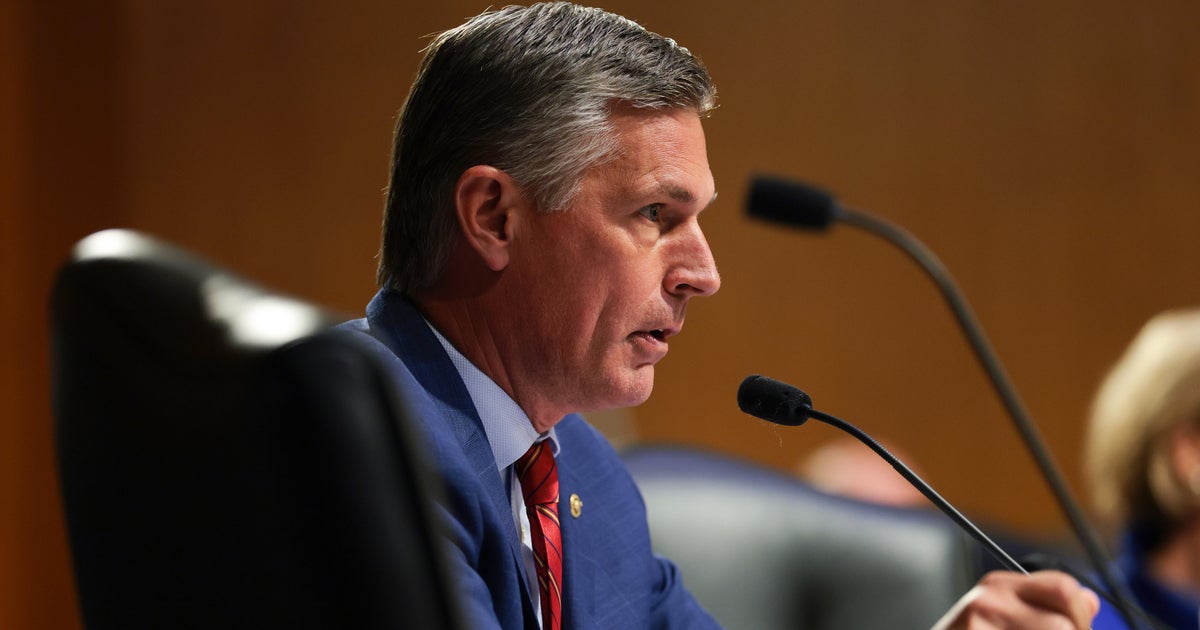
Sen. Martin Heinrich (D-NM) objected to Sen. Jon Husted’s (R-Ohio) effort to fast-track the Ratepayer Protection Act just one day after the House overwhelmingly approved the measure, 417-3. asserted
House → object → measure
The bill would order states to consider standards aimed at preventing large electricity users from shifting the costs of building up grids onto everyday utility customers. asserted
bill → order → customers
Heinrich argued the measure doesn’t go far enough. asserted
measure → argue → ?
“The senator from Ohio and I agree on one thing, AI data centers can mean higher costs for American families, and in a lot of places they already do,” the Democrat said. asserted
Democrat → agree → places
“But the Ratepayer Protection Act falls short of what we need to do to respond.” asserted
we → fall → what
Heinrich instead sought unanimous consent for his own GRID Savings Act, which would require large electricity users — such as data centers — to pay for facilities needed to connect them to the grid. asserted
which → seek → grid
His measure also calls for federal standards governing large-load interconnections. asserted
measure → call → interconnections
Sen. Bernie Moreno (R-Ohio) then objected to Heinrich’s bill, leaving both measures in limbo while the Republican accused Heinrich of preventing Americans from receiving “immediate relief.” asserted
Republican → object → relief
“The term do-nothing Congress exists for a reason,” Moreno said. asserted
Moreno → exist → reason
“We absolutely accomplished that right now.” asserted
We → accomplish → that
The clash came as lawmakers grapple with AI and data centers emerging as a political flashpoint ahead of the November midterm elections. asserted
AI → come → elections
Husted, who is facing a tough re-election race against Democratic former Sen. Sherrod Brown, has repeatedly faced criticism over his record on data centers, with the National Republican Senatorial Committee describing the issue in an Aug. 19 memo as “the anchor hanging around Husted’s neck.” asserted
Committee → face → neck
“If voters’ perceptions of data centers are not fixed quickly, the campaign against them will expand far beyond Ohio,” read the memo, first reported by Politico. asserted
memo → fix → Politico
“While the perceptions of data centers are weak, the American people are with us,” the NRSC concluded. asserted
NRSC → conclude → us
“By overwhelming margins, the American people prefer a Republican candidate who wants to only let data centers be built in communities that approve them by a local vote of the people, and that pay for their own power, water, and other utilities versus a Democrat candidate who wants to stop data center construction altogether, which will cause America to lose the AI race to China.” asserted
America → prefer → China
Husted defended the blocked bill Thursday, calling it “the most meaningful, bipartisan step Congress could take to protect the American people from higher prices for electricity.” “It is a shame that this opportunity has been missed today,” he added. uncertain
he → defend → electricity
The Senate is scheduled to be in session for the remainder of this month before lawmakers go on recess until after the midterm elections. asserted
lawmakers → schedule → elections

💬Give feedback
🕘History 🎫Support