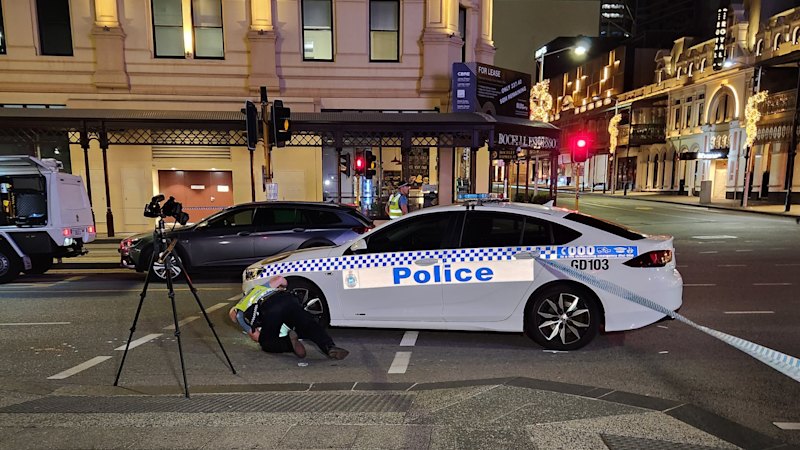
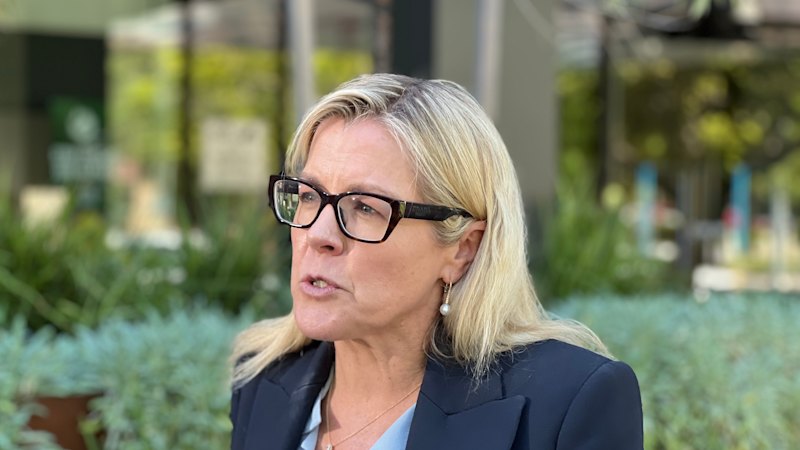
Photo via The Sydney Morning Herald

These laws were designed to ban thugs from Perth nightspots. Have they worked?

Read the original at The Sydney Morning Herald ↗
Cite

Hastie, H. (2026, September 18). These laws were designed to ban thugs from Perth nightspots. Have they worked? The Sydney Morning Herald. https://www.smh.com.au/national/western-australia/these-laws-were-designed-to-ban-thugs-from-perth-nightspots-have-they-worked-20260919-p60yk8.html?ref=rss&utm_medium=rss&utm_source=rss_feed

Dated when The Aporia collected the article, usually within hours of publication. Check the original for its exact date and byline.

The Sydney Morning Herald · collected 2026-09-18 · by Hamish Hastie

Quick Summary

Western Australia's Protected Entertainment Precinct (PEP) laws, introduced after Giuseppe Raco’s fatal attack in 2020, aim to ban violent offenders from nightlife areas like Perth and Northbridge. According to a report by WA Ombudsman Bevan Warner, these laws have helped improve safety perceptions but are criticized for being "error-ridden" and disproportionately targeting Aboriginal people and the homeless. The ombudsman found that inadequate information sharing between police and Racing, Gaming and Liquor resulted in some violent offenders not receiving exclusion orders as intended by law.
Written by AI on 2026-09-18, from this article's own text only (the story summary below draws on all the coverage).

AI analysis

Story summary

In 2022, Western Australia passed Protected Entertainment Precinct (PEP) laws designed to ban violent offenders from busy nightspots after a fatal one-punch attack. The state’s ombudsman, Bevan Warner, recently investigated these laws and found that while they have improved public safety perceptions in areas like Northbridge and Fremantle, they disproportionately affect Aboriginal people and the homeless. Specifically, 41.6% of short-term exclusion orders were issued to Aboriginal individuals despite representing only 3.3% of the population. Warner’s probe confirmed prior concerns from groups such as the Aboriginal Legal Service that these laws would unfairly target vulnerable communities, compounding their trauma and eroding trust in public institutions.

Written for “Nightspot Ban Laws Effectiveness” on 2026-11-04, grounded in this article and the 0 other(s) covering the same event.

Story

📰 Nightspot Ban Laws Effectiveness
Politics · 1 article(s) covering the same event.

Compared with similar articles

Nothing to compare against. No article is close enough to this one for the pipeline to have linked or judged the pair.
How this article was measured signals, leaning charts, publisher record, byline, topics and claims

Signals How these are calculated →

Claims extracted
28
sentences that state something as happening or true
Uncertain
7%
2 of 28 hedged ("reportedly", "may", "according to")
Leaning
Leans left
of the writing, not the subject · beta estimate
Publisher signals
61/100
The Sydney Morning Herald's corrections and hedging, across everything collected from it. Not a measure of accuracy.
Outlets on this story
1
Politics
Same framing elsewhere
1
articles that frame the event the way this one does
Analyzed 2026-09-18 · how these are computed

How this is being covered How these are calculated →

Article leaning vs. publisher reliability
Source leaning vs. consistency

Publisher

The Sydney Morning Herald · 6070 article(s) · 15 correction(s) detected
Running correction rate · 15 correction(s)

Who wrote this

Hamish Hastie
31 article(s) here · 1 carrying a prediction
🔮 Sadly, that then extends to real life, where in my electorate office we will often get calls.”
🔮 Recreational fishers will be able to fish for species including snapper and dhufish off the West Australian coast when a controversial ban lifts in September next year, but where they drop a line will be highly restricted and fishing will be restricted to winter months under changes flagged in an inquiry into the ban on Tuesday.
🔮 Last year, Krishnan said he had stepped back from the day-to-day activities of his business, but would sometimes assist his wife when she had queries.
🔮 Perth Airport boss Jason Waters is “confident” the state government will tinker with its train timetable to better cater the Airport Line for fly-in, fly-out workers.
🔮 There are no windows in the back, the condensation from your breath clinging to the roof drips down your neck, and you have to fold your body in half just to fit, but for a submariner stranded hundreds of metres underwater, boarding the LR5 would feel like getting into the back of a Rolls Royce.
🔮 A 56-year-old Bentley man has since been charged with being armed in a way that may cause fear, making a threat, and possessing cannabis.
🔮 Higher Education Minister Tony Buti says his government hasn’t “articulated” the benefits of a university merger as a hostile upper house look set to kill the proposal before it even gets off the ground.
🔮 Whitby was one of several WA politicians expressing dismay and shock after Victorian Independent MP Helen Haines was hit by a car on Monday afternoon in what appears to be a targeted attack.
🔮 The senator criticised Shoebridge for saying he had requested time off “because I knew it would be read as validating a story where there isn’t one”.
🔮 The return flight to Perth was cancelled so the plane could undergo a deep clean in Sydney.
Also by Hamish Hastie
Nothing else under this byline is closely related to this article, so these are simply their most recent.
All 31 articles by Hamish Hastie →

Topics

Aboriginal Northbridge Perth Racing, Gaming and Liquor Warner

Subjects

Warner PERSON · 8× Aboriginal NORP · 2× Northbridge GPE · 2× Perth GPE · 2× Racing, Gaming and Liquor ORG · 2× Aboriginal Legal Service WA ORG · 1× Bevan Warner PERSON · 1× Fremantle GPE · 1× Giuseppe Raco PERSON · 1× WA Police ORG · 1×

Narrative

Aboriginal people and the homeless subject to more bans Warner’s probe showed the fears held by groups including the Aboriginal Legal Service back in 2022 that vulnerable groups would be subjected to bans more frequently had come to fruition. The PEP laws were applied disproportionately to Aboriginal people, who were the recipients of 41.6 per cent of short-term exclusion orders, despite representing 3.3 per cent of the population. “Aboriginal people informed us that the scheme also compounds prior trauma, making them feel less safe which further undermines their trust in public institutions,” Warner said.
framing: assertive · carried by 1 article(s) · first seen 2026-09-18
🔮 He also found fears held before the laws passed in 2022 by groups like Aboriginal Legal Service WA that the bans, known as exclusion orders, would be heavily skewed toward vulnerable groups had been realised.
2026-09-18 · The Sydney Morning Herald
These laws were designed to ban thugs from Perth nightspots. Have they worked? · assertive framing

Claims (28 extracted, 2 hedged)

Powers to ban violent offenders from some of Perth’s busiest night spots have helped improve public perception of safety in those areas. asserted
Powers → ban → areas
However, the state’s ombudsman also found they were “error-ridden” and have disproportionately targeted Aboriginal people and the homeless. asserted
they → find → people
WA Ombudsman Bevan Warner’s first probe into WA’s Protected Entertainment Precinct laws has found information blockages between WA Police and the law’s lead agency – Racing, Gaming and Liquor – had resulted in some serious offenders not being served their bans. asserted
offenders → find → bans
He also found fears held before the laws passed in 2022 by groups like Aboriginal Legal Service WA that the bans, known as exclusion orders, would be heavily skewed toward vulnerable groups had been realised. asserted
bans → find → groups
The PEP laws were passed following an unprovoked one-punch attack which killed Giuseppe Raco in Northbridge in July 2020. asserted
which → pass → July
Precincts the laws apply to include nightlife areas including Perth, Northbridge, Fremantle, Hillarys, Mandurah and Scarborough. asserted
laws → apply → Perth
The powers give police and the Director of Liquor Licensing the power to ban people committing violent acts in a PEP for as little as a day to six months for short-term exclusion orders, or to up to five years for adults and two years for juveniles for automatic and extended orders. asserted
powers → give → orders
‘Error-prone’ methods at heart of problems Warner found there were violent offenders who should have been given automatic exclusion orders, but weren’t, because of Racing, Gaming and Liquor’s “error-prone” method of identifying them. asserted
who → find → them
He said staff did not have access to police systems and had to manually gather information through exchanges with police or by checking publicly available court records. asserted
staff → say → records
“Our monitoring also found several individuals who appear to meet the legal threshold to be automatically excluded but who had not been flagged by RGL at the end of the monitoring period,” he said. asserted
he → find → period
Warner also found six instances where Racing, Gaming and Liquor incorrectly notified people as automatic excluded offenders despite them not meeting legal criteria. asserted
them → find → criteria
“These errors are problematic because automatic excluded offenders are denied the right to seek a review of their status, and their freedom of movement was wrongly limited,” he said. asserted
he → exclude → movement
“The rate of omission and misclassification suggests a systemic problem rather than isolated errors and we cannot be confident that all automatic excluded offenders were excluded, when they should have been.” uncertain
they → suggest → errors
On short-term notices, Warner said they found instances where they were issued despite not meeting the threshold and instances where police guidelines were not applied appropriate, including when individual circumstances were ignored. asserted
circumstances → say → threshold
Warner said he found six instances of short-term orders being issued for conduct outside a PEP area which results in five of them being quickly revoked. asserted
five → say → them
“Any new scheme will have teething problems, but it is important these weaknesses are fixed,” Warner said. asserted
Warner → have → problems
Aboriginal people and the homeless subject to more bans Warner’s probe showed the fears held by groups including the Aboriginal Legal Service back in 2022 that vulnerable groups would be subjected to bans more frequently had come to fruition. The PEP laws were applied disproportionately to Aboriginal people, who were the recipients of 41.6 per cent of short-term exclusion orders, despite representing 3.3 per cent of the population. “Aboriginal people informed us that the scheme also compounds prior trauma, making them feel less safe which further undermines their trust in public institutions,” Warner said. asserted
Warner → show → institutions
Homeless people made up 20 per cent of all approved short-term exclusion orders. asserted
people → make → orders
Warner cited a survey of 1000 people which found more people said they felt “safer” rather than “less safe” in PEP areas (25 per cent compared to 16 per cent), and more people said the areas felt “more welcoming” than “less welcoming” (41.9 per cent compared to 13.5 per cent). asserted
areas → cite → cent
He also cited police stats that showed a lower growth of reported offences in PEP areas but said this data was “inconclusive” and may not be entirely attributable to the PEP laws. “While it is good that some people feel safer and more welcome, the available evidence does not show those changes can be attributed solely to the PEP scheme,” Warner said, pointing to other improvements in the precincts like better lighting and CCTV. uncertain
Warner → cite → lighting
A spokesman for the government said the PEP laws have been effective but said the overrepresentation of Aboriginal people and other vulnerable groups was a concern and “warrants careful attention.” asserted
overrepresentation → say → attention
“The Police Minister and the Police Commissioner have spoken about how exclusion orders can be applied consistently, giving consideration to issues raised in the report,” he said. asserted
he → speak → report
“The Cook Labor Government will carefully consider the report’s recommendations and work to strengthen the scheme so it remains both effective in improving safety and fair for all Western Australians.” Automatic exclusion orders apply to anyone who commits a violent offence in a PEP area, like murder, manslaughter, assault, rape, and drink-spiking. asserted
who → consider → murder
In three years, 47 automatic exclusion orders were issued – 41 of those because of an offence committed in Perth or Northbridge. asserted
orders → issue → Perth
WA Police made 737 applications for short-term exclusion orders in the period and 77 per cent were approved by a senior police officer. asserted
cent → make → officer
The number of short-term orders increased dramatically over the past three years from 137 in 2024 to 365 in 2025 including 190 involving weapons which Warner said was likely attributable to knife-wanding laws which came into effect at the end of 2024. asserted
which → increase → 2024
Warner made seven recommendations including allowing the Director of Liquor Licensing to have access to relevant WA Police information to identify offenders subject to an automatic notice quickly. asserted
Director → make → notice
He also recommended police should always consider individual circumstances when deciding to seeking a short-term order. asserted
police → recommend → order

💬Give feedback · no sign-in needed

No sign-in needed for now. Your note is sent without a name, so it cannot be answered.

🕘History 🎫Support