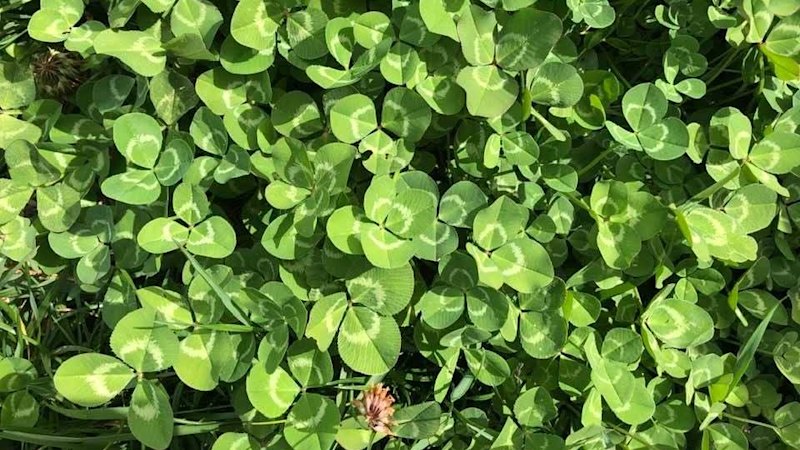
Photo via The Sydney Morning Herald

Can you spot the four-leaf clovers in this photo? Here’s how to find them easily

Read the original at The Sydney Morning Herald ↗
Cite

Cadzow, J. (2026, September 18). Can you spot the four-leaf clovers in this photo? Here’s how to find them easily. The Sydney Morning Herald. https://www.smh.com.au/national/can-you-spot-the-four-leaf-clovers-in-this-photo-here-s-how-to-find-them-easily-20260919-p60u8a.html?ref=rss&utm_medium=rss&utm_source=rss_feed

Dated when The Aporia collected the article, usually within hours of publication. Check the original for its exact date and byline.

The Sydney Morning Herald · collected 2026-09-18 · by Jane Cadzow

Quick Summary

Helen McHugh, an assistant director at the Australian National Botanic Gardens in Canberra, shares her expertise on finding four-leaf clovers, which she has collected over a thousand times throughout her life. She advises focusing on Trifolium repens (white clover) patches and looking for square or diamond shapes formed by the white lines across each leaf. McHugh suggests relaxing one's eyes to scan the ground efficiently rather than searching individually.
Written by AI on 2026-09-19, from this article's own text only (the story summary below draws on all the coverage).

AI analysis

Story summary

Helen McHugh, assistant director of the Australian National Botanic Gardens in Canberra, advises enthusiasts on how to find rare four-leaf clovers. According to McHugh, who has found more than 1000 such clovers over her lifetime and even discovered 70 in a single day as a teenager, these plants belong to the genus Trifolium, which usually produces three leaves per stalk. However, genetic mutations can cause some clover plants to produce four leaves instead. McHugh recommends focusing on Trifolium repens, commonly known as white clover due to its white flowers and distinctive white line across each leaf, for the best chance of finding a four-leaf clover. She emphasizes that while some people doubt their existence, these rare specimens are indeed real, making them a rewarding find for nature enthusiasts.

Written for “Finding Four Leaf Clovers” on 2026-11-02, grounded in this article and the 0 other(s) covering the same event.

Story

📰 Finding Four Leaf Clovers
Science · 1 article(s) covering the same event.

Compared with similar articles

Nothing to compare against. No article is close enough to this one for the pipeline to have linked or judged the pair.
How this article was measured signals, leaning charts, publisher record, byline, topics and claims

Signals How these are calculated →

Claims extracted
24
sentences that state something as happening or true
Uncertain
0%
0 of 24 hedged ("reportedly", "may", "according to")
Leaning
not political
takes no side on a contested political question
Publisher signals
61/100
The Sydney Morning Herald's corrections and hedging, across everything collected from it. Not a measure of accuracy.
Outlets on this story
1
Science
Same framing elsewhere
1
articles that frame the event the way this one does
Analyzed 2026-09-19 · how these are computed

How this is being covered How these are calculated →

Article leaning vs. publisher reliability
Source leaning vs. consistency

Publisher

The Sydney Morning Herald · 5842 article(s) · 15 correction(s) detected
Running correction rate · 15 correction(s)

Who wrote this

Jane Cadzow
1 article(s) here · 1 carrying a prediction
🔮 It isn’t as if we’re obsessively on the look-out, patrolling lawns with our eyes to the ground, but some of us would very much like to find a four-leaf clover.
The only article under this byline in the corpus.

Topics

Canberra Good Weekend

Subjects

McHugh PERSON · 5× Canberra GPE · 1× Helen McHugh PERSON · 1×

Narrative

She recommends focusing the search for these aberrant specimens on patches of Trifolium repens, known as white clover because it has white flowers and – more importantly for our purposes – a white line across each leaf.
framing: assertive · carried by 1 article(s) · first seen 2026-09-19
🔮 It isn’t as if we’re obsessively on the look-out, patrolling lawns with our eyes to the ground, but some of us would very much like to find a four-leaf clover.
2026-09-19 · The Sydney Morning Herald
Can you spot the four-leaf clovers in this photo? Here’s how to find them easily · assertive framing

Claims (24 extracted, 0 hedged)

It isn’t as if we’re obsessively on the look-out, patrolling lawns with our eyes to the ground, but some of us would very much like to find a four-leaf clover. asserted
some → ’re → clover
Not because we believe it would bring us good luck – though listen, we’re open to that possibility – but because a four-leaf clover is a quirk of nature and coming across one would be a stroke of fortune in itself. asserted
coming → believe → itself
That a sighting has eluded us makes us feel mildly aggrieved. asserted
us → elude → us
“Some people don’t believe four-leaf clovers exist,” says Helen McHugh, assistant director of the Australian National Botanic Gardens in Canberra. asserted
McHugh → believe → Canberra
She says this with a hint of amusement because McHugh finds four-leaf clovers all the time. asserted
McHugh → say → clovers
More than a thousand of them in the course of her life, she estimates. asserted
she → estimate → life
As a teenager, she found 70 in a single day. asserted
she → find → day
And she’s happy to pass on her technique: “I actually really love teaching people how to do it.” asserted
I → ’ → it
Clovers belong to the genus Trifolium, meaning “three-leaved”. asserted
Clovers → belong → leaved
“Typically, each leaf stalk has three little leaflets,” says McHugh, but occasionally a genetic mutation causes the stalk to instead produce four – or even more – leaflets. asserted
stalk → have → leaflets
She recommends focusing the search for these aberrant specimens on patches of Trifolium repens, known as white clover because it has white flowers and – more importantly for our purposes – a white line across each leaf. asserted
it → recommend → leaf
Viewed from above, the lines on a three-leaf clover form a triangle, McHugh explains. asserted
McHugh → view → triangle
The lines on a four-leaf clover form a square or a diamond. asserted
lines → form → square
“You stand over a patch and look down,” says McHugh, who found five four-leaf clovers in the patch pictured above. asserted
who → stand → patch
“You’re looking for that square or diamond shape. asserted
You → look → shape
Let your eyes relax a bit so that you’re scanning rather than looking at individual leaves.” asserted
you → let → leaves
For McHugh, the scanning has become second nature. asserted
scanning → become → McHugh
“Sometimes, I’m walking and I stop, and I don’t know why. asserted
I → walk → ?
And then I see a four-leaf clover. asserted
I → see → clover
So my brain does it unconsciously.” asserted
brain → do → it
These days, she tends to leave the clovers in place, hoping the next person to stroll past will have the delight of discovery. asserted
person → tend → discovery
If she does pick one, she presses it between the pages of a book, then slips it into a card and gives it to a friend. asserted
she → pick → friend
“It’s nice that I can give somebody a bit of a thrill,” she says. asserted
she → ’ → thrill
“That’s the good luck I get from clover.” asserted
I → ’ → clover
💬Give feedback
🕘History 🎫Support